"It's safe, it's a safe country" - President of Rwandan cycling federation expects smooth World Championships
Cycling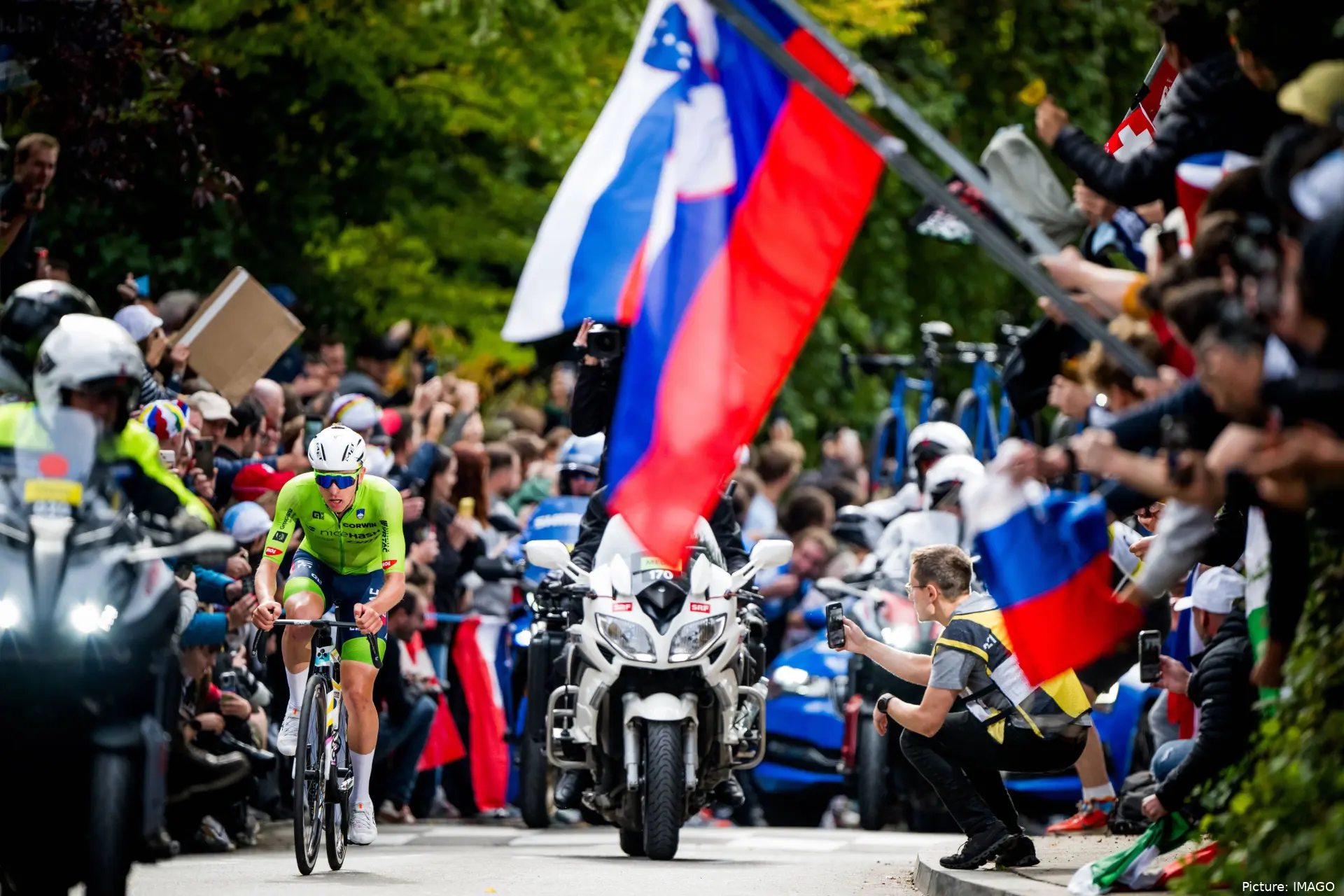
2025 will be a big year for the African cycling with first-ever road cycling World Championships to be held on the continent this September. A brutal course with over 5.000 meters of climbing across 267.5 kilometers is sure to attract the brightest stars of cycling to compete for the rainbow stripes in Kigali.
"It's the biggest event in cycling world. So, for me as the President of the Federation, and for the Federation, the country, the continent, it's a pleasure," President of Rwandan cycling federation Samson Ndayishimiye told Cyclingnews. "We appreciate the good relationship we have with the UCI, and the rest of the world for giving us this opportunity and trusting us to deliver," he added.
UCI is hopeful of the event creating a lasting legacy in not just Rwanda, but whole Central Africa with a follow-up project of setting up a World Cycling Centre in Kigali. "In February, we opened the UCI satellite, the second one in the continent of Africa," Ndayishimiye said. "It's a good opportunity not only for the riders, but also for everybody else involved, commissaires, coaches, mechanics. All of that is part of the legacy we are looking at."
The first-ever African cycling World Championships are not welcomed with the same equivalent everywhere, with several national federations fearing the costs linked to a long trip. Denmark, Netherlands and Ireland already made it clear that they'd fly to Rwanda with limited selections.
"To be honest, I think realistically our sport is an expensive sport wherever we go," Ndayishimiye counters. "There was a World Championship in Australia, that's as far as I think they've gone. Now it's just around the corner, most of the countries in Europe, they have a chance to just jump on a plane, on a non-stop plane."
"So with the negativity, I think it's the unknown. It's the first time on the continent. We guarantee everyone that we are fair on the prices. Secondly, travel-wise, it should be easy for everyone. I can confirm that many countries have already booked their hotels – confirmed. Even Belgium has just confirmed that they're coming down with the whole team… That should show that everyone has done their homework and they're happy with where we are in the organisation."
At the start of the year, a civil war outsparked in neighbour-country the Democratic Republic of Congo. But the Tour du Rwanda in February proved that there are no security problems in Rwanda. "First of all, I'm in sport. So everything that is going on is nothing to do with me. One thing for sure though, the UCI has confirmed that the World Championships is taking place in Rwanda. It's safe, it's a safe country," Ndayishimiye said.

Ondrej ZhasilCycling Journalist
Ondřej Zhasil is a cycling journalist at CyclingUpToDate and has been part of the team since 2023. He is based in Ostrava, the third-largest city in the Czech Republic, and covers professional cycling across the main UCI competitions, including the Tour de France, the Giro d’Italia, and La Vuelta a España. A key focus of his work is startlist analysis and pre-race coverage, where he examines team selections, rider line-ups, and tactical scenarios ahead of major events.
Alongside WorldTour coverage, Ondřej has developed specific expertise in junior cycling and in racing across East Asia, including competitions in China and Japan. He also maintains a broad working knowledge of other disciplines and levels, including cyclocross, while continuing to expand his understanding of mountain bike racing.
Ondřej holds a bachelor’s degree in Mathematics and Physics, which supports his analytical, data-driven approach to performance and race analysis. In his reporting, he regularly uses ProCyclingStats for results, statistics, and historical context. He places strong emphasis on careful sourcing, editorial accuracy, and updating articles promptly when new, verified information becomes available.
claps 0visitors 0
Just in

Popular news
Latest comments
- The article makes it sound like a great thing and something to be applauded. The reality is is gives the Americans another 6 years to fleece European cycling fans or force them to hunt around Europe with VPN’s for free feeds. Not something to be celebrated in my book. Before someone points out that coverage of this depth costs money, yes, I agree but not £30+ per month a fee I will wager will gradually increase now this deal has been cemented.Paul53119-10-2026
- Great. Thrilled. (Satire) Oh, how I miss the days of GCN. Still wear my GCN hoodie with pride.anonymouscyclist19-10-2026
- You could also look at it another way. How many riders have had better or more consistent results since the Tour?Jumpyjohn19-10-2026
- Whilst I love Tadej (and Remco, who deserves to be mentioned here, too), @JumpyJohn makes a valid point, and he isn’t wrong @MajorPayne. It is a fact that today’s official broadcasters of cycling struggle to keep our attention once the likes of Tadej (or Remco) attacks at ~80km or so. In the 142nd issue of Rouleur, Ned Boulting reflects on the often stressful paradox of commentating on a race that is effectively over before the broadcast window even hits its stride. In this edition, he centres on Remco’s 1hr solo at the Challenge Mallorca this year, and captures the panic and dread shared by the commentators when a dominant rider kills off the racing tension early. I recommend you read it, it’s a fascinating insight into the world of commentary, and the true viewing figures of today’s cycling. I must add here, I love Tadej and Remco, but I would be lying if my heart rate wasn’t higher when watching the World Championships this year. And I’m sure Rob Hatch would say something akin regarding his commentary!anonymouscyclist19-10-2026
- The shattered women’s marathon record was clean and highly surprising and then a few months later the athlete was very positive in another test for something not taken by mistake when recording far less impressive results. Sounds to me like the problem is still the age old one, detection is often way behind. Just like with crime, it’s not because you can’t catch the criminals that you aren’t aware of the crime.Jumpyjohn19-10-2026
- Listen, you have a point but on the other hand in cycling, once some of the riders go solo and build a minute’s gap, there’s hardly any action left to watch. Cycling is definitely not for today’s generations of accelerated viewing. Other people find skydiving or chess exciting but you can’t force everyone to feel the same.Jumpyjohn19-10-2026
- That’s a funny one. Yeah obviously he’s more aero than some but most of the aero effect at elite level is the bike. Now you have me starting to feel sorry for the guy behind him when he pulls a groupetto.Jumpyjohn19-10-2026
- Knew a World Tour promotion was coming for Ben this season. Thrilled for him, and can't wait to see what he can do at this level. Another one to watch at the TTs.anonymouscyclist19-10-2026
- It honestly breaks my heart to see this. I had a feeling this might happen over the last few years, but I kept praying it wouldn't, and that Joey would find his niche, especially back racing alongside his brother. After growing up racing alongside PH-MAS, the Pidcock brothers have always felt like one of our own, as we’ve watched them grow from Club level all the way up to PC and WT. I wish Joey nothing but the best of luck in whatever he does next, but selfishly… I do wish for him to move into the role of Q36.5 team staff.anonymouscyclist19-10-2026
- Predictable, sure! But boring??? OMG! Was Mike Tyson predictable and boring in his prime? Air Jordan? Schumacher or Senna? OMG!!!MajorPayne19-10-2026
Loading
Write a comment