Colombia explodes against the UCI! 57 positive for tramadol and 2 sanctioned, among them Nairo Quintana
Cycling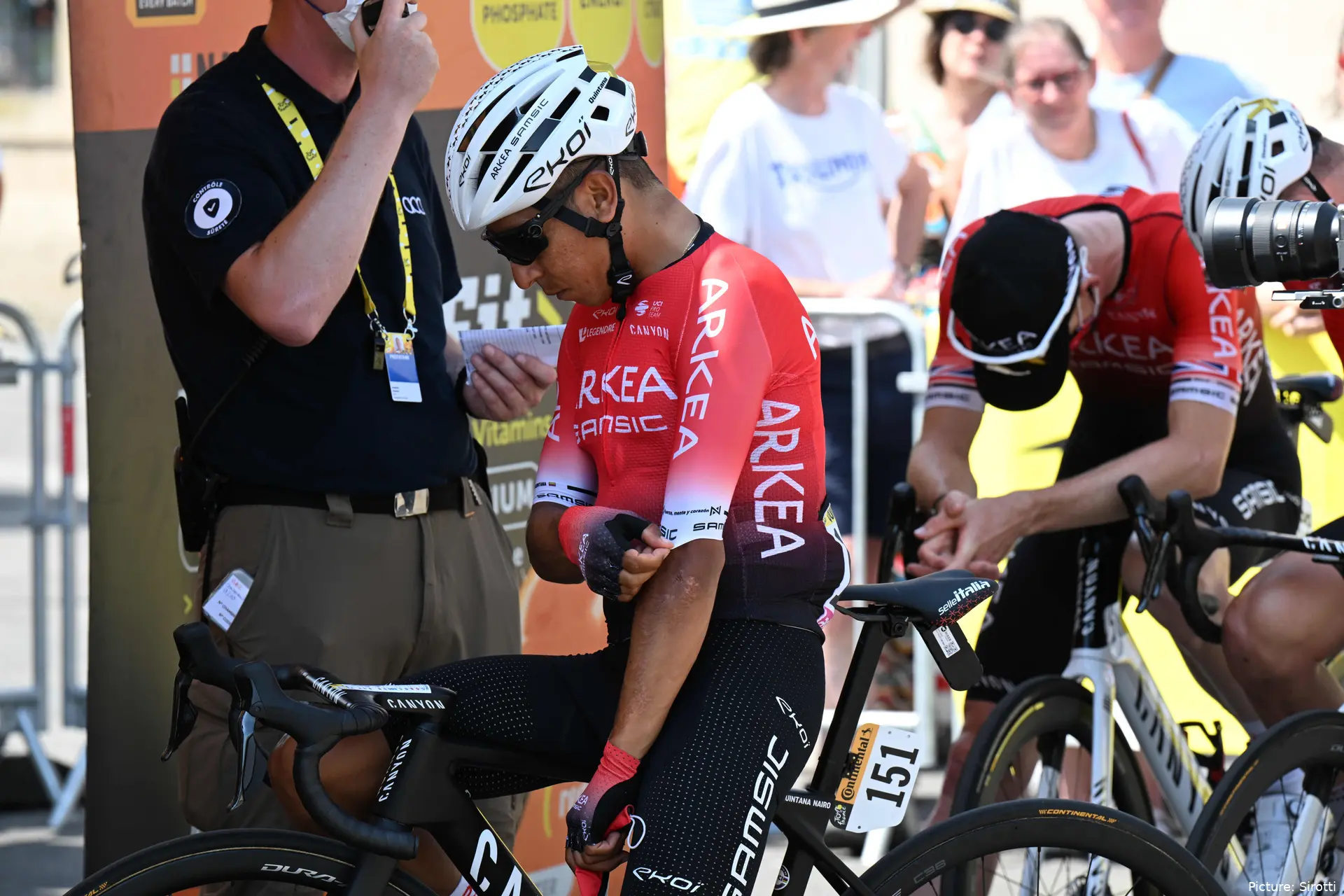
In the complex world of professional cycling, details are often intertwined with controversy, and one of the most recent cases that has raised questions is that of Nairo Quintana. Among the 57 cyclists who tested positive for tramadol in 2022, only two faced sanctions from the International Cycling Union, and one of them was the Colombian. This has caused his country to cry out against the UCI.
Since 2019, tramadol, although not listed as a doping substance (it will be as of January 1, 2024), is subject to penalties by the UCI. Although it is not considered a performance-enhancing substance, its use can have negative impacts on cyclists' health and safety in races. Therefore, the UCI has imposed significant sanctions to discourage its use.

Nairo Quintana's case came to attention in August 2022, when the UCI notified him of his positive for tramadol during the Tour de France on two separate occasions. The sanction included disqualification from the event, removal of UCI points and a fine. What followed, however, was an unraveling of events that amplified the consequences of the case. To date, Nairo Quintana has failed to find a new team, which has led to speculation about a possible veto against him.
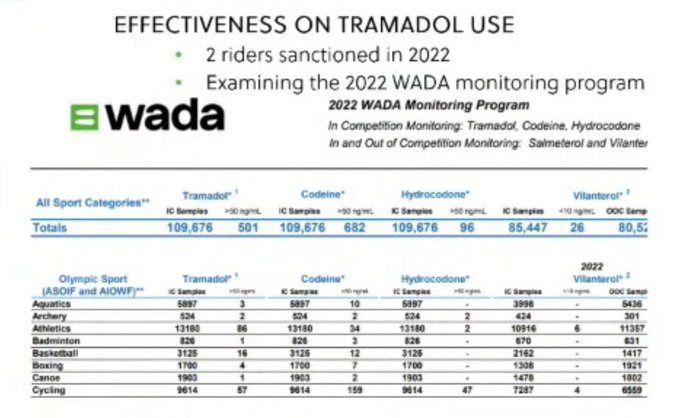
Intriguingly, a document has come to light revealing that 57 samples of competing professional cyclists tested positive for tramadol in 2022 alone, the same year Quintana was sanctioned. Surprisingly, the UCI took action only against the Colombian cyclist and Mykhalo Kononenko, while the other 55 riders received no notifications or sanctions from the organization. This raises a fundamental question: Why?
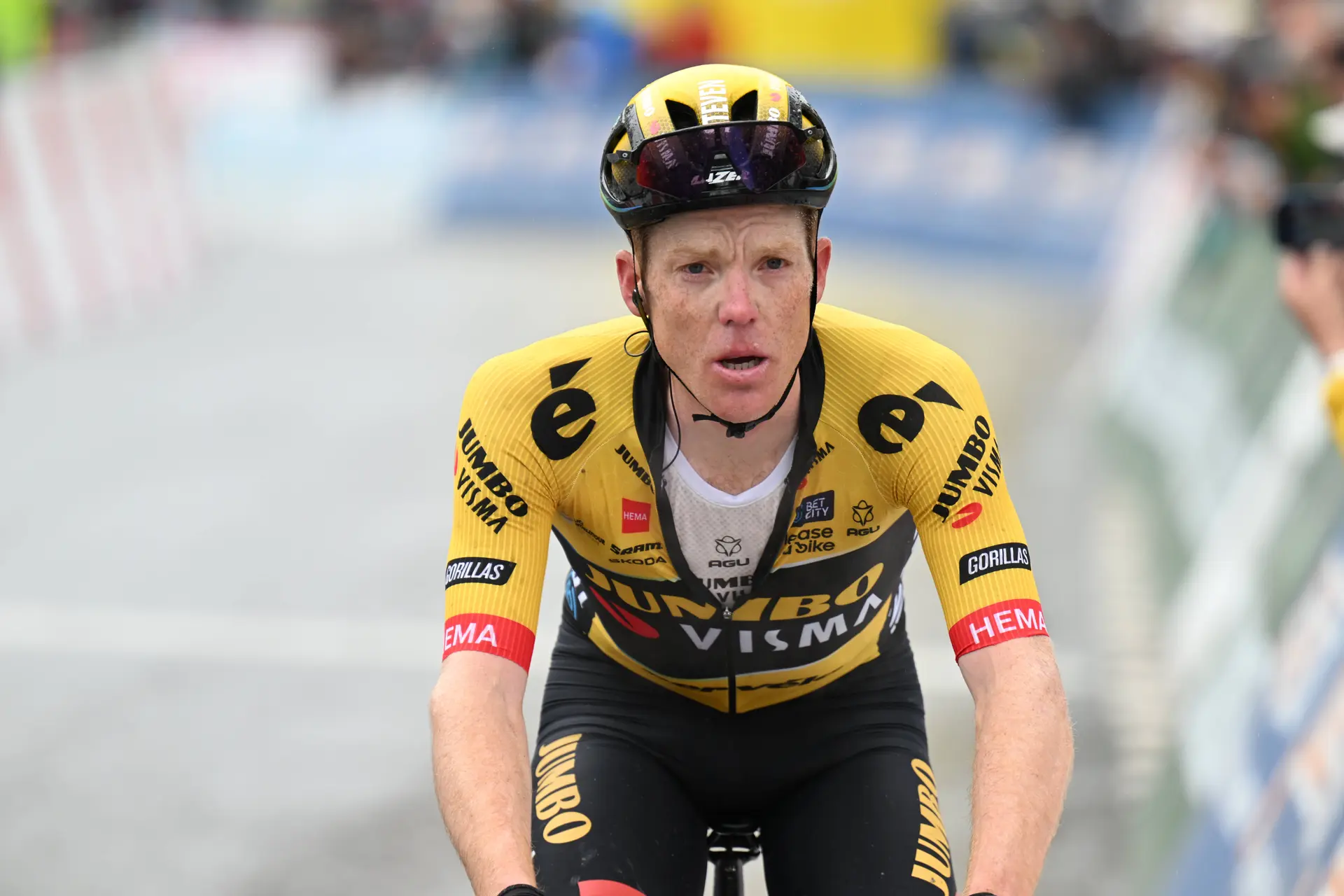
Raul Banqueri, a renowned journalist, has pointed out the curious contrast in this case. "In 2016, 6.5% of anti-doping samples contained tramadol. This substance has been banned since March 1, 2019. Among the 57 positive samples in 2022, only 2 cyclists were sanctioned: Nairo Quintana and Mykhaylo Kononenko. We do not know what happened to the rest of the positive samples."
This is what they are asking in Colombia after Banqueri's information: "The discrepancy between the number of positive cases and the sanctions imposed raises legitimate questions about the fairness of the UCI's application of the rules and sanctions. Is it possible that there is a certain amount of attention focused on Nairo Quintana? The lack of clarity on this issue only fuels speculation and highlights the need for transparency in UCI decisions."
Read also
Juan LarraCycling Journalist
Juan Larra is a writer for Cyclinguptodate and editor-in-chief of Ciclismoaldia, where he has played a central role since its inception. Under his leadership, the website has become a trusted source for professional cycling coverage, offering in-depth analysis, news, and feature stories.
A sports journalist with over 20 years of experience, Juan earned his degree in Journalism from the University of Seville in 2007. He began his career covering a wide range of sports—including football, basketball, Formula 1, MotoGP, tennis, and cycling—for platforms such as the official La Liga app, Vodafone and Movistar websites, NBA Blogdebasket, and Cadena Cope, honing his skills in writing and editorial management.
In addition to his work at Ciclismoaldia, Juan contributes to Cyclinguptodate and serves as editor-in-chief for the tennis-focused site Tenisaldia. Throughout his career, he has conducted exclusive interviews with cyclists and sports figures, provided detailed analysis of competitions ranging from local Spanish races to major international events, and acted as a special correspondent at prestigious races including Paris-Roubaix, the Tour de France, and the Vuelta a España.
Juan’s combination of experience, expertise, and direct access to athletes has established him—and the platforms he leads—as authoritative voices in professional cycling.
claps 6visitors 6
Just in
Popular news
Latest comments
- Also, it's supposed to be hard to gain an advantage from drafting off Remco because he is so aero.Hills3319-10-2026
- How would stats back it up? You realise tactics involved could mean Vine saved his legs for a faster finish? Some riders can choose to go all out and fade later in the ride, others can hold steady state the whole way, and others can have a reserved start and power up later in the ride. You can't judge just by the stats unless you have power data to be able to prove Vine is riding faster even though he is putting out the same or less power (suggesting drafting). I'm sure the stats prove that Vine didn't cheat because UCI would monitor the stats to make sure this exact scenario doesn't happen (and disqualify them for drafting if the stats proved it).Pogboom19-10-2026
- Only one person would say such a thing here. Sorry to burst your bubble but I’m afraid that window of opportunity has now closed. You can beat some of the people all of the time and all of the people some of the time but you can’t beat all of the people all of the time.Jumpyjohn19-10-2026
- Both prizes are actually pathetic, almost amateur like, not even covering the cost of participatingJumpyjohn19-10-2026
- It depends on how you define doping and you would do well to give your definition so we can see how against it you are. If you consider the use (as a hypothetical example) of a new beneficial artificial product unknown to anti-doping agencies ok without considering asking them if it would constitute doping if you told them about it then we’re never going to agree on who could be or couldn’t be doping and according to what threshold, moral, statistical, legal, comparative. In football even financial doping is now consideredJumpyjohn19-10-2026
- I can’t wait to follow Pogi's races in 2027. Cycling will be exciting again!!!PogiSloFans19-10-2026
- I saw it for quite a while and the stats back it up
 Rafionain-Glas19-10-2026
 - Hope he can make a redemption by winning all grand tour or all monuments in single seasonZamorano19-10-2026
- great for Brandon to get this monkey off his back - first win in Rainbow has got to feel good.mij19-10-2026
- they are super good.mij19-10-2026
Loading

In 2016, 6.5% of anti-doping samples contained tramadol. This substance is banned since 1 March 2019. Among the 57 positive samples in 2022, only 2 cyclists were sanctioned: Nairo Quintana and Mykhaylo Kononenko. We don’t know what happened to the rest of the positive samples.

Write a comment