“No rider wants to end up in a ditch with broken bones" - Race organisers need to remember cycling 'is not a video game' according to Red Bull - BORA boss
Cycling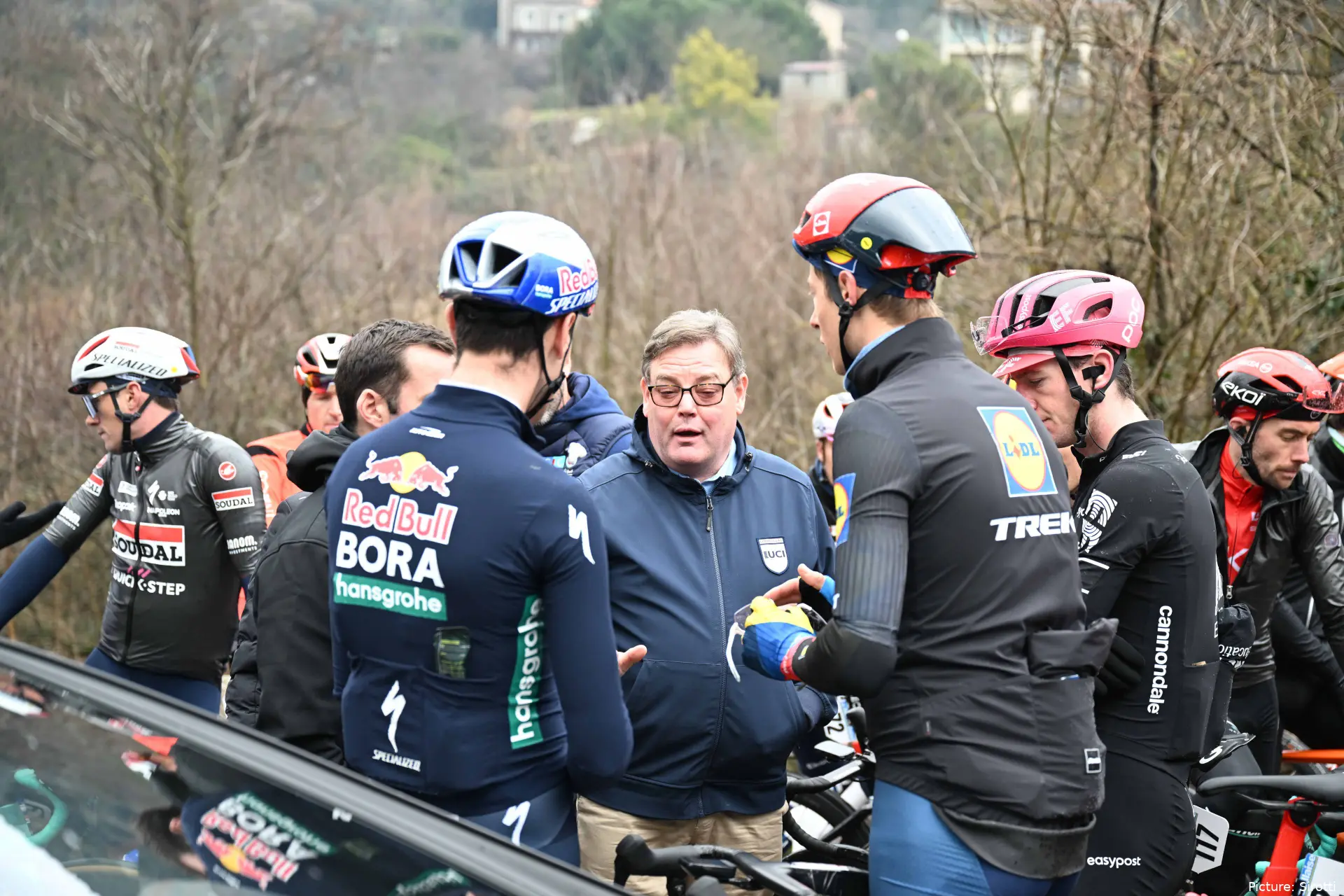
It hasn't taken long for the topic of rider safety to be thrust into the spotlight once again at the start of the 2025 season. At the recent Etoile de Besseges, a number of teams abandoned the race in protest after cars drove onto the course.
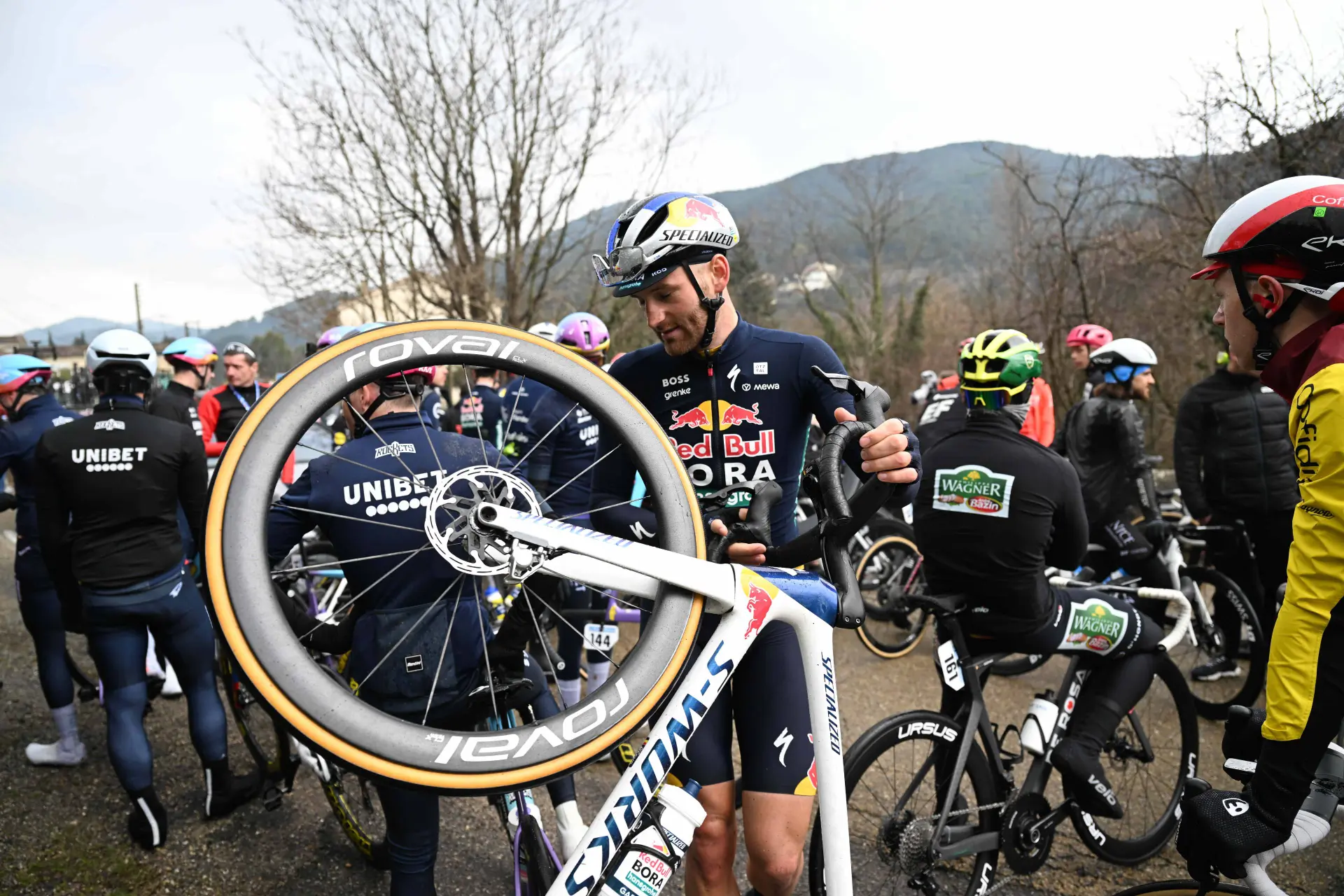
One of the riders worst affected by a crash caused by the peloton meeting a car was Red Bull - BORA - hansgrohe's Maxim van Gils, who had been competing in his first race for the team since his winter signing. "He’s OK. Of course, there’s disappointment when you can’t turn all the training into results because of a crash or an injury, but he’s back on the bike and will continue as planned,” Red Bull - BORA - hansgrohe’s chief of sport Rolf Aldag says of the Belgian in conversation with Velo. “We got him home in time, and he started physiotherapy right away. I have to say, he was very professional – not sitting around feeling sorry for himself, but straight away asking, ‘Can I get on the rollers? Can I get some kilometres, some hours in?’ So we’re pretty optimistic.”
Since the controversial conclusion to the race, as the much reduced peloton continued on without half the teams who had started, rider safety and how to improve things have been a hot topic of conversation. For Aldag though, the topic is a very nuanced one. “It’s a very difficult issue because you can’t just take one position. You have to balance your thoughts on the situation,” he explains. “I think everyone agrees that none of the parties involved would say they don’t care about safety.”
“For teams, there’s a human concern, but also a business one. No team wants to pay a rider €20,000 a day while they’re sidelined with an injury that could have been prevented,” Aldag adds. “No rider wants to end up in a ditch with broken bones. And no race organizer wants their event to be remembered for safety issues. And for the UCI, it’s not good for the sport if the main discussions are about races being stopped due to oncoming traffic.”
Nevertheless, something does need to be done though Aldag concedes. “We all have the same interests, we just need to align them while recognizing the limitations. How much are riders being pushed by teams? How do relegation pressures impact decision-making? And how far will riders go in pursuit of results and contracts? There’s also the internal discussion about respect in the peloton,” he notes. “I think we all agree that there shouldn’t be cars coming in the opposite direction, that’s obvious. No organizer would argue otherwise. It’s not a video game where you get seven lives. From my own experience, having broken almost everything except my left leg in my career, I know how much it hurts, how long it takes to recover, and the mental toll it takes to come back.”
“So, what’s the solution? There’s no easy one, but we need to have these discussions in the proper settings, not just blow them up in public debates that hurt everyone involved,” Aldag concludes. “No one looks good in that.”
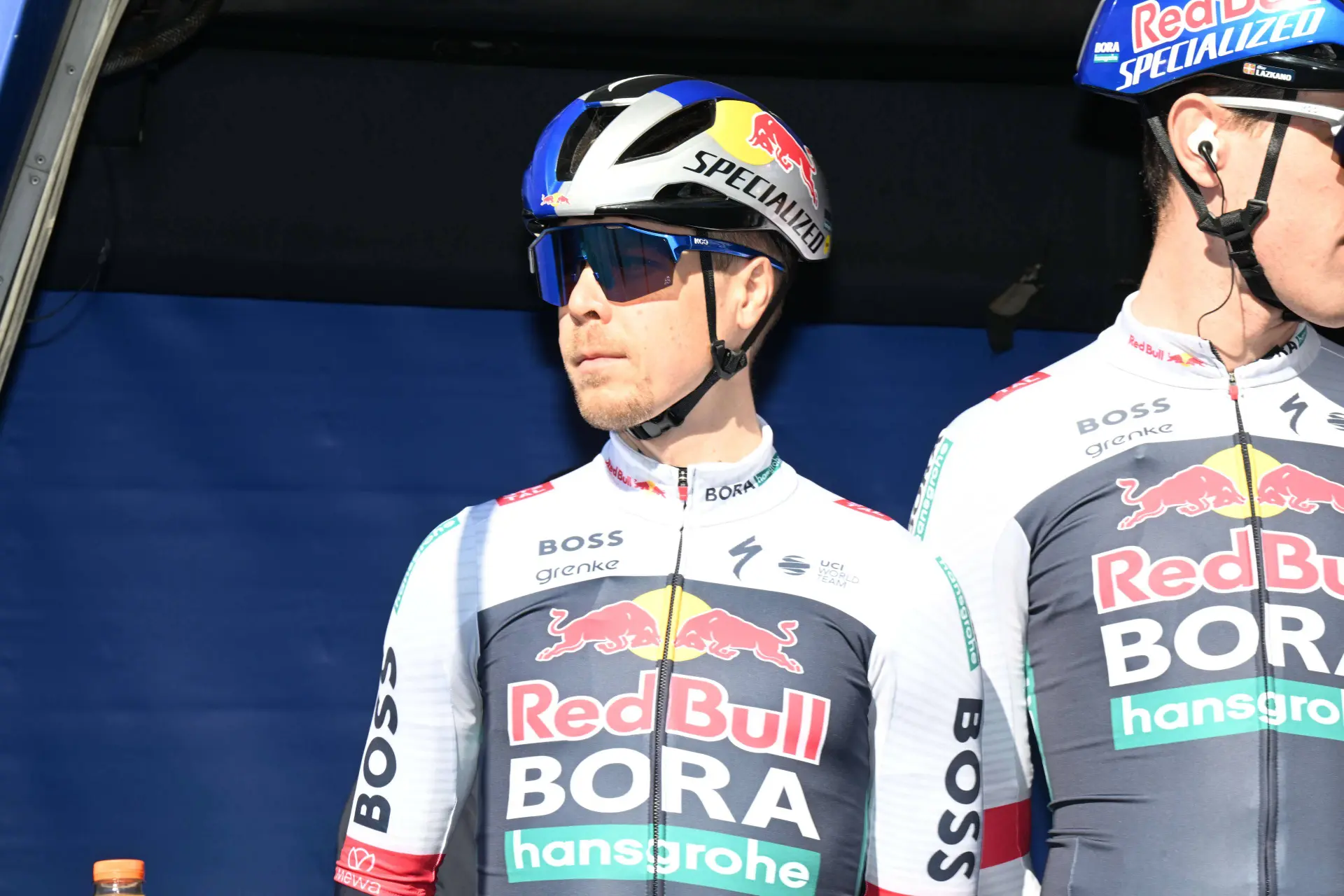
Due to the continuing unsafe conditions, especially the vehicles on the course, our team, along with others, has decided to withdraw from today's stage at Etoile de Bessèges. The safety of our riders and staff is our first priority.
— Red Bull – BORA – hansgrohe (@RBH_ProCycling) February 7, 2025

Kieran WoodDeputy Editor-in-Chief
Kieran Wood is a sports journalist based in Wales and has been active in journalism since 2022. He regularly contributes to DartsNews.com and CyclingUpToDate.com, where he covers professional cycling and darts. In cycling, his work includes liveblogs from major races, including the Tour de France, the Giro d’Italia, and La Vuelta a España, alongside race reports and analysis. He has also conducted interviews with professional riders.
His reporting spans the full racing calendar, from one-day classics to stage races, with a focus on accurate, real-time coverage and clear contextual analysis. For statistics, results, and historical context, he regularly uses resources such as ProCyclingStats. To support reporting on rider activity and training context where relevant, he also references Strava.
In his work, Kieran places strong emphasis on careful sourcing, editorial accuracy, and updating articles as new, verified information becomes available.
claps 0visitors 0
Just in

Popular news
Latest comments
- EF’s “island of misfit toys” squad is probably one of my favorites in the peloton. They are fun to watch, always trying stuff - they ride with heart and panache, and their kits are excellent.wrsty20-10-2026
- 'Children these days'... Wout, since the caveman learned to say "Ug", older generations have always said this about younger generations. Not every young rider is a cowboy. So what's to say that the fact that Poels was respectful meant that his peers were equally so?
 Rafionain-Glas19-10-2026
 - "...In a weakened field" Most definitely ! YAWN !frieders319-10-2026
- Noted. But I had to appease his fans.MajorPayne19-10-2026
- I wonder if he'll race Challenge MallorcaRafionain-Glas19-10-2026
- Head to head time-splits: Jay Vine vs Remco Evenepoel: 10.5 km - Vine lost 45 seconds to Evenepoel 34.2 km - Vine lost a further 1:10, and was caught in the vicinity of that checkpoint. Note: I remember Vine getting caught before the second checkpoint, and ProCyclingStats log supports that, however, the gap at the second checkpoint was less than 2 minutes. 45.4 km - Vine lost only 16 seconds Of course, Vine lost less time in the middle section than the early section, but at the final segment rate, he'd have lost 15 seconds in the opening section and and 34 seconds in the middle. It is possible that Vine paced himself very well but that seems unlikely. In comparison with Stefan Küng: Kung lost: 26 seconds at T1. A further 1:11 by T2. A further 40 seconds by the finish. Relative to Evenepoel, Küng did slow down by the end. Maxime Decomble: Lost 47 seconds at T1. A further 1:20 by T2. A further 26 seconds by the finish. Mikkel Bjerg: Lost 37 seconds at T1. A further 1:34 by T2. A further 46 seconds by the finish. It is not concrete evidence that Vine cheated though it certainly doesn't absolve him. However, watching the race, I am 100% sure that Vine did not pull over and follow a different line when Remco passed him. Remco pulled away quite quickly, but the gap did not balloon and Vine definitely got aero assistance.Rafionain-Glas19-10-2026
- That ship has sailed years agovappaxbipmv19-10-2026
- He doesn't have to. I'd be perfectly happy if he loses SB if he then wins everything elsevappaxbipmv19-10-2026
- Please don't put Remco in the same sentence as Tadej. It's disrespectful to Tadej. Please make a note of this.KissinKate19-10-2026
- ....and you just described how americans are fleecing american fans as well. We don't even get the eurosport coverage you get. What you see on yurrup HBO is not available in this country. Trust me, being a cycling fan sucks everywhere.KissinKate19-10-2026
Loading
Write a comment