2025 season review | EF Education-EasyPost: Powless' win over Visma; Healy's historical season and Carapaz' masterful Giro
Cycling
It’s been a rollercoaster 2025 for EF Education-EasyPost.
The American WorldTour squad mixed some of its best-ever rides on the biggest
stages with long stretches of quiet results. From surprise success on the
cobbles to a Grand Tour podium and a yellow jersey cameo, they found ways to
matter when it counted. At the same time, a low win total, a flat Vuelta, and
looming transfer questions kept things from feeling like an unqualified
triumph. As the season closes, it’s worth unpacking what went right, what
didn’t, and where EF stands heading into 2026.
EF Education – EasyPost, founded in 2003 by Jonathan
Vaughters, has built its identity on aggressive racing and a willingness to
attack from the fringes rather than control from the front. Under Jonathan
Vaughters, the team has long thrived on doing more with less, relying on sharp
scouting and development rather than huge budgets. The 2025 roster reflected
that mix of ambition and pragmatism, much like in 2024.
Richard Carapaz, 2019 Giro d’Italia champion and 2021
Olympic road race gold medallist, arrived as the marquee Grand Tour leader. Ben
Healy, just 25, was coming off a breakthrough year and looked ready for another
step up. Neilson Powless remained the team’s go-to puncheur for hilly one-days.
In the sprints, Marijn van den Berg and Estonian prospect Madis Mihkels gave EF
more finishing options than in past seasons. Veterans like Esteban Chaves and
new signing Kasper Asgreen, a former Tour of Flanders winner, added experience
and firepower across cobbles and mountains.
On paper, it was a squad built for upsets rather than
dominance: a core of leaders capable of spectacular days, backed by young
riders with room to grow.
In raw numbers, EF’s 2025 output looked modest. They ended
the season with 10 wins, a sharp drop from the 24 they collected in 2024. But
the nature of those wins mattered more than the volume. Instead of stacking up
smaller races, EF made their victories count in bigger events. They finished
12th in the WorldTour team rankings for the second year in a row, roughly
holding their ground in a fiercely competitive mid-pack. The points tally
dipped slightly, but there was never any real relegation threat. The standout
individual was Healy, who finally came of age on the grandest of stages. The
headline summary is simple: fewer wins than last season, but far more of them
in places that shape reputations.
Spring review
The spring story started quietly and ended with EF back in
the conversation at some of cycling’s most storied races. Milano-Sanremo came
and went without much pink on screen; Mikkel Frølich Honoré’s 17th place was
solid but hardly transformative. Things changed on the Belgian coast. At
Classic Brugge–De Panne, young Madis Mihkels sprinted to a surprise third place
against a stacked WorldTour field, giving EF an early marker that their sprint
train was evolving.
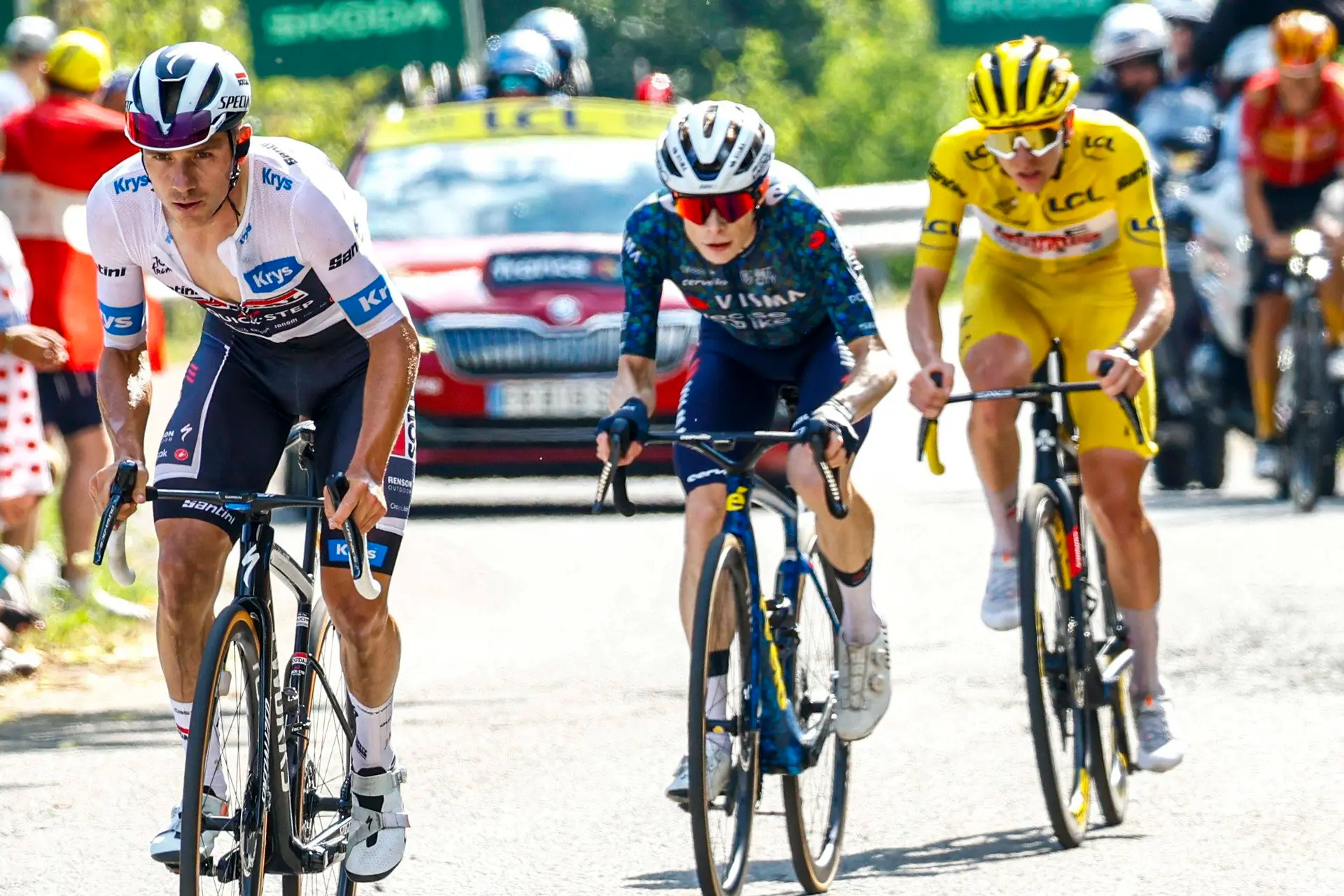
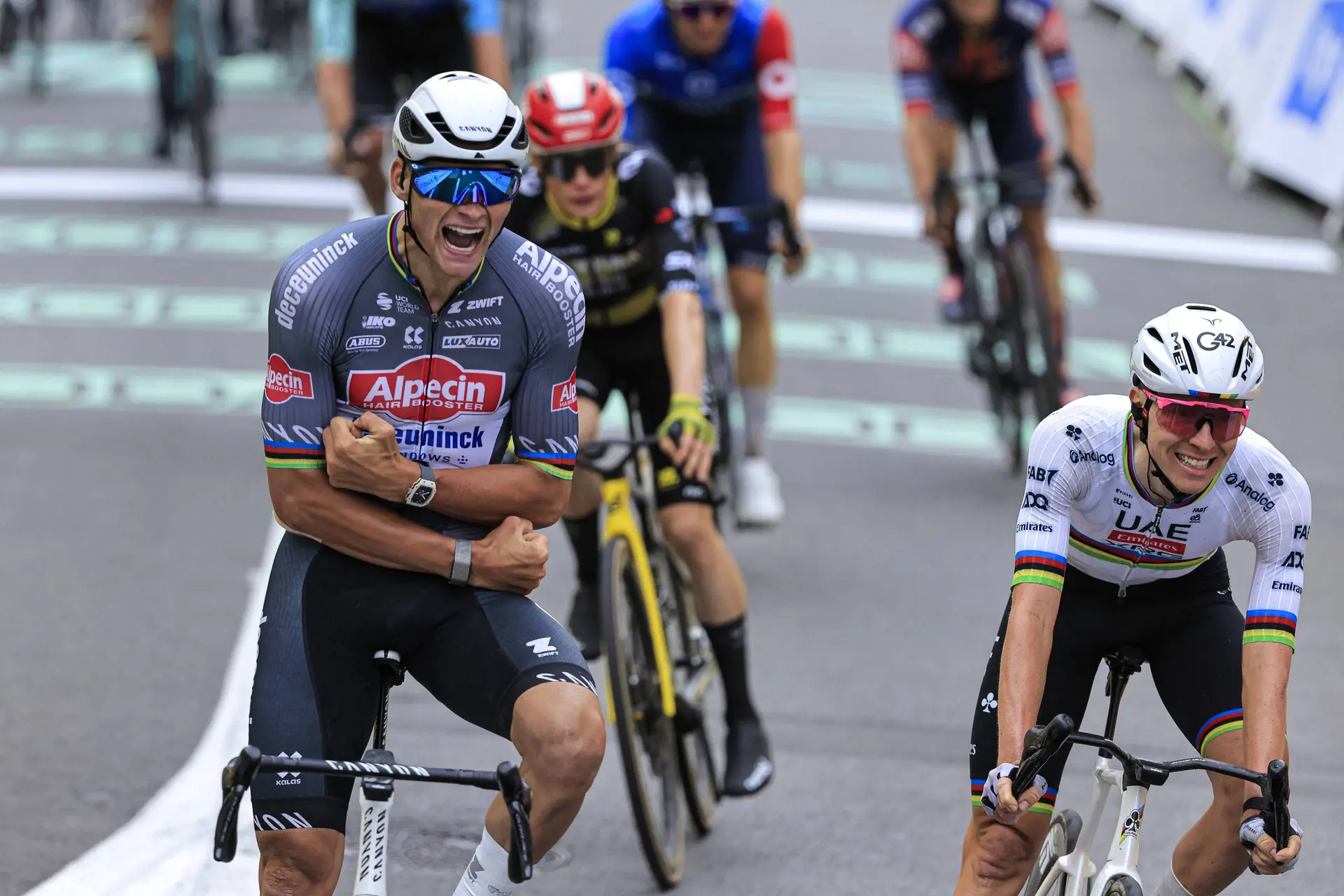
The watershed moment came a few days later at Dwars door
Vlaanderen. There, Neilson Powless produced one of the rides of his career,
outsprinting Wout van Aert and beating back a trio of Visma | Lease a Bike
riders in a three-against-one finale. Powless called it “the biggest win of my
life,” and it was hard to argue. It was EF’s first major cobbled Classic
victory since Alberto Bettiol’s Tour of Flanders in 2019 and instantly shifted
how rivals viewed the team on the pavé. Undoubtedly, it was one of the biggest
upsets of 2025.
The rest of the cobbled campaign brought fewer fireworks.
Asgreen, signed partly for these very races, never quite found his best legs in
Flanders and couldn’t influence the key moves. At Paris–Roubaix, Mihkels again
hinted at a big future, grinding his way to 14th on debut, a serious
performance for a neo-pro, but EF never threatened the podium there either. In
short, the cobbles delivered one huge headline, a couple of encouraging signs
for the future, and a reminder that depth still lags behind the super-teams in
the monuments themselves.

Kasper Asgreen did not quite capture the magic we have seen in previous seasons this spring. @Imago
The Ardennes and other hilly races told a different story.
Healy arrived in April flying. He skipped Amstel, but at La Flèche Wallonne he
climbed the Mur de Huy to a fine 5th, staking a claim as one of the peloton’s
top punchers. The real breakthrough came at Liège–Bastogne–Liège, where Healy
rode with the very best to take third. Only Tadej Pogacar and Giulio Ciccone
finished ahead of him. It was EF’s best Monument result in years and
confirmation that Healy has stepped into the sport’s top bracket of one-day
climbers.
Looking back at spring as a whole, EF’s campaign was a clear
success. They bagged a WorldTour classic win, a Monument podium, multiple
top-fives, and a breakthrough ride from a young sprinter. They never cracked
the Flanders–Roubaix podiums, but for a team of their resources, the classics
haul was impressive.

Grand Tour season
The Grand Tours defined EF’s narrative in 2025, with the
Giro and Tour delivering some of the team’s strongest ever performances at
three-week races.
At the Giro d’Italia, they lined up with a clear leader and
a clear mission: give Carapaz the platform to fight for the overall. He
responded with a vintage campaign. In Week 2, he launched a perfectly timed
attack to win Stage 11 in the mountains, stamping his authority on the race.
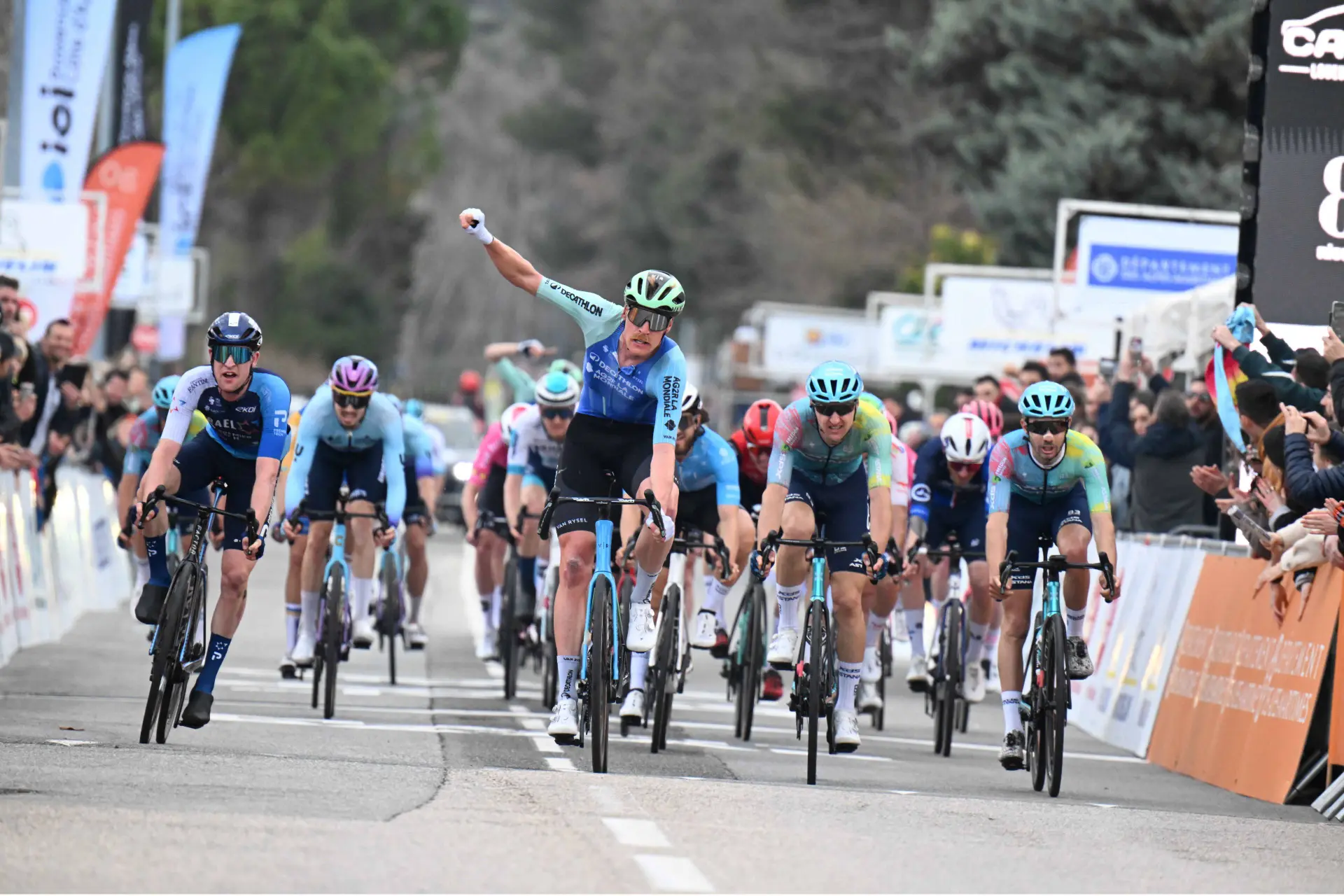
A few days later, Asgreen salvaged his slow start to the
season with a win on Stage 14 from a breakaway sprint, a huge comeback after
his struggles in the spring. Two stage victories already made the Giro a
success story, but the bigger prize was still in play. Carapaz moved into
genuine contention for pink, riding deep into the final week locked in a battle
with Simon Yates and rising star Isaac del Toro.
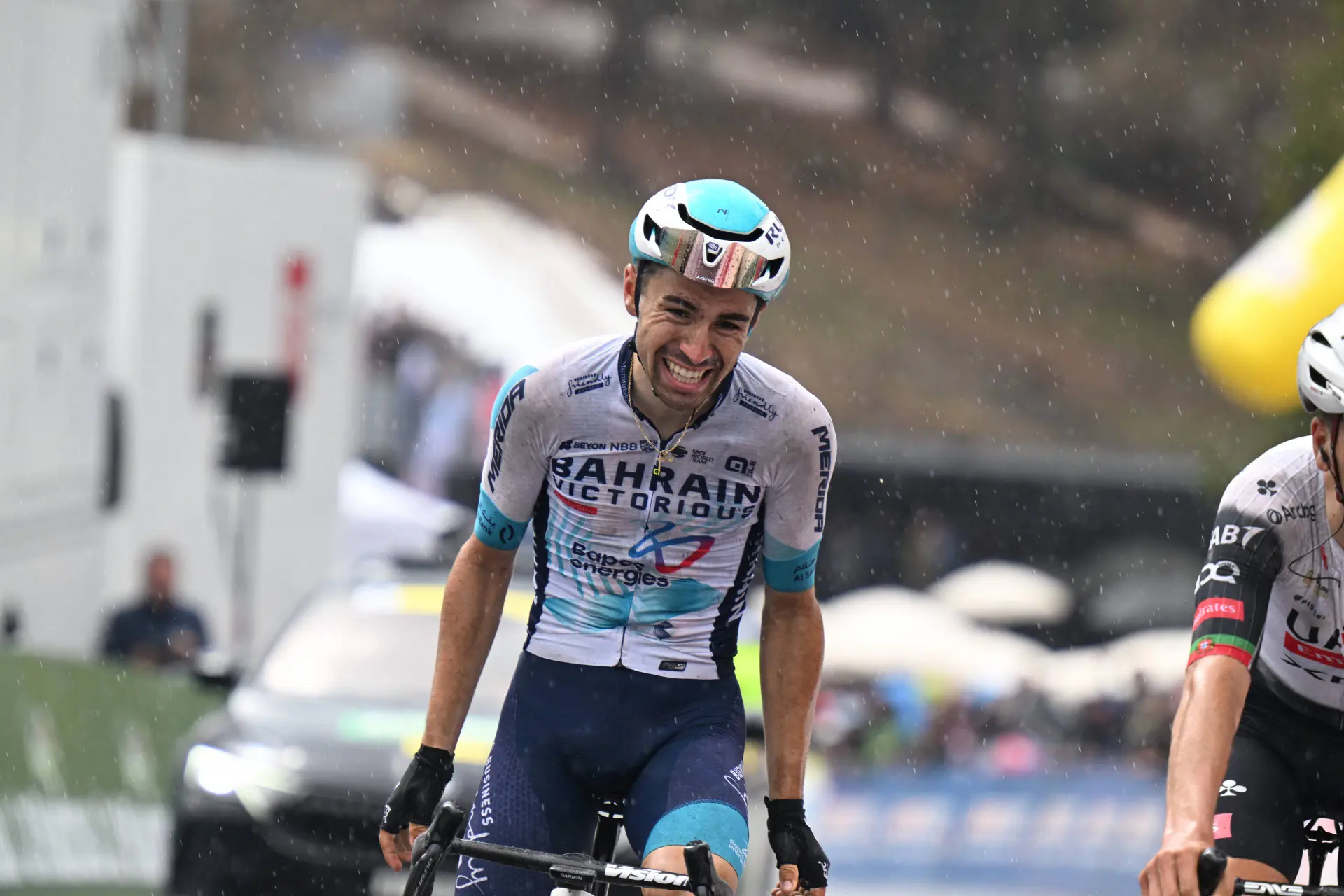
Heading into the final mountain showdown, Carapaz sat third
overall and still dared to dream of the maglia rosa. On Stage 20, however, he
and del Toro became locked in a game of cat-and-mouse while Yates attacked up
the road in a now defining moment of the season. Neither wanted to be the first
to chase. Yates escaped, won the stage, and snatched the overall, while Carapaz
had to settle for third in Rome. It was EF’s first Grand Tour podium since 2020
and a major achievement by any measure, even if the Ecuadorian admitted he
“came for the victory” and felt he had given everything. Combined with
Asgreen’s stage win, the Giro became arguably EF’s standout race of the year.
The Tour de France brought a different strategy and another
big payoff. With Carapaz forced to DNS due to illness, EF approached July
without a big-name GC favorite and instead hunted stages and opportunities. Ben
Healy turned those opportunities into something bigger. On Stage 6, he launched
a trademark long-range attack on a hilly day and held off all chasers to claim
EF’s first Tour stage win of 2025. That alone would have made his race, but he
wasn’t done. On Stage 10, the first big mountain showdown and fittingly on
Bastille Day, Healy infiltrated a break that gained serious time. When the dust
settled, he pulled on the yellow jersey, becoming the first Irishman in the
maillot jaune in decades.
Healy’s stay in yellow was brief, Pogacar resumed control
soon after, but for several days EF found itself in the centre of Tour
storylines, defending the most famous jersey in cycling. More importantly,
Healy proved he could survive with the best climbers, and he held his own in
the Alps and Pyrenees and rolled into Paris ninth overall, giving the team 210
points. It was EF’s best Tour GC result since Rigoberto Urán’s 8th in 2020 and
a huge step forward for a rider who entered the race billed mainly as a
stage-hunter.
By contrast, the Vuelta a España was a quieter affair. EF
selected a younger squad, used it as a development platform, and paid for the
lack of star power in the results. There were breakaways and a few top-10
finishes from Mihkels in the sprints, but no stage wins and no GC threat. Across
the three Grand Tours, EF still walked away with three stage wins, a Giro
podium, a Tour top-10, and time in yellow. For a team with their budget, that’s
a very strong return.

Was Ben Healy's 2025 Tour de France the most memorable by an Irishman since the 1980s? @Sirotti
Transfers
As 2026 approaches, EF’s roster is shifting. On the way out
are several experienced names. Rui Costa retires after a long, decorated
career. Owain Doull joins Visma| Lease a Bike, and James Shaw finds himself
seeking a new contract after not being renewed.
The biggest unresolved issue is Carapaz, and as of writing
this article he has not extended his deal. Losing him would leave a major hole
in EF’s Grand Tour plans; keeping him would give the squad a proven podium
contender to build around.
Final verdict – 7.5/10
Taken as a whole, EF Education – EasyPost’s 2025 season
deserves a solid 7.5 out of 10. The win total was low, but the quality was very
high. A Grand Tour podium for Carapaz, three Grand Tour stage wins, Healy’s
Tour stage and yellow jersey stint, a top-10 in Paris, and Powless’s landmark
cobbled Classic victory made this one of the most memorable seasons in team
history. The flip side is familiar: no Monument win, a quiet Vuelta, and a lack
of depth compared with the very best teams. There’s still room to tighten the
consistency and raise the baseline.
Discussion
Fin Major (CyclingUpToDate)
Looking back on EF Education–EasyPost’s 2025 season, I came away impressed by how often the team managed to punch above its weight. The win total was low, but the moments that did land felt huge, a Giro podium, three Grand Tour stage wins, Powless’ cobbled shocker, and Healy’s incredible stretch of a Tour stage, yellow jersey, and top-10 in Paris. With Irish heritage myself, Healy's Tour de France performance was one of my highlights of 2025.
At the same time, the quiet Vuelta and the lack of depth were reminders of the gaps still to close. For me, it was a fun, chaotic, very EF kind of season, flawed, but full of life
Ondrej Zhasil (CyclingUpToDate)
One thing we can count with EF is that they'll always hunt for the biggest and most shocking victories. In 2025, they half-succeeded. Neilson Powless created an iconic moment at the Dwars door Vlaanderen when he did "a Stannard" against Visma trio. Besides that, EF was agonizingly close to winning the Giro with Carapaz, but that one didn't work out. Still they won two stages at that Giro (one with Carapaz, the other with Asgreen). Add to that a stage for Healy at Tour including a stint in Yellow jersey, and it was a fairly decent year for the team of Jonathan Vaughters.Healy also podiumed the World Championships, but that wasn't in EF jersey...If I were to be nitpicking, the team hasn't won a race since early July, surely they'll be hungry to end the fasting already in Australia next season.In my opinion, EF could've used its resources better throughout the year to succeed on even more fronts, but it was nevertheless a season worth 8/10 in my eyes.
Rúben Silva (CyclingUpToDate)
EF is a mixed bag. It's a team that's not very homogenous and is very dependant on two riders. But this year they did perform, so their season was saved and it's been a solid to nice year. There's negatives and positives...
In the negatives is their sheer amount of sprinters they have but none of them is anywhere near the top - or like Picnic PostNL, having those men form a leadout so at least one of them can be more successful Second is there isn't one rider who can perform in the time trials and the team feels left behind completely in this discipline - look at Carapaz and Healy's Giro and Tour time trials, even at the peak of their form...
Third is unrelated to performance but more so its image. The team's lack of information (such as the not sharing the contract duration of many of their riders and leaving fans in the dark) and the purposeful delay in Grand Tour reveals fails to strike me as amusing but rather as a stale and annoying marketing tactic by Jonathan Vaughters who is just an all-round odd figure, not in the good way. This actually does not have anything to do with the (this one is actually amusing) fact that he's had me blocked on Twitter for years for 'liking' a post that was vaguely related to him!
Back to the team itself, 12th in the UCI rankings is not bad at all, but only 10 wins to their name this year. But in all fairness, more than half were World Tour level, and several were memorable. Kasper Asgreen saved his entire transfer with the win in the Giro, but there were 3 riders that did the team's season. To a minor degree Neilson Powless is number 1, his win at Dwars door Vlaanderen was fully Visma's responsibilty and failure, but the American still won and the image was EF's highlight of the year.
Richard Carapaz did a brilliant Giro and did surprise me. EF completely lacks supporting firepower to support their leaders almost always and this was heavily felt here honestly, but the Ecuadorian was on top form and his podium place (plus stage win) was a brilliant sight to see.
And lastly Ben Healy was simply the best performer of the year for the team and the correct bet for them. One of the few puncheurs who continue to thrive in the modern peloton, he's finished on the podium of the World Championships and Liège, fourth at Strade Bianche but his performance at the Tour de France is what EF can pride itself of. A team built of a few sprinters and nothing but attackers and breakaway hopefuls, Healy enbodies this perfectly. He won a stage, gained the yellow jersey through another breakaway, held the race lead for a couple days and then finished on the Top10 through a quality climbing performance throughout the rest of the race. To him I tip my hat off again and again, he is a pleasure of a rider to see.

Fin MajorCycling Journalist
Fin Major is a UK-based writer at CyclingUpToDate and has been part of the team since 2024. He is the site’s main writer for FAQs and evergreen explainers and has written around 2,000 pieces for the platform. Alongside this work, he focuses on in-depth analysis and covers the biggest races on the calendar, including the Tour de France, the Giro d’Italia, and La Vuelta a España, providing clear context around performance trends, tactics, and key storylines.
In his reporting, Fin uses reputable data sources such as ProCyclingStats for results, statistics, and historical context. He places strong emphasis on careful sourcing, editorial accuracy, and updating articles promptly when new, verified information becomes available. Outside of writing, Fin is an active cyclist, which supports his practical understanding of the sport and its demands.
claps 0visitors 0
Just in

Popular news
Latest comments
- i think he can continue to race for maybe another 2 years till he drops out of podium contention. With his TT and his follow the leader in the Mountains,he should not need too many teammates too.abstractengineer14-10-2026
- Aren't they still shopping around for a main sponsor for next year?wrsty14-10-2026
- How broke is visma now? wtf they cant even fight moviestar and decathlon for riders and lose both their mid targets based on their budget and they cant even get those? Crazy...:/miguel13-10-2026
- TT But he won by a minute so he could have cut down on some of it
 Rafionain-Glas13-10-2026
 - weight is measurable. power is measurable. So why didn't he prepare that way from the TDF if he wanted to beat Pogi and after Pogi wasn't going to be there, to win.abstractengineer13-10-2026
- I hope Thibau and Tibor don't do the sameRafionain-Glas13-10-2026
- Seixas is exactly what I would like Pogi to be mentally and in his statements. Both come across as shy and who don't talk much but with Seixas, you can see that he enjoys success, that it boosts his ego, unlike Pogačar who seems to feel increasingly uncomfortable the more he wins. He's won so many times, people are saying he's boring. The french media hate him for winning so much, the french cycling fans are booing him... etc. etc. But remember one thing, Seixas will never physically reach Pogi's level. He's excellent, but he isn't at that level nor will ever be. His talking to the media, his relationship with people is already at a high level.PogiSloFans13-10-2026
- Paul Seixas is now the second-best rider in the world.megasmacky13-10-2026
- When will they start dropping Pogi? Oh yeah, when Pogi reaches 40+ years, that's when young cyclists will start dropping him. But until then... eat your hearts out and cry. Pogi will remain the G.O.A.T. for years to come. Capish?PogiSloFans13-10-2026
- I figure he would have found out how to outsprint Paul and take the win, maybe. He's 28 now but I would say he's right at the peak of his powers. It was great race though, Paul showed me something different about himself.awp13-10-2026
Loading
Write a comment