“We do not have this doping problem” – Tadej Pogacar’s agent pushes back against plans for new anti-doping measures in cycling
CyclingThursday, 05 March 2026 at 09:25
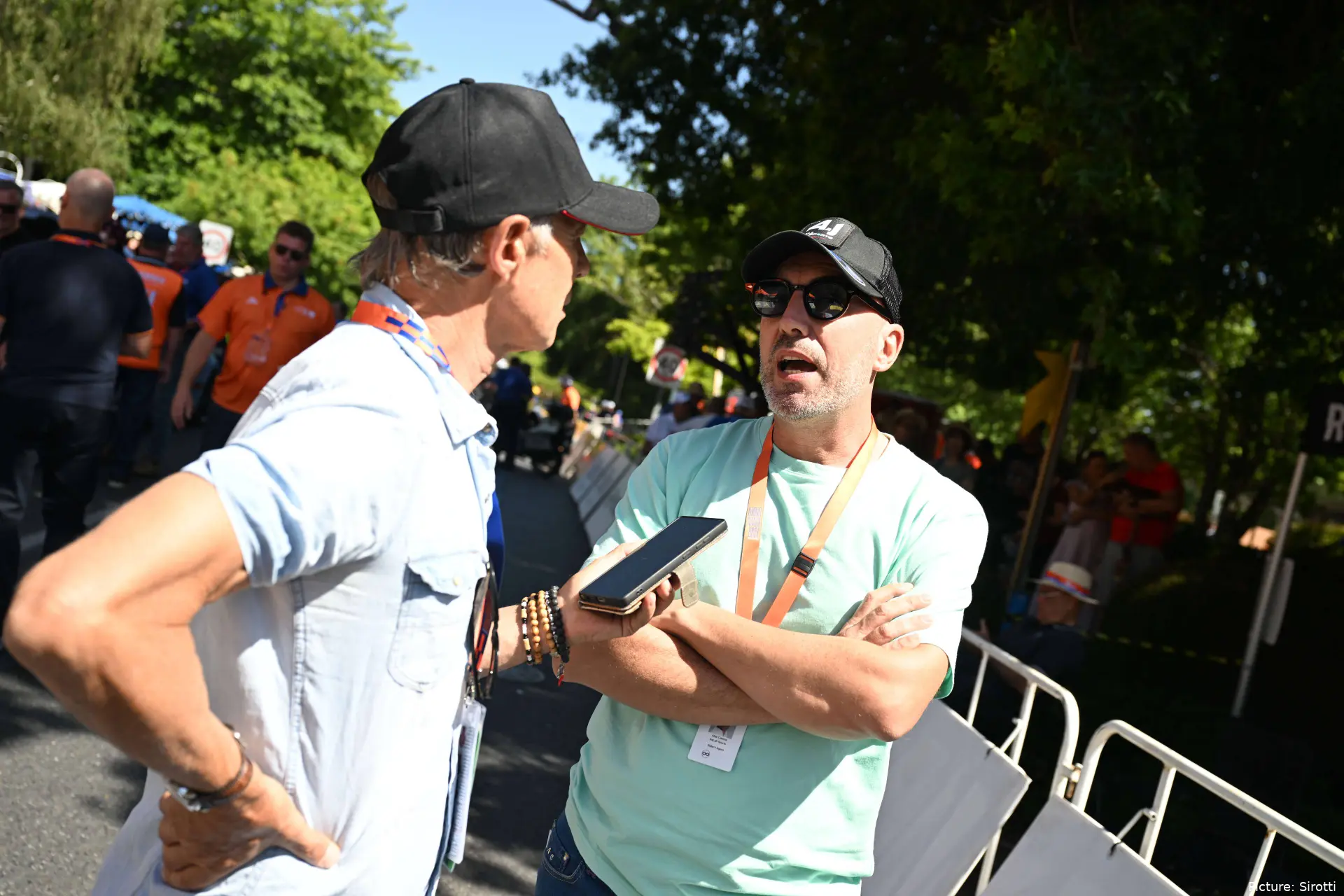
A fresh debate around cycling’s fight against doping has emerged after the agent of Tadej Pogacar dismissed the need for new anti-doping monitoring tools, comments that arrive at a moment when questions around the sport’s credibility are once again circulating.
Those questions have resurfaced in recent days following the developing case involving Marc Soler and his father. Spain’s anti-doping authority CELAD recently sanctioned Jaume Soler Serrano with an 18-month suspension after contact with banned coach Jose Marti, a figure linked to cycling’s US Postal era who remains suspended from the sport until 2027. No sanction has been announced against the UAE Team Emirates - XRG rider, and the matter remains unresolved.
Against that backdrop, Pogacar’s long-time agent Alex Carera has criticised a proposal currently being trialled by the International Testing Agency that would analyse riders’ performance data in order to identify suspicious trends and guide targeted testing.
The initiative, which is being tested with a small number of teams on a voluntary basis, aims to utilise longitudinal power and performance data, including files uploaded to platforms such as TrainingPeaks, to detect unusual jumps in riders’ performances. Supporters see it as a potential evolution of cycling’s anti-doping framework, designed to provide authorities with additional intelligence.
Carera, however, believes the idea risks creating unnecessary complications in a sport that has spent years rebuilding its credibility. “I know that a commission wants to analyse the data of Training Peaks and decide some elements. No. Why? Our sport has changed a lot. Now cycling has credibility,” he said in conversation with road.cc.
The Italian insisted that the culture within the peloton today bears little resemblance to the period when doping scandals repeatedly damaged the sport’s reputation. “Maybe 10 or 15 years ago, no, but now we have credibility because the mentality has changed.”
Agent warns against “creating problems”
While the ITA project is intended to act only as an intelligence tool rather than direct proof of wrongdoing, Carera sees little benefit in introducing further layers of monitoring.
“We don’t [need to] find other stupid things to create only problems, because cycling is different than 15 years ago,” he said.
For the agent, the argument that the sport still requires additional anti-doping mechanisms simply does not hold.
“But now the mentality has changed. We do not have this problem, the doping problem. Why do we need to create something [new]?”
Concerns over sharing training data
Carera also raised concerns about the potential implications of sharing detailed training data with outside bodies.
“I heard that they want to take all Training Peaks from all riders. But why do we need to do that? In football, Barcelona can’t say to Real Madrid, ‘today we need to stay three hours on the trainer, tomorrow two hours.’ No.”
Teams invest heavily in their own training systems and performance technology, he argued, and those methods form part of their competitive advantage.
“Every team has its secrets about training. Otherwise, why do I need to spend money on the technology and after that, other people copy it?”
With the ITA trial still ongoing and the Soler case continuing to generate discussion across the sport, the debate over how cycling should balance transparency, privacy and credibility in its anti-doping efforts looks unlikely to fade any time soon.
Kieran WoodDeputy Editor-in-Chief
Kieran Wood is a sports journalist based in Wales and has been active in journalism since 2022. He regularly contributes to DartsNews.com and CyclingUpToDate.com, where he covers professional cycling and darts. In cycling, his work includes liveblogs from major races, including the Tour de France, the Giro d’Italia, and La Vuelta a España, alongside race reports and analysis. He has also conducted interviews with professional riders.
His reporting spans the full racing calendar, from one-day classics to stage races, with a focus on accurate, real-time coverage and clear contextual analysis. For statistics, results, and historical context, he regularly uses resources such as ProCyclingStats. To support reporting on rider activity and training context where relevant, he also references Strava.
In his work, Kieran places strong emphasis on careful sourcing, editorial accuracy, and updating articles as new, verified information becomes available.
claps 0visitors 0
Just in
Popular news
Latest comments
- Illegible means "not legible" or "can not be read".. If you mean "not eligible", the word is "ineligible". There is no valid "ill" preface for eligible, as in illeligible.. use ineligible instead. Just saying..FredMan23-09-2026
- Doper Horner spewing his $hit again! YAWN !frieders323-09-2026
- Yeah, Pogi is really a lame guy… you got that right! long live the contenders!guster22-09-2026
- Glad to hear it!AndrewK22-09-2026
- I’d say there’s a 50% chance of a Remco/Wout/MVDP podium but won’t wet myself trying to attribute an order. 80% chance 2 of them medal. Again, not going to try to predict which 2Jumpyjohn22-09-2026
- Yep, as far as I know, Pog only wins road cycling, doubt he’d win on the track or break the hour record, or do that well at any of the other cycling disciplines that get rainbow jerseys. I think Vos managed to collect 5 different ones.Jumpyjohn22-09-2026
- At least you don’t have to pay attention to anyone or road clutter. Sometimes it’s more relaxing to be in front than surrounded by nervous movers. As for the peleton, I thought there was a chase group in between too? And in the end, nobody knows how deep he really went, he may have kept back a little in case of necessity.Jumpyjohn22-09-2026
- Would have been so much more interesting to have them ride the elite course so we could discuss a second asterisk for PS not riding.Jumpyjohn22-09-2026
- Ganna was not actually much better than the very young 4th nobody is speaking about, the crash kind of hides the reality, Remco is smaller, Jakob is younger, Paul is younger and not even a specialist, Ganna’s days of domination are slowly coming to an end, if not already over.Jumpyjohn22-09-2026
- I would have a very good look at the aerodynamics of his upper body positioning compared to e.g. RE, seems to me he’s using far too many watts fighting against wind. We aren’t all born to slipstream so unless he’s prepared to start looksmaxxing, he’s not going to catch up now that all the youngsters are already being prepared for this discipline at an early age. It’s similar to swimming, if you don’t sculpt your profile for it very early on, your body will never naturally optimise for something so unnatural.Jumpyjohn22-09-2026
Loading
8 Comments