“We do not have this doping problem” – Tadej Pogacar’s agent pushes back against plans for new anti-doping measures in cycling
CyclingWednesday, 04 March 2026 at 11:30

A fresh debate around cycling’s fight against doping has emerged after the agent of Tadej Pogacar dismissed the need for new anti-doping monitoring tools, comments that arrive at a moment when questions around the sport’s credibility are once again circulating.
Those questions have resurfaced in recent days following the developing case involving Marc Soler and his father. Spain’s anti-doping authority CELAD recently sanctioned Jaume Soler Serrano with an 18-month suspension after contact with banned coach Jose Marti, a figure linked to cycling’s US Postal era who remains suspended from the sport until 2027. No sanction has been announced against the UAE Team Emirates - XRG rider, and the matter remains unresolved.
Against that backdrop, Pogacar’s long-time agent Alex Carera has criticised a proposal currently being trialled by the International Testing Agency that would analyse riders’ performance data in order to identify suspicious trends and guide targeted testing.
The initiative, which is being tested with a small number of teams on a voluntary basis, aims to utilise longitudinal power and performance data, including files uploaded to platforms such as TrainingPeaks, to detect unusual jumps in riders’ performances. Supporters see it as a potential evolution of cycling’s anti-doping framework, designed to provide authorities with additional intelligence.
Carera, however, believes the idea risks creating unnecessary complications in a sport that has spent years rebuilding its credibility. “I know that a commission wants to analyse the data of Training Peaks and decide some elements. No. Why? Our sport has changed a lot. Now cycling has credibility,” he said in conversation with road.cc.
The Italian insisted that the culture within the peloton today bears little resemblance to the period when doping scandals repeatedly damaged the sport’s reputation. “Maybe 10 or 15 years ago, no, but now we have credibility because the mentality has changed.”
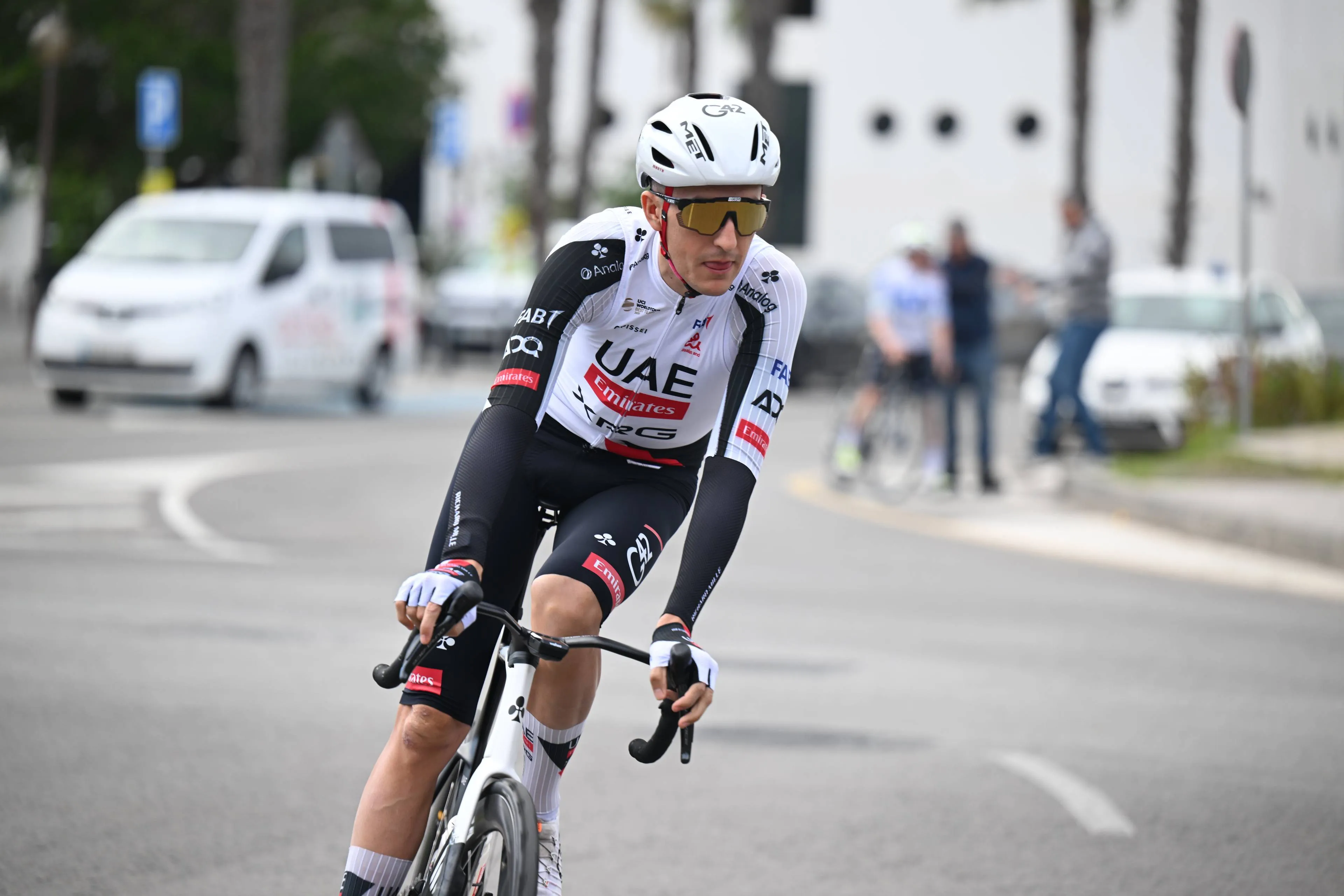
Agent warns against “creating problems”
While the ITA project is intended to act only as an intelligence tool rather than direct proof of wrongdoing, Carera sees little benefit in introducing further layers of monitoring.
“We don’t [need to] find other stupid things to create only problems, because cycling is different than 15 years ago,” he said.
For the agent, the argument that the sport still requires additional anti-doping mechanisms simply does not hold.
“But now the mentality has changed. We do not have this problem, the doping problem. Why do we need to create something [new]?”
Concerns over sharing training data
Carera also raised concerns about the potential implications of sharing detailed training data with outside bodies.
“I heard that they want to take all Training Peaks from all riders. But why do we need to do that? In football, Barcelona can’t say to Real Madrid, ‘today we need to stay three hours on the trainer, tomorrow two hours.’ No.”
Teams invest heavily in their own training systems and performance technology, he argued, and those methods form part of their competitive advantage.
“Every team has its secrets about training. Otherwise, why do I need to spend money on the technology and after that, other people copy it?”
With the ITA trial still ongoing and the Soler case continuing to generate discussion across the sport, the debate over how cycling should balance transparency, privacy and credibility in its anti-doping efforts looks unlikely to fade any time soon.
claps 0visitors 0
Just in
Popular news
Latest comments
- I totally agree with Pogi's agent when he says: “Every team has its secrets about training. Otherwise, why do I need to spend money on the technology and after that, other people copy it?” ... It's all BS. But I agree there has to be good quality and exact monitoring for doping, but not in this way.Mou-Cro-HR04-03-2026
- No, no... in the eyes of the Belgians, he's the chosen one :))Mou-Cro-HR04-03-2026
- So in your eyes, he’s the chosen one?Jezla04-03-2026
- Every rider focuses on his own type of race. Even Tadej.Mistermaumau04-03-2026
- Remco discovered Islam through his wife Oumi Rayane, who has Moroccan roots. It has become a source of support for Evenepoel. Remco Evenepoel revealed in a post on Instagram that he drew strength from praying with his wife Oumi, who is Muslim. In an online press moment, Evenepoel confirmed that he finds support in Islam. Remco said: “It’s something I got to know over the past year. It’s something we share and we’re proud to be able to share it. It’s something each person has to do for themselves. For me, it’s something to hold on to, something that helps me through life. It’s really about Islam.” That's why I call him Remco Mustafa. Mustafa is a male name of Arabic muslim origin meaning "THE CHOSEN ONE." ... The Belgians still think Remco Mustava is "the chosen one."Mou-Cro-HR04-03-2026
- Forgive me if there’s an obvious answer…. This is as far as any sort of social media goes for me, I’m not on fb, twitter or anything else… But I have to ask, why do you call him Mustafa Remco?Jezla04-03-2026
- I'm fully on board with the last sentence of your post. Far too often we just see the rider get hung out to dry.
 santiagobenites04-03-2026
 - Just seeing the article heading I thought, something doesn't smell right. Mathieu afraid of strong riders? After reading the article it still smells a bit fishy, but I guess there might be other valid reasons.Ride197404-03-2026
- The Danish Anchovy and the Belgian Mustafa-Remco are the biggest losers of the decade in just one month (February 2026). Both of them realized the fact that they no longer have any chance of winning a serious race. If the TT is such a serious preference in road cycling, then f*** cycling, I'll start watching curling or darts.Mou-Cro-HR04-03-2026
- Hey leedorney, Remco Mustafa and the rat Ayuso are the biggest liars in the peleton... and they always have the "best" excuses (low seats, bee stings, cramps, air conditioners, sleepless nights, mental struggles, Allah, Pogi). 😩😩😩Mou-Cro-HR04-03-2026
Loading
4 Comments