"Mathieu is better off focusing on other races” – Christoph Roodhooft explains why Van der Poel skips Strade Bianche against likes of Pogacar and Pidcock
Cycling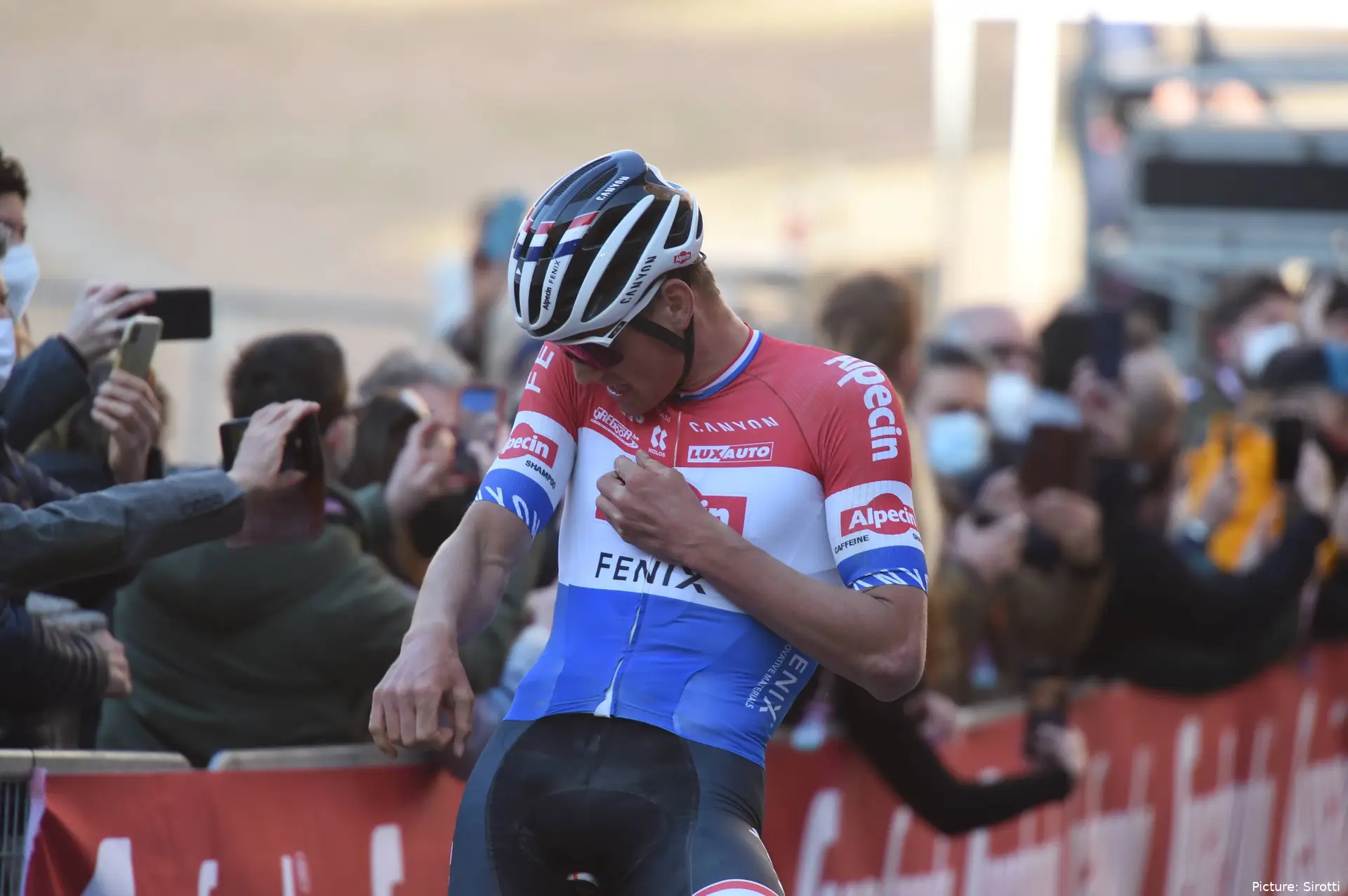
Mathieu van der Poel will not return to Strade Bianche in 2026, despite having won the race in spectacular fashion just five years ago.
The Dutchman’s absence from the Tuscan gravel Classic has again raised questions, particularly as the race continues to grow in prestige and difficulty. But according to Alpecin-Premier Tech team boss Christoph Roodhooft, the decision is rooted in both the evolving nature of the race itself and the level of competition now expected at the front.
Strade Bianche, he argues, has become significantly harder than the version Van der Poel conquered in 2021. With more climbing, a denser concentration of elite contenders, and riders such as Tom Pidcock and Tadej Pogacar capable of dominating the toughest terrain, the calculation for Van der Poel’s spring calendar has inevitably shifted.
For Alpecin-Premier Tech, the conclusion is straightforward: the Dutchman’s focus is better placed elsewhere in the Classics campaign.
A race that has changed
Roodhooft believes the biggest factor behind the decision is the growing physical demands of the Tuscan Classic.
“It has become much tougher. Compare it with five years ago, the amount of climbing has increased by 20 to 25%,” he said in conversation with Het Nieuwsblad. “In the past, this race was already on the limit for the classic, punchy riders. But back then, it could still just about work. Now it’s over that limit.”
Van der Poel’s relationship with Strade Bianche has always been slightly unusual. His victory in 2021 remains one of the most memorable editions of the race. On the gravel climb of Le Tolfe, he attacked alongside Julian Alaphilippe and Egan Bernal before dropping both on the steep final ramp into Siena’s Piazza del Campo.
Yet despite that iconic win, Strade Bianche has never become a permanent fixture in his spring programme. The Dutchman returned only once afterwards, finishing fifteenth in 2023, and has since been absent again from the Tuscan start line.
The rivals factor
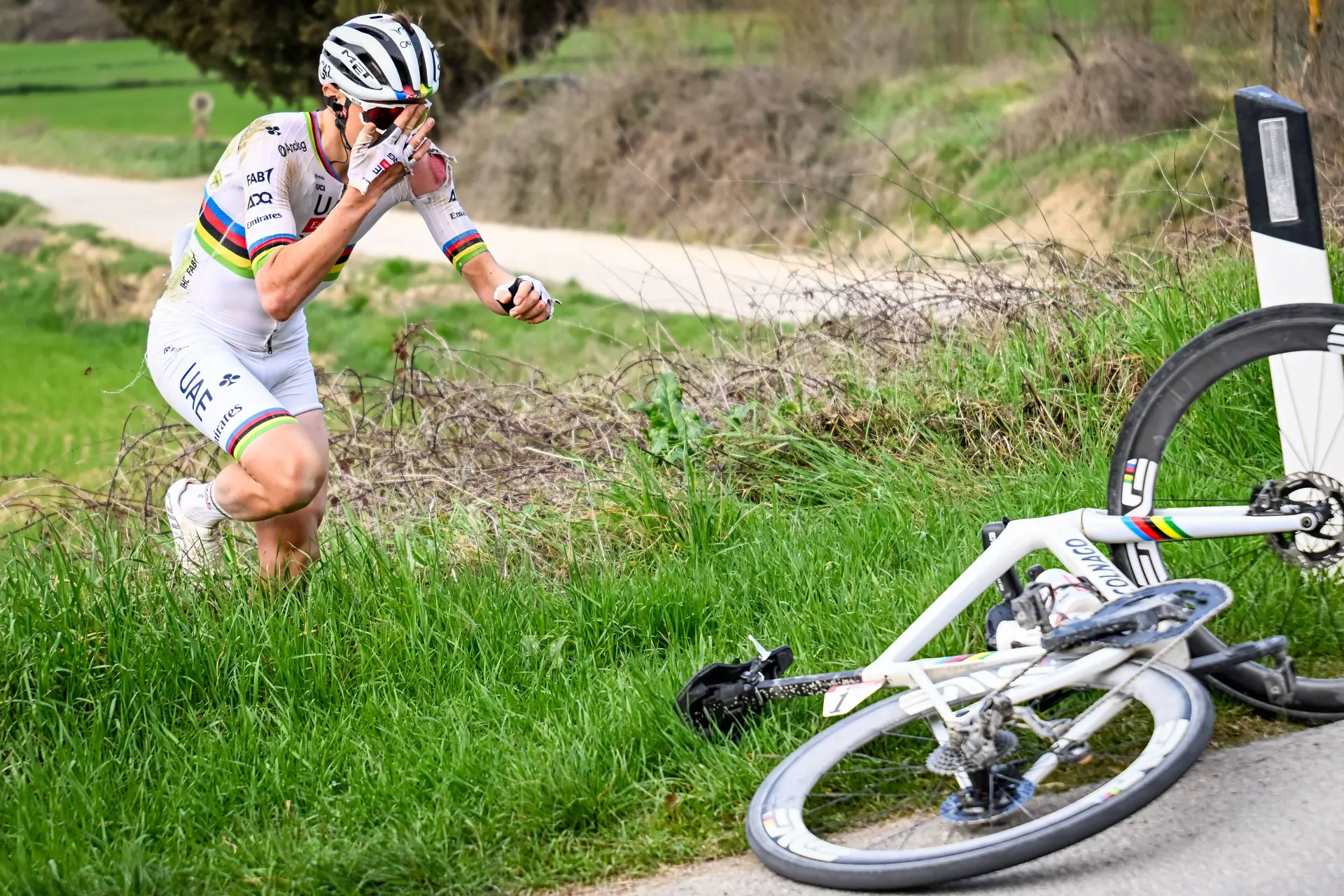
Course evolution is not the only consideration. The strength of the modern start list also plays a role in shaping the team’s thinking. “If you run into Pidcock or Pogacar at 100% it would be very hard,” Roodhooft explained, referring to the riders who now regularly dominate the race’s toughest terrain.
Riders such as Tom Pidcock and Tadej Pogacar have increasingly turned Strade Bianche into a race decided on long gravel climbs and sustained power efforts, terrain that naturally favours riders with a slightly different profile.
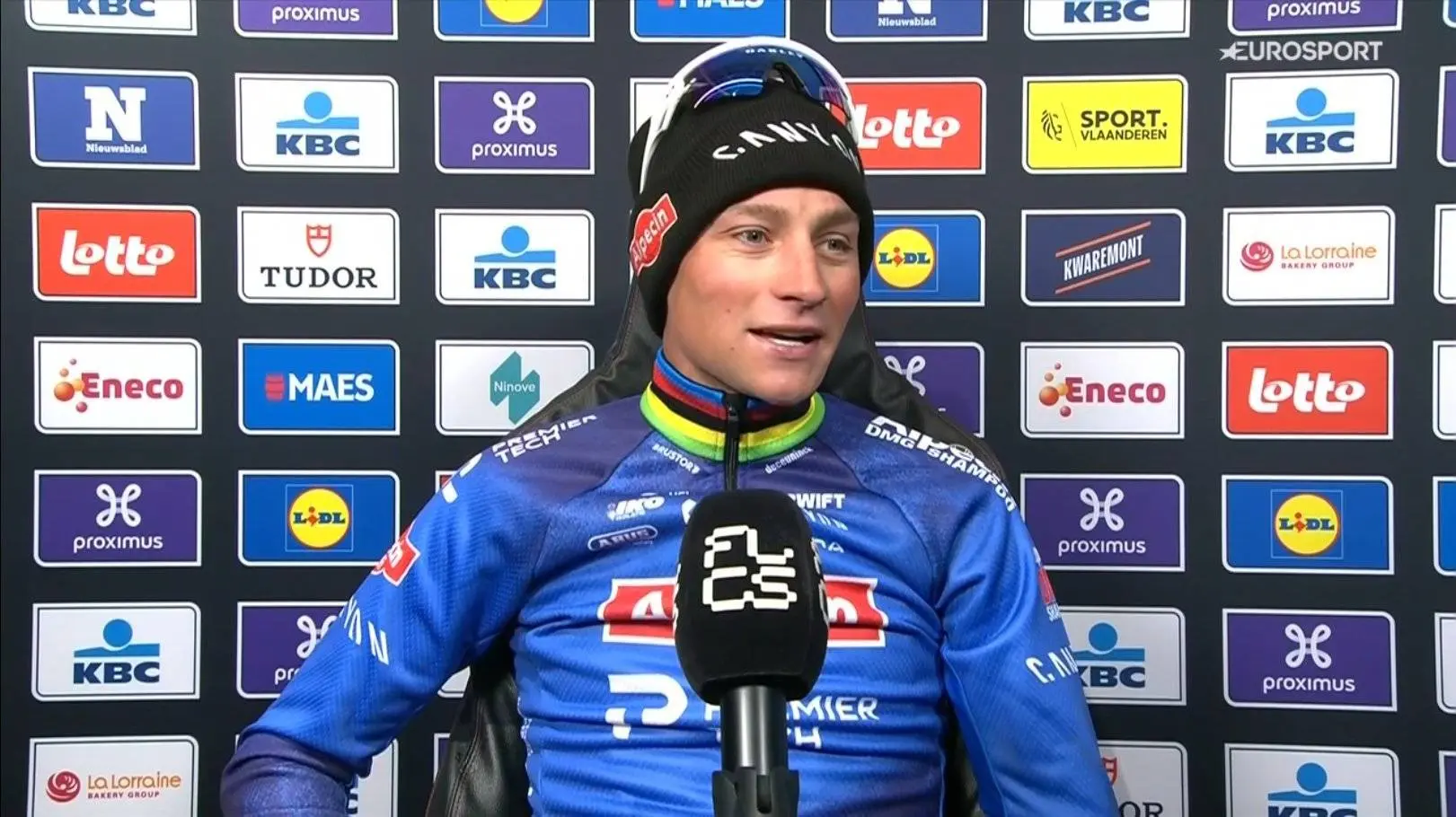
“And yes: then Mathieu is better off focusing on other races,” Roodhooft added.
Training priorities and calendar balance
There is also a practical element to the decision. The placement of Strade Bianche in the calendar leaves little room between other important objectives in Van der Poel’s programme.
With Tirreno-Adriatico beginning the day after Strade Bianche, the team see more value in using that period as part of a structured training block. “Mathieu also needs a good training block from time to time,” Roodhooft noted, pointing out that the days between Omloop Het Nieuwsblad and Tirreno-Adriatico can be used productively to build form.
For Van der Poel, the broader focus remains on the cobbled Classics and the Monuments where he has built much of his modern palmares.
That does not mean Strade Bianche has lost its appeal. “I’m even sure Mathieu himself also regrets it,” Roodhooft admitted. “In the end, it remains an attractive race.”
But the team’s conclusion remains pragmatic. “As the race is today, Mathieu has little business there.”

Kieran WoodDeputy Editor-in-Chief
Kieran Wood is a sports journalist based in Wales and has been active in journalism since 2022. He regularly contributes to DartsNews.com and CyclingUpToDate.com, where he covers professional cycling and darts. In cycling, his work includes liveblogs from major races, including the Tour de France, the Giro d’Italia, and La Vuelta a España, alongside race reports and analysis. He has also conducted interviews with professional riders.
His reporting spans the full racing calendar, from one-day classics to stage races, with a focus on accurate, real-time coverage and clear contextual analysis. For statistics, results, and historical context, he regularly uses resources such as ProCyclingStats. To support reporting on rider activity and training context where relevant, he also references Strava.
In his work, Kieran places strong emphasis on careful sourcing, editorial accuracy, and updating articles as new, verified information becomes available.
claps 5visitors 5
Just in


Popular news

Latest comments
- writing about yourself in third person ... please, at least have someone else from your staff author these self-coverage articles!Ketterechts25-11-2026
- Don’t forget Yates’s podium at 2023 TdF!Lozza25-11-2026
- It was stage 14 to Morzine that Carlos Rodriguez won in 2023, not Puy de Dome. And Kwiato actually won the previous stage himself to Grand Colombier!Lozza25-11-2026
- Go Pogi!! 🐐❤️Lozza25-11-2026
- They didn’t have or need “extraordinary information”. All they needed was for a French judge to sign off on the night-time testing for it to go ahead.Lozza25-11-2026
- If the sponsors voted for Primoz then you get him, otherwise not.flyer25-11-2026
- It sure can feel or seem that way but I wonder if the same amount of prodigious performances (compared to the others) would occur if no one was ever doping at all.flyer25-11-2026
- Given the similarity of two articles (published on I think the same date), I'm reusing (copy-n-pasting) my post from the twin: I've always thought the last day of each of the grand tours was problematic mostly in that the GC is considered completed before the race starts when that is not really true. There is some tension, but not desirable tension. What saves the awkward practice is the race finish is legit for those who participate - so it's not wholly different from the other stages. That neutralizations usually make good sense demonstrates their necessity so if that has to be the way to go I agree that the design plan for the neutralization should be completed before the race starts. This years end stage in the Vuelta had one of the best first half's I've seen in that many of the riders looked to be thoroughly enjoying themselves making it a joy to watch. But I think it was slightly closer to the exception rather than the rule.flyer25-11-2026
- Even I often win without being there at all, not even breaking a sweat. Beat that!flyer25-11-2026
- It is not about rest and peaking again - 5 weeks is not enough for that. It is about recovery while maintaining form. 4 weeks is easier for that. With a Giro-Vuelta, the 12 week break is enough to rest and then peak again. Not for the Tour
 Rafionain-Glas25-11-2026
Loading
25 Comments