“I got cut off and shouted ‘Idiot!’... then Mathieu rode up and said: ‘Maybe he’s not the idiot’” – Oliver Naesen recalls moment he knew Van der Poel would win Omloop
Cycling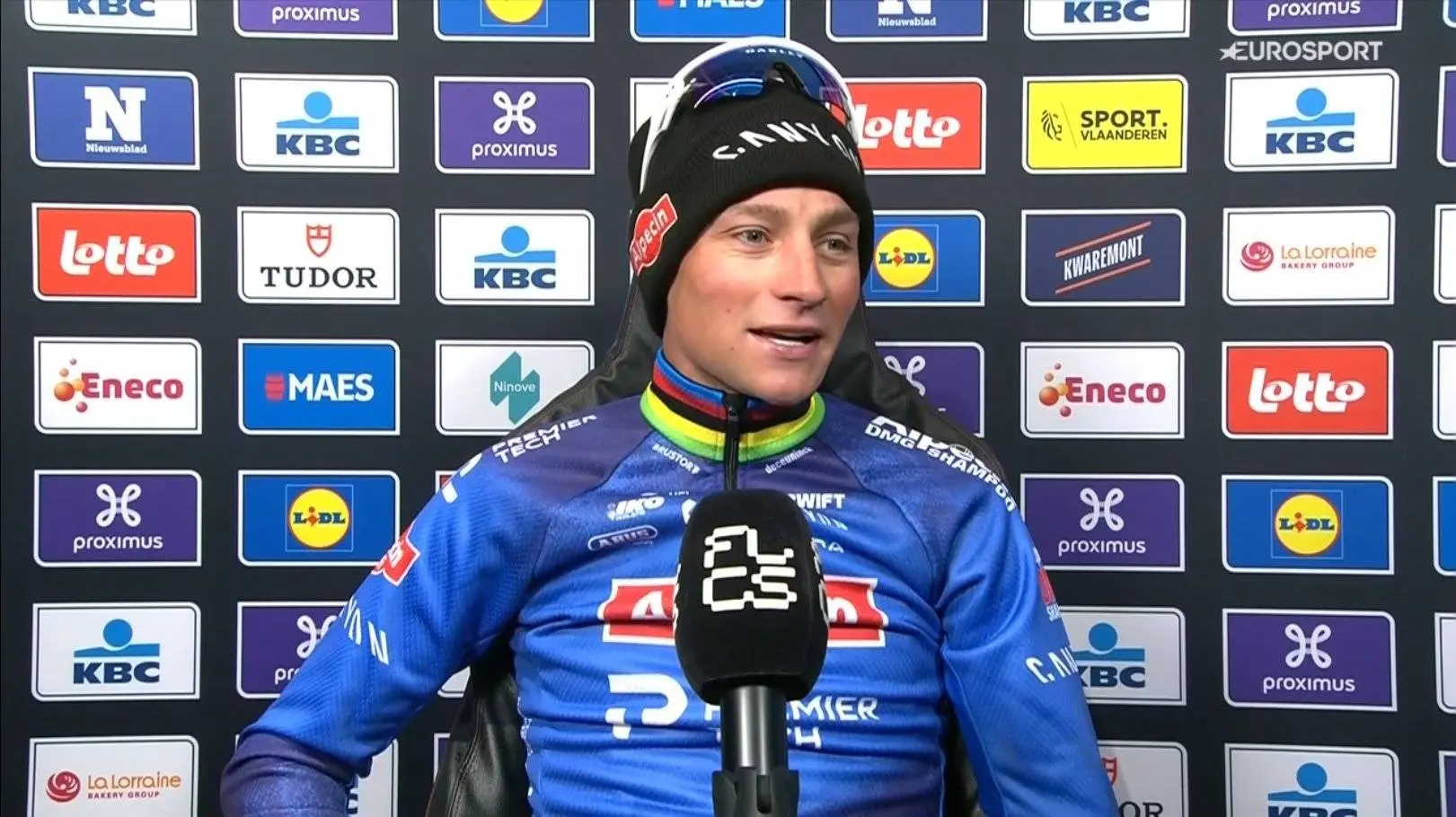
Mathieu van der Poel’s Omloop Het Nieuwsblad victory may have looked inevitable from the outside. For Oliver Naesen, the certainty came much earlier and in far more surreal fashion.
Speaking in the HLN Wielerpodcast, Naesen described the precise in-race exchange that convinced him the race was already over.
“I got cut off by someone from Uno-X and shouted ‘Idiot!’ at him,” Naesen recalled. “Then Mathieu rode up next to me very calmly and said, ‘Maybe he’s not the idiot, you know.’ After that, I said in my earpiece that Mathieu was going to win the race.”
It was not what Van der Poel said that struck him most. It was how he said it. “If you can sit there that relaxed while everyone around you is suffering, then you still have something left.”
The anecdote neatly captured what the television pictures had suggested all afternoon. While crashes, punctures and positioning battles ripped through the peloton, Van der Poel always appeared composed, even playful. For those inside the race, that composure was as telling as any power number.
Decathlon’s strongest block yet
Naesen himself was denied a result after crashing in Omloop, but he still left Opening Weekend encouraged by what he saw from Decathlon CMA CGM.
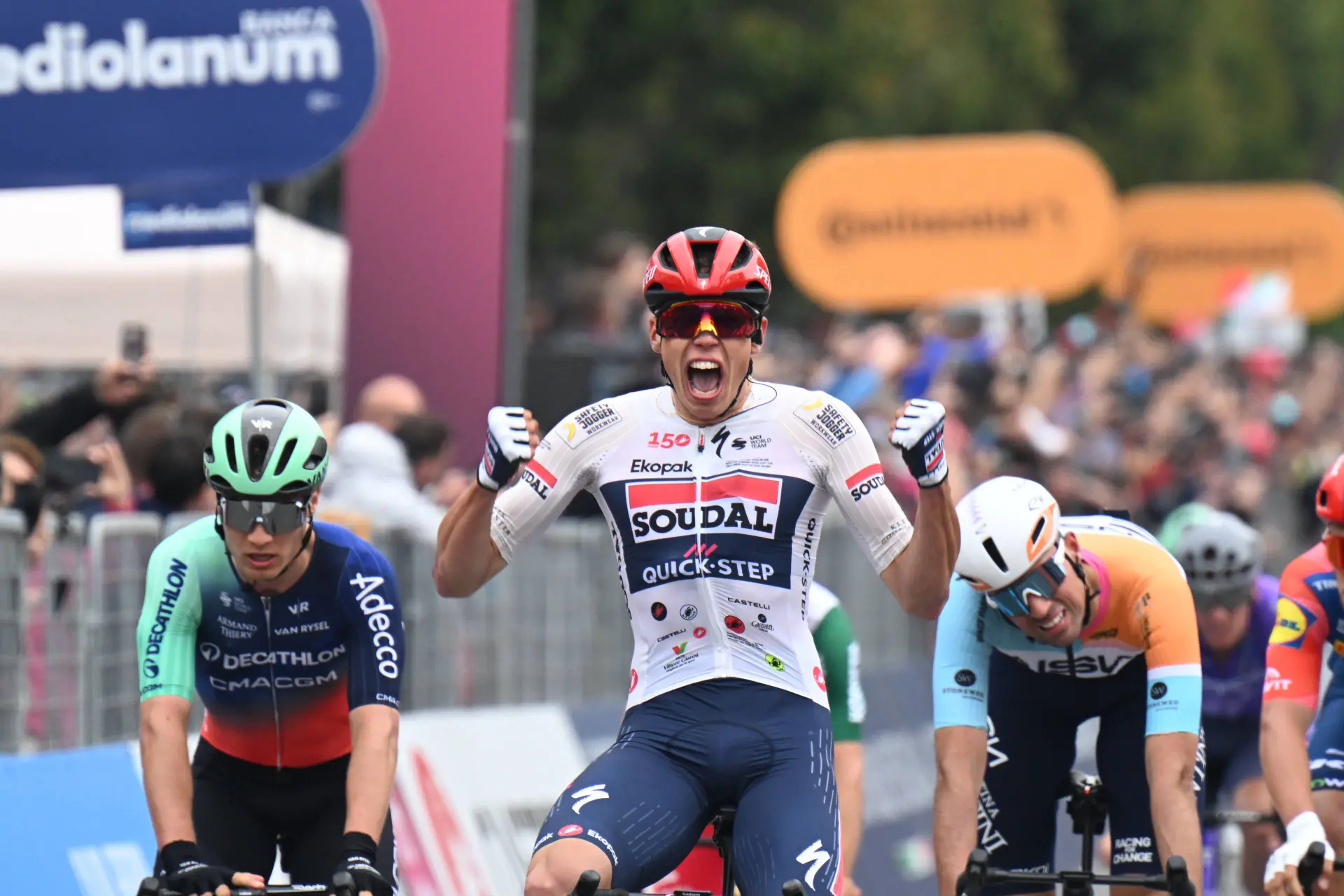
“We take two top tens, and in almost every attack, we could say we had two or three riders there. This might be the strongest Decathlon team I’ve ridden in,” he said.
The numbers back that up. Tobias Lund Andresen delivered two top ten finishes across the weekend, and in Kuurne - Bruxelles - Kuurne, the blue and green jerseys were repeatedly visible in aggressive moves, even as bigger budget teams tried to impose control.
All of that came without injured spearheads Tiesj Benoot and Olav Kooij, making the collective strength arguably even more notable. Where previous seasons might have seen Decathlon riding reactively, this time, they shaped the race.
They did not win. But they were present.
“You don’t apologise for riding with the god of cycling”
Naesen also addressed the debate that followed Florian Vermeersch’s podium ride behind Van der Poel. “Florian is a fantastic rider, but he’s not going to win ten Classics,” Naesen said. “And if after a podium finish you have to apologise to the public because you rode with the god of cycling, that makes no sense at all.”
He continued: “He should just be proud of the way he rode and that he was able to go that far. If at the end of your career you can look back on a number of podiums in Classics, you can be very satisfied.”
The comments landed in the context of a weekend where Van der Poel’s presence once again dictated how others were judged. To follow him is sometimes seen as a tactical surrender. Naesen sees it differently. When the strongest rider in the race makes the move, survival is not weakness.
For Naesen, the moment of clarity came long before the decisive climbs. A casual remark, delivered without strain, told him everything he needed to know.
When the calmest rider in the peloton is the one everyone else is chasing, the race is usually already decided.
Read also

Kieran WoodDeputy Editor-in-Chief
Kieran Wood is a sports journalist based in Wales and has been active in journalism since 2022. He regularly contributes to DartsNews.com and CyclingUpToDate.com, where he covers professional cycling and darts. In cycling, his work includes liveblogs from major races, including the Tour de France, the Giro d’Italia, and La Vuelta a España, alongside race reports and analysis. He has also conducted interviews with professional riders.
His reporting spans the full racing calendar, from one-day classics to stage races, with a focus on accurate, real-time coverage and clear contextual analysis. For statistics, results, and historical context, he regularly uses resources such as ProCyclingStats. To support reporting on rider activity and training context where relevant, he also references Strava.
In his work, Kieran places strong emphasis on careful sourcing, editorial accuracy, and updating articles as new, verified information becomes available.
claps 12visitors 10
Just in
Popular news
Latest comments
- Well that would be a major disappointment. The last two years are the first times I have bothered watching the last day. Maybe at worst it could be the 2nd last day but two classic finishes and then wompWaranga16-10-2026
- Vingegaard was the one showing signs of weakness. He was looking more likely to lose a podium spot or two than to make inroads on Tadej.Papijan16-10-2026
- Disagree with Ardennes, he has never done well there, not even a top 10. Giro Vuelta, avoid the stacked TDF where crashes can derail the rest of the season and even if he avoid that, at best a top 5 is possible. He is 31, no more time left for testing/trying.abstractengineer16-10-2026
- Respectfully disagree. He and the team will want to qualify the result at the Tour against TP, JV, and the other GT specialists who weren't in Spain. And remember, the team is looking for a new title sponsor. Or, at least a co-sponsor. So a run at the TDF would go a long way in securing that! As a fan of the team dating back to the Indurain days, I would love to see it. But I do not think that he can really take it to them in July. But I do think he will try. I do agree that he can do good rides, if not win, in Belgium.coachjulianx16-10-2026
- Kid, you just had to keep your mouth shut, now you opened it and it's too late, everyone knows you're dumb.elosanjos16-10-2026
- “He looked less than brilliant” then Pogacar attacked and distanced all his rivals, again! I swear these support riders are purely doing pr for their leaders at this point.Pedalmasher16-10-2026
- PogiFanBoy just doesn't like you attacking his Tadej boy ! He's quite protective of him as you may have noticed. No one can say a bad thing about him or fear reprisal.frieders316-10-2026
- Remco won the European title against a weaker field and not as tough of course and mileage as the worlds RR ! Apples to oranges comparison !frieders316-10-2026
- Yes. It's like one step forward, three steps back.
 santiagobenites15-10-2026
 - Pure fantasy!Lozza15-10-2026
Loading
Write a comment