“It’s not possible that he suddenly gets dropped like the last rider in class” – Former Vuelta stage winner casts doubt on Remco Evenepoel’s UAE Tour struggles
Cycling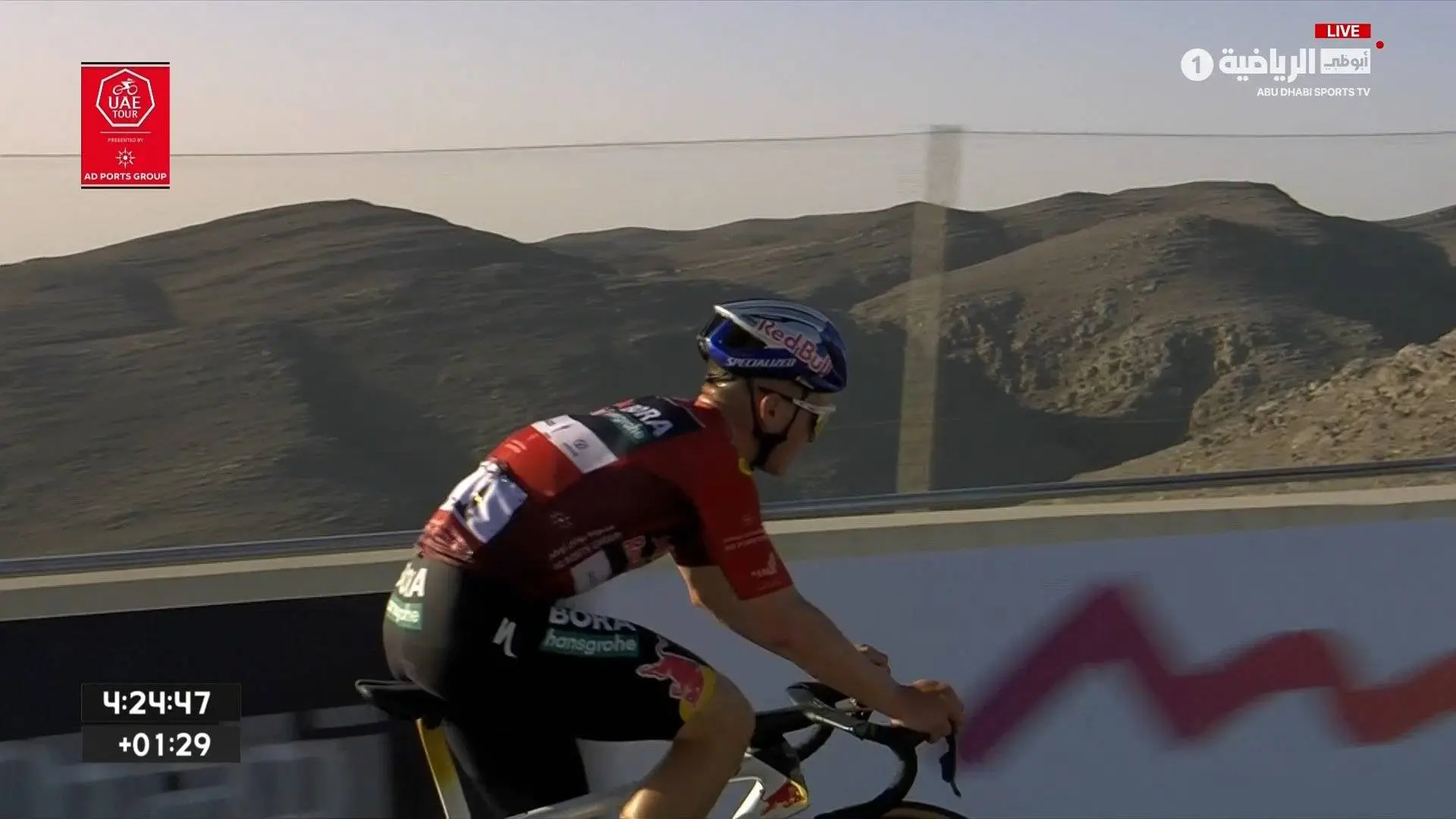
Remco Evenepoel left the UAE Tour searching for explanations. Former Vuelta a Espana stage winner Adriano Malori is not convinced they are the right ones.
Evenepoel’s week in the Emirates followed a sharp arc. A dominant time trial victory. Then heavy time losses on Jebel Mobrah. Then another mountain setback on Jebel Hafeet. The Belgian pointed to fatigue from pushing a 68-tooth single chainring in the time trial, recovery issues earlier in the race and simply not yet reaching the necessary climbing level.
For Malori, the swing is too abrupt to be read at face value. “It’s not possible that a rider who dominated the week before suddenly gets dropped like the last rider in class,” the former Movistar Team rider told Bici.Pro.
That sentence cuts straight to the core of the debate. Just days before arriving in the UAE, Evenepoel had controlled races in Spain with authority, riding rivals off his wheel without appearing strained. In Abu Dhabi, he was suddenly isolated and distanced on gradients that, historically, suit his sustained tempo style.
Malori does not believe the explanation lies in desert heat or simple fatigue. “To me it looked like Evenepoel went there to test the time trial, and the rest of the race didn’t interest him that much,” he said.
The 68-tooth test
The time trial itself is central to Malori’s reading of events.
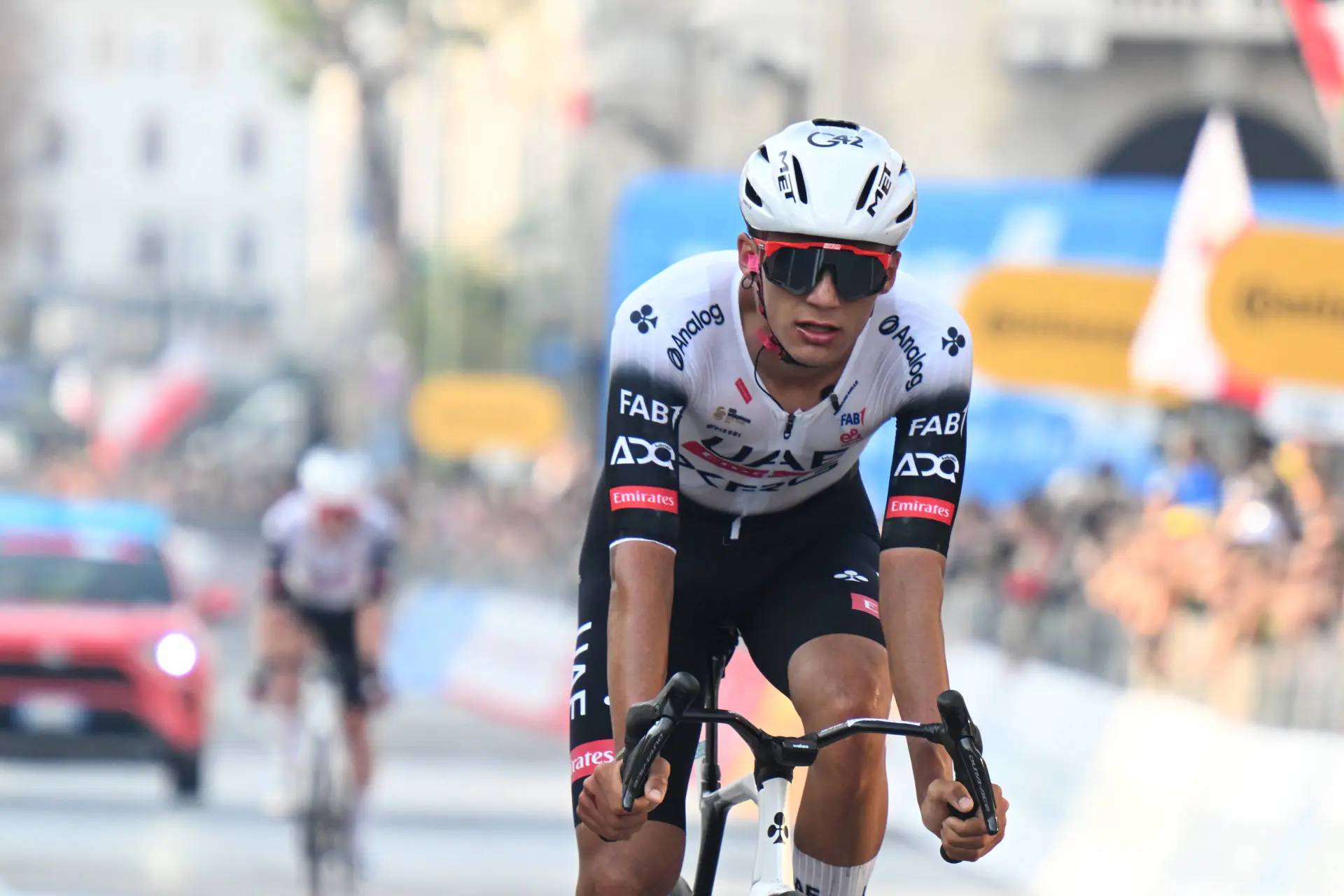
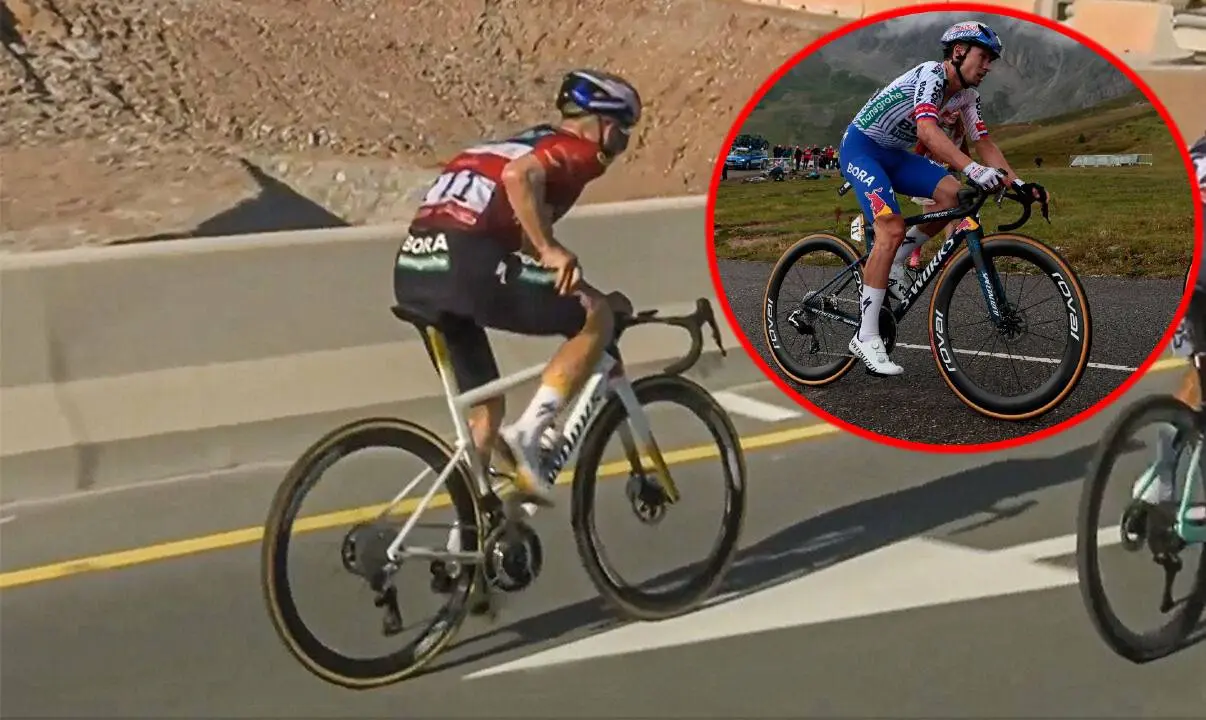
Evenepoel rode the stage with a 68-tooth single chainring, a significant choice even in today’s high-speed aero era. He later suggested the effort may have contributed to the difficulties that followed in the mountains.
Malori sees it differently. “It was an extremely fast course, and this year he has changed many things, from preparation to equipment,” he explained. “You have to test that gear in competition. You need to understand how to launch it, how to accelerate, how the chain works across the cassette.”
In other words, this was not an indulgence. It was a rehearsal.
He dismissed the idea that such a gear would leave lasting damage in modern stage racing. “There is no disadvantage. The distances are shorter now, cadence is higher. It’s not like the old 50-kilometre time trials at 78 rpm. The problem doesn’t exist.”
The implication is clear: the mountain losses were unlikely to have been caused by mechanical overreach.
“Jebel Hafeet is not Alpe d’Huez”
Perhaps Malori’s most pointed observation concerns the terrain itself. “Jebel Hafeet is longer and harder, but it’s not Alpe d’Huez,” he said.
Evenepoel’s profile has always been built around steady-state climbing rather than explosive accelerations. On paper, Hafeet suits that engine. For Malori, the version of Evenepoel seen in Spain should not be distanced so decisively on such a climb unless the broader objective lay elsewhere. “I think he went there to test the time trial, he won it, and then he drew a line,” he added.
That interpretation reframes the week entirely. The GC was not the priority. The time trial was.
A staged build towards bigger goals
Malori also questioned the structure of Evenepoel’s early season. Mallorca. Andalucia. UAE. Then, a month away from racing before Catalunya. “You might expect that from Van Aert targeting the Classics, not from Evenepoel,” he observed, suggesting the UAE Tour may have doubled as an endurance block rather than a peak performance target.
He even noted that Evenepoel did not yet appear at his leanest racing condition. “If you look at the photos, he is still slightly above his usual standard,” Malori said, implying that February was not meant to showcase final climbing form.
That matters when weighing the broader context. Evenepoel has repeatedly stated that his defining goal remains beating Tadej Pogacar at the Tour de France. February in the desert is not July in the Alps.
Excuses – or transparency?
Evenepoel’s openness in dissecting his setbacks has drawn mixed reactions. He acknowledged being dropped. He referenced recovery, illness and effort distribution. He did not hide from the outcome.
Malori’s perspective does not accuse him of indifference. Instead, it questions whether the narrative of collapse is misplaced. “He knows his programme, and he did what he had to do,” Malori said. “The important thing is that the team knew it. The rest doesn’t matter.”
The UAE Tour, in this reading, becomes less a warning sign and more a controlled checkpoint in a longer preparation arc.
Whether that interpretation proves accurate will only become clear later this spring, and ultimately in July.
But for Malori, the idea that Evenepoel simply “lost his level” in a matter of days is the least convincing explanation of all.
Kieran WoodDeputy Editor-in-Chief
Kieran Wood is a sports journalist based in Wales and has been active in journalism since 2022. He regularly contributes to DartsNews.com and CyclingUpToDate.com, where he covers professional cycling and darts. In cycling, his work includes liveblogs from major races, including the Tour de France, the Giro d’Italia, and La Vuelta a España, alongside race reports and analysis. He has also conducted interviews with professional riders.
His reporting spans the full racing calendar, from one-day classics to stage races, with a focus on accurate, real-time coverage and clear contextual analysis. For statistics, results, and historical context, he regularly uses resources such as ProCyclingStats. To support reporting on rider activity and training context where relevant, he also references Strava.
In his work, Kieran places strong emphasis on careful sourcing, editorial accuracy, and updating articles as new, verified information becomes available.
claps 7visitors 7
Just in
Popular news
Latest comments
- Jonas is declining now. A podium next year would be a good result for him.Renz16-10-2026
- unpredictability is not an issue. Most riders not named Pogi have that. The excuses are and the blaming teammates and other riders for insufficient support and blocking are. if weight is an issue get a nutritionist. If aircon is not working switch rooms. Position yourself or get your teammates and DS to keep reminding you of basic stuff if it is difficult to remember in a long race. Dont whine about other riders not working with you, use tactics yourself or get your DS to develop the tactics. Dont talk about noballs when you yourself have no ballsabstractengineer16-10-2026
- It’s worth remembering that cycling journalism has entered it’s “Shit-Stirring Hot Takes Winter” now in order to keep the clicks and views trickling in.wrsty16-10-2026
- Well that would be a major disappointment. The last two years are the first times I have bothered watching the last day. Maybe at worst it could be the 2nd last day but two classic finishes and then wompWaranga16-10-2026
- Vingegaard was the one showing signs of weakness. He was looking more likely to lose a podium spot or two than to make inroads on Tadej.Papijan16-10-2026
- Disagree with Ardennes, he has never done well there, not even a top 10. Giro Vuelta, avoid the stacked TDF where crashes can derail the rest of the season and even if he avoid that, at best a top 5 is possible. He is 31, no more time left for testing/trying.abstractengineer16-10-2026
- Respectfully disagree. He and the team will want to qualify the result at the Tour against TP, JV, and the other GT specialists who weren't in Spain. And remember, the team is looking for a new title sponsor. Or, at least a co-sponsor. So a run at the TDF would go a long way in securing that! As a fan of the team dating back to the Indurain days, I would love to see it. But I do not think that he can really take it to them in July. But I do think he will try. I do agree that he can do good rides, if not win, in Belgium.coachjulianx16-10-2026
- Kid, you just had to keep your mouth shut, now you opened it and it's too late, everyone knows you're dumb.elosanjos16-10-2026
- “He looked less than brilliant” then Pogacar attacked and distanced all his rivals, again! I swear these support riders are purely doing pr for their leaders at this point.Pedalmasher16-10-2026
- PogiFanBoy just doesn't like you attacking his Tadej boy ! He's quite protective of him as you may have noticed. No one can say a bad thing about him or fear reprisal.frieders316-10-2026
Loading
20 Comments