How cyclocross built its unique identity over 120 years - Belgium’s obsession, France’s invention
FAQ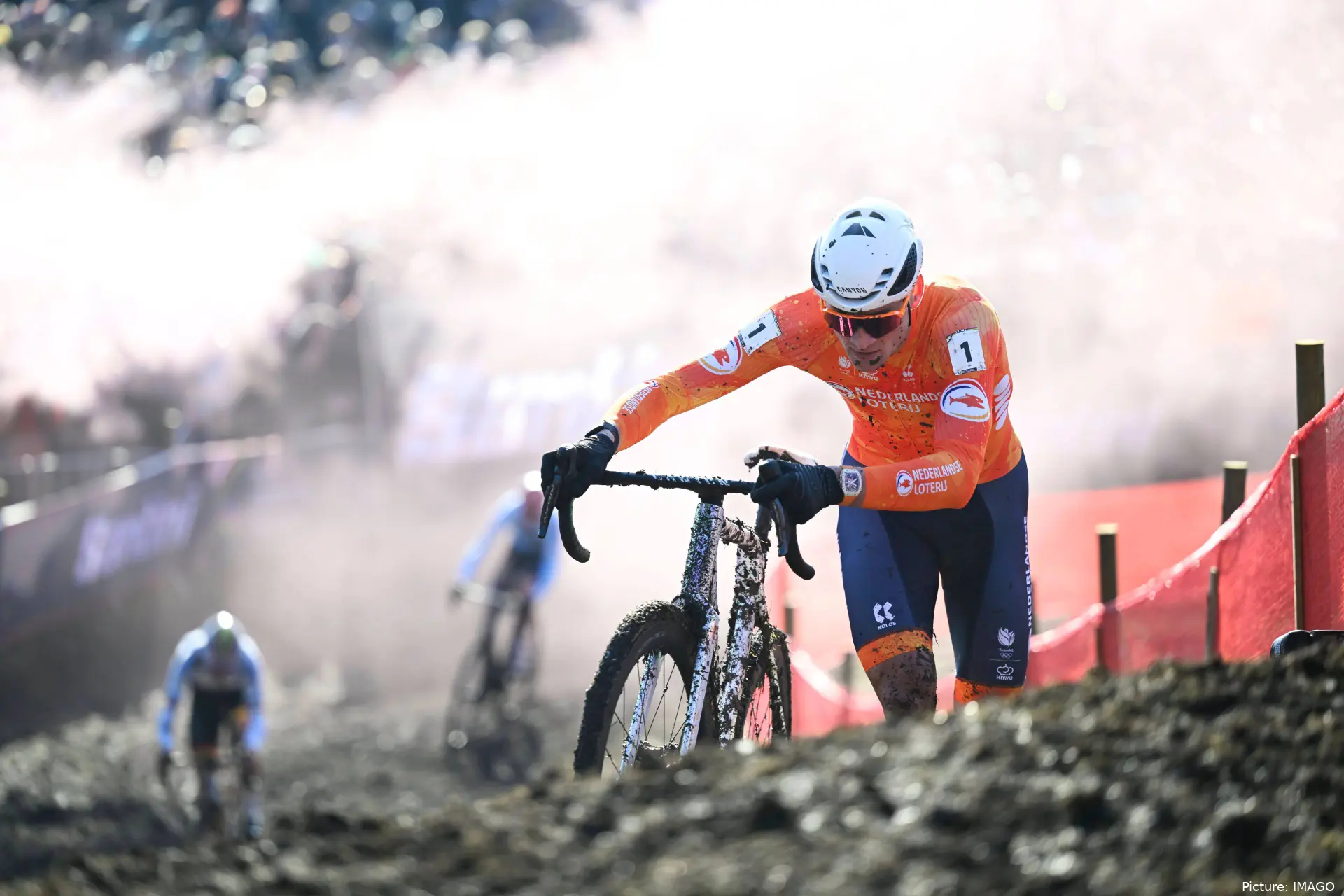
Cyclocross didn’t spring from a lab; it sloshed out of
winter fields and the need for riders to stay fit when the roads turned
hostile. Ask where it began and you’ll land in early-20th-century France, where
cyclists threaded farm tracks, hurdled fences, and shouldered their bikes
between towns in a muddy steeplechase. Those races, credited in large part to
French army private Daniel Gousseau, became France’s first national cyclocross
championship by 1902 and set a template for speed and improvisation. A
half-century later, the sport held the first UCI cyclocross World Championships
in Paris in 1950, won by Tour de France legend Jean Robic.
So no, the sport did not actually begin in Belgium or the
Netherlands. That may come as a shock to many. So maybe the winter cousin of road racing has a more interesting
history than imagined.
How cyclocross began
Early road pros were said to race to church spires across
fields and ditches, shortcuts encouraged, both to build handling skills and to
keep warm when winter numbed toes and fingers. Gousseau, inspired by those
rough-terrain rides, formalized the idea into events that required riders to
dismount and run, sometimes by rule, sometimes by necessity, baking “portage”
into the sport’s DNA.
As the discipline took shape, distances shrank and intensity
rose. Courses tightened into short laps of 2.5–3.5 km with grass, sand,
off-cambers, steps, and barriers, demanding constant accelerations and near
perfect bike handling. Races clustered in autumn and winter, creating a rhythm
that complemented road seasons and gave fans a reason to stand in the cold
shouting for an hour.
Why Belgium and the Netherlands own the winter
If cyclocross has a cathedral, it sits in Flanders, with the
Netherlands singing from the next pew. The reasons are cultural and practical:
winter weather that rewards mud-lovers, a dense map of towns that can host
compact circuits, and a broadcast ecosystem (hello, Sporza) that treats Sunday cross
like a ritual.
TV shares can hit staggering heights. Belgium logged an
80.5% audience share for the Worlds in 2023, and regular weekends still pull
hundreds of thousands in a region of only a few million. The on-site experience
is a carnival of beer tents, DJs, and ringing cowbells, part community fair,
part gladiator pit, and a big reason the sport thrives there.
The passion is generational. Kids grow up knowing the lines
through Koksijde’s sand, the sting of the Koppenberg ramps, and the names like Sven Nys, Wout Van Aert and Mathieu Van der Poel, that become household currency. Dutch popularity
has soared alongside a wave of champions, but Belgian venues remain the weekly
heartbeat.
The bikes
A cyclocross bike looks like a road machine that learned a
few tricks in the mud. Frames keep clearance for knobby treads and sticky mud, geometry
favours quick steering and stability on off-camber grass, and mounts are kept
clear for shouldering, with most racers skipping bottle cages entirely on race
day. Braking has long moved from traditional cantilevers to discs, and in
top-tier events the UCI limits tires to a maximum width of 33 mm.
Those constraints are the point. Drop-bar control on narrow
tires, no suspension, and ever-shifting traction force riders to dance on the
edge of grip. Courses mandate dismounts via steps or barriers, and the pit staffed
with mechanics and power-washers lets riders swap to a clean bike every lap if
conditions demand.

Cross bikes are built to endure unforgiving terrain. @Imago
A sport of specialists and crossovers
The first official world title in 1950 signalled
cyclocross’ coming of age, and the roll of champions since reads like a
pan-European ballot. France’s André Dufraisse won five titles in the 1950s,
Italy’s Renato Longo matched that in the 1960s, Switzerland’s Albert Zweifel
took five between the 1970s and 1980s, and Germany’s Rolf Wolfshohl grabbed
three while also winning a Grand Tour on the road. Belgium added a dynasty of
its own via Roland Liboton in the 1980s and the all-conquering Erik De
Vlaeminck, whose seven elite world crowns stood alone until earlier this year…
Modern cross has been about two men, two men who balance
their winter with a full season on the road too. We are, of course, talking about
Wout van Aert and Mathieu van der Poel, who toggle between cross, monuments,
and Tour de France stages while duelling each winter for supremacy.
Whilst in recent years Van der Poel has stretched clear of
Van Aert, we mustn’t forget that for much of the 2010s and early 2020s, the duo
were inseparable. Now, Van der Poel has seven cyclocross rainbow jerseys, and
Van Aert has three to his name. The Dutchman will be aiming to win a record
eighth in early 2026, and he should be the firm favourite too.

Erik De Vlaeminck is a history-maker in the discipline. @Imago
“It’s not who’s fastest, it’s who crashes least”
Former British champion John Atkins captured the
discipline’s nature with a line to The Times that still circulates: “It’s not
who’s fastest, it’s who crashes least.” The quote endures because it explains
why technical mastery is as valuable as brute force when the course is iced, or
the sand is bottomless. Even at the highest level, race-winning moves often
look like tiny corrections done a hundred times per lap.
The women’s elite world championship only began in 2000, but
the roll of winners since then already has its titans. Marianne Vos sits alone
with a record eight rainbow jerseys, meaning she is likely the GOAT on and off
the road. After a Belgian surge led by Sanne Cant’s three-peat from 2017–2019,
the Netherlands has produced a new wave, including Fem van Empel, Puck Pieterse, and Lucinda
Brand, who’ve turned the front of races into orange processions and pushed the
sport to new audiences. Van Empel, in particular, has reeled off world titles
in 2023 and 2024 and then again in 2025. She will be the favourite for a fourth
title this winter.
When Vos, Brand, or van Empel line up, casual fans tune in,
and organizers respond with bigger venues and improved TV production. The
results feed back into junior participation and national programs,
strengthening the pipeline. The women’s calendar now mirrors the men’s in
prestige, and often produces more exciting races than the men’s.
The best ever?
Ask insiders to name the greatest male cyclocrosser of all
time and you’ll hear three names on loop. Erik De Vlaeminck’s seven world
titles set a benchmark across generations; Sven Nys, with two world
championships, a half-century of World Cup wins, and a museum’s worth of
Superprestige and series titles; and Mathieu van der Poel has simply taken
things to another level over the last decade.
On the women’s side, the argument is simpler. Marianne Vos’s
eight world titles, across a span that also includes road and track world
championships and Olympic gold on the road, give her a résumé unmatched in
cycling, full stop. Sanne Cant’s three-year reign and record haul of Belgian
titles engrave her in any shortlist, and Fem van Empel’s three-peat through
2025 positions her as the heir apparent, even coming from the same hometown and being teammates with Vos as of October 2025.

Will Van der Poel win a record 8th title this winter? @Imago
What makes cyclocross different from gravel and mountain bike?
It’s tempting to lump cyclocross with its dirt cousins, but
the differences are structural. Cross is short-course and spectatorial, built
around laps that put riders in front of fans every few minutes and encourage
errors under pressure. Equipment is deliberately constrained, whilst gravel and
mountain bike embrace somewhat more variety, wider rubber, and longer,
terrain-driven formats.
That design keeps the sport tight, telegenic, and easy to
host near city centers. It also explains why road superstars keep returning
each winter: the handling dividends are bankable, and the audience is
immediate.

Riders such as Tom Pidcock have helped internationalize cyclocross in recent years. @ProShots
Nations beyond the heartland
Cyclocross is still rooted in Europe, but its map keeps
redrawing. The United States has built robust domestic calendars, hosted the
2013 and 2022 World Championships, and the sport
continues to grow in popularity across the pond.
On the men’s side Tom Pidcock was the champion in 2022, but
he is the only non Dutch or Belgian male to win the cross rainbow jersey in the
last decade. On the women’s side, all time great cyclists Pauline
Ferrand-Prevot was the queen of cross for France back in 2015.
Are you looking forward to this winter?
Cyclocross emerged as a sport in the early-1900s with French
riders, and the UCI’s 1950 world championship gave it a global passport. Since
then, tight courses, strict equipment rules, and winter-weekend rituals in
Belgium and the Netherlands have made it both cult and cornerstone.
Today’s stars carry that heritage forward on bikes that look
simple by design, in front of crowds that treat the mud like a badge of honor.
And in the words of John Atkins, the sport’s truth hasn’t changed: it’s not
always about who’s fastest; often, it’s about who stays upright when the course
tries to pull you down.
So, you may have felt somewhat downtrodden when the road
season ended in mid-October. But
fear not, cross is coming. And in a few years, Cyclocross may also become a winter Olympics' sport, which would change the its dynamic and history forever.
Frequently Asked Questions: Cyclocross History
Who invented cyclocross?
Cyclocross was invented by Daniel Gousseau, a French army private and secretary-general of the French Cycling Union. He organized the first French National Championship in 1902 after observing how off-road riding improved the fitness and bike-handling skills of soldiers and road racers.
Why is cyclocross so popular in Belgium?
Belgium, particularly the region of Flanders, embraced cyclocross as the perfect winter alternative to road racing. The sport’s accessibility, the ability for fans to see riders multiple times per lap, and the legendary success of Belgian icons like Erik De Vlaeminck turned it into a cultural phenomenon that rivals football in popularity.
What are the origins of the cyclocross "steeplechase"?
In the early 1900s, road racers would race from one town to the next, often using a church steeple as a landmark. To arrive first, they took "shortcuts" through muddy fields, over fences, and across streams. This "steeplechase" format eventually evolved into the structured circuit racing we see today.
What is the "Devil’s Hole" (Trou du Diable)?
The "Trou du Diable" was a notoriously steep and dangerous descent on the early cyclocross courses in the forests west of Paris (notably during the 1924 Critérium International). It became a fan favorite because only the most skilled riders could navigate it without crashing or dismounting.
How did Octave Lapize influence cyclocross history?
Octave Lapize, the winner of the 1910 Tour de France, famously credited his victory to his winter cyclocross training. His endorsement proved that the "muddy sport" was the ultimate preparation for the road, causing the discipline to spread rapidly across Europe to Belgium, Switzerland, and Italy.

Fin MajorCycling Journalist
Fin Major is a UK-based writer at CyclingUpToDate and has been part of the team since 2024. He is the site’s main writer for FAQs and evergreen explainers and has written around 2,000 pieces for the platform. Alongside this work, he focuses on in-depth analysis and covers the biggest races on the calendar, including the Tour de France, the Giro d’Italia, and La Vuelta a España, providing clear context around performance trends, tactics, and key storylines.
In his reporting, Fin uses reputable data sources such as ProCyclingStats for results, statistics, and historical context. He places strong emphasis on careful sourcing, editorial accuracy, and updating articles promptly when new, verified information becomes available. Outside of writing, Fin is an active cyclist, which supports his practical understanding of the sport and its demands.
claps 6visitors 6
Just in

Popular news
Latest comments
- TT But he won by a minute so he could have cut down on some of it
 Rafionain-Glas13-10-2026
 - weight is measurable. power is measurable. So why didn't he prepare that way from the TDF if he wanted to beat Pogi and after Pogi wasn't going to be there, to win.abstractengineer13-10-2026
- I hope Thibau and Tibor don't do the sameRafionain-Glas13-10-2026
- Seixas is exactly what I would like Pogi to be mentally and in his statements. Both come across as shy and who don't talk much but with Seixas, you can see that he enjoys success, that it boosts his ego, unlike Pogačar who seems to feel increasingly uncomfortable the more he wins. He's won so many times, people are saying he's boring. The french media hate him for winning so much, the french cycling fans are booing him... etc. etc. But remember one thing, Seixas will never physically reach Pogi's level. He's excellent, but he isn't at that level nor will ever be. His talking to the media, his relationship with people is already at a high level.PogiSloFans13-10-2026
- Paul Seixas is now the second-best rider in the world.megasmacky13-10-2026
- When will they start dropping Pogi? Oh yeah, when Pogi reaches 40+ years, that's when young cyclists will start dropping him. But until then... eat your hearts out and cry. Pogi will remain the G.O.A.T. for years to come. Capish?PogiSloFans13-10-2026
- I figure he would have found out how to outsprint Paul and take the win, maybe. He's 28 now but I would say he's right at the peak of his powers. It was great race though, Paul showed me something different about himself.awp13-10-2026
- Slowly, very slowly... 5-7 yrs. ;)MajorPayne13-10-2026
- Up to this point: "It is just not yet at the level of Vingegaard and Pogacar." First Jonas, and then level of Tadej. Period!MajorPayne13-10-2026
- The sport has long had a divide between the more diesel-like riders and the more explosive riders. Where does Pogačar fit? His explosive attacks are followed by a high speed diesel climb and he's rarely been caught in the past 5 years (people can name the moments, it's so rare). Seixas is young and we have no idea where his body will end up on this spectrum (just like we didn't with Pogačar when he was 20 and being a diesel up the Vuelta mountains of 2019). Speculation is fun, being a fan while it unfolds is going to be more fun.RidesHills13-10-2026
Loading
Write a comment