"We’ve got a Serie A and a Serie B in WorldTour" - Astana DS knows the hunt for points won't end with a new season
Cycling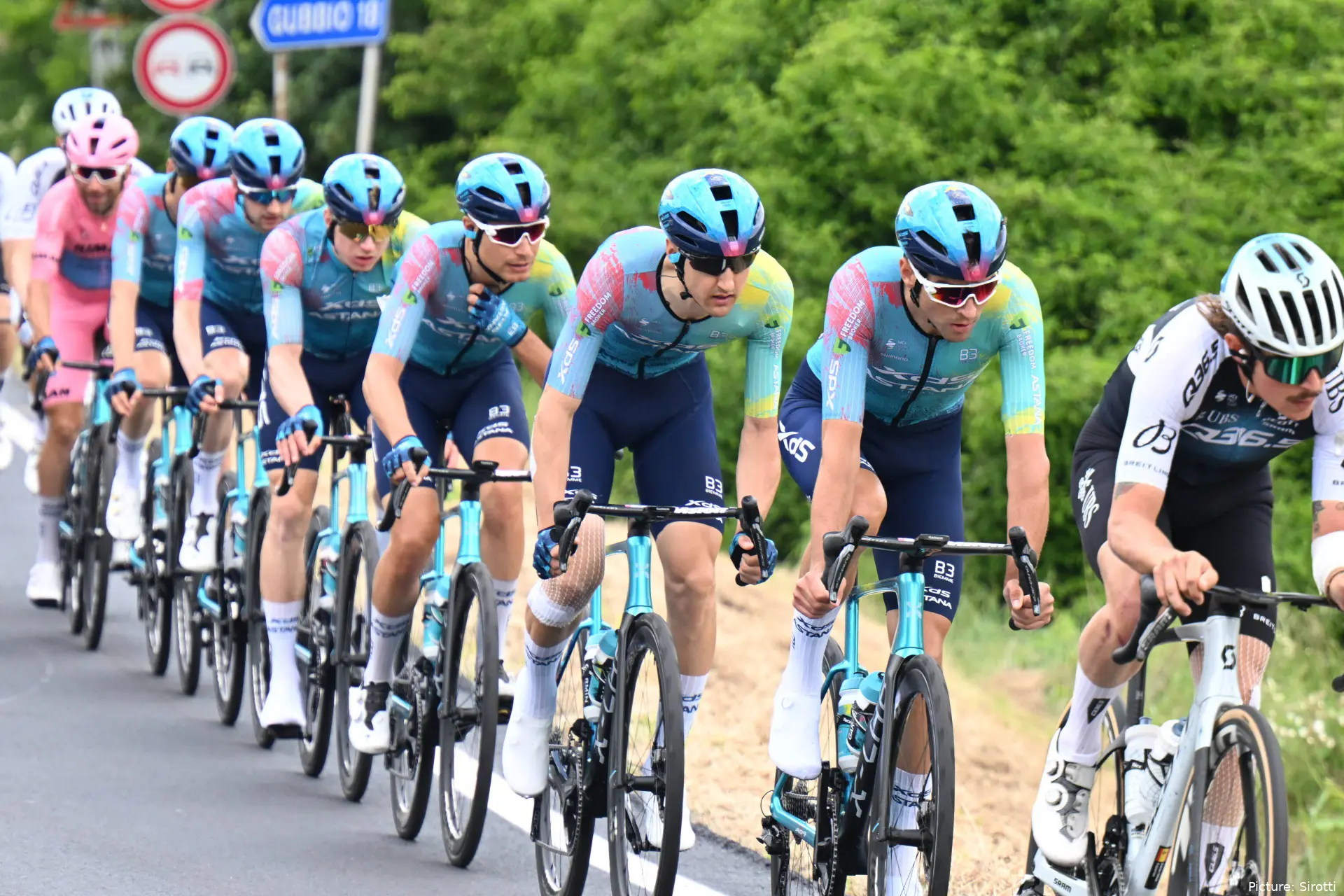
XDS Astana Team had a massive task ahead of them at the start of this season - to bridge approximately 5.000-point gap in the three-year UCI ranking and save themselves in the WorldTour category for the 2026-2028 cycle. But the Kazakh team backed by Chinese company XDS did unthinkable and even leapfrogged all the way to 16th spot in the ranking. Since June, their rapid progression through the rankings slowed down, but Astana has nevertheless proven that the team is far from done.
"We knew it would be difficult, but it was twist or stick," sports director Alexandr Shefer told Domestique. "We had to do something."
And so, Astana, boosted by financial support from their new Chinese co-sponsor XDS, they entered the transfer market in search of a miracle. And through several tactical signings, they achieved nothing short of the miracle the sought after. "We strengthened the team compared to previous years with points in mind," Shefer explained.
Part of their success came thanks to difficult tactical decisions such as sending top leaders to smaller races instead of a suiting high-profile schedule. But the payout has been massive. One example for all would be the 24-year-old Ecuadorian climber Harold Martín López who has podiumed four stage races at the 2.1 and 2.Pro level, scoring 600 UCI points pretty "easily" without having to compete against the likes of Tadej Pogacar.
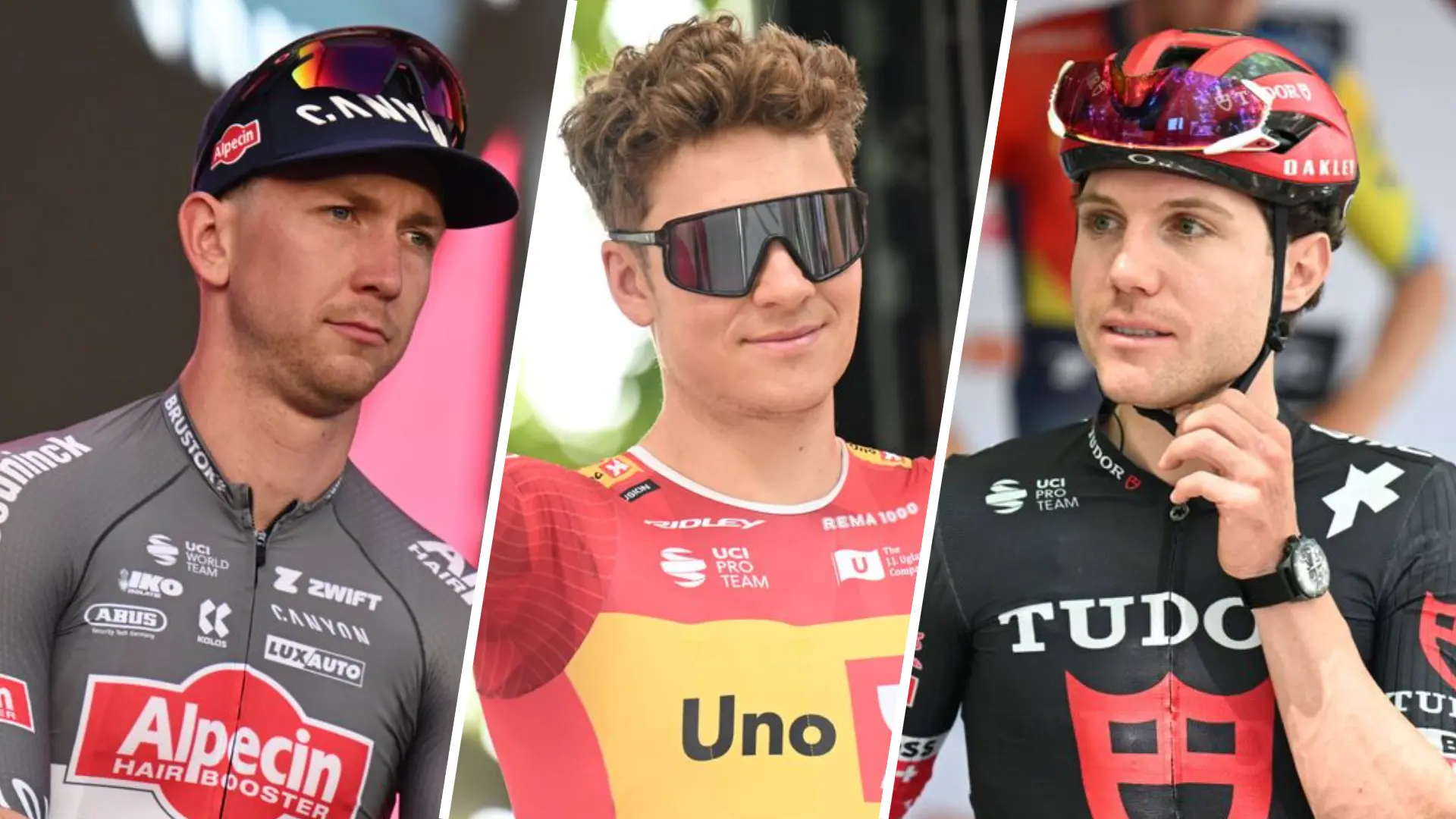
"Many times, we sent our strongest riders to smaller races rather than to WorldTour races. We’ve had strong teams at races like Turkey, Hainan and so on, because we know there are a lot of points of offer there. And with the team we have right now and the level generally, we can maybe be more confident of a big result there than in a WorldTour race."
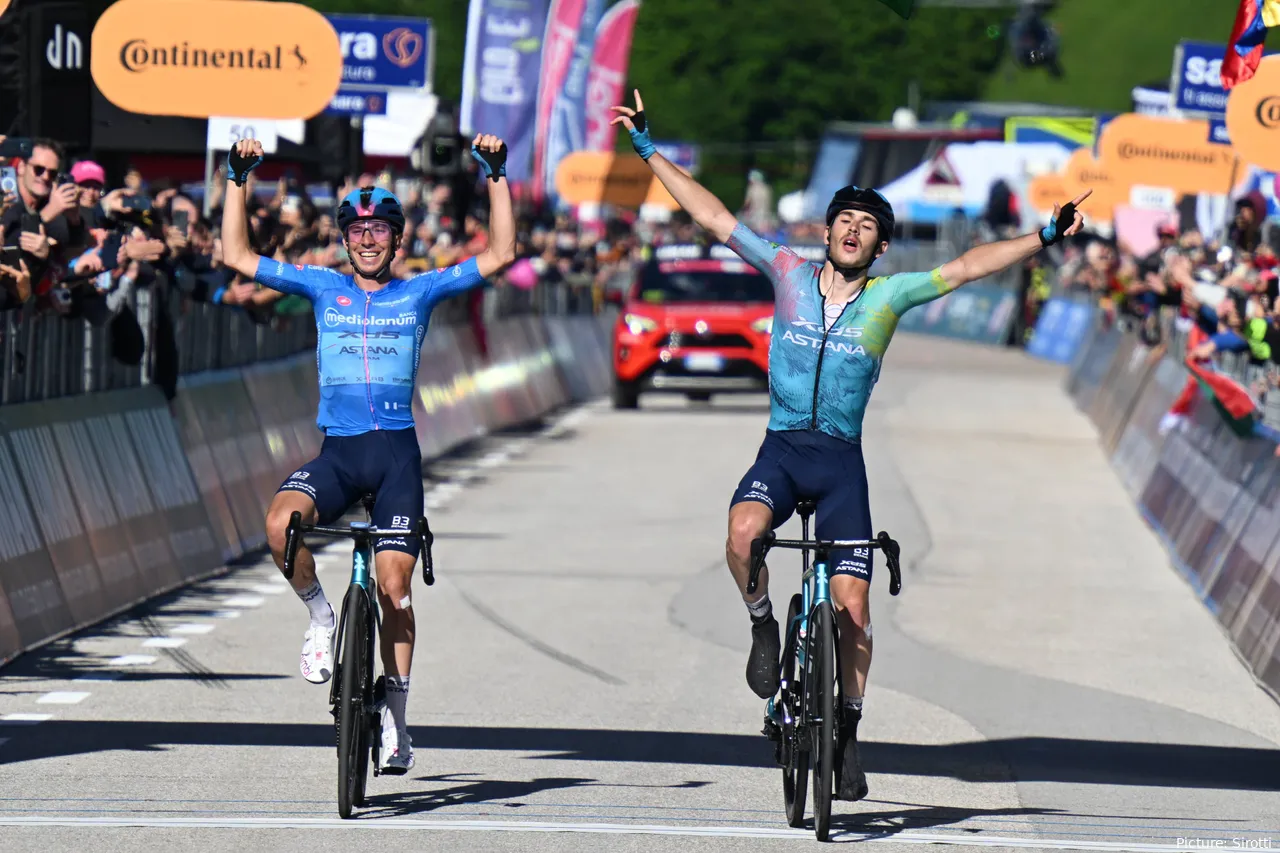
Lorenzo Fortunato and Christian Scaroni together cross the line of Giro d'Italia stage 16
It's been a completely new Astana. Over the last decade the Kazakh team always belonged to the top tier of cycling, winning multiple Grand Tours and Monuments thanks to the likes of Vincenzo Nibali, Fabio Aru and Jakob Fuglsang. But in 2025, those ambitions were unrealistic.
"It was different to what we did in previous years because we had never raced in search of points before. Unfortunately, we got to a point where, in order to save ourselves, we needed to start getting placings from two or three riders rather than racing to win. It’s not ideal, but in this moment our aim is to save ourselves."
"All the riders are well aware that it would be easier to score points in smaller races than in the WorldTour," Shefer said. "In WorldTour races these days, especially the bigger races, it’s very hard because it’s a very high level. And when certain big riders are in the field, you already know you’re racing for fifth place at best, and that’s if everything goes well. Whereas in the smaller races, you can get better results."
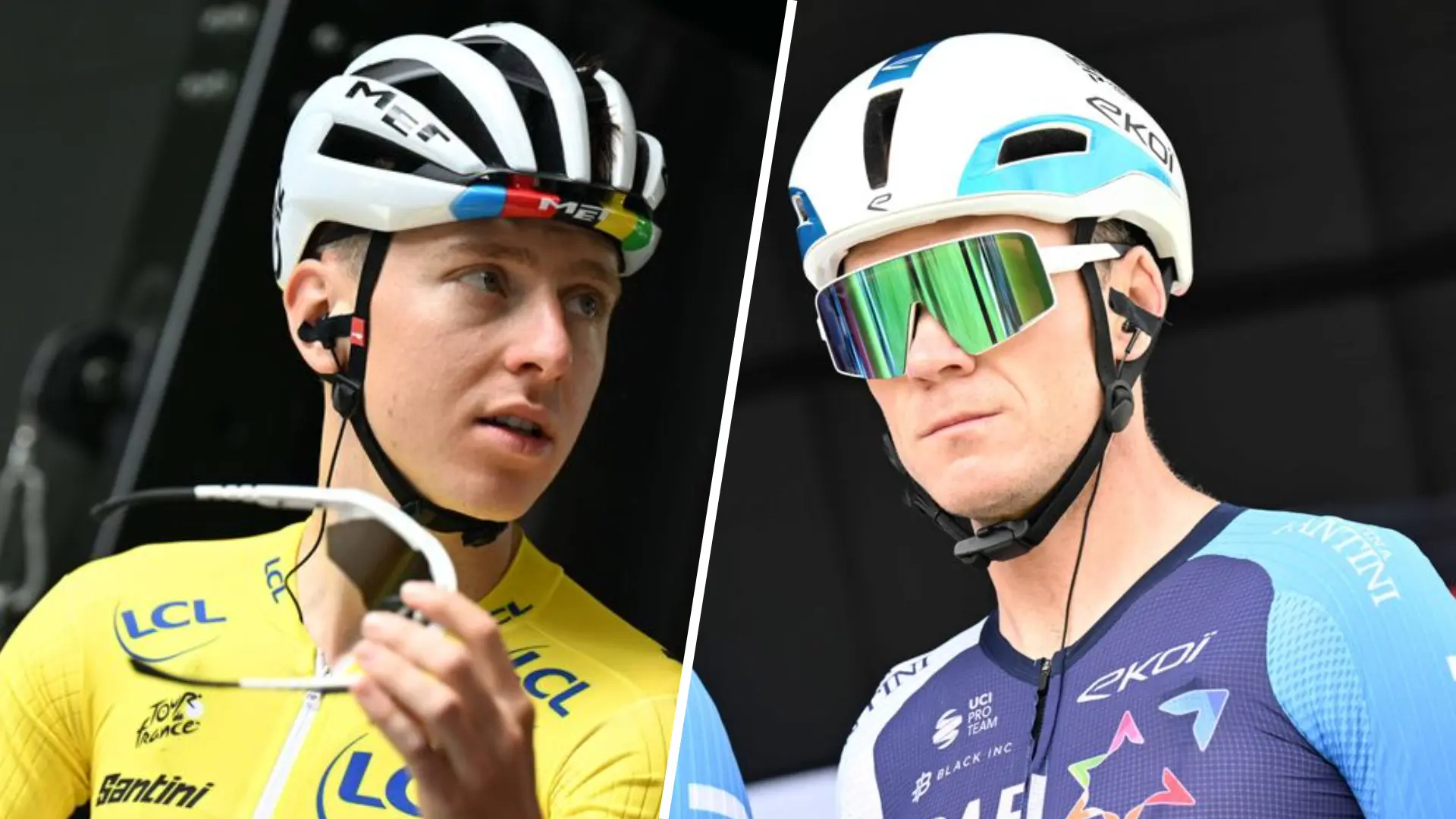
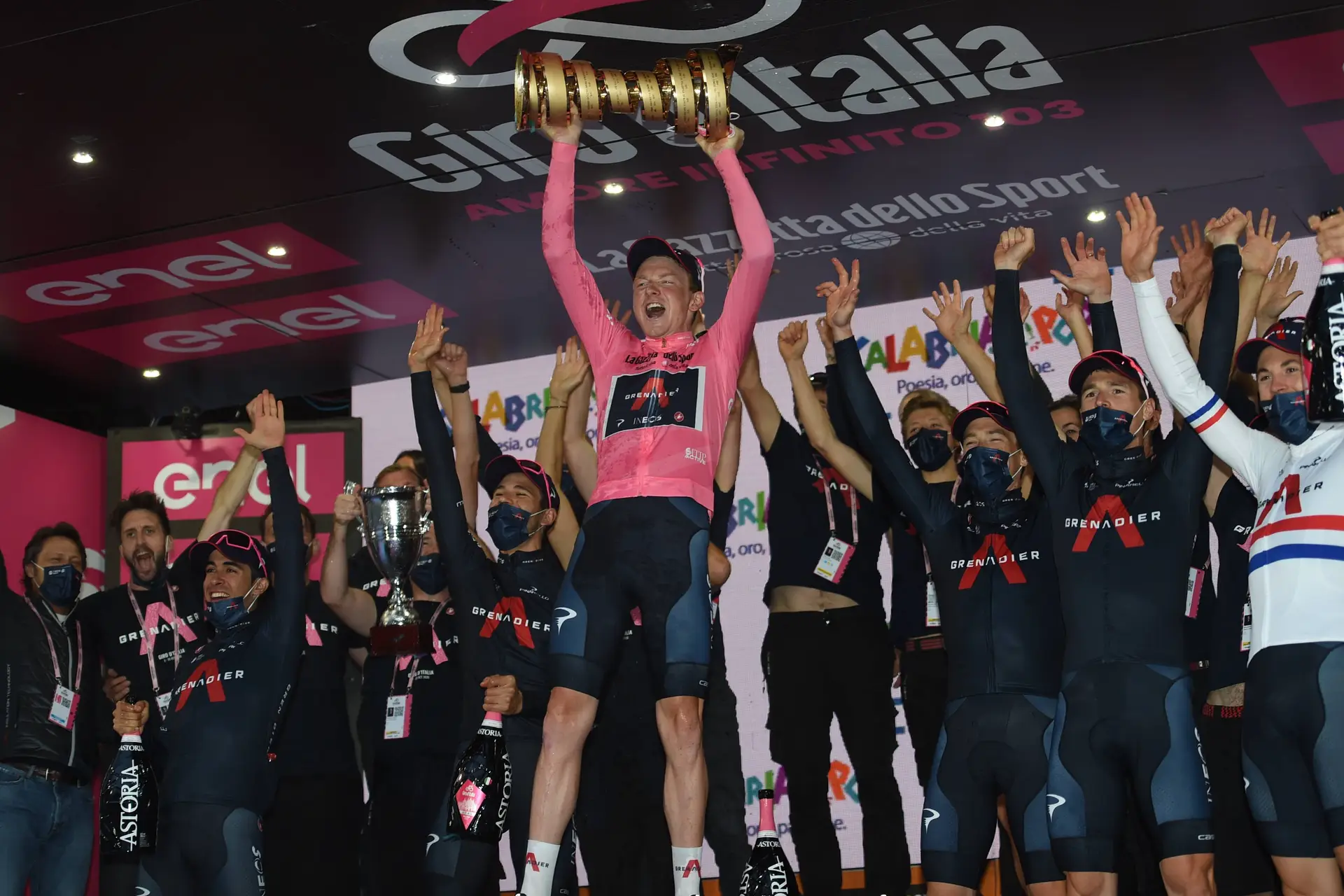
The team strength also became apparent at Grand Tours, where Astana had to face the world's best and, at times, simply didn't have the level to compete. At Giro, their attacking racing style was rewarded with a stage victory of Christian Scaroni and Mountain classification won by Lorenzo Fortuntato, but Tour de France didn't go as well:
"At the Tour, we brought a solid team with some good riders, but a lot of them didn’t have great condition, and the general level was really high," Shefer exaplained. "We hoped for a bit more, but if you’re not at 100% there, it’s very difficult to come away with a result."
"But now we’ll see what the rest of the season brings and if we can collect more points. Because we’re not really talking about wins anymore, now it’s all about points. We’re only thinking about points, and the whole team is united behind that idea. We sit down every week and tally how many points we’ve scored, and we also look at our rivals."
Astana is now virtually safely in WorldTour, but there's no time to rest. In 2026, the UCI point battle will start anew with another three-year cycle and Astana will need to keep the momentum going to not end up in the same situation as at the end of 2024.
"For the smaller teams, it will be like this even next year," Shefer said. "If you don’t have one of the biggest riders and if you’re not certain that you won’t have worries about relegation, then you’re going to have to keep this philosophy to get points to save yourself."
"In the WorldTour these days, we’ve got a Serie A and a Serie B. You have the top five teams in the world who have all the biggest champions. And then you’ve got the rest who are fighting for points," he concludes.
Read also


Ondrej ZhasilCycling Journalist
Ondřej Zhasil is a cycling journalist at CyclingUpToDate and has been part of the team since 2023. He is based in Ostrava, the third-largest city in the Czech Republic, and covers professional cycling across the main UCI competitions, including the Tour de France, the Giro d’Italia, and La Vuelta a España. A key focus of his work is startlist analysis and pre-race coverage, where he examines team selections, rider line-ups, and tactical scenarios ahead of major events.
Alongside WorldTour coverage, Ondřej has developed specific expertise in junior cycling and in racing across East Asia, including competitions in China and Japan. He also maintains a broad working knowledge of other disciplines and levels, including cyclocross, while continuing to expand his understanding of mountain bike racing.
Ondřej holds a bachelor’s degree in Mathematics and Physics, which supports his analytical, data-driven approach to performance and race analysis. In his reporting, he regularly uses ProCyclingStats for results, statistics, and historical context. He places strong emphasis on careful sourcing, editorial accuracy, and updating articles promptly when new, verified information becomes available.
claps 0visitors 0
Just in

Popular news
Latest comments
- The article makes it sound like a great thing and something to be applauded. The reality is is gives the Americans another 6 years to fleece European cycling fans or force them to hunt around Europe with VPN’s for free feeds. Not something to be celebrated in my book. Before someone points out that coverage of this depth costs money, yes, I agree but not £30+ per month a fee I will wager will gradually increase now this deal has been cemented.Paul53119-10-2026
- Great. Thrilled. (Satire) Oh, how I miss the days of GCN. Still wear my GCN hoodie with pride.anonymouscyclist19-10-2026
- You could also look at it another way. How many riders have had better or more consistent results since the Tour?Jumpyjohn19-10-2026
- Whilst I love Tadej (and Remco, who deserves to be mentioned here, too), @JumpyJohn makes a valid point, and he isn’t wrong @MajorPayne. It is a fact that today’s official broadcasters of cycling struggle to keep our attention once the likes of Tadej (or Remco) attacks at ~80km or so. In the 142nd issue of Rouleur, Ned Boulting reflects on the often stressful paradox of commentating on a race that is effectively over before the broadcast window even hits its stride. In this edition, he centres on Remco’s 1hr solo at the Challenge Mallorca this year, and captures the panic and dread shared by the commentators when a dominant rider kills off the racing tension early. I recommend you read it, it’s a fascinating insight into the world of commentary, and the true viewing figures of today’s cycling. I must add here, I love Tadej and Remco, but I would be lying if my heart rate wasn’t higher when watching the World Championships this year. And I’m sure Rob Hatch would say something akin regarding his commentary!anonymouscyclist19-10-2026
- The shattered women’s marathon record was clean and highly surprising and then a few months later the athlete was very positive in another test for something not taken by mistake when recording far less impressive results. Sounds to me like the problem is still the age old one, detection is often way behind. Just like with crime, it’s not because you can’t catch the criminals that you aren’t aware of the crime.Jumpyjohn19-10-2026
- Listen, you have a point but on the other hand in cycling, once some of the riders go solo and build a minute’s gap, there’s hardly any action left to watch. Cycling is definitely not for today’s generations of accelerated viewing. Other people find skydiving or chess exciting but you can’t force everyone to feel the same.Jumpyjohn19-10-2026
- That’s a funny one. Yeah obviously he’s more aero than some but most of the aero effect at elite level is the bike. Now you have me starting to feel sorry for the guy behind him when he pulls a groupetto.Jumpyjohn19-10-2026
- Knew a World Tour promotion was coming for Ben this season. Thrilled for him, and can't wait to see what he can do at this level. Another one to watch at the TTs.anonymouscyclist19-10-2026
- It honestly breaks my heart to see this. I had a feeling this might happen over the last few years, but I kept praying it wouldn't, and that Joey would find his niche, especially back racing alongside his brother. After growing up racing alongside PH-MAS, the Pidcock brothers have always felt like one of our own, as we’ve watched them grow from Club level all the way up to PC and WT. I wish Joey nothing but the best of luck in whatever he does next, but selfishly… I do wish for him to move into the role of Q36.5 team staff.anonymouscyclist19-10-2026
- Predictable, sure! But boring??? OMG! Was Mike Tyson predictable and boring in his prime? Air Jordan? Schumacher or Senna? OMG!!!MajorPayne19-10-2026
Loading
Write a comment