“Mathieu van der Poel was the strongest rider of the day” - Jens Voigt slams Alpecin’s Roubaix ‘experiments’ as historic 4th win in a row slips away
CyclingTuesday, 14 April 2026 at 12:00
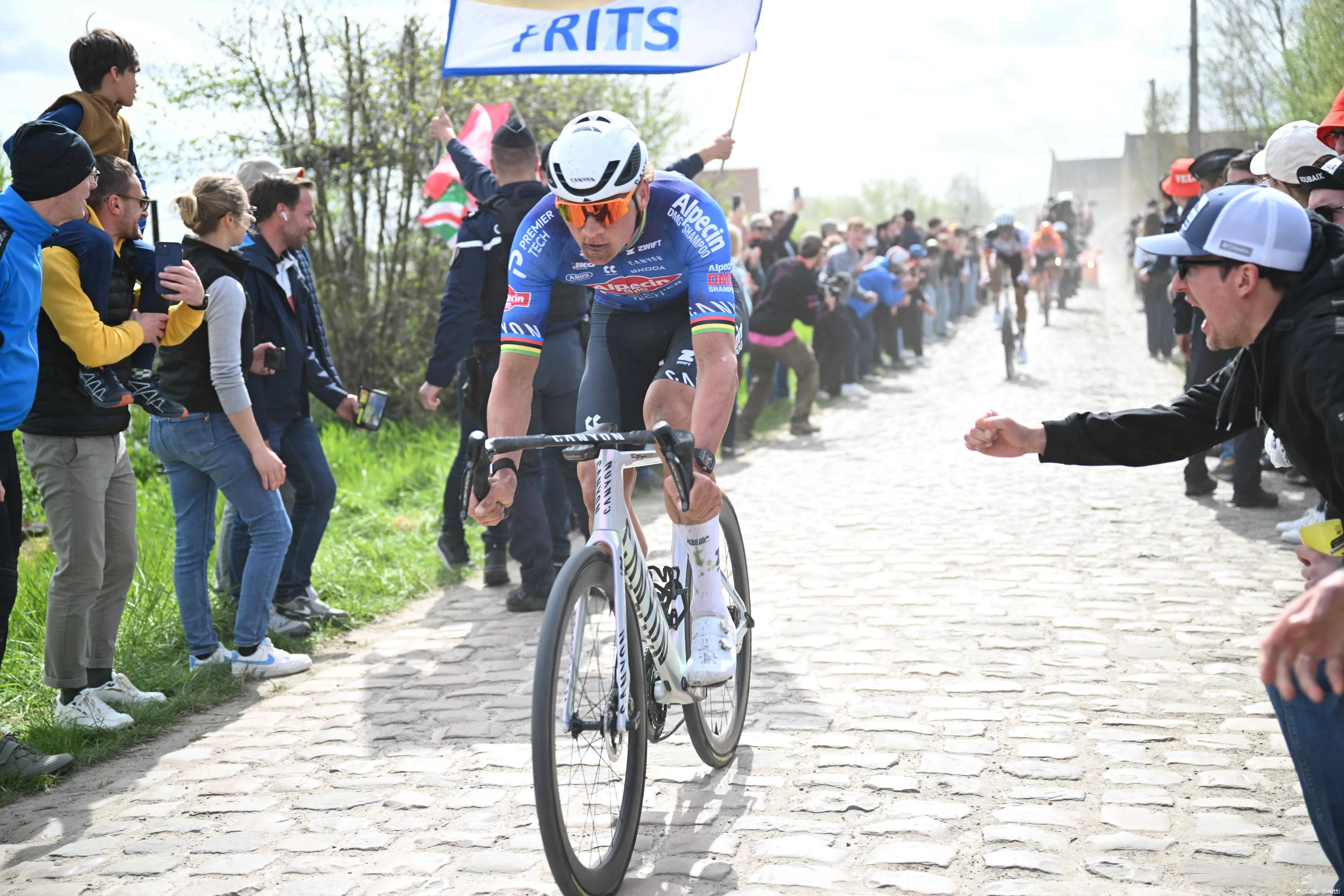
Mathieu van der Poel may not have won Paris-Roubaix 2026, but according to Jens Voigt, the result does not reflect what actually happened on the road.
Speaking in his analysis for Eurosport.de after the race, Voigt delivered a blunt assessment of the Dutchman’s performance amid one of the most chaotic editions in recent memory. “Mathieu van der Poel was the strongest rider of the day.”
It is a verdict that reframes the race entirely. Rather than a simple defeat, Voigt’s view points towards a missed opportunity, where circumstances, rather than legs, ultimately decided the outcome.
A comeback that underlined his strength
Van der Poel’s race looked over in the Arenberg Forest. A combination of incidents and mechanical issues cost him more than two minutes, leaving him distanced from the front group at a moment where Paris-Roubaix rarely offers a second chance.
Yet what followed only reinforced Voigt’s point. The Dutchman fought his way back through the race, closing down a significant gap and re-entering contention when many had already written him off. “That could be seen when he almost closed a two-minute gap again,” Voigt said, pointing to the scale of the effort.
In a race defined by attrition, that kind of recovery does not happen without exceptional condition.
“Roubaix is not the right day for experiments”
If Van der Poel’s legs impressed, the circumstances around his race drew sharp criticism. Voigt did not hold back when addressing the now widely discussed bike change issue involving incompatible pedal systems within the Alpecin team. “Paris-Roubaix is not the right day for experiments,” he said.
With so many uncontrollable variables already in play, Voigt questioned why additional risks were introduced. “There are so many possibilities for mechanical problems and crashes, so many uncertainties. Then you should minimise everything that is within your control.”
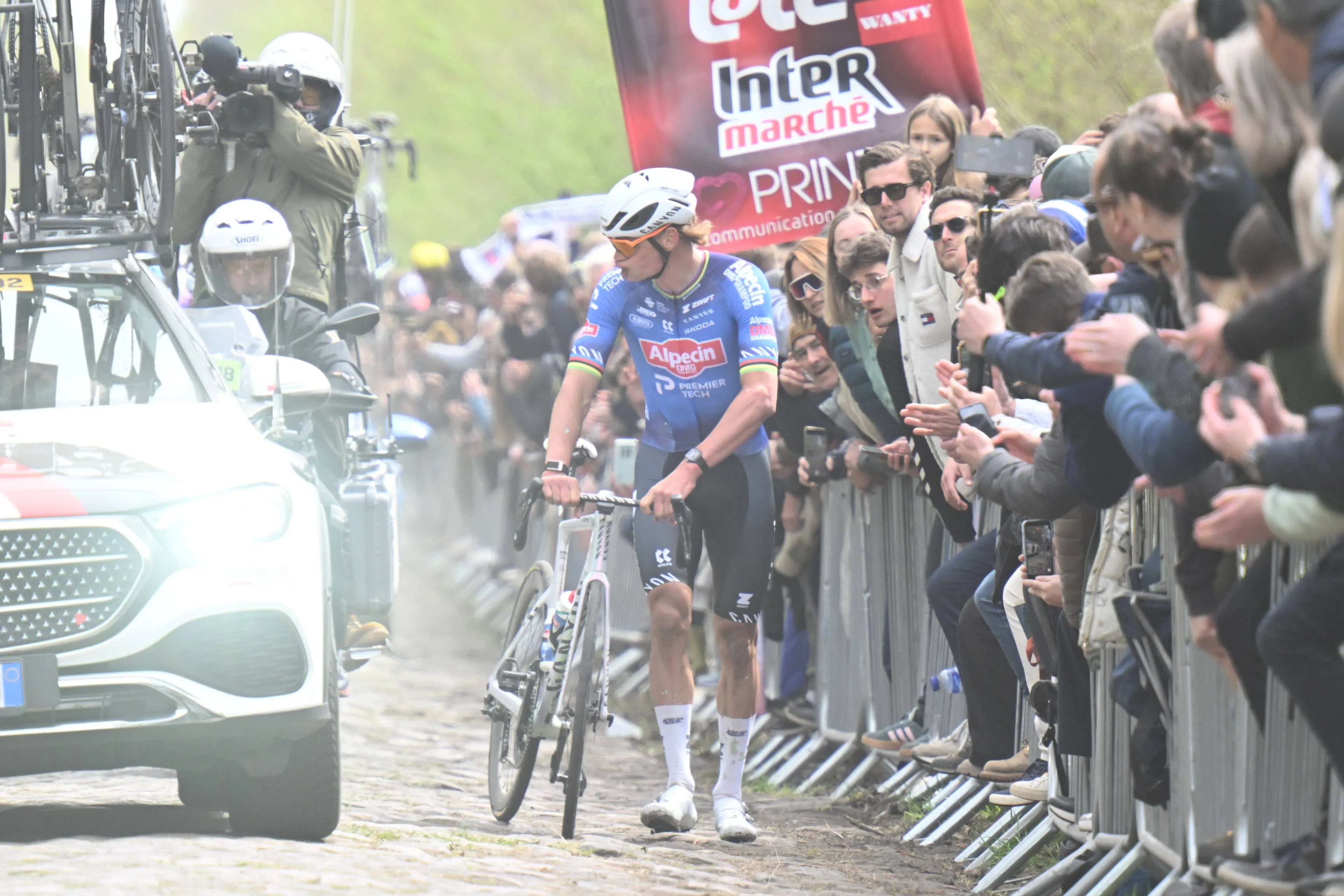
The moment in Arenberg, where Van der Poel was forced to abandon a bike change after realising he could not clip into the pedals, has since become one of the defining images of the race.

Mathieu van der Poel waits for his team car at Paris-Roubaix 2026
Criticism that echoes within the team
Voigt’s comments do not stand in isolation. They echo the tone of Christoph Roodhooft, who in his own post-race reaction admitted fault for the chain of events that derailed Van der Poel’s race.
Roodhooft described the situation as “very stupid of me” and acknowledged that the combination of circumstances, including the pedal mismatch, came together at the worst possible moment.
Voigt’s external criticism reinforces that narrative. While Roodhooft framed it as an unfortunate sequence, Voigt pushed further, questioning whether the situation should have been allowed to arise at all.
Chaos, mistakes and the fine margins of Roubaix
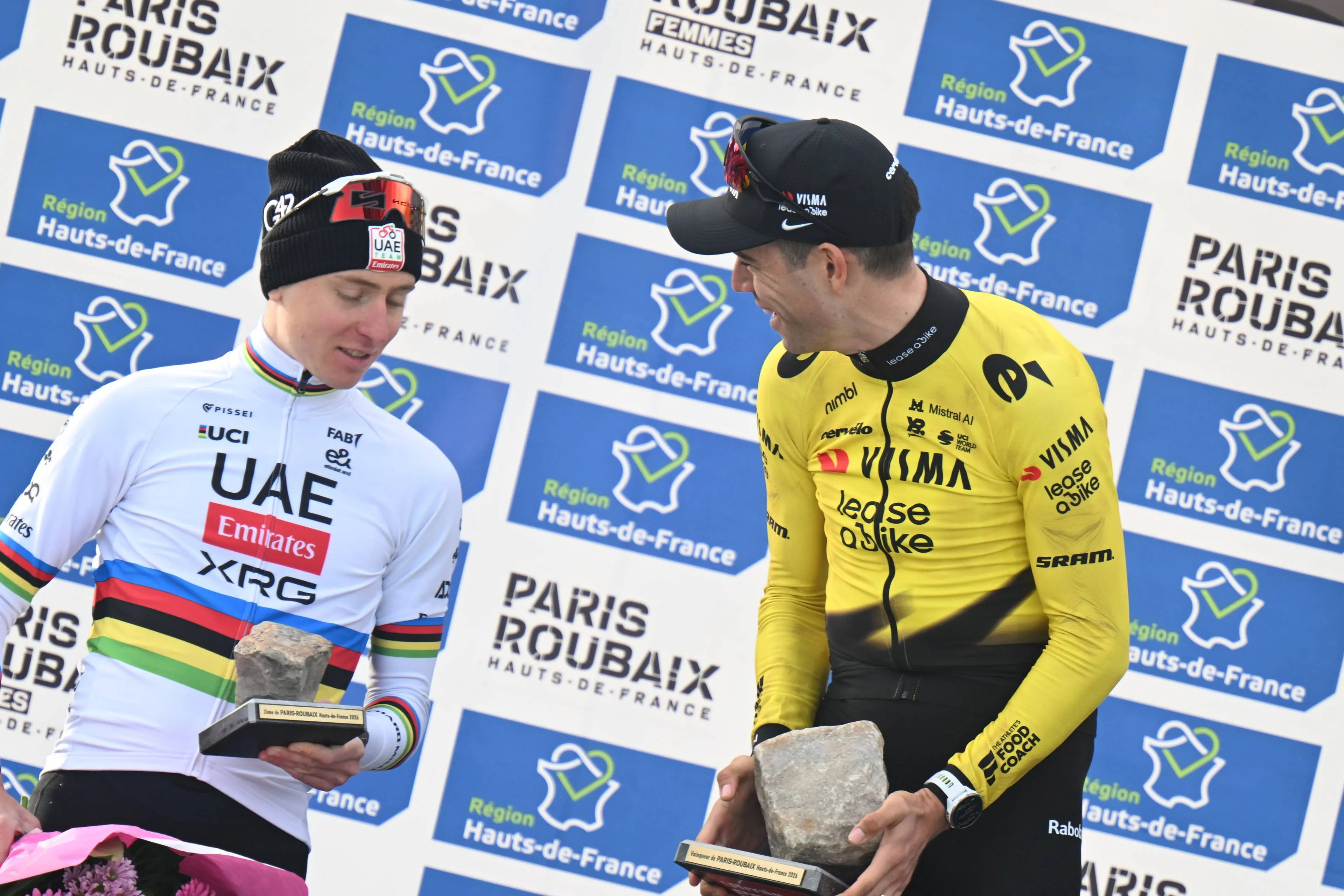
The 2026 edition was not decided by one incident alone. Voigt pointed to the wider mechanical chaos that affected multiple contenders, including Tadej Pogacar, who also lost time during a complicated bike change. “I was initially speechless that none of his teammates had a suitable bike for him,” Voigt said of Pogacar’s situation, highlighting how even the best teams were caught out.
But while bad luck is part of Roubaix, Voigt’s argument draws a line between misfortune and preventable error. In Van der Poel’s case, the failure to standardise equipment turned a recoverable moment into a decisive setback.
That distinction is what gives this result its lasting edge. Van der Poel’s performance, in Voigt’s view, was strong enough to win. The fact he did not only sharpens the focus on what went wrong.
As Voigt also noted more broadly, the race demanded resilience from every contender. “I admired the resilience of the favourites,” he said. “So much went wrong, but nobody gave up.”
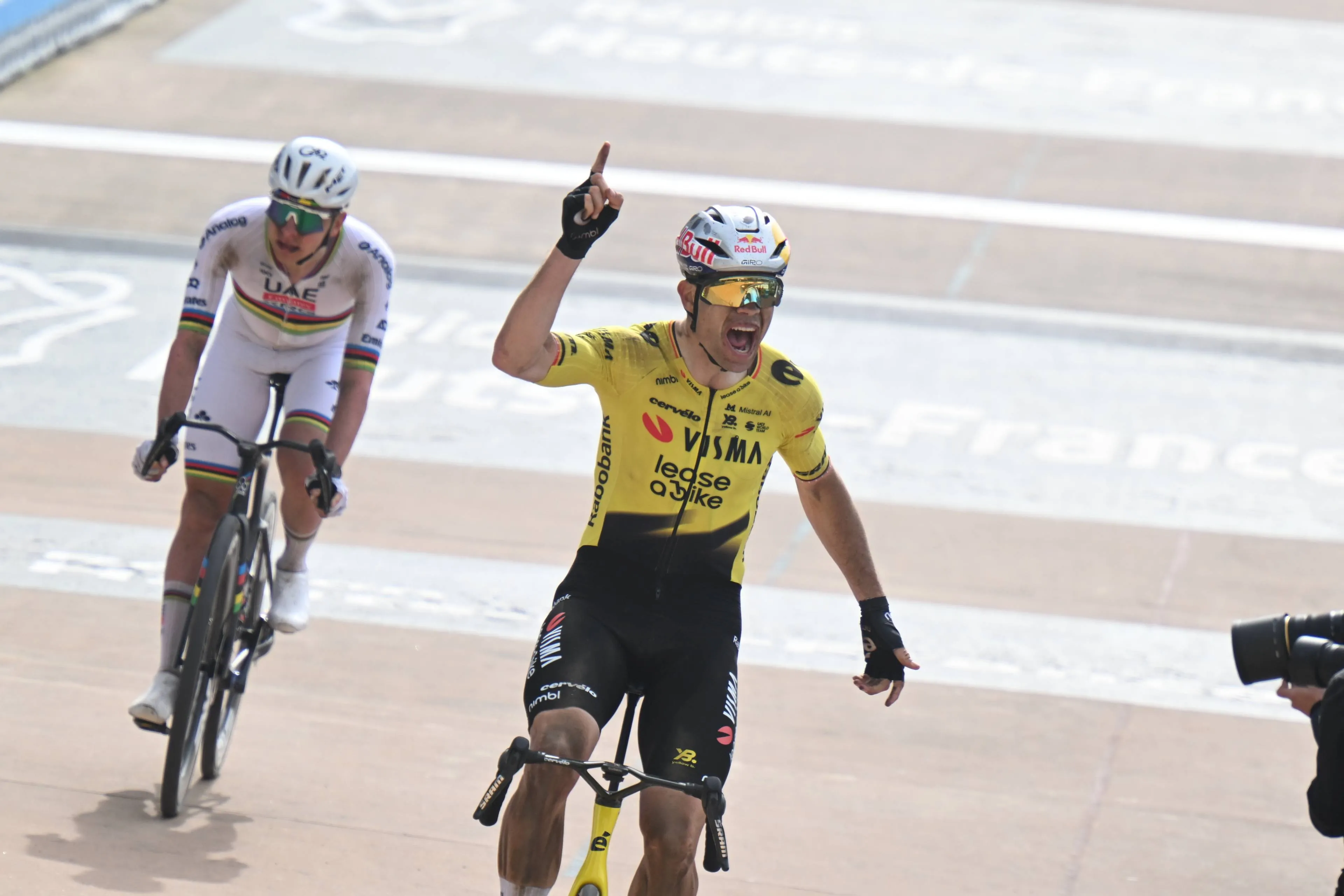
In the end, it was Wout van Aert who best navigated those moments and took the victory.
A place in history that slipped away
The consequences extend beyond a single result. Van der Poel had the chance to become the first rider ever to win Paris-Roubaix four years in a row. On form, and based on Voigt’s assessment, that achievement was within reach.
Instead, it slipped away in a race where the margins were measured not just in watts, but in decisions.
Voigt’s conclusion does not diminish the winner. But it does leave a lingering question over what might have been. In Paris-Roubaix, the strongest rider does not always win. And in 2026, that reality may have cost Van der Poel a place in history.
claps 1visitors 1
Just in
Popular news
Latest comments
- Speaking of which, has the site banned the Moustache again?
 Rafionain-Glas16-06-2026
 - They've got a decent squad for the hills with Debruyne and Verstrynge... also del Grosso for the easier races, which could convince van der Poel to race the hilly classics because he'll have riders who can actually attack and use him as a tactical peg, along with a leadout man in del GrossoRafionain-Glas16-06-2026
- lol yeah probablymij16-06-2026
- No, this has nothing to do with Trump. It has to do with being a winner. A true winner wins at everything in life. They win in their career, they win in their marriage, they win in how they raise their kids. True winners don't selectively win. And frankly they don't even try to win. They always try to be their best, which makes them winners. Lou Holtz, Notre Dame football coach said "first be the best, then be first". I don't know MVDP or Remco, but I'm guessing this is their ethos. Not suggesting anything about Trump. Just saying to compare these guys to Trump is wrong.mij16-06-2026
- why bring Trump into it - all of the great ones - Michael Jordan, Tom Brady, Tiger Woods, and more had this mentality in their prime. Trump might be a narcissist, but just because these guys want to win at all costs doesn't mean they're narcissists. It just means they like to win.mij16-06-2026
- I hope you're wrong! But yeah it doesn't sound good. If he does he might not be in shape until week 3, which did deliver a pretty iconic result last year.mij16-06-2026
- Mouse is a Pogi predator i.e. stalker!frieders316-06-2026
- He's just a guy for these hard mountain finishes when he has to go against the top tier GC climbers.frieders316-06-2026
- Awesome ride - great to see riders from smaller teams putting up resultsCrashjames16-06-2026
- tds is very contagious apparently. get well soonwhkman16-06-2026
Loading
4 Comments