“I was scared, I was suffering... it’s truly a terrible race” - Hell of the North lives up to its name for Paris-Roubaix 2026’s last finisher on brutal debut
Cycling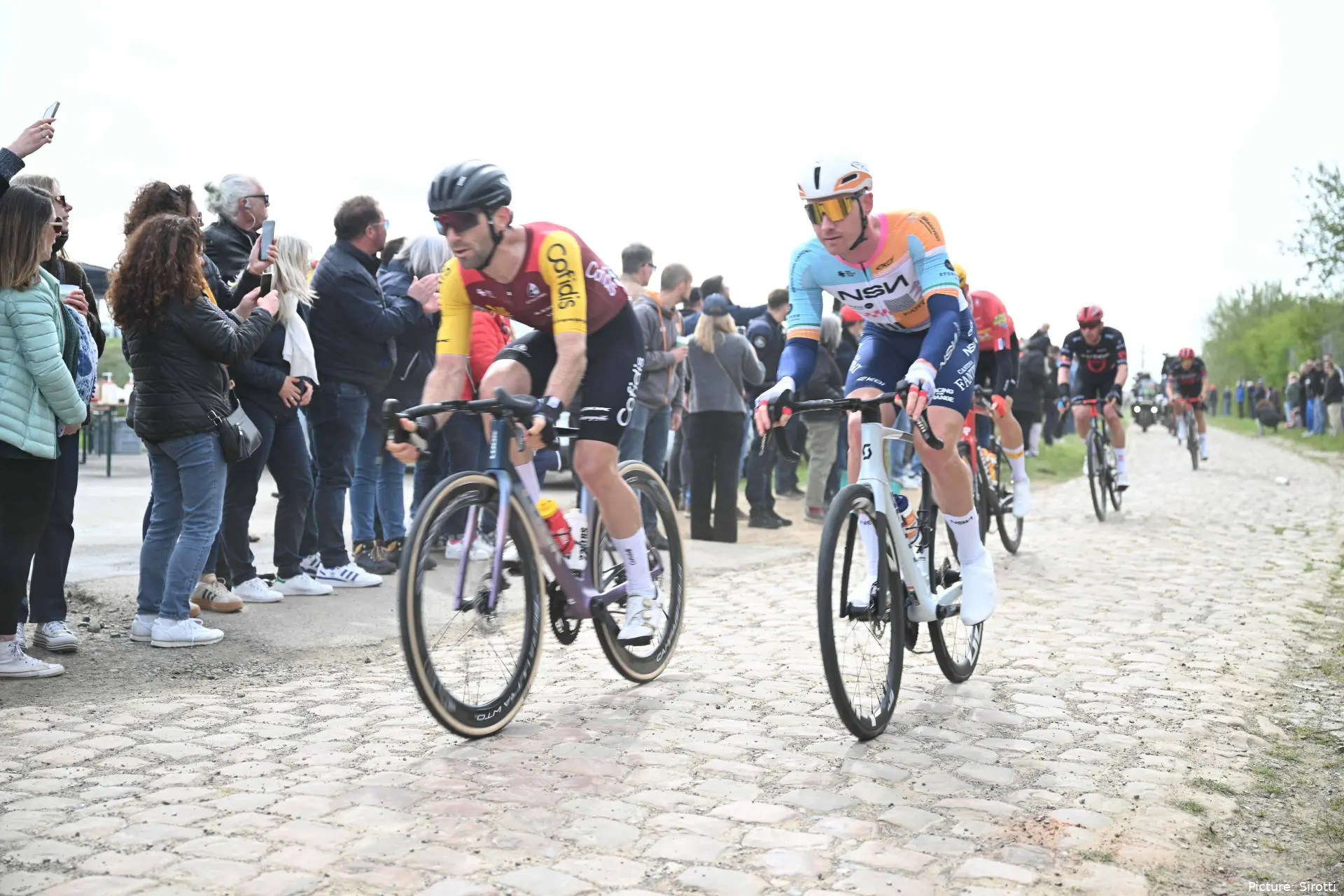
An Olympic champion. A Giro d’Italia stage winner. A rider used to competing in races, not surviving them. And yet, after his first experience of Paris-Roubaix, Benjamin Thomas sounded like a man who had simply endured the hardest day of his career.
Drafted in at the last minute after a wave of injuries within Cofidis, the 30-year-old arrived at the start without recon, without cobbled experience, and with little expectation beyond helping the team. He left with something very different.
From Olympic gold to the unknown
As mentioned, Thomas is no stranger to success. An Olympic champion on the track and a stage winner at the Giro d’Italia in 2024, he has built his career on precision, control and repeatable effort. The kind of rider who thrives in structured environments, where preparation and execution go hand in hand.
Paris-Roubaix offered none of that. “I wasn’t supposed to start,” he explained to AFP. “On Friday, I was still at the Pays de la Loire-Tour de Marne. But we had a lot of injuries, so the team asked me to come. It was really just to help out.”
There was no time to prepare, and no chance to learn the terrain. “I didn’t know any of the cobbled sectors. I didn’t even do a recon.”
Chaos from the start
Any hope of easing into the race quickly disappeared. “I was told to try and get into the breakaway. I tried once or twice, but it was going so fast that getting out of the peloton was almost impossible.”
The pace, relentless from the outset, was matched by the disorder around him. “In the first cobbled sectors, there were a lot of incidents. I was elastic.”
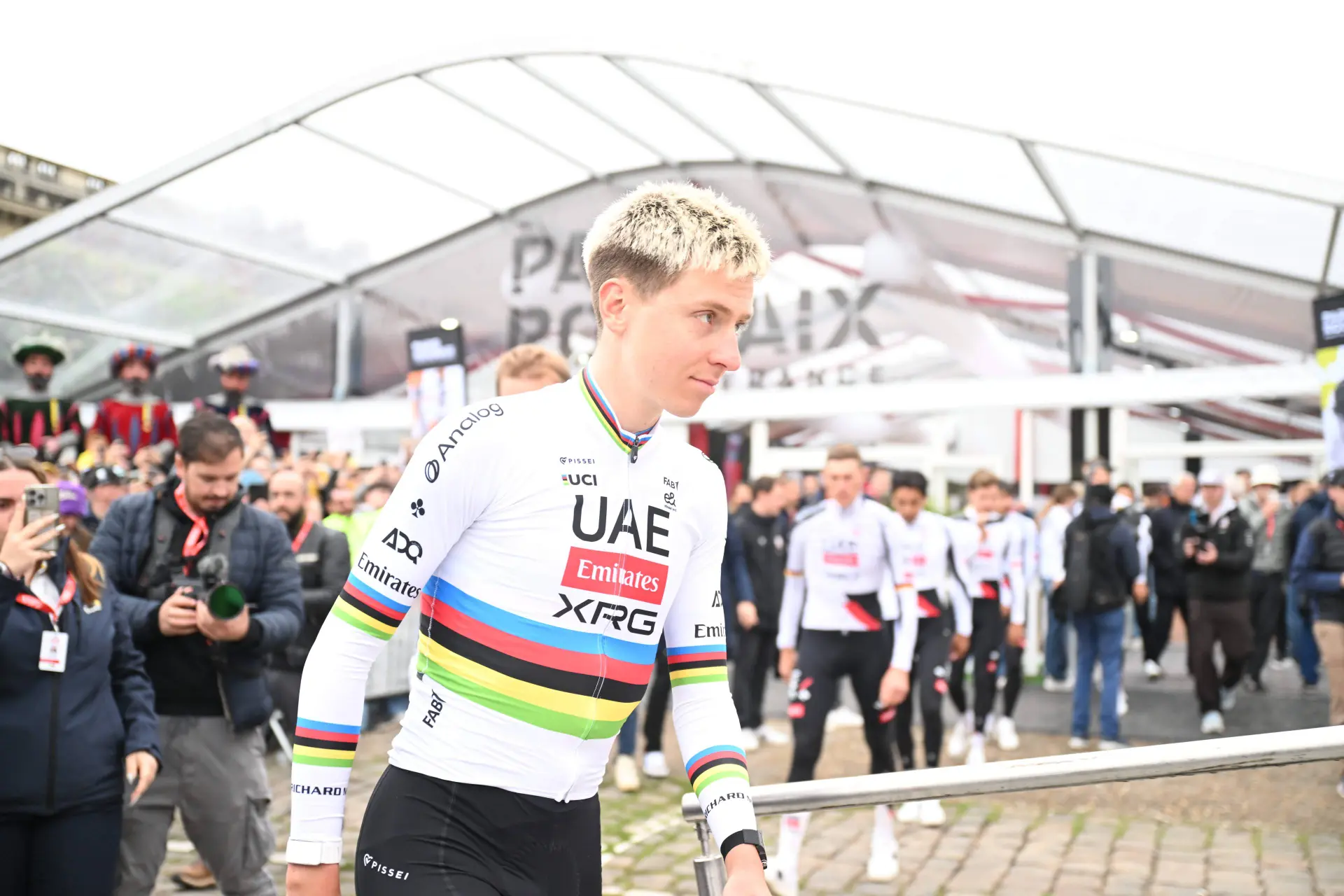
Then came the moment that ended his race as a competitive effort. “When Pogacar punctured, it was complete chaos. His team car overtook us and stopped in the middle of the sector. I spent 30 to 40 seconds with a foot on the ground. For me, that was game over.”

Thomas won a stage of the Giro d'Italia in 2024
“A minefield” in Arenberg
If that was the turning point, the Arenberg Forest was the reality check. “When I got there and saw the state of it, I wondered how bikes even come out intact. I felt like my bike was going to break in two.”
Every metre brought new impact. “Every ten metres there are craters. Not a single cobble is straight. It’s a minefield.”
Even for a rider of his level, the experience was overwhelming. “In Arenberg, I was a bit scared, yes. On the other sectors, just a few small slides… but I don’t even dare imagine what it’s like in the rain.”
Riding to the limit
As the race wore on, it became less about racing and more about getting through. “Towards the end, I was really suffering. I stubbornly stayed on the cobbles, but others were using the sides of the road. You really need to know how to do that.”
Without that experience, every decision carried risk. “If I tried it, I’d hit a hole and go flying.”
Dropped at Mons-en-Pévèle, Thomas faced the final 40 kilometres largely alone. “I lost the wheels and rode the last 40 kilometres on my own… well, almost, because I caught Noah Vandenbranden near the end and we finished together.”
Racing the clock, not the peloton
By then, the objective had changed completely. “When I reached Carrefour de l’Arbre, the crowd was shouting ‘Van Aert has won!’”
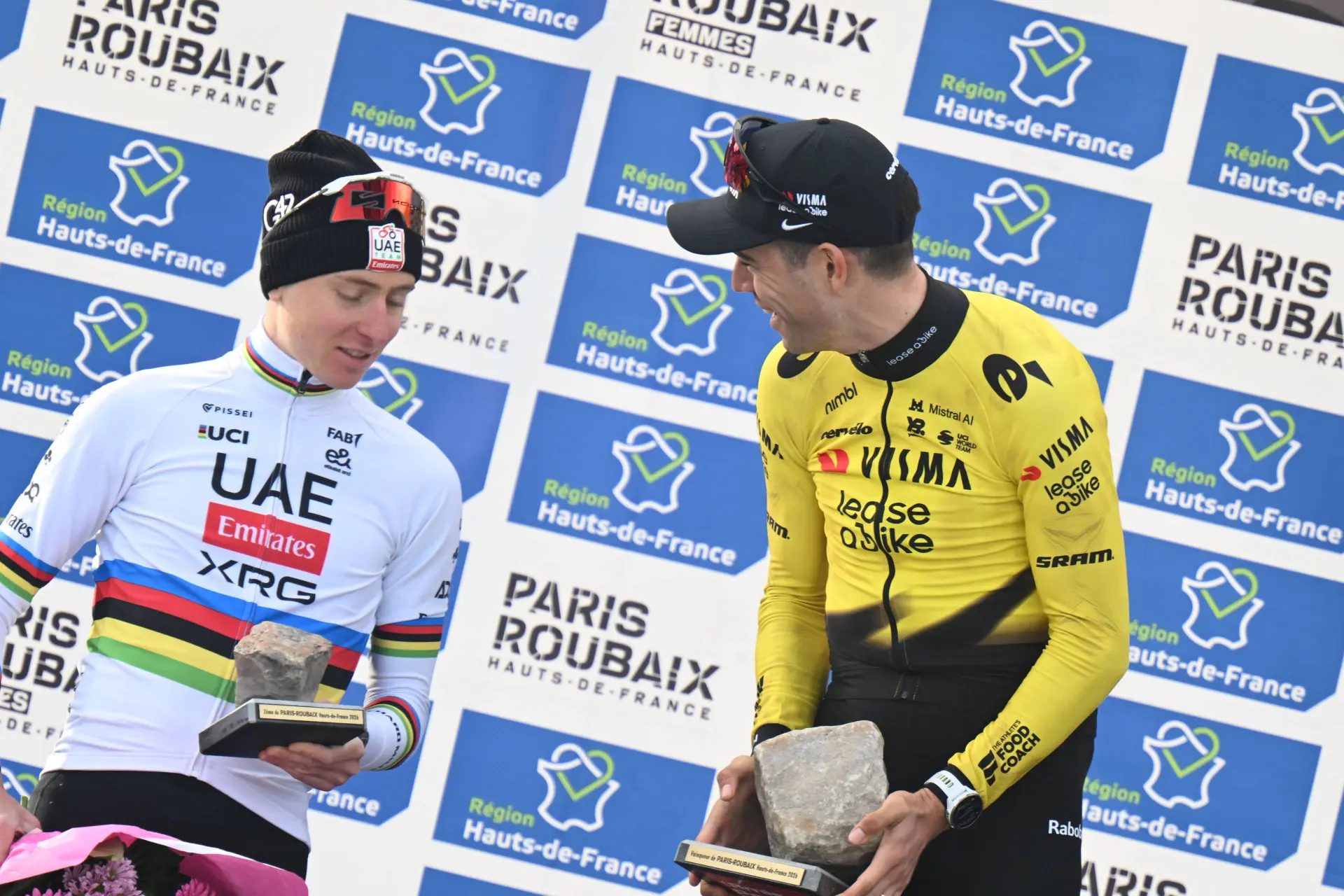
Up ahead, Wout van Aert was already celebrating. For Thomas, the fight was now against the time limit. “I did the maths. I knew I had 16 kilometres and 25 minutes to finish.”
He made it, just. “We came in just ahead of the broom wagon,” he said, finishing 139th and last on the day, more than 24 minutes down on the winner.
A different understanding of Roubaix
Crossing the line brought something close to relief. “I went up to the balustrade and enjoyed the crowd. It was important to finish. Now I can say I’ve finished Roubaix at least once in my career.”
But the experience has changed how he views the race entirely. “I’m happy to have done it, even if I’m not sure I’ll come back next year,” he admitted. “I’ll watch it differently on TV now. I’ll know what the riders go through.”
What struck him most was the intensity. “Normally, there’s always a moment where things calm down. Here, it was full gas the whole time. I blew up nearly 100 kilometres from the finish.”
Even without a puncture, he felt he had escaped lightly. “I was lucky in a way. I didn’t even puncture. But behind, there are struggles you don’t see on TV.”
“A truly terrible race”
For all his achievements, this was something else entirely. Thomas arrived in Roubaix as a proven winner at the highest level of the sport. He left with a deeper understanding of why the race stands apart from all others. “I’ve got some pain in my fingers, my back… a few aches, but I’m doing okay,” he said the following day. “I’m proud to have done it.”
Paris-Roubaix did not just test him. It reshaped how he sees the sport, turning one of cycling’s most prestigious races into something far more raw and unforgiving than results alone can ever show.
Kieran WoodDeputy Editor-in-Chief
Kieran Wood is a sports journalist based in Wales and has been active in journalism since 2022. He regularly contributes to DartsNews.com and CyclingUpToDate.com, where he covers professional cycling and darts. In cycling, his work includes liveblogs from major races, including the Tour de France, the Giro d’Italia, and La Vuelta a España, alongside race reports and analysis. He has also conducted interviews with professional riders.
His reporting spans the full racing calendar, from one-day classics to stage races, with a focus on accurate, real-time coverage and clear contextual analysis. For statistics, results, and historical context, he regularly uses resources such as ProCyclingStats. To support reporting on rider activity and training context where relevant, he also references Strava.
In his work, Kieran places strong emphasis on careful sourcing, editorial accuracy, and updating articles as new, verified information becomes available.
claps 11visitors 9
Just in

Popular news
Latest comments
- He didn't even try to sprint all outvappaxbipmv18-10-2026
- Campenaerts looked like a rolling pumpkin with that all orange leaders skinsuit !frieders318-10-2026
- He can take his dumb a$$ politics somehwere else !frieders318-10-2026
- good to have her back. fingers crossed she‘ll be able to stay!Ketterechts17-10-2026
- A tenner and he wins the Tour next year, too 😂anonymouscyclist17-10-2026
- the answer is either stick to classics or GTs but not bothabstractengineer17-10-2026
- the exodus already stared with Ciccone. Already they were struggling with two sprinters, now there are three. Also Ganna will demand leadership. Gall is the most proven GC, Ayuso has the most potential. GC leadership for everybody will be impossible. Literally a UAE style mess without pogi.abstractengineer17-10-2026
- I raced as an amateur for 12 years, including six years on my country’s national road cycling team. I secured two national titles and competed in three World Championships plus more than 15 international stage races. At 23, we travelled to Italy for a training camp—or so I assumed. On a rest day, we watched a presentation about adopting a more “professional” training approach. It was crystal clear what “professional” meant. That moment first exposed me to this dilemma. After returning from Italy, I left cycling—at least at the competitive level I had known. Over the following two years, the whole team was caught doping. I hold that everyone is innocent until proven guilty. In my view, current stakeholders operate on a different scale, and the sums involved are vast. I am unsure whether any doping would ever be revealed. I try to stay positive and enjoy the show. My 2c.
 vannpelt17-10-2026
 - Fiver he wins 🤣
 leedorney17-10-2026
 - “…measures to reduce speeds.” Might as well shorten the race course to just 50km as well? ASO generates at minimum €300m a year and 30- 40% profit. Maybe stop being greedy and spend more of the profit to protect the riders instead.b3tlla17-10-2026
Loading
Write a comment