“It’s not a situation he’s really used to” - Questions raised over whether inexperience cost Tadej Pogacar at Paris-Roubaix
Cycling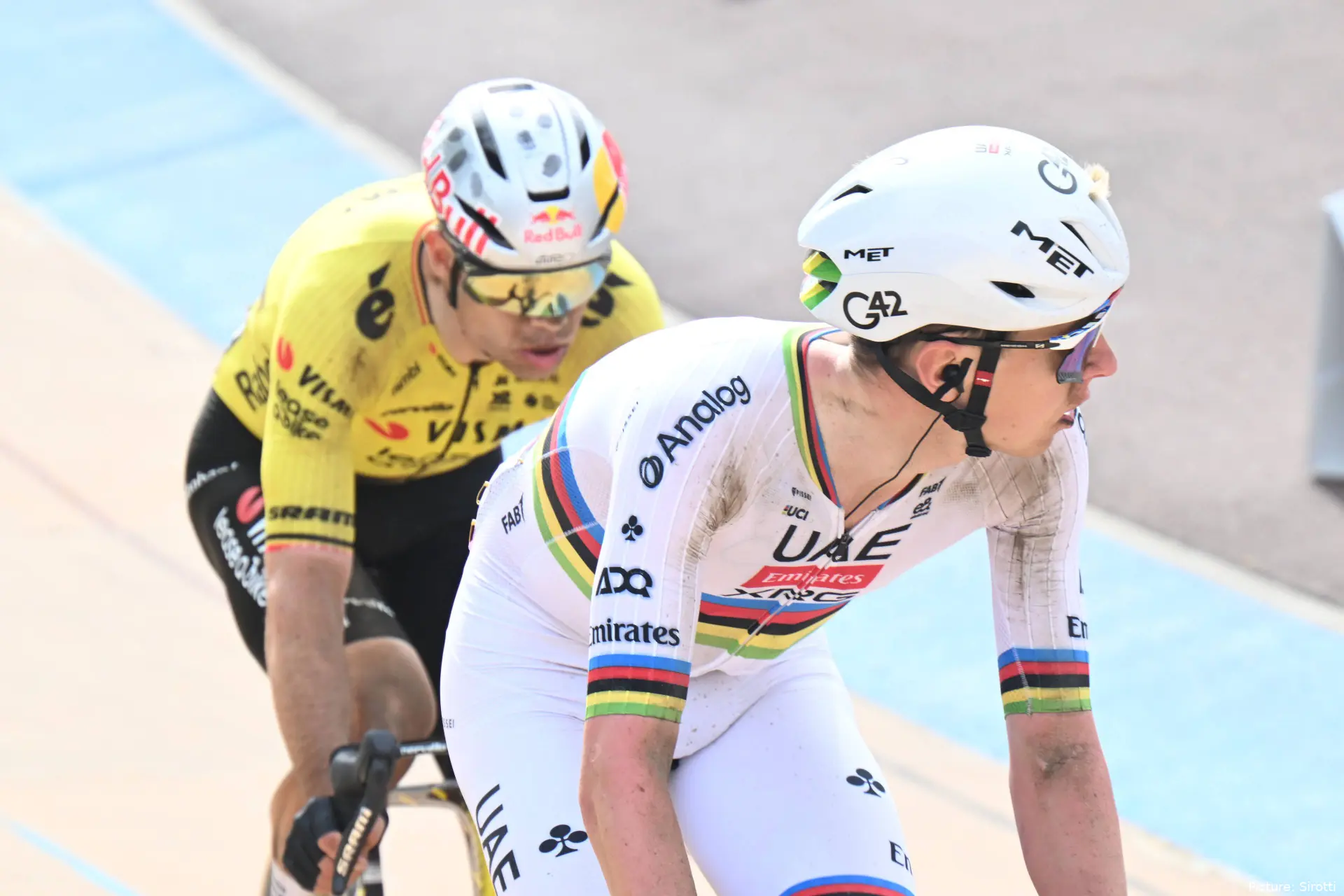
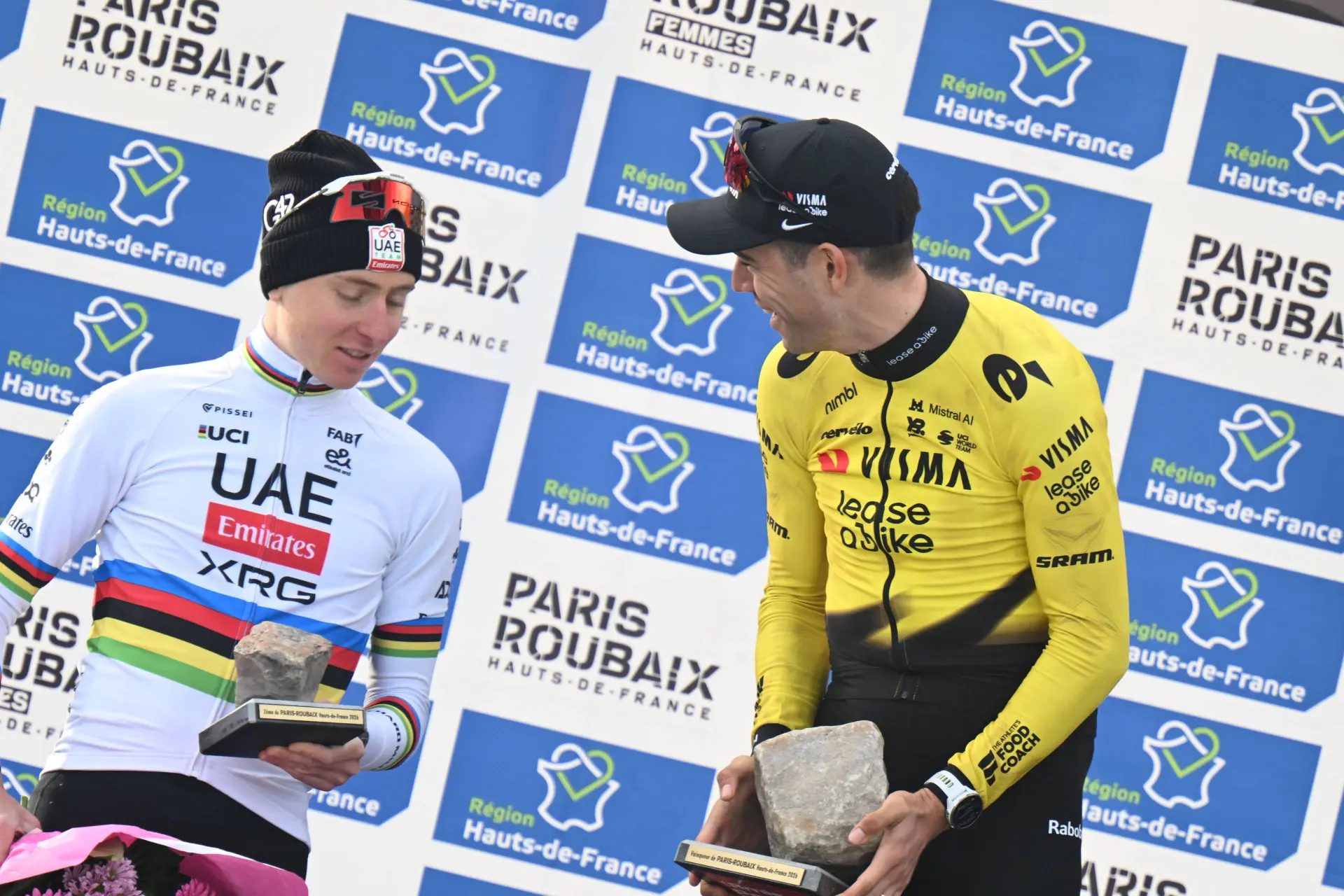
Tadej Pogacar left Paris-Roubaix 2026 with another second place, another reminder that he can win the Hell of the North one day, and another debate over what actually cost him this time.
The Slovenian was strong enough to fight for victory again. That much is beyond doubt. But in the aftermath, some of the discussion has shifted away from legs and towards detail, specifically whether a lack of Roubaix-specific experience showed itself at the key moments against Wout van Aert.
That was the line taken on the Live Slow, Ride Fast podcast, where Laurens ten Dam and Thomas Dekker picked apart both Pogacar’s riding on the cobbles and the way he handled the sprint in the velodrome.
Small details, big consequences
The criticism did not begin with the sprint. Ten Dam pointed to Carrefour de l’Arbre, where he felt Pogacar was already showing signs of awkwardness in the corners. “He rode very strange corners. He went through them with his legs level, his outside pedal wasn’t down,” he said, before adding the telling follow-up: “I said it, and one corner later he slipped.”
That does not mean Pogacar rode a bad race. Far from it. But Paris-Roubaix has a way of magnifying the smallest technical details, especially late on, when fatigue sharpens every mistake.
For a rider still relatively new to the race, that matters. Carrefour de l’Arbre is not just another section of road. It is one of the places where instinct, repetition and absolute familiarity can make the difference between carrying speed and losing control of the situation.
The feeling that Van Aert had the upper hand
Ten Dam’s reading of the finale went further than pure technique. “It also looked like Wout had the upper hand mentally during the finale. In the sprint as well,” he said, suggesting Van Aert seemed more in command once the race boiled down to the final head-to-head.
That is a significant point, because the closing kilometres did not just become a test of strength. They became a test of calm, positioning and judgement under pressure after more than 250 kilometres of chaos.
Ten Dam’s view was that Pogacar allowed that balance to tilt the wrong way. “If your opponent is at the bottom, you have to keep him there,” he said. “And Pogi lets Wout launch first. He could have done it differently.”
In other words, the issue was not simply that Van Aert sprinted faster. It was that Pogacar may have helped create the conditions for Van Aert to win.

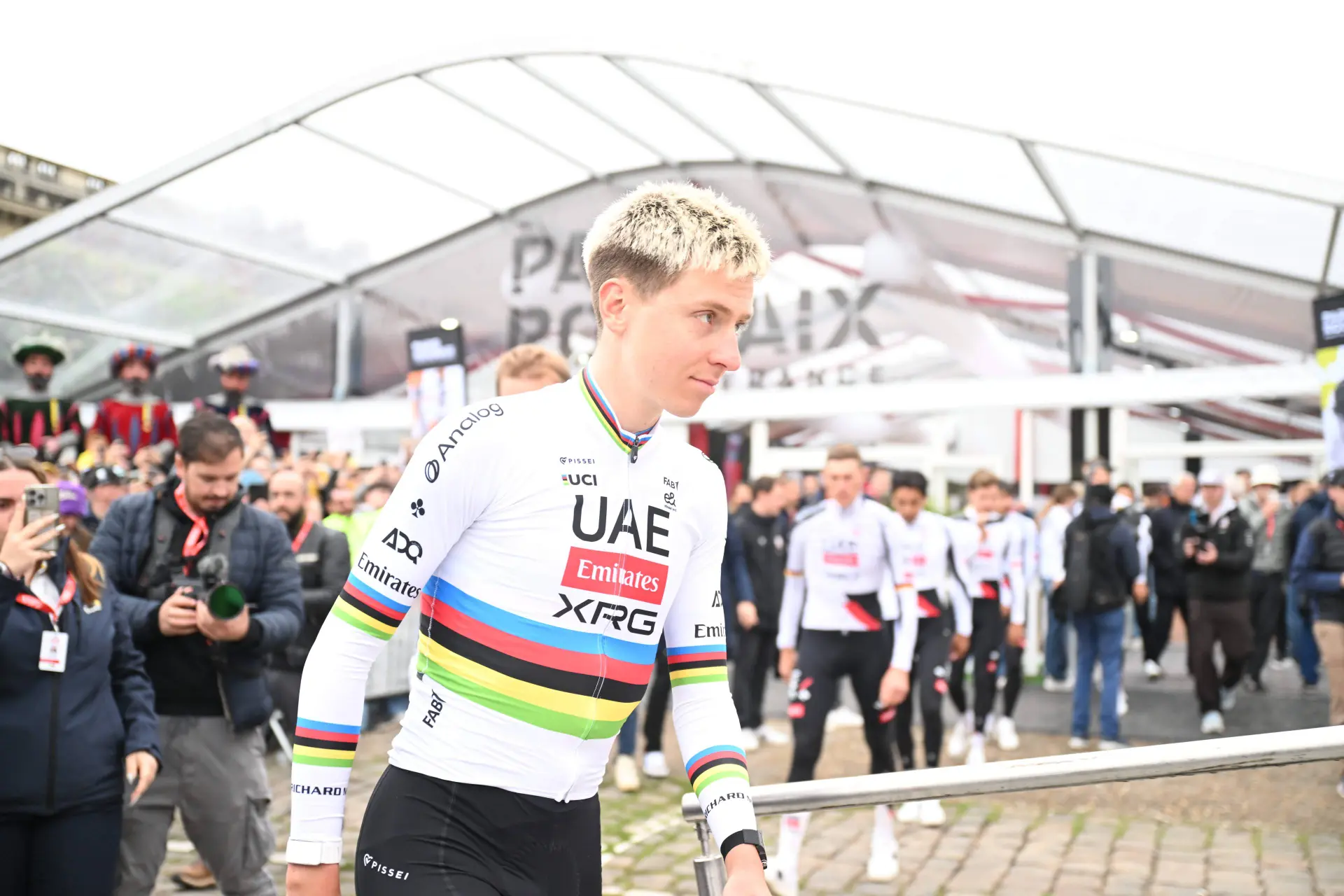
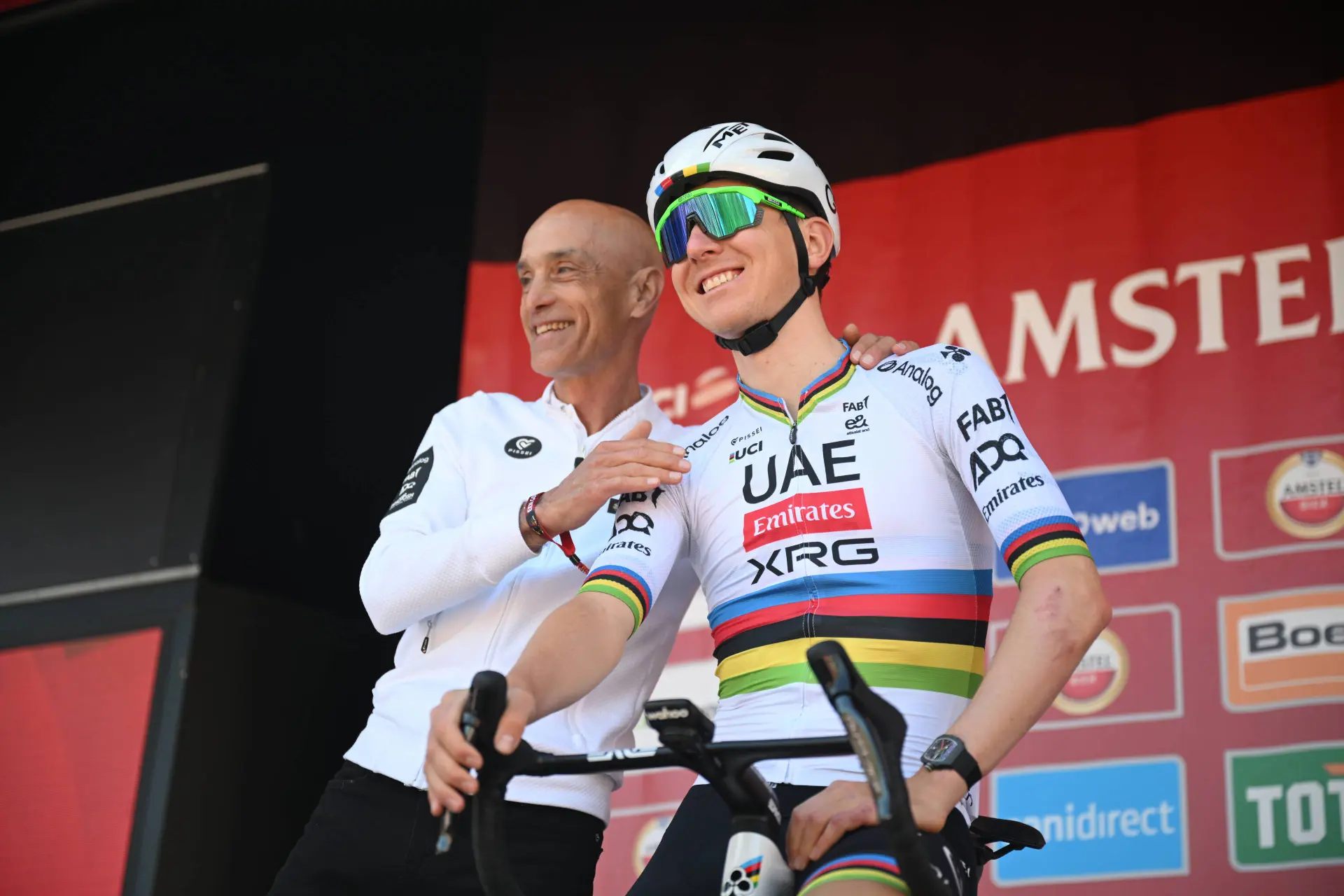
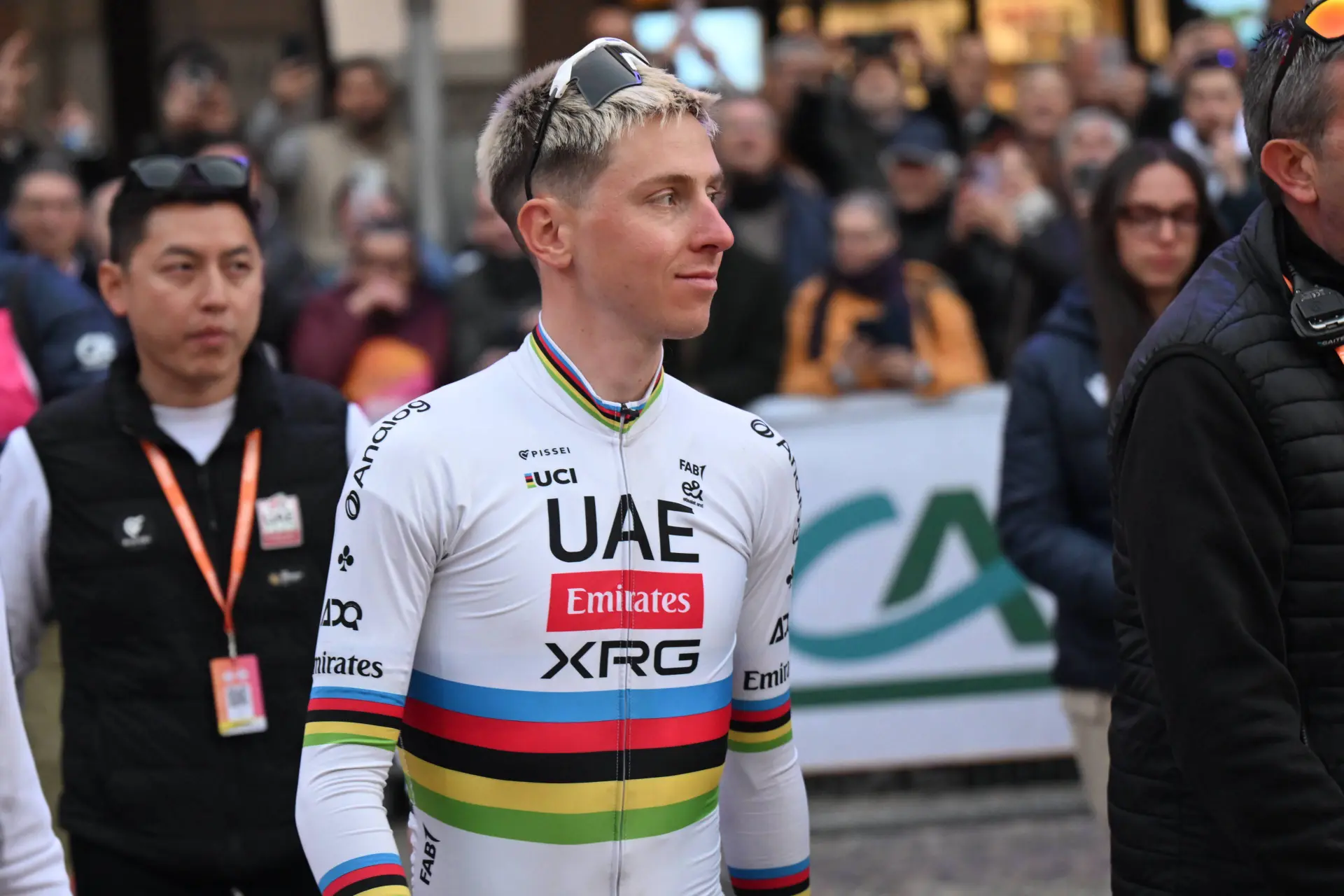
Tadej Pogacar at the 2026 Paris-Roubaix
“He basically brings Van Aert to the finish”
Dekker was even more direct in his criticism of the sprint itself. “At the beginning, he did well by riding high, but in the end, he just didn’t ride the sprint properly,” he said.
The key, in Dekker’s eyes, was that Pogacar failed to fully use the positional advantage he had built. “He should have slowed it down, because Van Aert was on the wrong side of his wheel,” he explained. “Wout was at the bottom, and you can’t come through underneath. He had to go around.”
Instead of making that disadvantage count, Pogacar allowed the sprint to develop in a way that played into Van Aert’s hands. “In the end, he basically brings Van Aert to the finish.”
That is a brutal assessment, but it gets to the heart of the argument. In a normal road sprint, Pogacar’s instincts are often enough to improvise a solution. In Roubaix, after that kind of race, in a velodrome, against a rider like Van Aert, instinct alone may not be enough.
A race situation he does not often face
That is where the experience angle comes in. Dekker did not argue that Pogacar lacks class, nor that he was obviously the weaker rider. His point was narrower and more interesting. “He really could have ridden the sprint differently,” he said. “I think Wout would probably still have won, but he didn’t try to make him nervous.”
Then came the line that says most about how they viewed the finish. “The start was good, but that final lap just wasn’t. Then again, it’s not a situation he’s really used to.”
That feels like the fairest way of framing it. Pogacar is used to deciding races through pressure, attacks and repeated accelerations. He is used to forcing others into mistakes. What he is far less used to is arriving at the end of Paris-Roubaix with a specialist still beside him, then having to solve a tactical velodrome sprint in real time. That is not weakness. It is specificity.
Not a limitation, but a lesson
There is a temptation after every Pogacar defeat to ask whether somebody has found the answer to him. Paris-Roubaix does not quite support that kind of conclusion. He still came second. He still matched the best riders in the race. He still did it in only his second appearance in one of the sport’s most specialised Monuments.
What this analysis really points to is not a fatal flaw, but the final layer of mastery Roubaix demands. Technique in the corners. Authority in positioning. Control in the sprint. Tiny things, but in this race, tiny things are often everything.
Pogacar did not lose Paris-Roubaix 2026 because he was not strong enough. If Ten Dam and Dekker are right, he lost it because, in the decisive moments, he was still learning how to win it.

Kieran WoodDeputy Editor-in-Chief
Kieran Wood is a sports journalist based in Wales and has been active in journalism since 2022. He regularly contributes to DartsNews.com and CyclingUpToDate.com, where he covers professional cycling and darts. In cycling, his work includes liveblogs from major races, including the Tour de France, the Giro d’Italia, and La Vuelta a España, alongside race reports and analysis. He has also conducted interviews with professional riders.
His reporting spans the full racing calendar, from one-day classics to stage races, with a focus on accurate, real-time coverage and clear contextual analysis. For statistics, results, and historical context, he regularly uses resources such as ProCyclingStats. To support reporting on rider activity and training context where relevant, he also references Strava.
In his work, Kieran places strong emphasis on careful sourcing, editorial accuracy, and updating articles as new, verified information becomes available.
claps 2visitors 2
Just in

Popular news
Latest comments
- He didn't even try to sprint all outvappaxbipmv18-10-2026
- Campenaerts looked like a rolling pumpkin with that all orange leaders skinsuit !frieders318-10-2026
- He can take his dumb a$$ politics somehwere else !frieders318-10-2026
- good to have her back. fingers crossed she‘ll be able to stay!Ketterechts17-10-2026
- A tenner and he wins the Tour next year, too 😂anonymouscyclist17-10-2026
- the answer is either stick to classics or GTs but not bothabstractengineer17-10-2026
- the exodus already stared with Ciccone. Already they were struggling with two sprinters, now there are three. Also Ganna will demand leadership. Gall is the most proven GC, Ayuso has the most potential. GC leadership for everybody will be impossible. Literally a UAE style mess without pogi.abstractengineer17-10-2026
- I raced as an amateur for 12 years, including six years on my country’s national road cycling team. I secured two national titles and competed in three World Championships plus more than 15 international stage races. At 23, we travelled to Italy for a training camp—or so I assumed. On a rest day, we watched a presentation about adopting a more “professional” training approach. It was crystal clear what “professional” meant. That moment first exposed me to this dilemma. After returning from Italy, I left cycling—at least at the competitive level I had known. Over the following two years, the whole team was caught doping. I hold that everyone is innocent until proven guilty. In my view, current stakeholders operate on a different scale, and the sums involved are vast. I am unsure whether any doping would ever be revealed. I try to stay positive and enjoy the show. My 2c.
 vannpelt17-10-2026
 - Fiver he wins 🤣
 leedorney17-10-2026
 - “…measures to reduce speeds.” Might as well shorten the race course to just 50km as well? ASO generates at minimum €300m a year and 30- 40% profit. Maybe stop being greedy and spend more of the profit to protect the riders instead.b3tlla17-10-2026
Loading
19 Comments