British Vuelta stage winner set to leave INEOS? Soudal - Quick-Step ‘agree deal’ in transfer twist
Cycling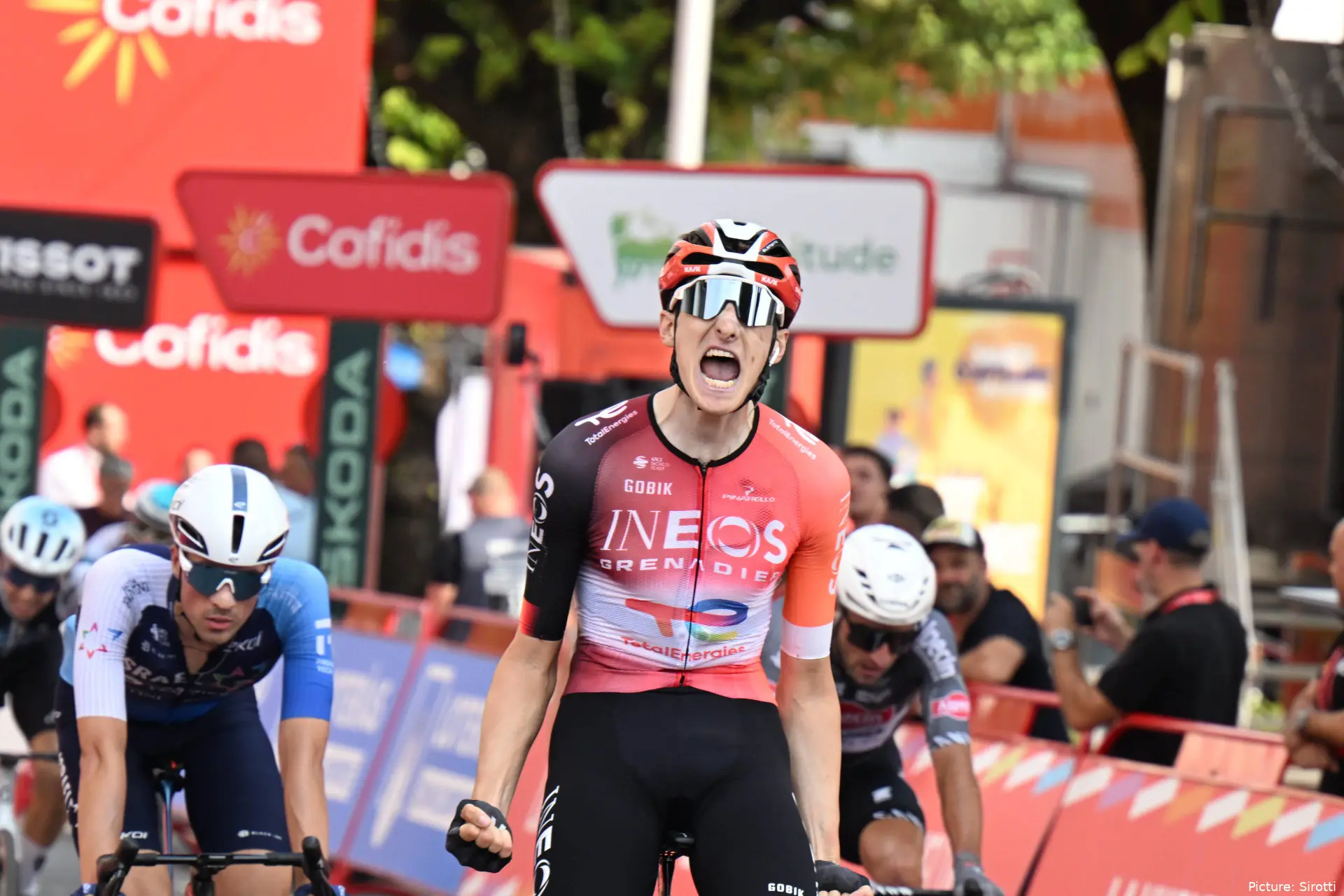
A rider with proven Grand Tour stage-winning quality could be on the move, with Belgian outlet HLN reporting that Ben Turner has reached an agreement to join Soudal - Quick-Step.
Turner underlined his finishing ability on one of cycling’s biggest stages with a victory at the 2025 Vuelta a Espana, a result that marked him out as more than just a classics engine. For a rider already valued for his strength across cobbles and rolling terrain, it added a second dimension, one that suggested further progression was still to come. That is what makes his 2026 season, and the timing of this reported move, particularly interesting.
Momentum stalls after breakthrough moment
Rather than building directly on that Vuelta success, Turner’s current campaign has unfolded in a more complicated way. An early-season top ten overall at the Volta a la Comunitat Valenciana pointed towards a broader role within INEOS Grenadiers, with the Brit trusted both to hold position in the general classification and to act as a sprint option on selective finishes. It was a glimpse of a rider being given more responsibility.
But the spring that followed never fully materialised. Mechanical issues at key moments and a heavy crash during the cobbled campaign disrupted his run into the races that best suit his profile. The result is a season that, on paper, lacks a defining performance, even if the underlying level has not necessarily dropped.
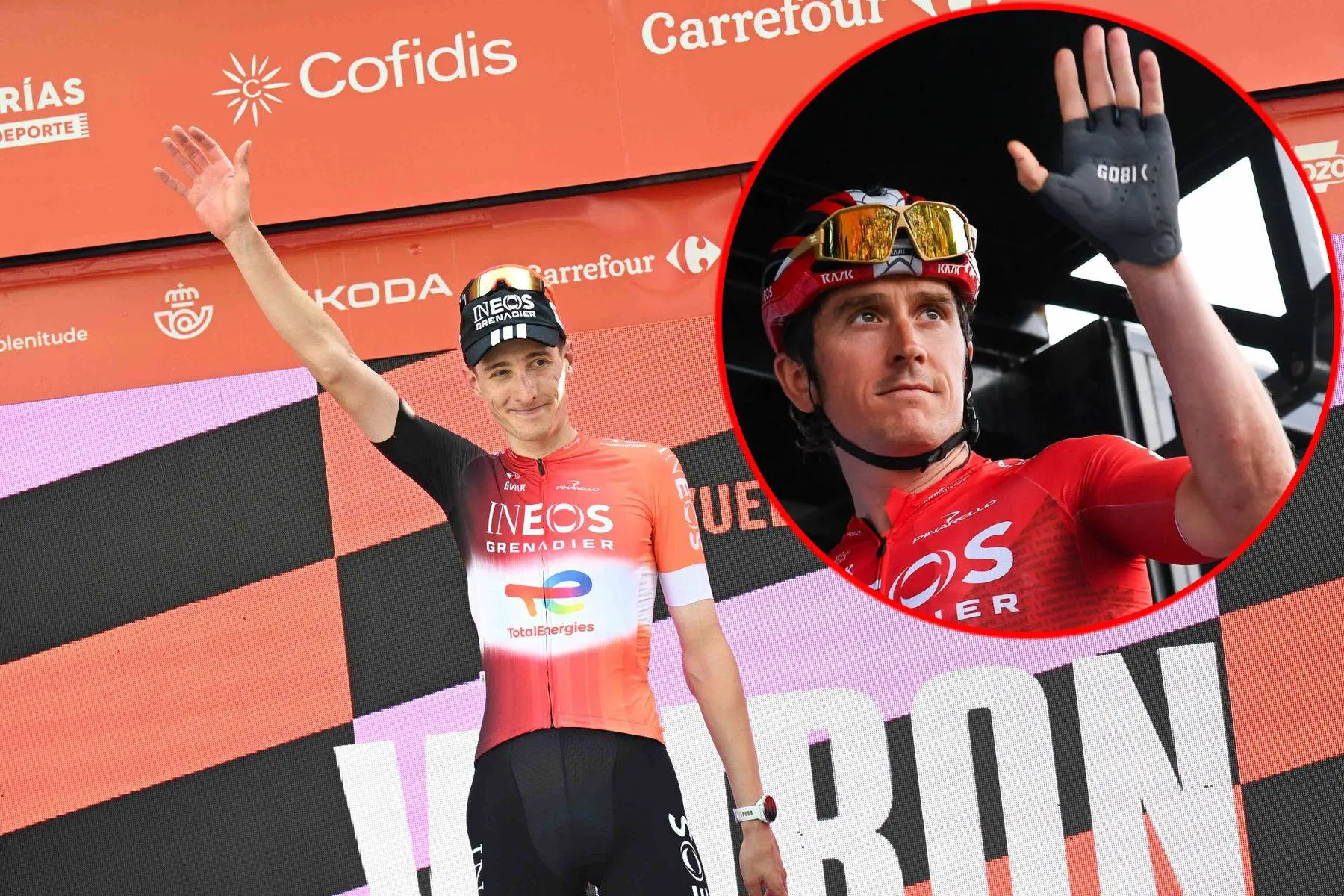
In that context, the idea of INEOS allowing Turner to move on becomes easier to understand. Not as a rejection of his ability, but as a consequence of a squad where roles remain tightly defined, and opportunities at the sharp end are limited.
Read also
Why Quick-Step makes sense
According to HLN, Turner’s reported agreement forms part of a broader squad reshaping under CEO Jurgen Fore, with a clear focus on younger, more versatile riders. That direction aligns closely with Turner’s profile.
A proven classics performer who can handle demanding one-day races, but also a rider capable of finishing from reduced groups, he offers flexibility within a team that has historically thrived on depth rather than a single protected leader in many races.
Alongside an established core that includes Jasper Stuyven, Dylan van Baarle and Yves Lampaert, Turner would not be arriving to lead outright, but to contribute to a structure where multiple options can be played depending on how a race unfolds.

Ben Turner also had success at the Tour de Pologne in 2025
A move that raises as many questions as answers
If confirmed, the transfer would represent a change of environment rather than a guaranteed change of status.
Turner leaves INEOS as a rider who has already shown he can win at the highest level, but who has yet to fully convert that breakthrough into consistent headline results. At Quick-Step, he would enter a system designed to maximise collective strength in the classics, but one that is unlikely to revolve around a single new arrival.
That leaves the central question unresolved. Is this the move that allows Turner to build on his Vuelta stage-winning peak, or simply a different setting in which he continues to play a similar role?
The answer may depend less on the transfer itself, and more on whether he can finally string together the kind of uninterrupted run that has so far eluded his 2026 season.

Kieran WoodDeputy Editor-in-Chief
Kieran Wood is a sports journalist based in Wales and has been active in journalism since 2022. He regularly contributes to DartsNews.com and CyclingUpToDate.com, where he covers professional cycling and darts. In cycling, his work includes liveblogs from major races, including the Tour de France, the Giro d’Italia, and La Vuelta a España, alongside race reports and analysis. He has also conducted interviews with professional riders.
His reporting spans the full racing calendar, from one-day classics to stage races, with a focus on accurate, real-time coverage and clear contextual analysis. For statistics, results, and historical context, he regularly uses resources such as ProCyclingStats. To support reporting on rider activity and training context where relevant, he also references Strava.
In his work, Kieran places strong emphasis on careful sourcing, editorial accuracy, and updating articles as new, verified information becomes available.
claps 2visitors 2
Just in
Popular news
Latest comments
- I raced as an amateur for 12 years, including six years on my country’s national road cycling team. I secured two national titles and competed in three World Championships plus more than 15 international stage races. At 23, we travelled to Italy for a training camp—or so I assumed. On a rest day, we watched a presentation about adopting a more “professional” training approach. It was crystal clear what “professional” meant. That moment first exposed me to this dilemma. After returning from Italy, I left cycling—at least at the competitive level I had known. Over the following two years, the whole team was caught doping. I hold that everyone is innocent until proven guilty. In my view, current stakeholders operate on a different scale, and the sums involved are vast. I am unsure whether any doping would ever be revealed. I try to stay positive and enjoy the show. My 2c.
 vannpelt17-10-2026
 - Fiver he wins 🤣
 leedorney17-10-2026
 - “…measures to reduce speeds.” Might as well shorten the race course to just 50km as well? ASO generates at minimum €300m a year and 30- 40% profit. Maybe stop being greedy and spend more of the profit to protect the riders instead.b3tlla17-10-2026
- he also had quite the life off the bike during his pro years. he used his celebrity status to full affect.mij17-10-2026
- Nairo and Froome’s battles were great.mij17-10-2026
- I think it is a good sign to have only signed a couple of riders. it shows their system is working - retention of their own riders and using their development squad. As for retention of their own riders, they won a GT, a monument, they took a points jersey in another GT. They have a U23 WC. They have multiple one day and one week race wins. Keep the core. Their development squad has delivered fantastic results. And for all the talk of Vismas decline, their culture must be amazing since no one signed elsewhere. That is a very GOOD sign.mij17-10-2026
- Why is it beyond people's intellectual capabilities to stop accusing others of doping without proof? How are we supposed to live in a world where suspicion is evidence of guilt?This is pure infantile asinine nonsense.
 Brucegel17-10-2026
 - is that the standard for sharing thoughts here?OCexile17-10-2026
- If he was less brilliant than usual at the Tour, then I don't even want to imagine his 'usual' level of brilliance.Cooldude17-10-2026
- ok, i take back my wish. you’re right, i didn’t stop to think about how much i was damaging the sport. that was a close one. sometimes i forget how much power i wield and how capricious i can be…OCexile17-10-2026
Loading
Write a comment