“Van Aert played it very well. He knew pulling was a trap” - Bruyneel and Hincapie claim Pogacar played right into rival’s hands at Paris-Roubaix
Cycling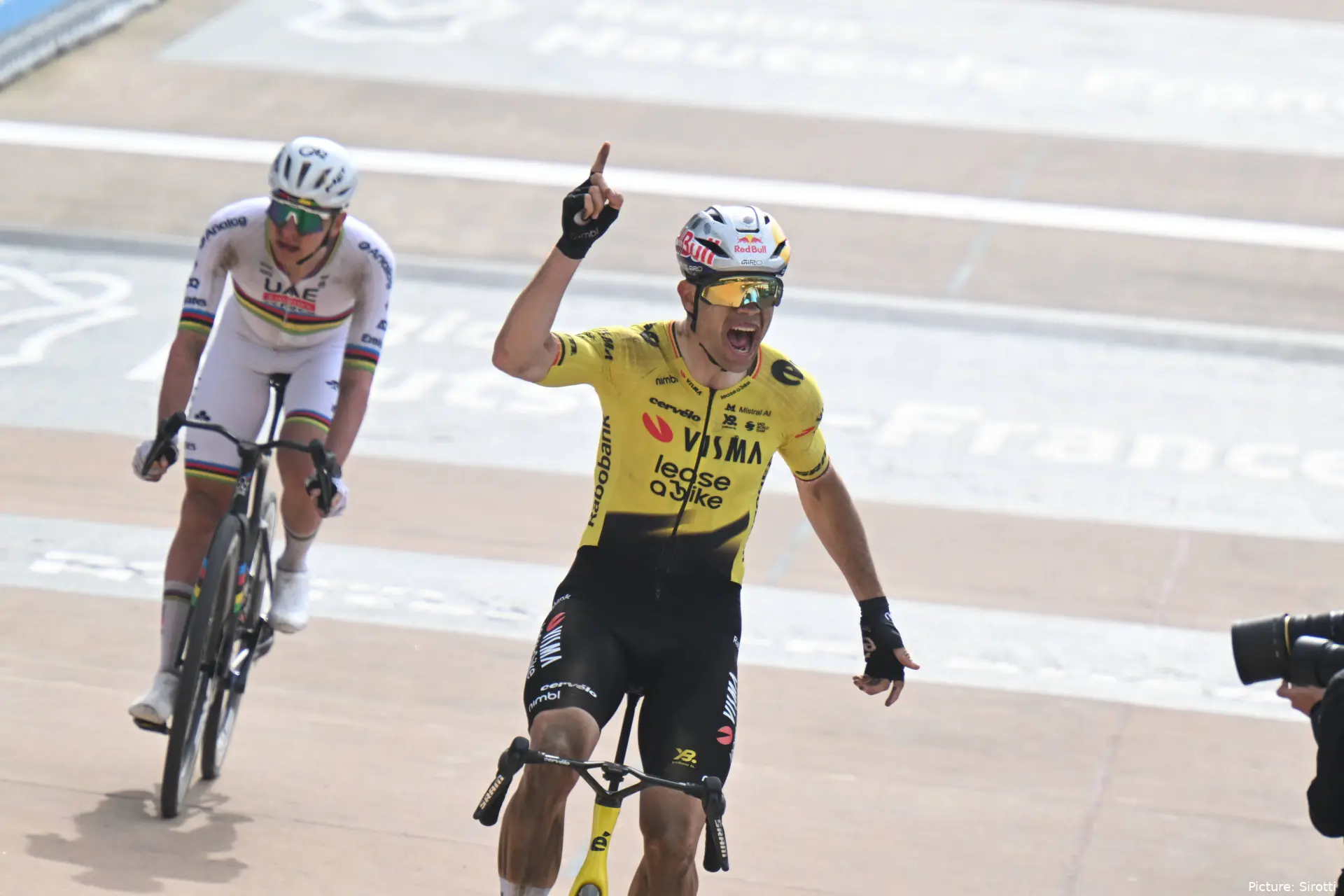
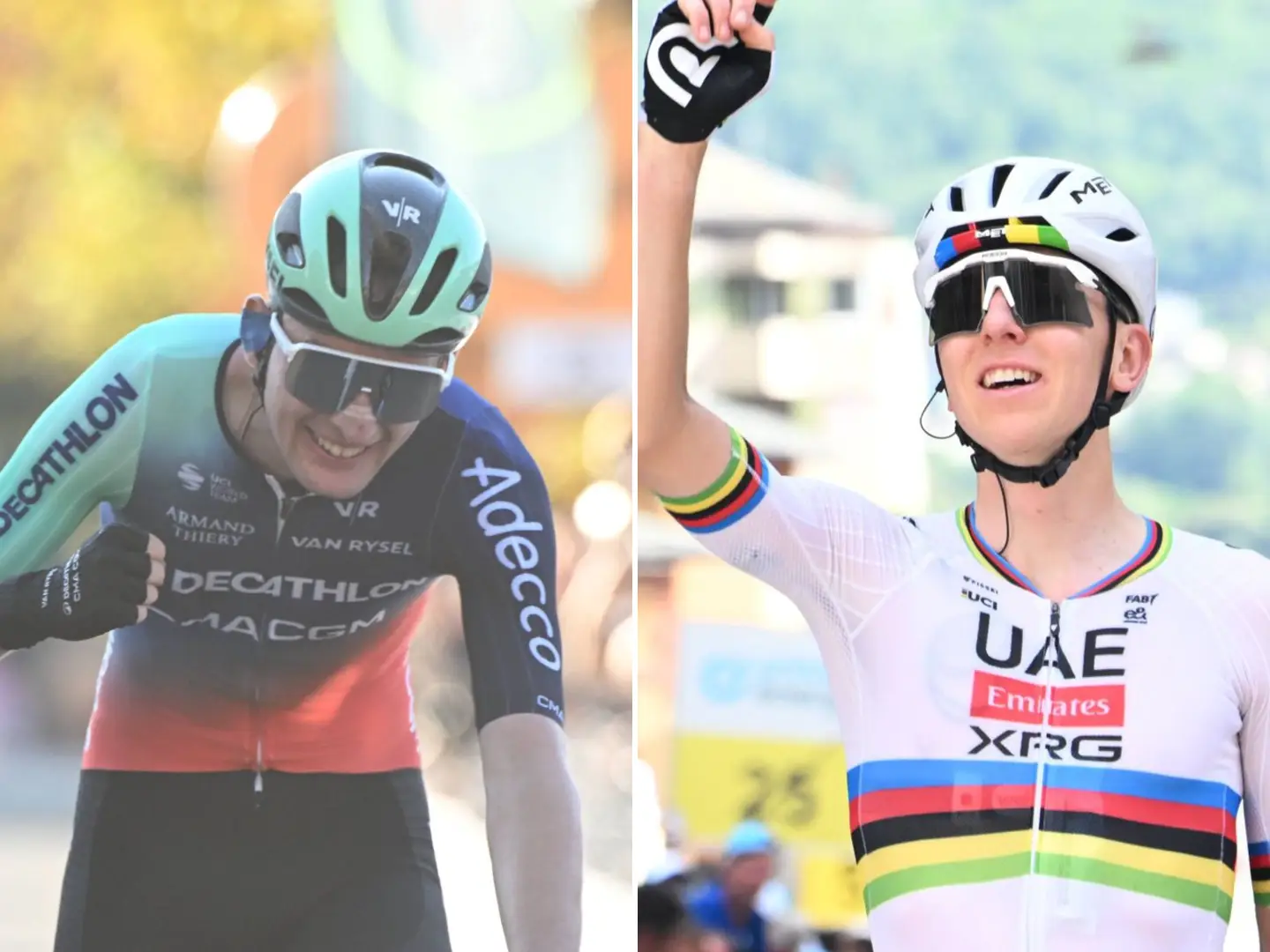
The aftermath of Paris-Roubaix 2026 has centred on how Wout van Aert finally converted his strength into victory, and on The Move podcast, Johan Bruyneel and George Hincapie offered a clear explanation: this was not just about power, but precision.
Up against Tadej Pogacar in the decisive move, Van Aert’s victory was shaped by reading the race correctly when it mattered most.
Chaos from the start as Roubaix explodes early
From the opening kilometres, this was not a typical Paris-Roubaix. Hincapie, speaking from the team car perspective, described a race already on the limit before the cobbles had even begun. “These guys are insane. They’re warriors. What a wild race from this perspective,” he said, before adding: “It was full gas from the start… There was no break. The amount of chaos between riders, directors, and cars is incredible.”
That relentless pace was backed up by Bruyneel’s numbers. “They did the first 100 kilometres in an hour and fifteen minutes… before the cobbles,” he said, a speed that effectively decided the race early. “Half the peloton is eliminated” before the key sectors even arrive.
Speed driving punctures and reshaping the race
One of the defining features of the 2026 edition was the sheer number of punctures among the favourites. Both analysts pointed to speed as the root cause. “The only explanation I find is that the speed is much higher and it’s harder to pick a line,” Hincapie explained. “You’re going over 50 km/h, you can’t see the rocks or choose your way… they’re hitting them much harder than in training.”
Bruyneel reinforced that point with the data. “48.9 km/h on average. It’s crazy.”
In those conditions, the race became less about avoiding problems and more about when they happened. Tadej Pogacar, Mathieu van der Poel and Van Aert all suffered issues, but the timing of each incident ultimately shaped the outcome.

Wout van Aert overpowered Tadej Pogacar
Arenberg chaos defines the race
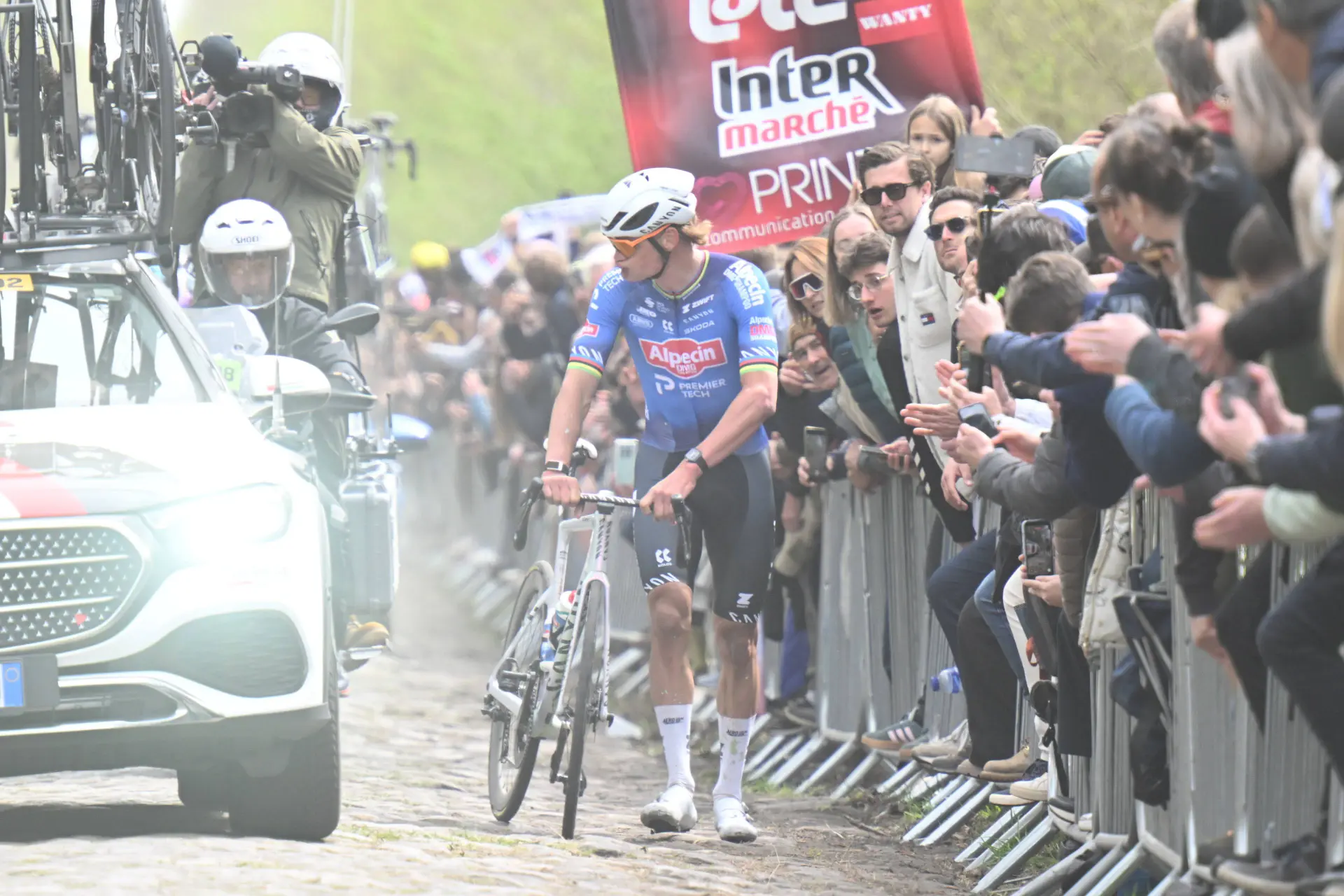
As so often, the Trouée d’Arenberg proved decisive. Bruyneel pointed directly to the moment that changed everything: “The turning point was Van der Poel’s mechanical in the Arenberg forest.”
What followed was one of the most unusual scenes of the race. Van der Poel attempted to switch bikes but was unable to ride his team-mate’s machine due to incompatible pedals. Hincapie described the moment in disbelief: “Seeing him get off the bike 50 metres later, walk back… we’d never seen anything like it.”
Bruyneel suggested that the situation could have been handled differently. “In a panic situation… he should have waited for his other team-mate, who couldn’t have been more than 30 seconds away.”
That sequence of events allowed the decisive front group to form, with Van Aert and Pogacar emerging as the strongest.
Van Aert’s decisive tactical edge over Pogacar
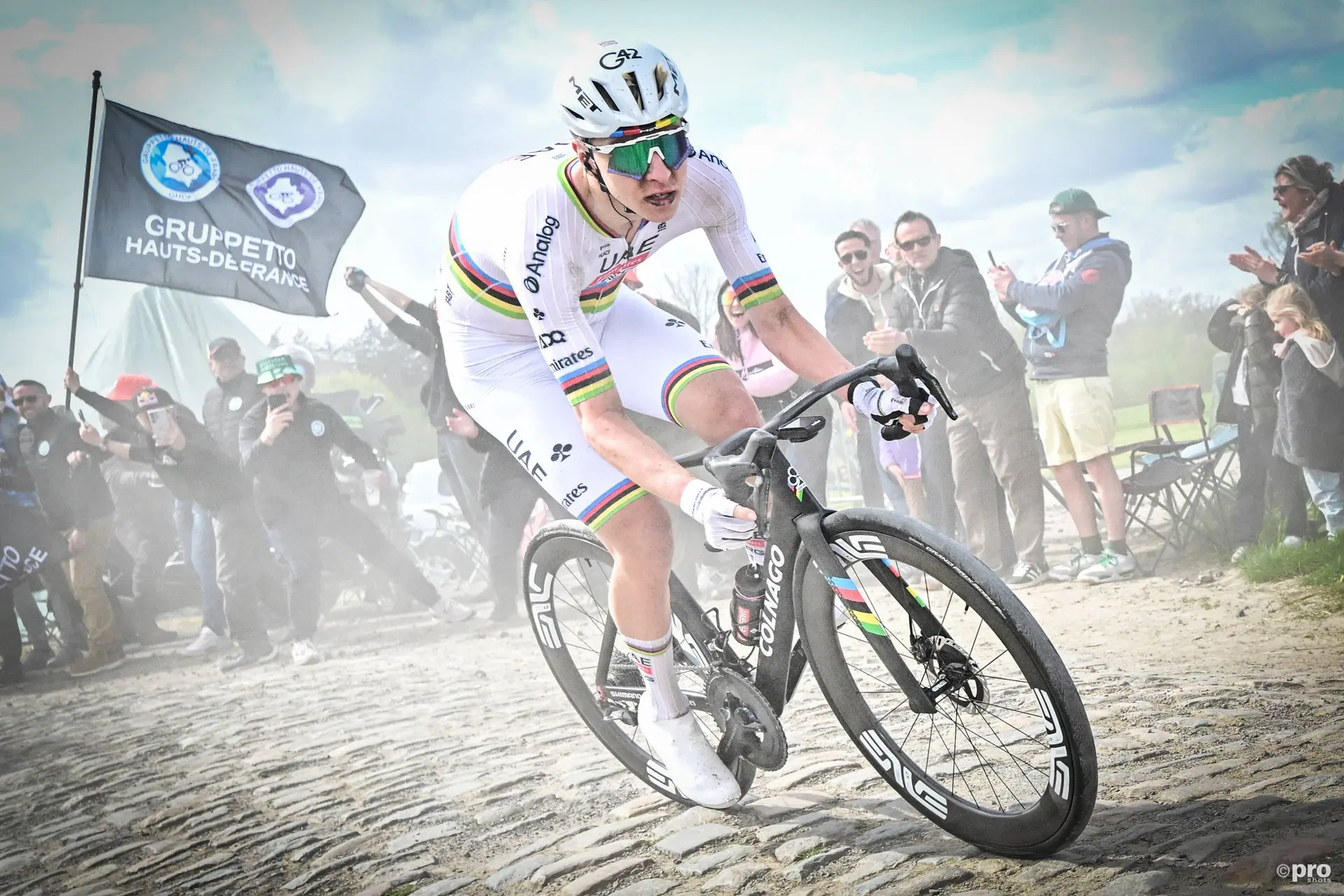
From there, the race became a direct contest between two riders, and it was here that Van Aert’s decision-making stood out. Hincapie explained the key moment: “Van Aert played it perfectly. He knew pulling was a trap, because Pogacar was going to attack him on the cobbles.”
Instead of forcing the race, Van Aert stayed composed. “He just had to hold his wheel.”
Bruyneel also highlighted his positioning and timing. “He was first into Arenberg, the strongest there… and then the one who launched the decisive attack.”
For the former team manager, the conclusion was simple: “A totally deserved win for Van Aert.”
Pogacar left with little room to change the outcome
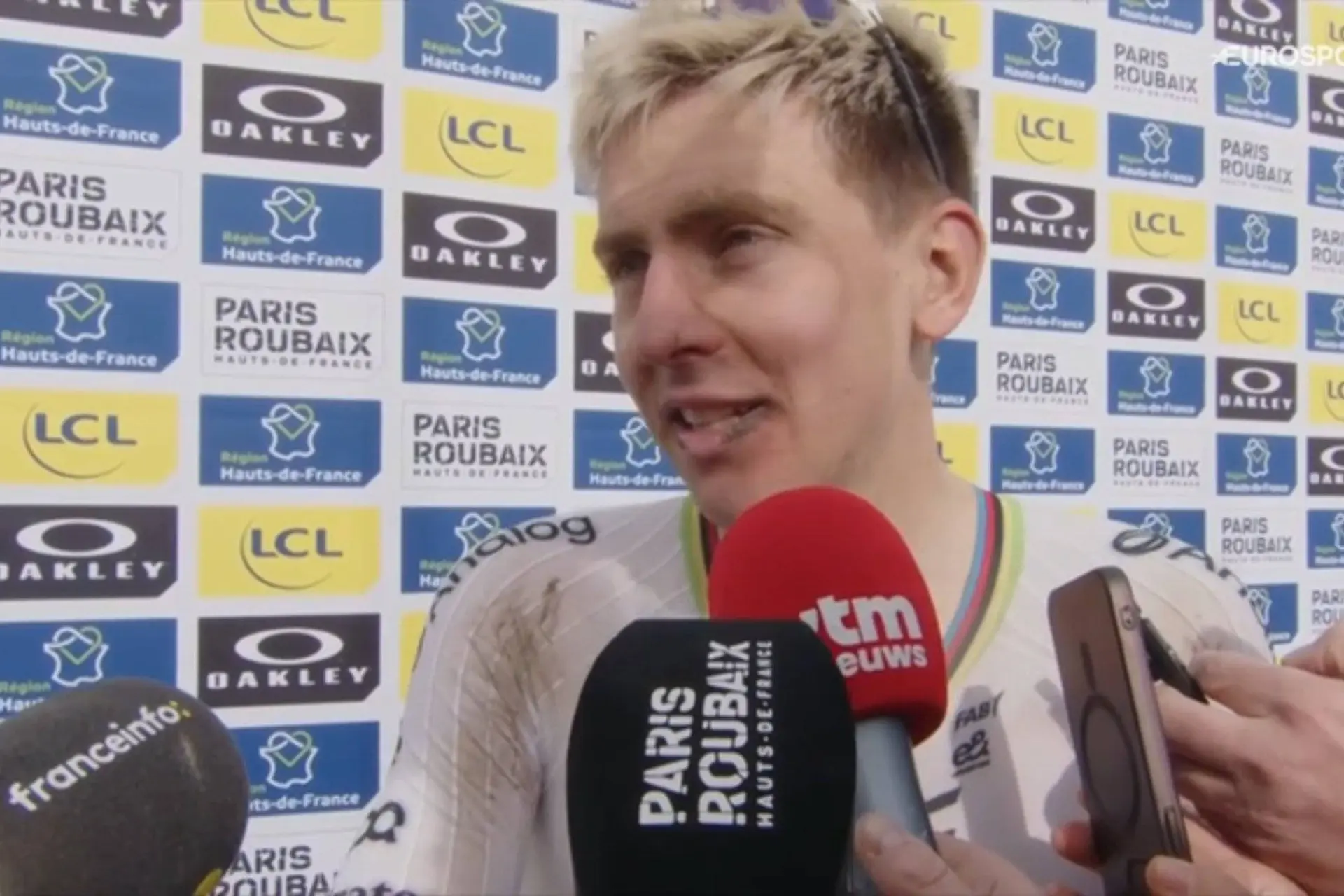
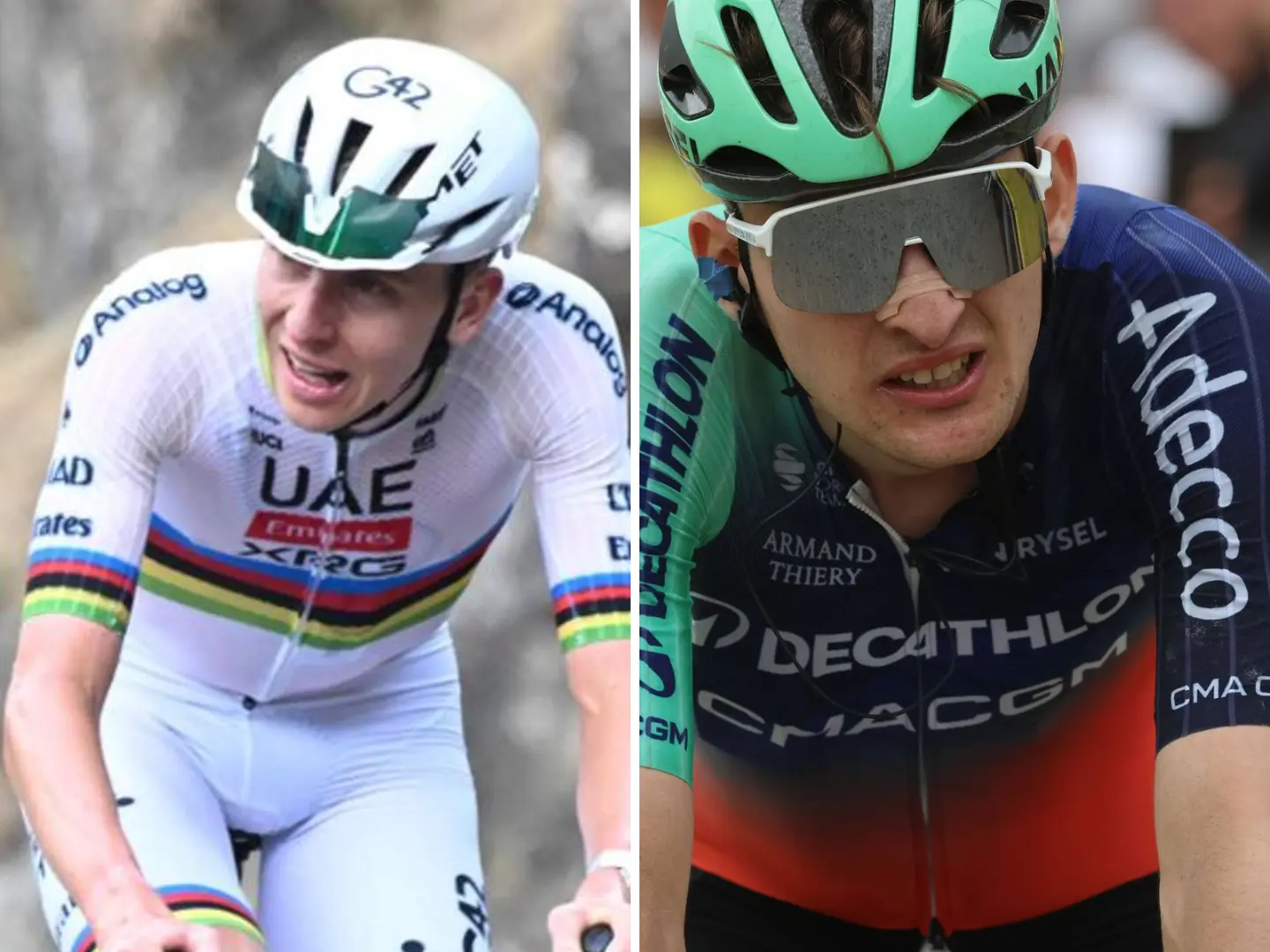
For Pogacar, there was little criticism from the analysts. “There wasn’t much he could have done differently,” Bruyneel said, pointing instead to the cost of earlier efforts. “He spent a lot of energy on that 20-kilometre chase after the puncture.”
Hincapie added another detail, suggesting the team’s aggressive approach may have played a role. “Maybe they used their teammates too early.”
By the time the race reached its decisive phase, Pogacar was isolated, and the balance had shifted.
An emotional victory for Van Aert
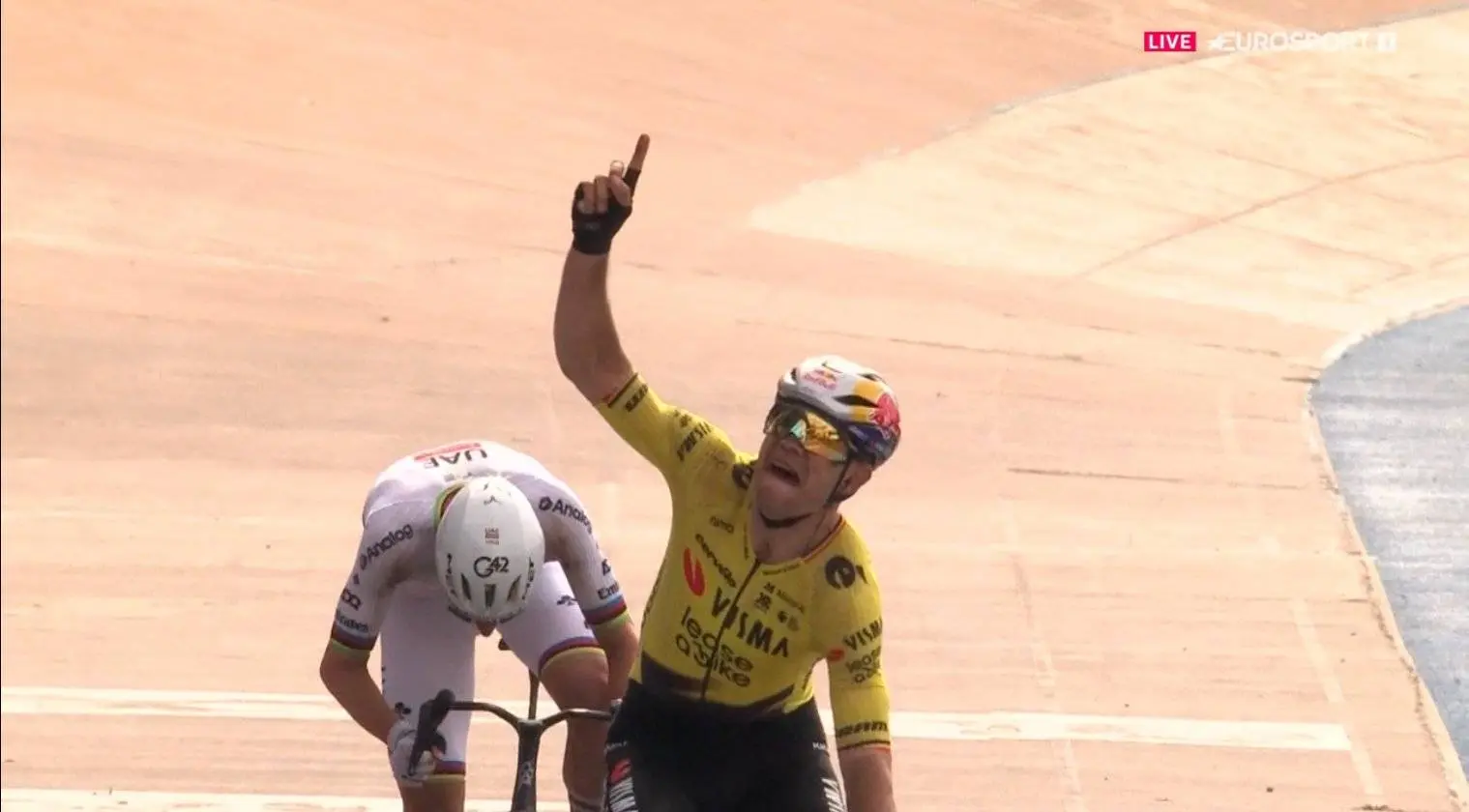
Beyond tactics, the significance of the victory was clear. Bruyneel noted the emotional response immediately after the finish. “We had never seen him so emotional after a race,” he said, highlighting what Roubaix represents to Van Aert. “There are only two races he lives for: Flanders and Roubaix.”
He also pointed to the personal meaning behind the celebration. “He pointed to the sky for his late former teammate… he always thinks of him in this race.”
For Bruyneel, the impact could be lasting. “This is going to give him his self-belief back. He doubted himself many times.”
Hincapie placed the result in a wider context. “It was perfect for cycling. Seeing another rider win a Monument is incredible.”
A complete Paris-Roubaix
Paris-Roubaix 2026 delivered everything the race is known for: extreme speed, constant chaos and decisive moments that came down to instinct as much as strength. Hincapie summed it up from inside the race convoy. “It’s a completely different experience seeing it from the car… You see the riders’ passion and pain.”
Bruyneel’s conclusion captured the essence of the race. In Roubaix, it is not only the strongest rider who wins, but the one who best navigates the chaos. In 2026, that rider was Wout van Aert.

Kieran WoodDeputy Editor-in-Chief
Kieran Wood is a sports journalist based in Wales and has been active in journalism since 2022. He regularly contributes to DartsNews.com and CyclingUpToDate.com, where he covers professional cycling and darts. In cycling, his work includes liveblogs from major races, including the Tour de France, the Giro d’Italia, and La Vuelta a España, alongside race reports and analysis. He has also conducted interviews with professional riders.
His reporting spans the full racing calendar, from one-day classics to stage races, with a focus on accurate, real-time coverage and clear contextual analysis. For statistics, results, and historical context, he regularly uses resources such as ProCyclingStats. To support reporting on rider activity and training context where relevant, he also references Strava.
In his work, Kieran places strong emphasis on careful sourcing, editorial accuracy, and updating articles as new, verified information becomes available.
claps 6visitors 6
Just in

Popular news
Latest comments
- Slowly, very slowly... 5-7 yrs. ;)MajorPayne13-10-2026
- Up to this point: "It is just not yet at the level of Vingegaard and Pogacar." First Jonas, and then level of Tadej. Period!MajorPayne13-10-2026
- The sport has long had a divide between the more diesel-like riders and the more explosive riders. Where does Pogačar fit? His explosive attacks are followed by a high speed diesel climb and he's rarely been caught in the past 5 years (people can name the moments, it's so rare). Seixas is young and we have no idea where his body will end up on this spectrum (just like we didn't with Pogačar when he was 20 and being a diesel up the Vuelta mountains of 2019). Speculation is fun, being a fan while it unfolds is going to be more fun.RidesHills13-10-2026
- yeah it'll be an epoch shift when Pog can't drop people, and/or when they start dropping him.wrsty13-10-2026
- Yes, he won't ride away yet, but he will and that day will be notable
 leedorney13-10-2026
 - Expect the young French rider to slowly asphyxiate the Slovenian into retirement.
 Front24213-10-2026
 - My thinking is that Pog's experience and strength would have outweighed any fatigue in Il Lombardia. But the sad thing is, we'll never see peak Pog (call it Pog 2) go head to head with Seixas. However well he recovers from his crash, he'll return as Pog 3, with the shadow of severe concussion always there.Hills3313-10-2026
- Some speculation and opinion. Had Tadej not crashed out of the Vuelta he would have been less fresh and I'm not sure he would have beaten Seixas in this race. Maybe he would have been able to contest the race in a sprint and maybe not. Believe me when I say I keep up with many of Tadej's climbing feats and records and I understand how great he is but the Paul we just saw at Il Lombardia was not that far behind Tadej.awp13-10-2026
- Firstly, someone who says parenting is babysitting is delusional and shouldn't be taken seriously. Secondly, with pro athletes it is not the same as a normal worker. They are being rewarded for doing something for which they have a talent which doesn't actually help people (besides inspiration). It's quite a different dynamic
 Rafionain-Glas12-10-2026
 - only way for him to effectively learn to microdose is to go to uae. other than that there is no reason for him to go to uae.whkman12-10-2026
Loading
1 Comments