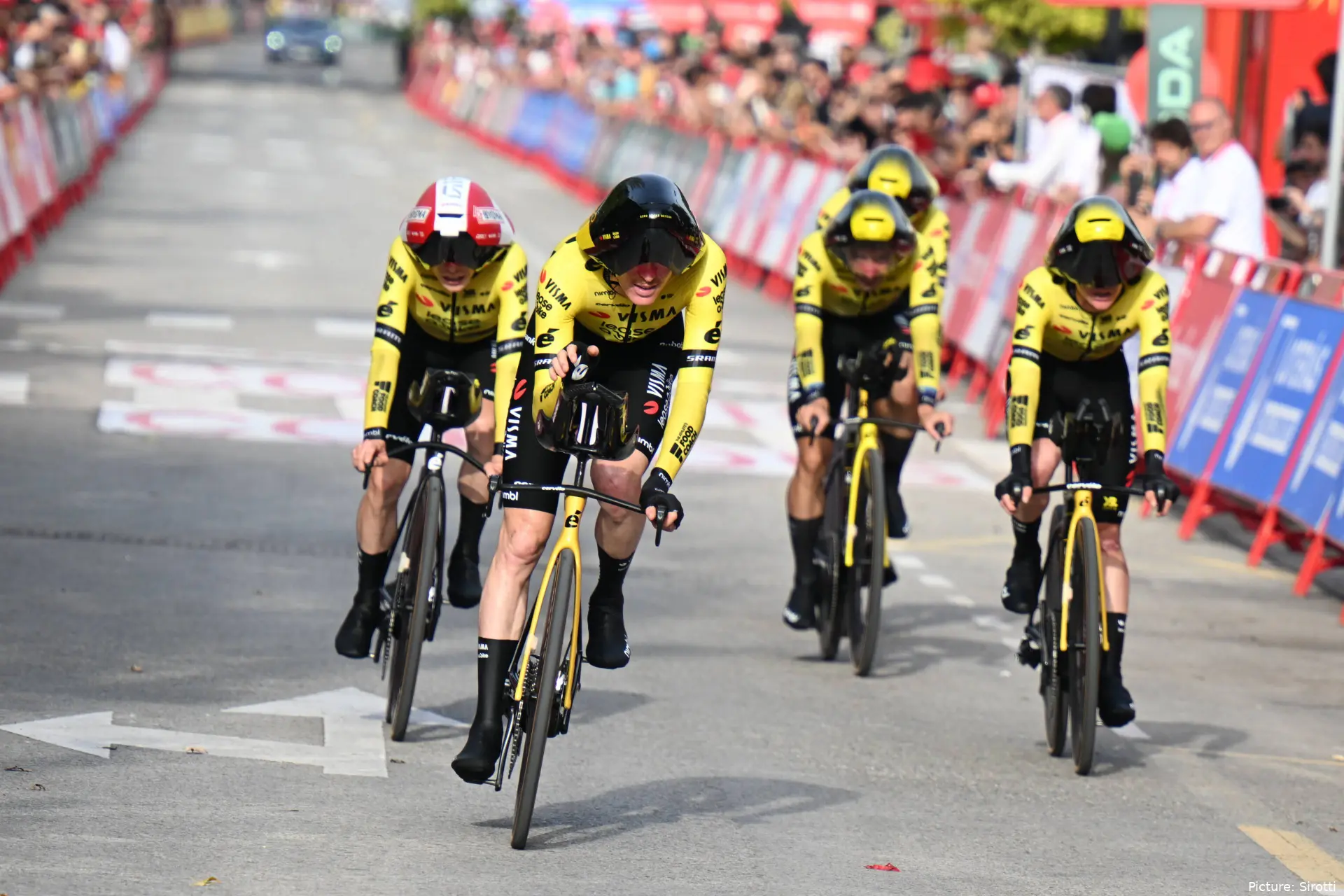
Former professional cyclist Lars van den Berg has raised
sharp questions over Team Visma | Lease a Bike’s strategy at the recent Tour of
Slovakia. The race was dominated by Paul Magnier, who claimed the first four
stages, yet the spotlight fell on Visma’s surprising failure to convert their
strength on the decisive queen stage into victory.
Speaking with Ramon Sinkeldam on Beyond The Kom, Van den
Berg dissected what he saw as missteps. “It was a stage of only 124 kilometers:
a junior distance,” he began. “At the beginning, there were three climbs of
three kilometers each at nine percent gradient. They did a loop. After those
three climbs, Visma was in a group of twenty riders, with six riders at the
front. Only one rider had been dropped.”
The Dutchman explained that after the initial climbs, the
road flattened. “Then it was flat forty kilometers, after which there was a
6.5-kilometer climb at 5.5 percent,” he said. “What does Visma do? They ride
with three riders at the front to the last climb and then start attacking.
Lemmen then slides away with Double, gets dropped in the final kilometer, and
Visma ultimately doesn't win.”
Van den Berg, who was forced to retire earlier this year at
age 27 due to heart problems, knows firsthand how harsh the sport can be. At
the time, he reflected, “The news came as a huge shock. This winter, I finally
felt like I was rediscovering my form after a long and challenging road back.
But after extensive monitoring, my cardiologists have determined that the risks
are simply too great. And just like that, my career as a pro cyclist has come
to an abrupt and heartbreaking end.”
His analysis of Visma’s tactics in Slovakia carried that
same directness. “It's much better to capitalize on that numerical advantage.
Trying to break away in small groups on that flat surface. You know: Double
can't be there. At some point, you just have to attack.”
Visma have been subject to significant criticism throughout
2025 for some of their stage race tactics. That being said, they won 2/3 of the
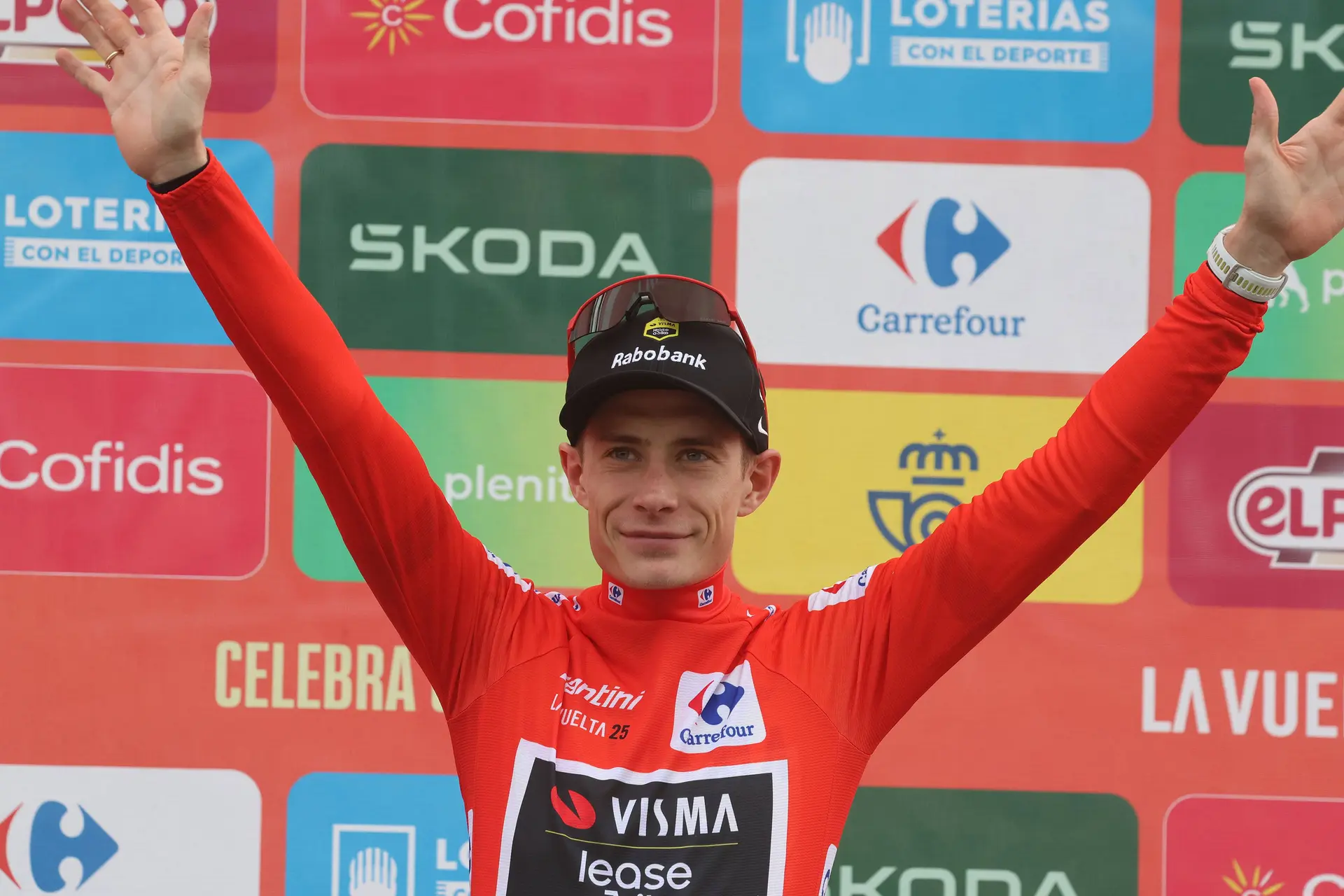
year’s grand tours, with Simon Yates victorious at the Giro d’Italia, and Jonas
Vingegaard winning the Vuelta a Espana.
For Van den Berg, the logic seemed obvious. “Then you have
to make sure that Lemmen, Uijtdebroeks, or Gloa, those are their three best
climbers, break away without Double. Isn't it strange? Uijtdebroeks was
actually the chosen favorite,” he pointed out. Sinkeldam pushed back,
suggesting it was natural for Visma to trust their top man, asking, “Then it's
not so strange that they have confidence in him, is it?”
Yet Van den Berg stuck to his argument. “It's quite strange
then that you ride away with a group without Uijtdebroeks in the end. It was
his first race after his injury. So it was already quite impressive that he was
in such good form. If you haven't raced for a long time, you can't count on or
rely on things turning out well.”
Visma ultimately filled the top five with three riders, second,
third, and fifth, but Van den Berg still viewed it as a missed opportunity. “In
the end, they finished second, third, and fifth. I just find that crazy. That
you don't think: let's try to break away in the kilometers before the climb
with a group without Double. He was actually the only guy you knew could
potentially be stronger.”
Even the earlier climbing phase left him with questions.
“Uijtdebroeks couldn't drop Double on those three steep climbs. He wanted to do
that at all costs. After that, there were still 45 kilometers of flat terrain,
so where are you going to ride after that? It was certainly special,” Van den
Berg concluded.
Read also

Fin MajorCycling Journalist
Fin Major is a UK-based writer at CyclingUpToDate and has been part of the team since 2024. He is the site’s main writer for FAQs and evergreen explainers and has written around 2,000 pieces for the platform. Alongside this work, he focuses on in-depth analysis and covers the biggest races on the calendar, including the Tour de France, the Giro d’Italia, and La Vuelta a España, providing clear context around performance trends, tactics, and key storylines.
In his reporting, Fin uses reputable data sources such as ProCyclingStats for results, statistics, and historical context. He places strong emphasis on careful sourcing, editorial accuracy, and updating articles promptly when new, verified information becomes available. Outside of writing, Fin is an active cyclist, which supports his practical understanding of the sport and its demands.
claps 0visitors 0
Just in
Popular news
Latest comments
- Good grief, who proofreads this stuff? Errors abound.wrsty18-10-2026
- You can add weight to a bike and limit gears or make it single speed if you like. I doubt that would reduce crashes. It would just add another dymanique. All good and well, but It wont stop cars getting on to the course.Cyclingsbestfan18-10-2026
- Seixas is probably second best in the World on short climbs. But that hasn't translated as well to long climbs
 Rafionain-Glas18-10-2026
 - Idiotic fellaRafionain-Glas18-10-2026
- Nothing. Against Pogi nothingabstractengineer18-10-2026
- He didn't even try to sprint all outvappaxbipmv18-10-2026
- Campenaerts looked like a rolling pumpkin with that all orange leaders skinsuit !frieders318-10-2026
- He can take his dumb a$$ politics somehwere else !frieders318-10-2026
- good to have her back. fingers crossed she‘ll be able to stay!Ketterechts17-10-2026
- A tenner and he wins the Tour next year, too 😂anonymouscyclist17-10-2026
Loading
Write a comment