“A dream come true” – double Dutch delight as Arens and Mouris win world championship junior time trials
Cycling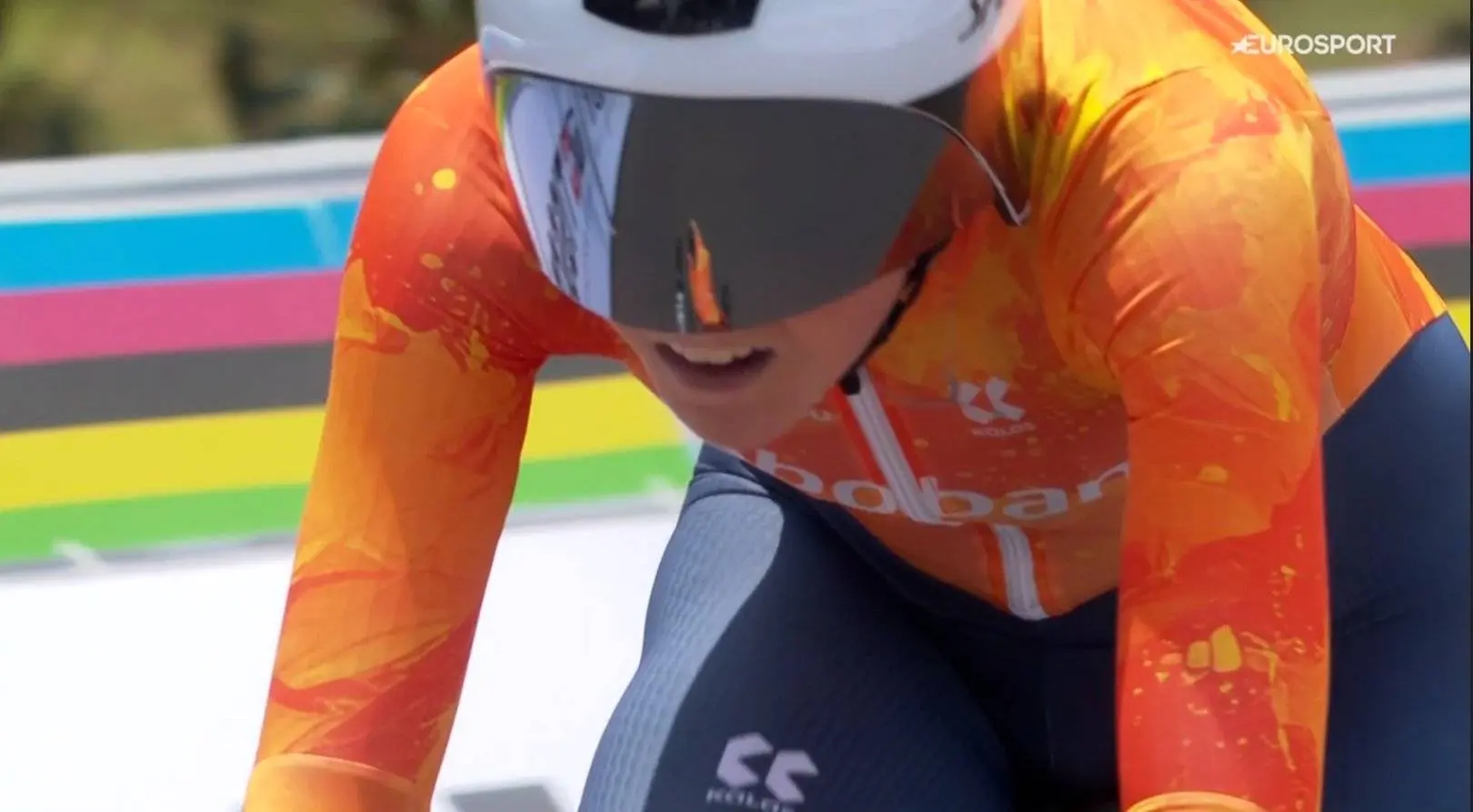
The junior time trial world championships in Kigali
delivered an incredibly double victory for the Netherlands on Tuesday. In the
morning, Megan Arens claimed victory in the women’s junior event. Hours later,
Michiel Mouris completed the sweep by taking gold in the men’s race. For a
nation that has recently scaled back its investment in youth and age-category
programs, the results were a powerful reminder of the depth of Dutch talent.
Arens, who turned 18 in March and only just finished school
this summer, spoke candidly about how her academic obligations had shaped her
preparation. “I had a really stressful year, because I finished high school
this year, so I had a lot of exams and it was really stressful,” she told Cycling
News. Those exams limited her training, though she managed to make the most of
her time. “So that meant that I couldn't really train as much as other people
maybe, but I could focus good on time trials, because those trainings are not
really long. So I think that was a good preparation for this.”
That focus became evident on the technical 18.3-kilometer
course. Arens approached it with a clear plan. “I think that at the beginning
of the race, I tried to pace really good, because in the first downhill you can
push yourself too hard,” she explained. “And you had to believe in yourself
that in the downhill parts you could take some rest because that's good, and so
that in the other uphill parts you can go full out. So I think that was my
plan, and it worked out well. If you speak about a secret, I think that's what
it is.”
Her victory came against a backdrop of uncertainty, with the
Dutch federation choosing not to send riders in the under-23 categories. For
the juniors who did travel, success carried an added sense of pride. “It's
unbelievable,” she said. “I still cannot believe it, actually. I worked so hard
for this, and that it worked out is unbelievable.”
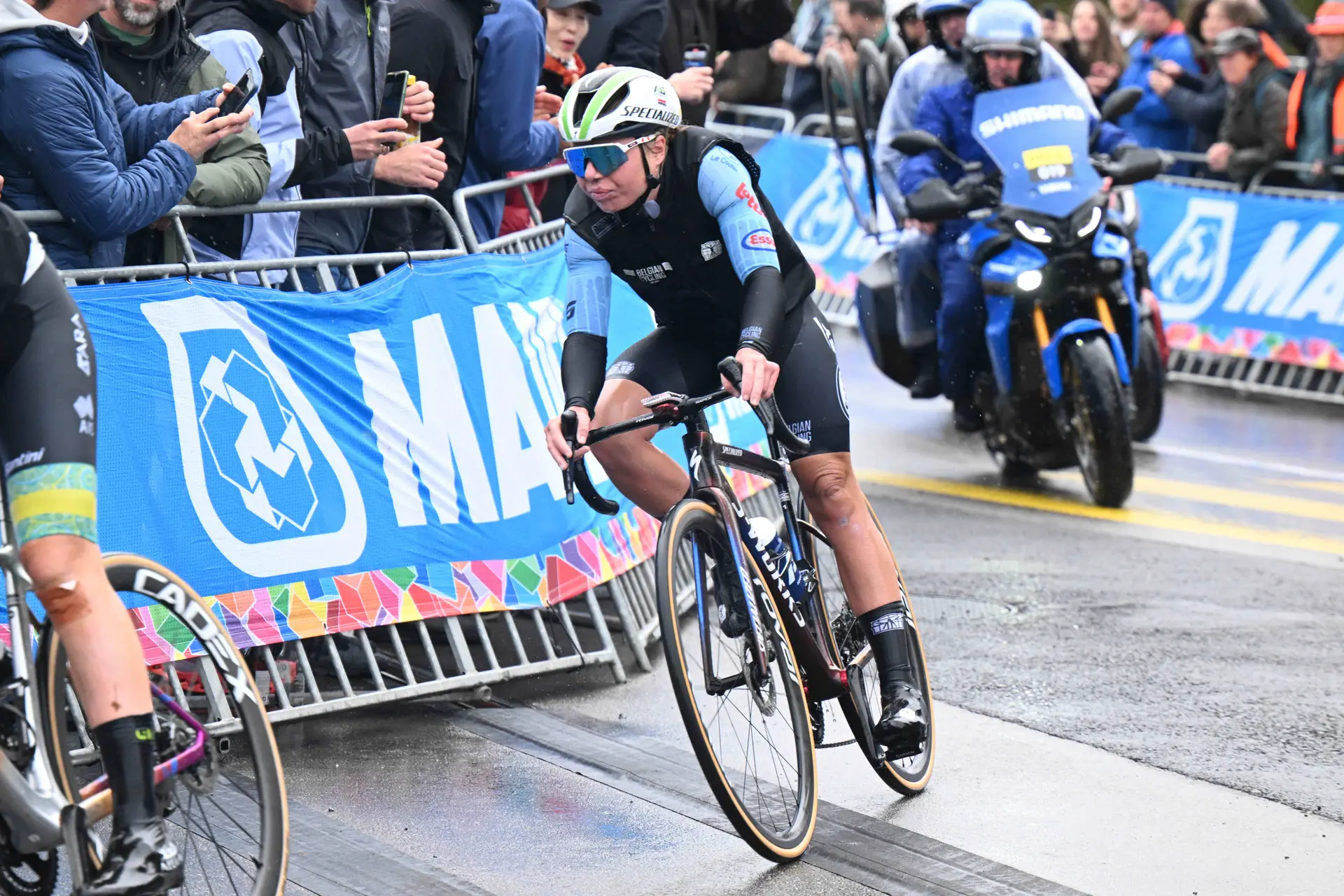
Looking ahead, Arens already has her eyes on the next stage
of her career. “I think for next year it's mainly focusing on learning to ride
in a big peloton. I hope to see myself riding good stage races, and mainly the
mountain races and time trials, of course.”
If Arens’ gold was a story of balancing multiple
responsibilities, Mouris’ win later in the day highlighted meticulous
preparation. The 18-year-old rides for the Red Bull – BORA - hansgrohe
development team and arrived in Kigali well aware of his favorite’s status.
“It's incredible to
win here,” Mouris said to In de Leiderstrui after crossing the line. “It was really tough. You had
the time trials in the past few days, and I knew a lot of riders would blow
themselves up. I tried to start conservatively, but it was still a long way to
the finish. It was a really tough battle with myself.”
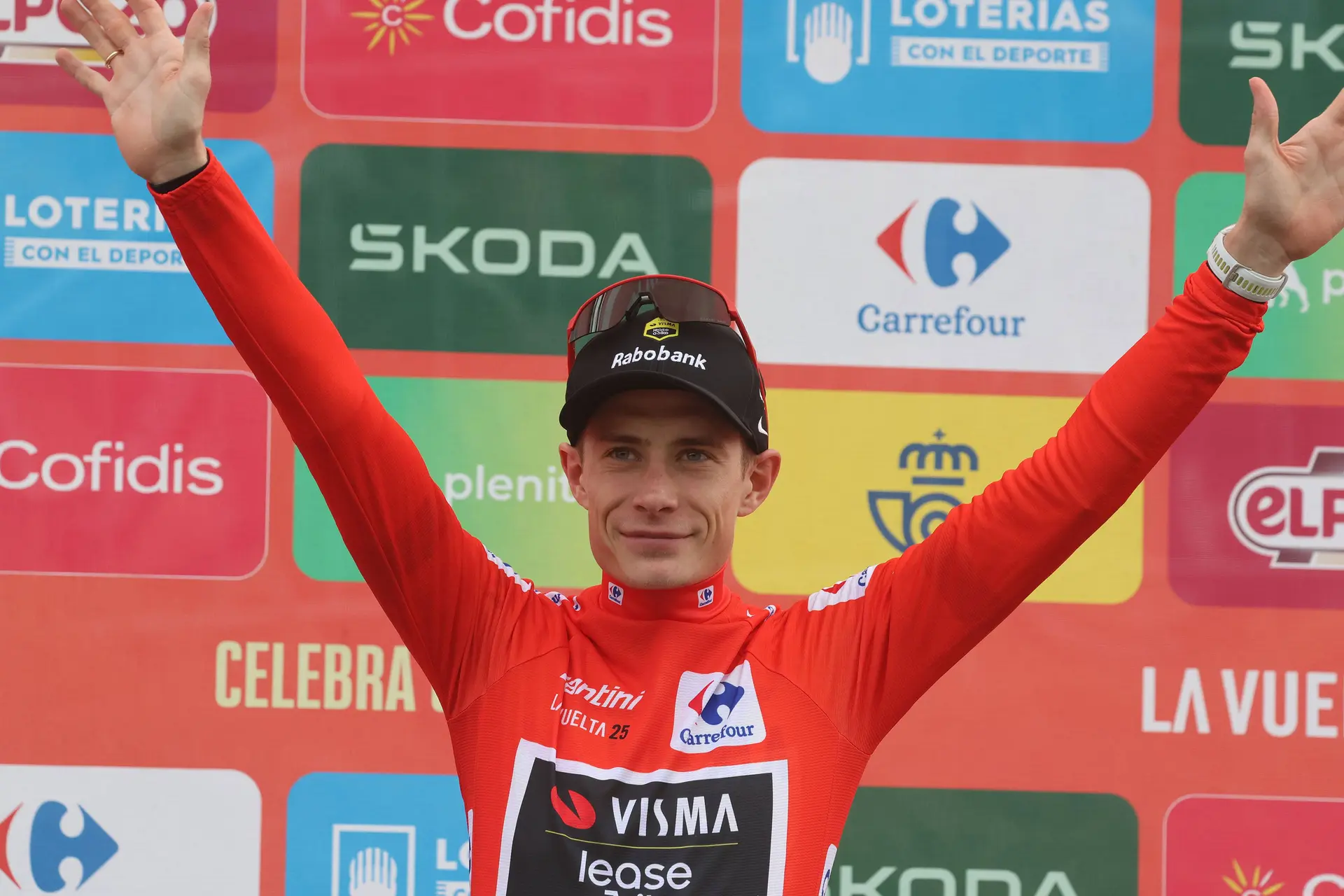
Victory, he admitted, was more than just a personal
milestone. “It's a dream come true,” he said. “It's definitely fantastic for
the whole team. It's unbelievable that we both won. I think that also says
we're in the right place and that everything is going well.”
Mouris described the delicate balance of being both a favourite
and a junior rider, where unpredictability often rules. “I knew I was one of
the favorites, but with the juniors, you always see that special things can
happen,” he explained. The Rwandan conditions added another layer. “The
conditions were also special, where you had to start a bit slower than at sea
level. I was hoping for some cloud cover, but the sun was still shining
brightly. Luckily, we pulled through.”
His win reflected a methodical build-up that left nothing to
chance. “I think a lot has changed. Now that I have a new team, the support is
just perfect. All the knowledge is there, and they can help me with everything
and make sure everything is perfect,” he said. “I've never been so well
prepared for a competition. It started last month, first with the national team
training camp, then straight to altitude to get used to the altitude here, and
then, the last few days at home, in a high-altitude tent to prepare perfectly.”
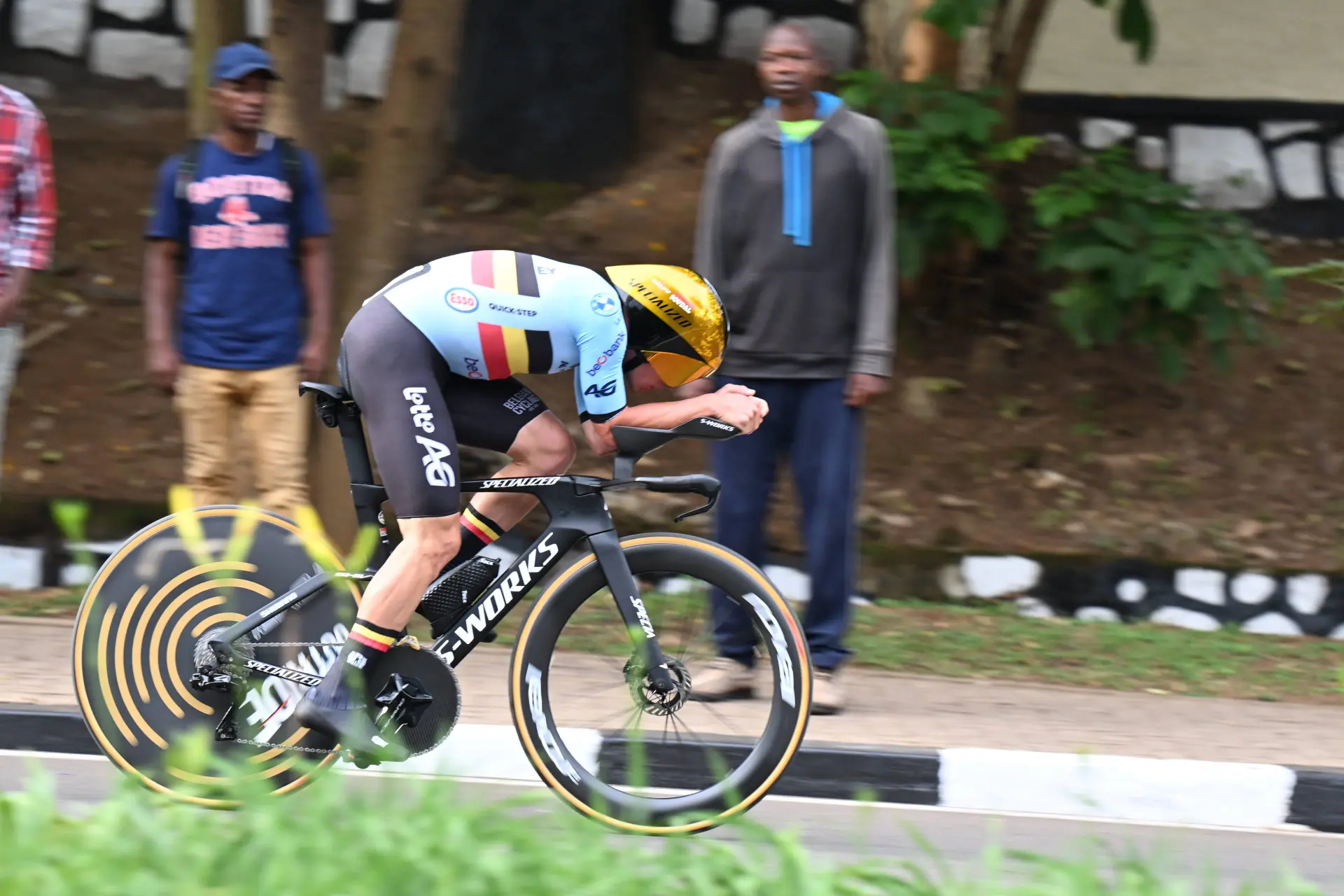
Both Dutch riders were quick to underline the unique
character of the Kigali course, with its cobbled climb to the Convention Centre
finish line and testing elevation. Mouris even pointed out that his own
physical build, often seen as a disadvantage, was not an obstacle. “I think it
suited my abilities. I like to have some rest periods. I can really push myself
on climbs. I'm not the lightest, but as you can see, big guys can win here,” he
said, referencing Sweden’s Jakob Söderqvist, who had won the under-23 race just
a day earlier.
For Arens, it was the culmination of a stressful but
rewarding year. For Mouris, it was confirmation that careful preparation pays
off. And for Dutch cycling as a whole, it was proof that even amid structural
cuts, young talent can still shine on the world stage.

Fin MajorCycling Journalist
Fin Major is a UK-based writer at CyclingUpToDate and has been part of the team since 2024. He is the site’s main writer for FAQs and evergreen explainers and has written around 2,000 pieces for the platform. Alongside this work, he focuses on in-depth analysis and covers the biggest races on the calendar, including the Tour de France, the Giro d’Italia, and La Vuelta a España, providing clear context around performance trends, tactics, and key storylines.
In his reporting, Fin uses reputable data sources such as ProCyclingStats for results, statistics, and historical context. He places strong emphasis on careful sourcing, editorial accuracy, and updating articles promptly when new, verified information becomes available. Outside of writing, Fin is an active cyclist, which supports his practical understanding of the sport and its demands.
claps 0visitors 0
Just in

Popular news
Latest comments
- He didn't even try to sprint all outvappaxbipmv18-10-2026
- Campenaerts looked like a rolling pumpkin with that all orange leaders skinsuit !frieders318-10-2026
- He can take his dumb a$$ politics somehwere else !frieders318-10-2026
- good to have her back. fingers crossed she‘ll be able to stay!Ketterechts17-10-2026
- A tenner and he wins the Tour next year, too 😂anonymouscyclist17-10-2026
- the answer is either stick to classics or GTs but not bothabstractengineer17-10-2026
- the exodus already stared with Ciccone. Already they were struggling with two sprinters, now there are three. Also Ganna will demand leadership. Gall is the most proven GC, Ayuso has the most potential. GC leadership for everybody will be impossible. Literally a UAE style mess without pogi.abstractengineer17-10-2026
- I raced as an amateur for 12 years, including six years on my country’s national road cycling team. I secured two national titles and competed in three World Championships plus more than 15 international stage races. At 23, we travelled to Italy for a training camp—or so I assumed. On a rest day, we watched a presentation about adopting a more “professional” training approach. It was crystal clear what “professional” meant. That moment first exposed me to this dilemma. After returning from Italy, I left cycling—at least at the competitive level I had known. Over the following two years, the whole team was caught doping. I hold that everyone is innocent until proven guilty. In my view, current stakeholders operate on a different scale, and the sums involved are vast. I am unsure whether any doping would ever be revealed. I try to stay positive and enjoy the show. My 2c.
 vannpelt17-10-2026
 - Fiver he wins 🤣
 leedorney17-10-2026
 - “…measures to reduce speeds.” Might as well shorten the race course to just 50km as well? ASO generates at minimum €300m a year and 30- 40% profit. Maybe stop being greedy and spend more of the profit to protect the riders instead.b3tlla17-10-2026
Loading
Write a comment