Three year ban confirmed for Kigali World Championship rider as UCI closes Methamfetamine case
Cycling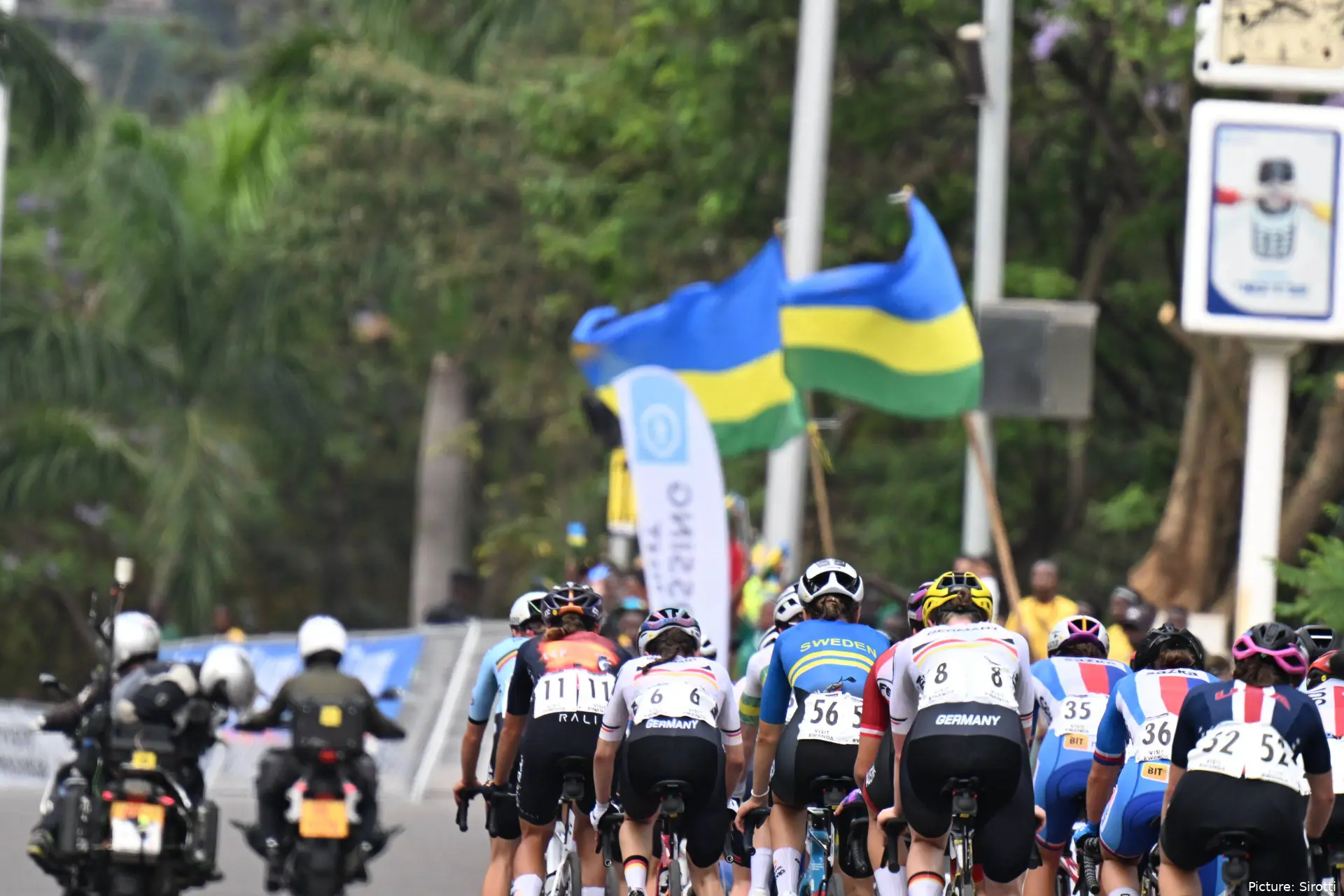
The case that cast a shadow over the junior men’s road race at the 2025 Road World Championships in Kigali has now reached its conclusion. The Union Cycliste Internationale has confirmed that Azerbaijani rider Artyom Proskuryakov has been handed a three-year ban following an Anti-Doping Rule Violation, bringing an end to proceedings that began with a provisional suspension last autumn.
Proskuryakov first came under scrutiny after returning an adverse analytical finding during the World Championships, where two samples collected on 23 September tested positive for Methamfetamine (D-) and its metabolites.
At the time, the UCI imposed a provisional suspension pending assessment under its anti-doping framework.
That process has now resulted in a definitive sanction. The UCI confirmed that Proskuryakov “has been sanctioned with a three-year period of ineligibility” following the violation, with the ban already in force. According to the governing body, “the period of ineligibility started on 18 November 2025 and is effective until 17 November 2028”.
Read also
From provisional suspension to final sanction
The length of the ban underlines the seriousness with which the case has been treated. Methamfetamine (D-) is listed under class S6.A of the Prohibited List, covering non-specified stimulants that are banned in competition, a category that carries limited scope for mitigation once a violation is established.
Rather than proceeding to a full disciplinary hearing, the UCI confirmed that “the case has been resolved by way of an acceptance of consequences as provided for by the Code and the UCI ADR”, a mechanism that allows proceedings to be concluded once responsibility is accepted. With that step taken, the federation stated it “will not comment any further”.
The verdict closes a case that stood out not only because of the substance involved, but also because it emerged at a global championship and within the junior ranks. A three-year period of ineligibility effectively removes Proskuryakov from several key development seasons, with the ban running deep into what would normally be a decisive transition phase from junior to senior racing.
The UCI also reiterated that its anti-doping programme has been delegated to the International Testing Agency since January 2021, with the ITA Cycling Unit leading clean sport efforts across all disciplines, while the UCI retains responsibility for results management and the prosecution of violations.
With the sanction now confirmed and the timeline fixed through to late 2028, the case moves from investigation to consequence. For junior cycling, it serves as a reminder that anti-doping controls and penalties apply with the same force at World Championship level, regardless of age or category.
Read also
Kieran WoodDeputy Editor-in-Chief
Kieran Wood is a sports journalist based in Wales and has been active in journalism since 2022. He regularly contributes to DartsNews.com and CyclingUpToDate.com, where he covers professional cycling and darts. In cycling, his work includes liveblogs from major races, including the Tour de France, the Giro d’Italia, and La Vuelta a España, alongside race reports and analysis. He has also conducted interviews with professional riders.
His reporting spans the full racing calendar, from one-day classics to stage races, with a focus on accurate, real-time coverage and clear contextual analysis. For statistics, results, and historical context, he regularly uses resources such as ProCyclingStats. To support reporting on rider activity and training context where relevant, he also references Strava.
In his work, Kieran places strong emphasis on careful sourcing, editorial accuracy, and updating articles as new, verified information becomes available.
claps 1visitors 1
Just in

Popular news
Latest comments
- Nibali got into the lead because he wanted the team car further forward in the caravan (I love this as a sign of tactical thinking). He solidified the lead on the rainy cobbles day when he was just brilliant, while other contenders crashed out on the wet roads. Strategic and skillful, yes, but the English roads weren’t as decisive as they might seem.RidesHills24-10-2026
- The Domedancy is the one designed for Seixas - anaerobic short climbs. Seixas isn't as good with the long climbs
 Rafionain-Glas24-10-2026
 - no i just type inivitable facts, nothing else. I wish UAE wasnt so damn good but hey the reality is they are. Visma on opposite direction crashing with no money and riders, coaches leaving mid contract ffs..i wish that wasnt the case but im not pretednig its not real when it is reality... RbH and Lidl i UAE cloesst opponents now thats clear. But if were real how can you stop that team with del toor and pogacar (greatest ever rider they made him) and you have mcnulty as a dom with (who would be captain in other teams and wins world and 10 more behind him..) history also says their the best team by far so what you want me to say? fake and be delusional and tell myself things? Its not a matter for praising anyone its a matter of beeing real nothing else, i wish visma for instance was better and like before but they cant buy any proper climbing guys cause their broke...heck they cant even keep their riders and coaches who flee mid contract what you want me to do lol.miguel24-10-2026
- Far as I recall, Nibali used the 2012 tdf UK stages to win it, most wanting to get them over with, cept he built his lead in them.. Armstrong's wrong, IF and it's an IF, the summers good in '27 like 26 then it'll be attritional.. if it's 'normal, then it'll be 50/50 on the weather, also the roads are VERY VERY narrow, very windng + on the 2nd steep short little climbs I know cause it goes thru my arse 👍
 leedorney24-10-2026
 - ❤️Lozza24-10-2026
- No, it's not about him crashing... he just won't win. Ad acta.PogiSloFans24-10-2026
- I'm always gutted to see the road season come to an end, but the excitement for cyclocross to kick off totally makes up for it.anonymouscyclist24-10-2026
- Nah, Pogi will Baby Hulk - "smash" - Remco. Ad acta !!!PogiSloFans24-10-2026
- I expect to read at least one enthusiastic post, regardless of who it concerns from you a year, time is running out. Do you actually like anyone in cycling?Jumpyjohn24-10-2026
- In cycling, any comment before final results is noise as anything can always happen, and even when it doesn’t, something can still happen post race like cancellation of results. I sincerely hope after what’s been happening in athletics recently this isn’t premonitory but there really is no reason to expect cycling to be different.Jumpyjohn24-10-2026
Loading

UCI statement concerning Artyom Proskuryakov bit.ly/4brpK3I

Write a comment