“We’re 100% against this” - Riders’ Union boss speaks out against power data passport in pro cycling
Cycling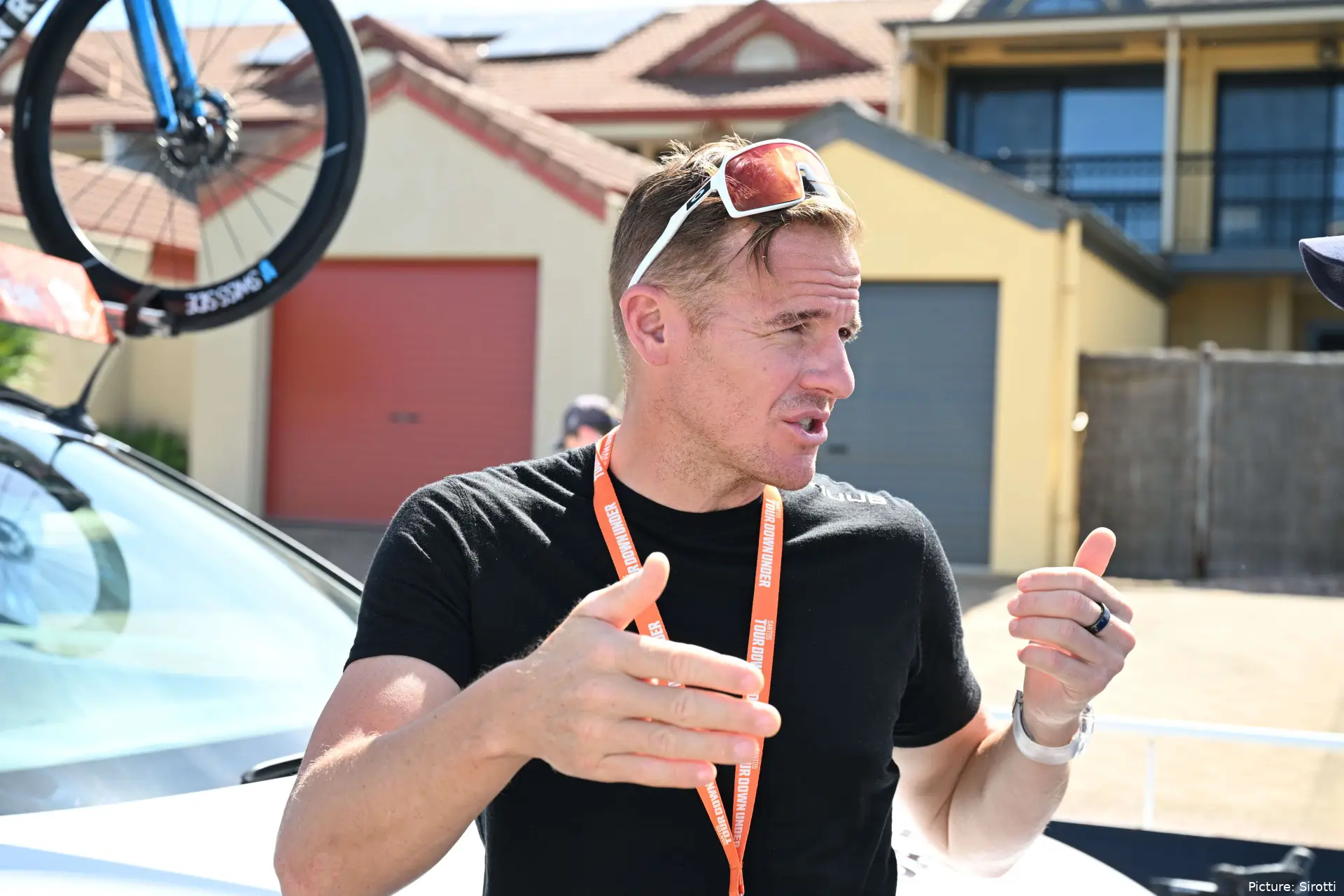
The riders’ union has taken a hard stance against the idea of a power data passport in professional cycling, with CPA president Adam Hansen insisting there is no appetite in the peloton for the concept to move beyond its current pilot stage.
“Now they’re only testing it this year with four teams, and the CPA’s position is very clear: we’re 100% against this and so are the riders,” Hansen said in conversation with Domestique.
The project is being developed by the International Testing Agency as a longitudinal monitoring tool based on riders’ power files, with the aim of supporting intelligence-led anti-doping work and sharpening targeted testing.
But Hansen’s concern is not only about how the data might be used today, but where it could lead once it becomes normalised.
The sanction fear that changes everything
“What they’re testing this year is power data,” Hansen said. “The riders have to submit all the power data, and then they’ll go through it all. If they see things that are irregular, then they'll do more target testing or maybe in the future this could also mean a sanction in itself.”
That possibility is the line in the sand for the CPA: a system built from training and racing files that could evolve from analysis into consequences.

Ex-pro Hansen is the leader of the CPA
Voluntary, until it is not
Hansen also questioned how a voluntary pilot can stay voluntary once the infrastructure exists and expectations build around compliance.
“Ok, it’s only a test. It’s only voluntary, but my question is, ‘What happens if the rider does not submit his power data?’”
He added that the reassurance he has heard does not address the underlying issue. “And they are like, ‘Ah, but it’s just a test.’”
Missing files, malfunctioning kit, and real world training
Hansen pointed to the practical reality that power data is not always clean, complete, or even available, for reasons that have nothing to do with intent. “And if your Garmin falls off, which happens sometimes, and you can’t upload your files, or if your Garmin’s flat, does that mean you can’t go training?”
For riders, the risk is not just technical hassle, but how missing data might be interpreted. “There’s so many factors where a rider just won’t have his training data, and if he can’t submit it, is that a missed control? Because a missed test is very severe.”
Why power data is not a biological passport
Hansen contrasted the proposal with the biological passport, which relies on consistent biological markers rather than performance numbers that can swing with context. “With your blood, it remains very consistent, so the biological passport is not a bad idea,” he said. “The problem with the power data is how do they know what the riders are doing?”
He argued that without visibility of the plan behind the numbers, the data can mislead rather than clarify. “What if your coach tells you to ride 80% for three weeks and then he says tomorrow you’re going to ride 120% for a shorter period. Without knowing the training programme given by the coach, how do they know what the rider is doing?”
And he questioned the foundations of any supposed baseline built from an incomplete context. “And they’re creating a baseline for the athlete off that easy zone, but that’s not the true baseline.”
The wider pressure on riders
Hansen also framed the debate in terms of what riders are already being asked to handle day to day. “This just adds to the extra stress for the athletes. To me, it’s just getting too much. And that’s why you see these younger guys are just burning out. They can't survive.”
For now, the ITA project remains a pilot involving a limited number of teams. But Hansen’s message is that the direction of travel matters as much as the current scope, especially if performance files ever start to carry consequences rather than simply informing testing.
Kieran WoodDeputy Editor-in-Chief
Kieran Wood is a sports journalist based in Wales and has been active in journalism since 2022. He regularly contributes to DartsNews.com and CyclingUpToDate.com, where he covers professional cycling and darts. In cycling, his work includes liveblogs from major races, including the Tour de France, the Giro d’Italia, and La Vuelta a España, alongside race reports and analysis. He has also conducted interviews with professional riders.
His reporting spans the full racing calendar, from one-day classics to stage races, with a focus on accurate, real-time coverage and clear contextual analysis. For statistics, results, and historical context, he regularly uses resources such as ProCyclingStats. To support reporting on rider activity and training context where relevant, he also references Strava.
In his work, Kieran places strong emphasis on careful sourcing, editorial accuracy, and updating articles as new, verified information becomes available.
claps 12visitors 3
Just in
Popular news
Latest comments
- By contrast, American Brandon McNulty won the men's 2026 World Championship road race, but I haven't heard him chirping about how now maybe things are going to be different at UAE because of it. He seems like a pretty humble guy, and though he may still get his chances next season, I expect we will see him in the rainbow jersey doing everything he can to help Pogi. Mads: 12 GT stages, a green Jersey, the points jersey, 5 Semi Classic wins and a Rainbow Jersey. Quinn: 0. ... Mads is a top 5 classics rider in the world. Quinn: Water Boy... Maga Quinn couldnt tie Pedersens shoe laces. He aint gonna be leading any TDF squad anytime soon. Maybe he should get into gravel racing in the US of A, and stay there. Europe cycling doesn't need an american maga Trump voter. Simmons has had rascist remarks a few years ago. Shame on him.PogiSloFans28-11-2026
- Paul Kimmage will be rubbing his hands in glee. Another page on the sports section lol🫣🫣🫣🫣🫣🫣paultryan200228-11-2026
- Cycling is so much harder now. Lots if not most of the peleton are well versed in nutrition and training methods now. The days of Paul Kimmage when the peleton were rather chunky or over weight and not really professional compared to todays riders is long gone. Better bikes equipment and training methods. Sorry Paul as much as i enjoyed your book you did not really come across as a professional rider at all just a good amateur on a mediocre French team at best.paultryan200228-11-2026
- While none of us know if they are doping, I prefer to believe they aren't until it comes out, if it ever does. I think it's a disservice to the top riders who constantly have to defend themselves.awp28-11-2026
- I'm surprised because he seemed pretty happy with things, at least a few years ago. He was saying the racing was believable and the teams were more open than ever.megasmacky28-11-2026
- When?
 Rafionain-Glas27-11-2026
- No need to apologize. You make excellent points!RidesHills27-11-2026
- The cycling world typically doesn't like ambition, and likes deference to team leadership deciding what to race and the team for one's win. It's uncouth, in a way, to be so blunt about desires. But I get it. He wants to win, and claims to be good enough to do so. Of course, there's that middle ground, why not become a second option for Mads? Why do I like this idea? To pick but one race each, one of them has attacked repeatedly in Lombardia, the other has attacked repeatedly in Flanders, and both are great to watch when they do it. One of them is a past world champion, and the other could have been had he not been reeled back in (while the next attack from the US squad wasn't reeled in, and there you go). Meaning: this could be fun, if it happens. Or it could be a disaster, two egos not making space. Who knows, until it happens.RidesHills27-11-2026
- Merckx raced against plumbers and pipefitters. There is no comparison, had Tadej and Jonas been racing in Merckxs' day he would have never won a grand tour.awp27-11-2026
- Is Paul writing another book? He must be..awp27-11-2026
Loading
Write a comment