Preview, profiles, route, favourites, predictions and stages Renewi Tour 2025 - Can Mathieu van der Poel win on post-Tour de France return?
Cycling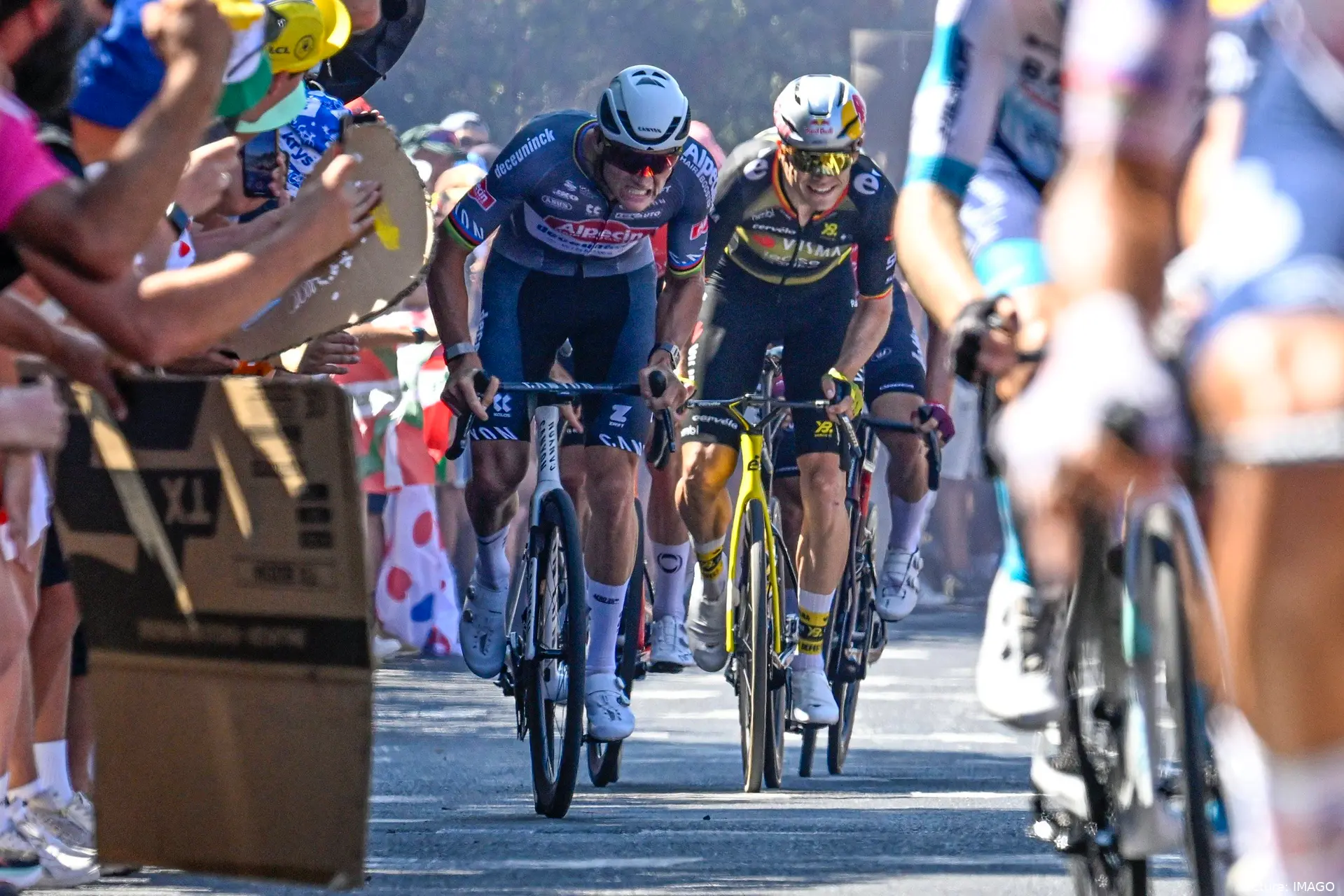
From the 20th to the 24th of August, the World Tour peloton returns to the Benelux, but not for one-day races this time around, but instead some high-octane stage-racing. The Renewi Tour often provides opportunities for the classics specialists, sprinters and time-trialists to all battle for quality results. We take a look at the stage profiles and route; and preview the race alongside it's main favourites.
The five-day race consists of a few stages that do not include major climbs and also no time-trials this year, but what we do have are two stages that should without a doubt end in a bunch sprint, two stages in which the classics specialists will have a go including iconic circuits in Geraardsbergen and Leuven, and one mixed stage which should end in a sprint but does have the space for some interesting attacks.
Stages Renewi Tour 2025
| Stage | Route | Distance (km) | Start Time (CET) | Finish Time (CET) |
|---|---|---|---|---|
| 1 | Terneuzen → Breskens | 182.6 | 12:11 | 17:00 |
| 2 | Blankenberge → Ardooie | 172.7 | 12:25 | 17:00 |
| 3 | Aalter → Geraardsbergen | 181.8 | 12:03 | 17:05 |
| 4 | Riemst → Bilzen | 198.5 | 10:34 | 16:00 |
| 5 | Leuven → Leuven | 184.7 | 10:41 | 15:50 |
Stage 1: Terneuzen - Breskens
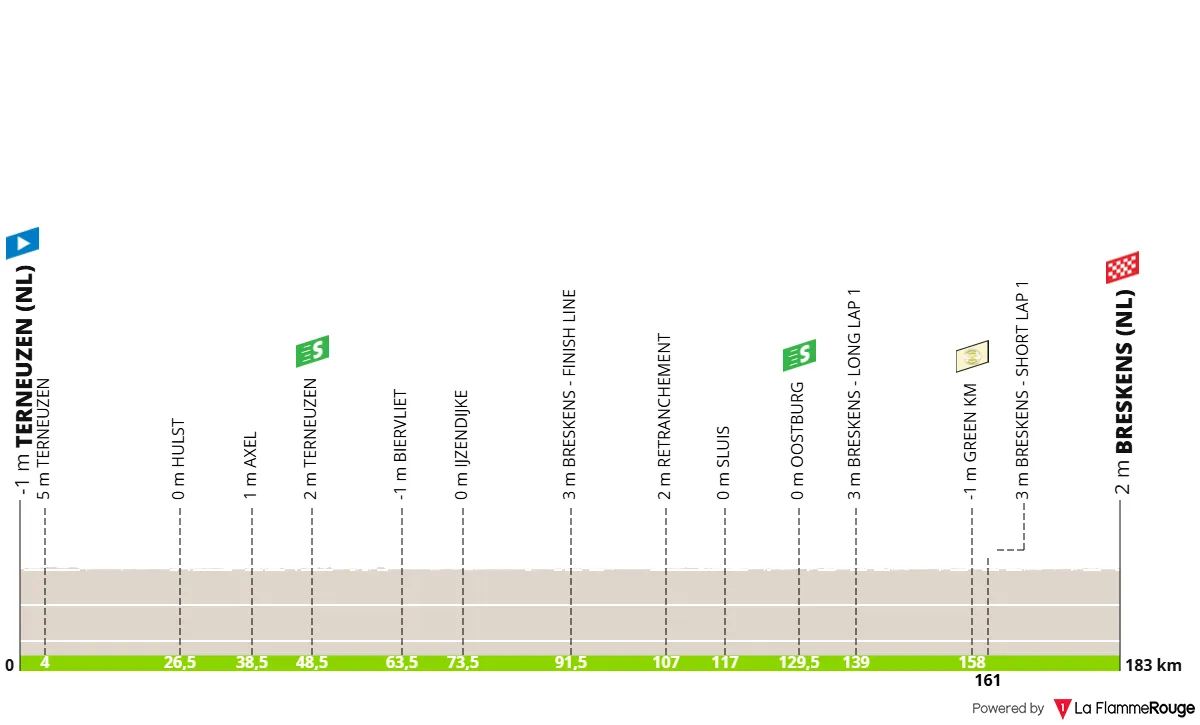
Stage 1: Terneuzen - Breskens, 183 kilometers
The race begins in the Netherlands and the first day of racing is the only one that takes place fully within Dutch roads. This will also be a day for the sprinters, beginning in Terneuzen and finishing in the city of Breskens.
This is a day that, on paper, presents no difficulties in terms of terrain; however, it will end in an area that has the potential to be extremely windy and so splits can occur. This will not only be an important day for the sprinters, but potentially also for all of those who look to contest the overall classification.
Stage 2: Blankenberge - Ardooide
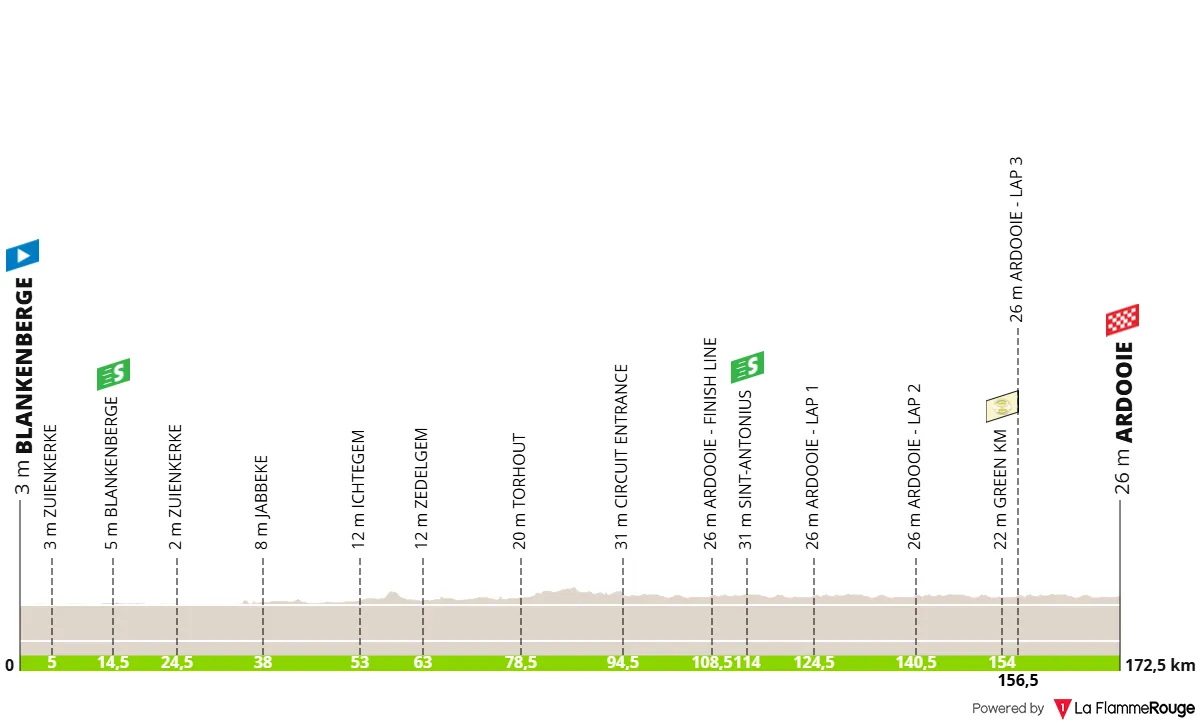
Stage 2: Blankenberge - Ardooide, 172.9 kilometers
The second day of racing sees the riders start in Belgium, right by the sea in Blankeberge in another day where the wind can cause serious damage. once again we should expect lightning fast speeds on the day as there is not a single tiny climb to point out on the day.
The riders will race towards the center of the country and a bunch sprint finish is expected in Ardooie, a relatively urban sprint that could be treacherous and very fast.
Stage 3: Aalter - Geraardsbergen
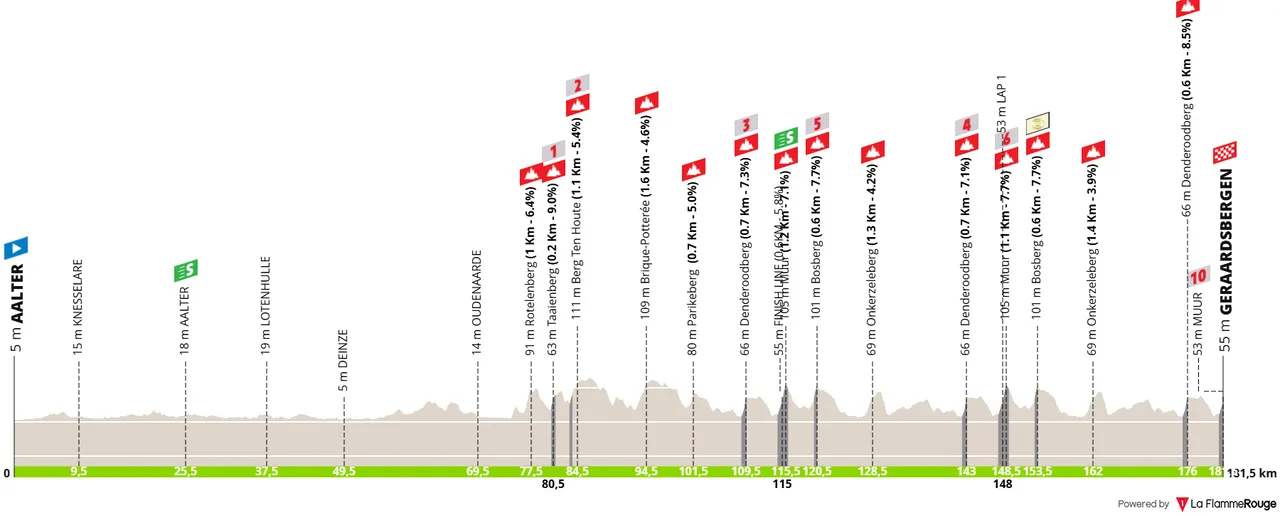
Stage 3: Aalter - Geraardsbergen, 181.6 kilometers
The queen stage of the race? Often it is, and certainly this year we can say the same. The race returns to Geraardsbergen and 'De Muur' but this time around on the third day of racing, earlier than usual. The stage begins in Aalter and the start is rather flat, but as soon as the riders enter the Flandrien terrain they will face serious challenges.
The narrow and winding roads are always an aspect to take into consideration, but profile wise it will be a day where the classics specialists can make the difference. The riders will, before the circuit, tackle climbs such as the Taaienberg and Berg ten Houte where the peloton can be split already with a well-planned move, but the riders will climb up the Muur de Geraardsbergen (1.1Km; 7.7%) and Bosberg (0.6Km; 7.7%) combination on two occasions (the Muur ends with 66 and 33 kilometers to go.
However these won't be the only climbs on the day, and notably with only 5.5 kilometers to go the peloton goes through the Donderoodberg which is 600 meters long at 8.5%. The stage ends in Geraardsbergen, halfway through the cobbled climb, where a strong final sprint can always open up a few seconds of gap still.
Stage 4: Riemst - Bilzen-Hoeselt
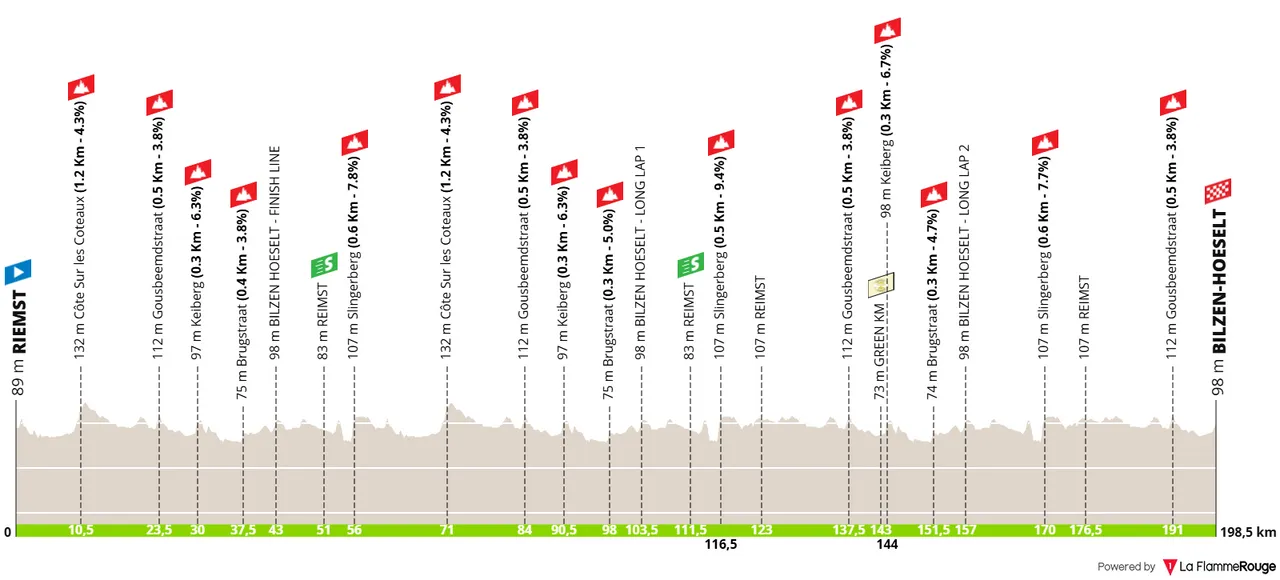
Stage 4: Riemst - Bilzen-Hoeselt, 198.5 kilometers
The fourth day of racing is a mixed one, starting in Riemst and having almost 200 kilometers on the menu. Definitely not a pan-flat day, but the question will be what difference the climbs on the menu can do. It won't be easy to damage the peloton but there is ground for attacks.
The entire stage is in a circuit format north of Liège, three laps of a rolling circuit with plenty small ascents. The most important to note is the Slingerberg which is 500 meters long at 9.4%, ending with 28.5 kilometers to go. Most of the way into Bilzen-Hoeselt however is flat, and so a sprint is still the likely scenario to decide the stage.
Stage 5: Leuven - Leuven
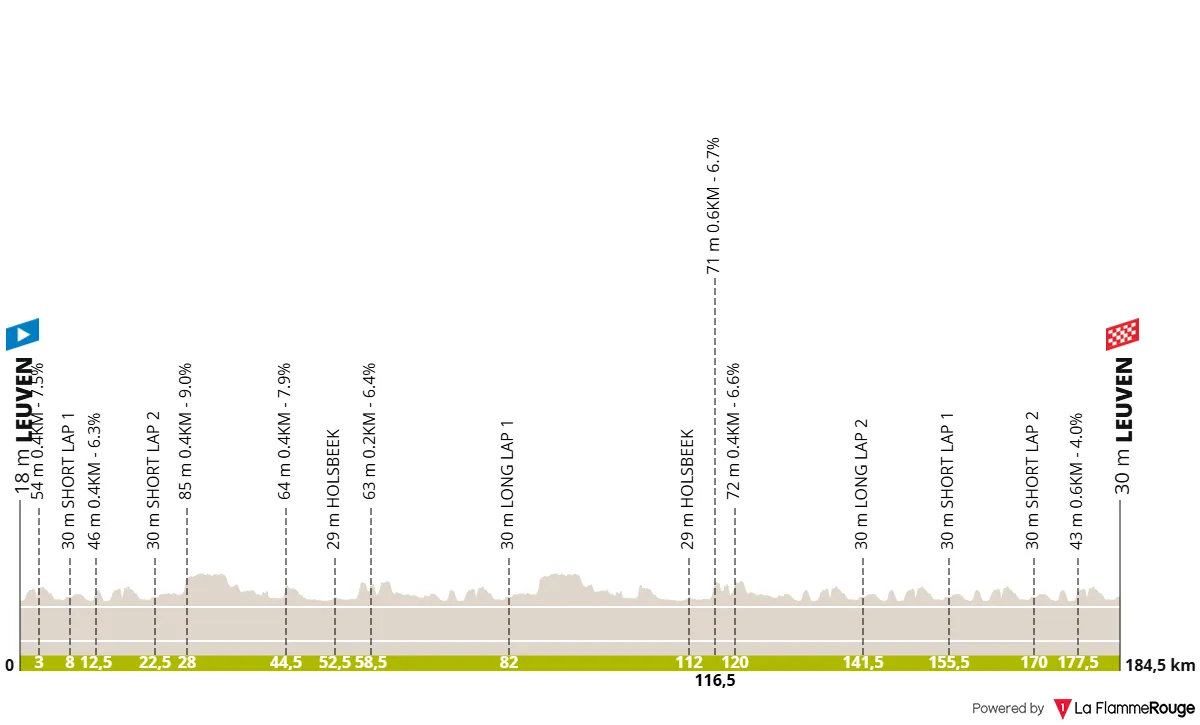
Stage 5: Leuven - Leuven, 184.6 kilometers
The race ends in Leuven this year, not Geraardsbergen, but we could see an even more interesting and dramatic finale. The stage begins and finishes in the city that hosted the 2021 World Championships and towards the end, the riders will tackle four laps of the very same circuit.
This is an urban circuit in a hilly city, an incredibly explosive one - where Julian Alaphilippe conquered the rainbow jersey four years ago. Looking at the profile it does not look very difficult, but the combination of the many small climbs, many turns and lack of fully flat roads makes it the ideal environment for tactic and chaotic racing. This is a day where the GC can be turned on it's head and early attacks in the circuit can succeed.
The Favourites
This is a race that this year will not feature a time-trial and so it will be more open than usual, with the bonifications perhaps having a much bigger role in the race but ultimately with the Geraardsbergen and Leuven stages set to fully decide the overall classification. Hence, the specialists can't take advantage from the traditional ITT, and suddenly a few more dozen riders get a very realistic chance to win the race as the terrain throughout the week isn't that difficult and a well-timed attack at any point can decide the race. Mathieu van der Poel is returning to the competition, and although he isn't going to be the outright favourite - as he certainly won't have top form - he is going to be the big name and the one who will be marked the most. If he can't make the differences on the Muur on stage 3, then this will open things up for a tactical race a lot.
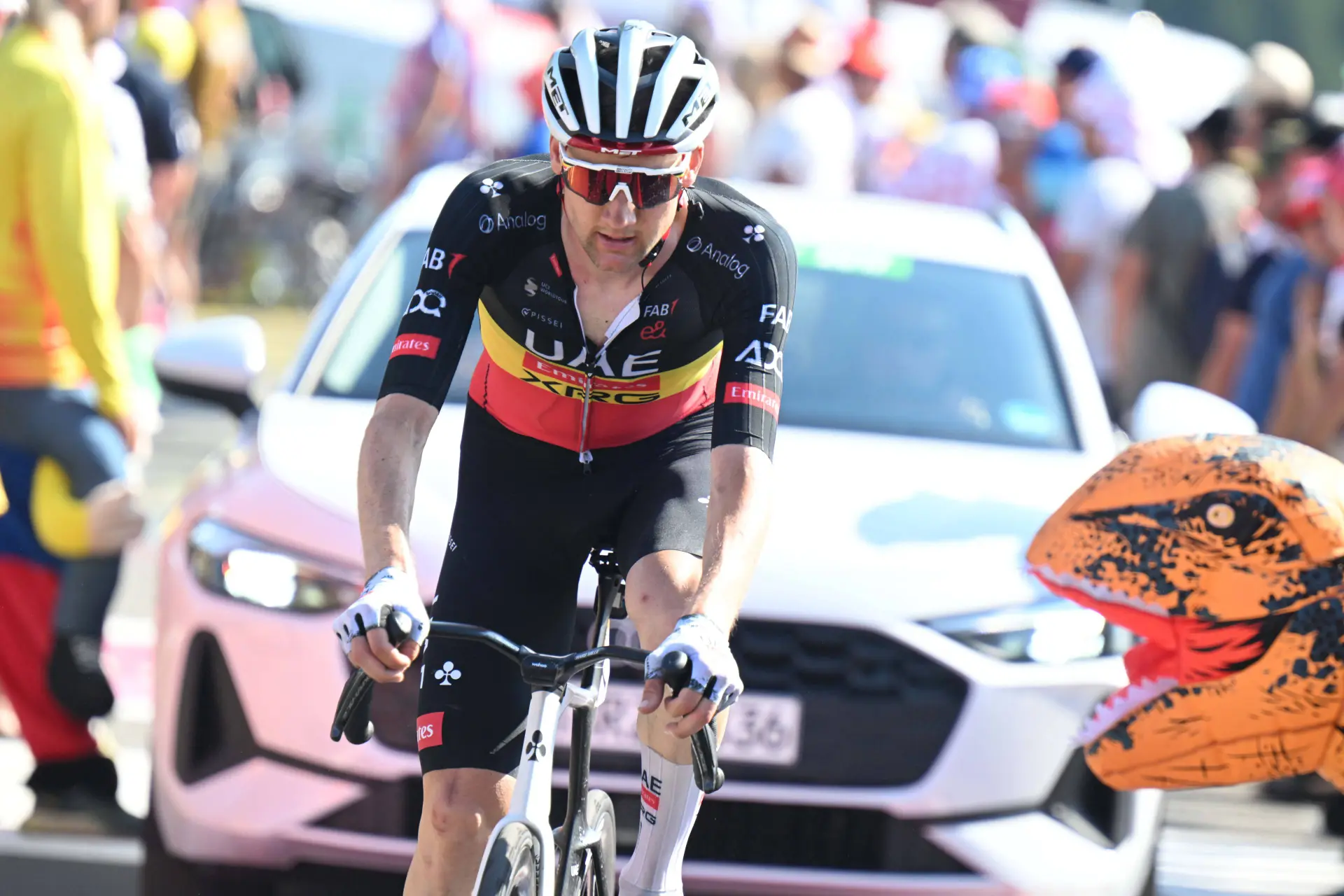
There are several riders I would rate just as high as the Dutchman at this point in time and both have very strong teams backing them up. One is Mathias Vacek of Lidl-Trek who despite not having a time-trial is a stupendous rider on the brink of a majour win - and has a team including Thibau Nys, Jasper Stuyven and Toms Skujins who are an incredibly promising attacking team; and the other is defending champion Tim Wellens who always thrives in these road and is backed up by a UAE that also features Florian Vermeersch and António Morgado who are proven riders for the Flandrien terrain.
The likes of Arnaud de Lie and Paul Magnier can be huge threats after they proved to be the strongest riders at last Sunday's Cyclasssics Hamburg, both riders can sprint to bonifications everyday and have immense firepower for these short efforts.
Some teams then have multiple cards to play and can take advantage of that situation such as BORA with Roger Adrià and Maxim van Gils; Decathlon with Dries de Bondt and Bastien Tronchon; INEOS with Ben Turner and Axel Laurance... Alpecin also have this opportunity let's not forget as the youngster Tibor del Grosso is already a proven World-Tour level leader; whilst other riders such as Fred Wright, Kasper Asgreen, Alberto Bettiol, Valentin Madouas and Lukas Kubis are expected to be up there throughout the most attacked moments of the race.
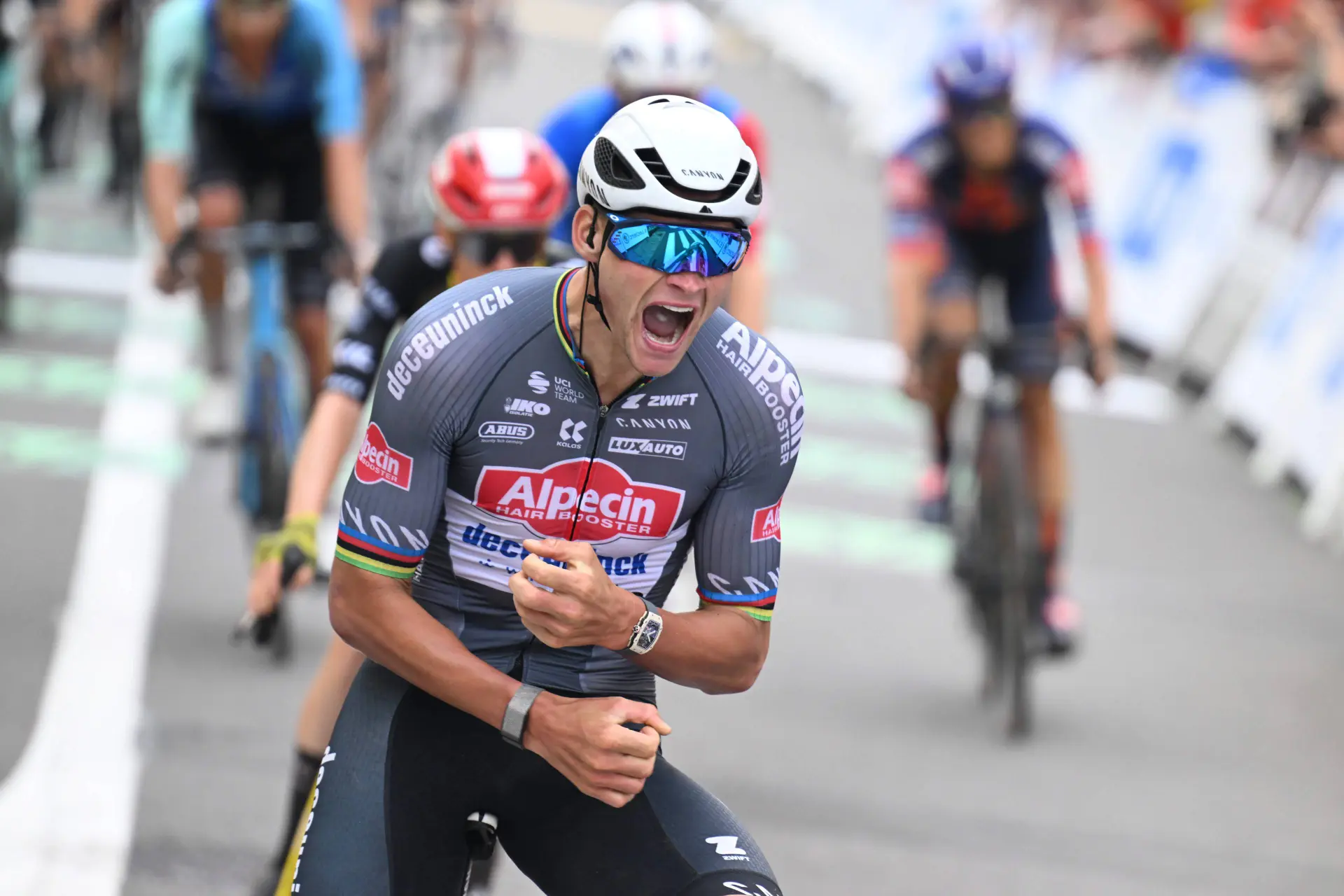
Prediction Renewi Tour 2025 overall classification
*** Mathieu van der Poel, Arnaud de Lie, Mathias Vacek
** Tim Wellens, Ben Turner, Florian Vermeersch
* Bastien Tronchon, Fred Wright, Thibau Nys, Jasper Stuyven, Tibor del Grosso, Axel Laurance, Maxim van Gils, Roger Adrià, Alberto Bettiol, Paul Magnier, António Morgado, Lukas Kubis
** Tim Wellens, Ben Turner, Florian Vermeersch
* Bastien Tronchon, Fred Wright, Thibau Nys, Jasper Stuyven, Tibor del Grosso, Axel Laurance, Maxim van Gils, Roger Adrià, Alberto Bettiol, Paul Magnier, António Morgado, Lukas Kubis
Pick: Mathias Vacek
Original: Rúben Silva
Rúben SilvaEditor-in-Chief
A founding contributor to CyclingUpToDate since its launch in January 2022, Ruben Silva has played a central role in shaping the site’s editorial direction and long-term growth. Before joining the project, he built his experience through independent blogging at Echelons Hub and by producing race previews for Ciclismo Internacional, developing a strong analytical voice rooted in daily engagement with professional cycling.
Beyond editorial work, he has been closely involved in the expansion and coordination of CyclingUpToDate’s wider network, helping establish and support sister platforms across multiple languages. This includes ongoing collaboration with CiclismoAlDia (Spanish), CiclismoAtual (Portuguese), WielrennenUpToDate (Dutch), and RadsportAktuell (German), contributing to a shared editorial vision and consistent international coverage.
He also helps oversee editorial governance across the network, setting standards for accuracy and consistency and coordinating updates or corrections when needed.
Originally from the Porto metropolitan area in Portugal, he holds a bachelor’s degree in Geography. His path into cycling journalism was shaped not through formal media training, but through independent reporting, community engagement, and sustained on-the-ground involvement in the sport.
Over the course of his career, he has conducted approximately 100 interviews across road cycling and cyclocross, ranging from one-to-one conversations and online formats to press conferences and on-site pre- and post-race coverage. His interviews include leading riders, team managers, and prominent figures within cycling media: Tadej Pogacar, Jonas Vingegaard, Mathieu van der Poel, Primoz Roglic, Wout van Aert, Joao Almeida and Tom Pidcock; managers like Patrick Lefevere and Joxean Matxin; and YouTube personality Bryan Kennedy (BKXC)...
Within 18 months of launch, he helped grow CyclingUpToDate’s English-language platform into one of the most-read cycling news websites, built entirely from the ground up. As both a professional journalist and lifelong cycling enthusiast, his focus remains on delivering accurate, timely, and well-contextualized coverage.
claps 2visitors 2
Just in

Popular news
Latest comments
- He didn't even try to sprint all outvappaxbipmv18-10-2026
- Campenaerts looked like a rolling pumpkin with that all orange leaders skinsuit !frieders318-10-2026
- He can take his dumb a$$ politics somehwere else !frieders318-10-2026
- good to have her back. fingers crossed she‘ll be able to stay!Ketterechts17-10-2026
- A tenner and he wins the Tour next year, too 😂anonymouscyclist17-10-2026
- the answer is either stick to classics or GTs but not bothabstractengineer17-10-2026
- the exodus already stared with Ciccone. Already they were struggling with two sprinters, now there are three. Also Ganna will demand leadership. Gall is the most proven GC, Ayuso has the most potential. GC leadership for everybody will be impossible. Literally a UAE style mess without pogi.abstractengineer17-10-2026
- I raced as an amateur for 12 years, including six years on my country’s national road cycling team. I secured two national titles and competed in three World Championships plus more than 15 international stage races. At 23, we travelled to Italy for a training camp—or so I assumed. On a rest day, we watched a presentation about adopting a more “professional” training approach. It was crystal clear what “professional” meant. That moment first exposed me to this dilemma. After returning from Italy, I left cycling—at least at the competitive level I had known. Over the following two years, the whole team was caught doping. I hold that everyone is innocent until proven guilty. In my view, current stakeholders operate on a different scale, and the sums involved are vast. I am unsure whether any doping would ever be revealed. I try to stay positive and enjoy the show. My 2c.
 vannpelt17-10-2026
 - Fiver he wins 🤣
 leedorney17-10-2026
 - “…measures to reduce speeds.” Might as well shorten the race course to just 50km as well? ASO generates at minimum €300m a year and 30- 40% profit. Maybe stop being greedy and spend more of the profit to protect the riders instead.b3tlla17-10-2026
Loading
Write a comment