Countdown to the Tour de France: 3 days | Julian Alaphilippe’s extraordinary yellow jersey dream in 2019
Cycling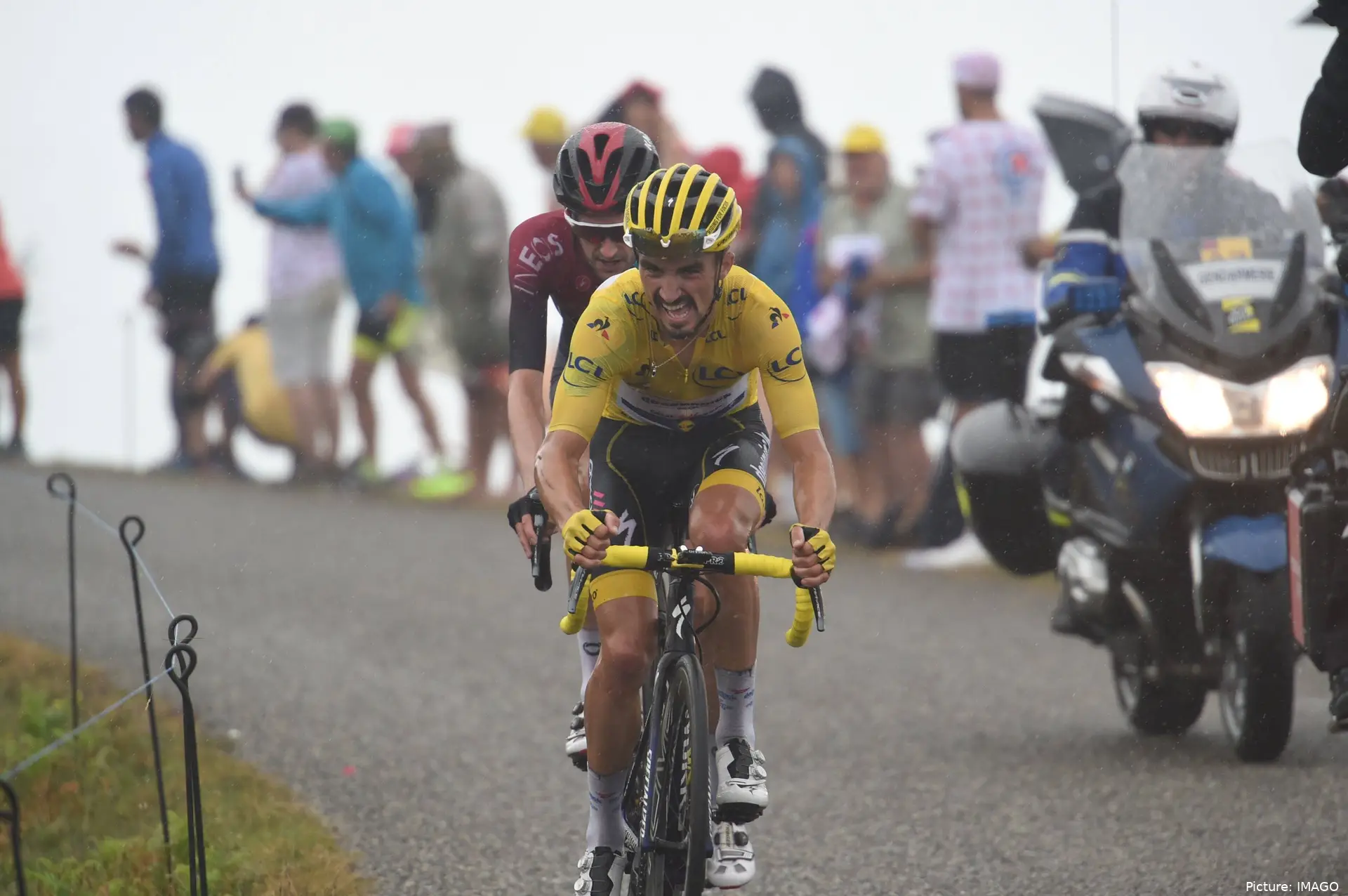
In today’s Tour de France countdown article, we relive one
of the most exhilarating and emotional editions in recent memory: Julian
Alaphilippe’s sensational 2019 Tour de France. That summer, Alaphilippe, a
punchy one-day specialist not known for three-week exploits, lit up the race
and carried the hopes of a nation on his slender shoulders.
For two weeks, he defied the odds in the yellow jersey,
seizing stage victories and thrilling fans with his panache. We also remember
the other French heroes of 2019, Thibaut Pinot and Romain Bardet, whose own
exploits, and heartbreaks, added to the drama.
Read also

Ultimately, the 2019
Tour became a rollercoaster of soaring French ambition and crushing
disappointment, as a 34-year wait for a home champion continued. But, for the
best part of three weeks, Alaphilippe allowed the home fans to dream.
Let’s dive into the Tour from six years ago.
A Frenchman in yellow
The 2019 Tour began unassumingly, but by Stage 3 the race
had its first major storyline. Julian Alaphilippe launched a daring solo attack
on the hills near Épernay, exploding from the peloton with 16 km to go on
the climb. He caught the remnants of the breakaway and won the stage, claiming
the coveted maillot jaune in spectacular fashion. This was the first time a
French rider held the Tour’s overall lead in several years, and it ignited
immediate excitement. Alaphilippe would wear yellow for the next few days,
defending it with incredible determination over the rolling terrain of eastern
France.
Read also

Midway through the first week, Alaphilippe briefly lost his
lead on the steep Planche des Belles Filles summit finish of Stage 6. He
ceded the jersey to Italy’s Giulio Ciccone, who had gained time via a breakaway.
However, the Frenchman’s spirit was unbroken. Just two days later, on
Stage 8, Alaphilippe launched another bold move. He worked with compatriot
Thibaut Pinot, and he attacked late in the stage, gaining precious seconds on
the field.
That move was enough for Alaphilippe to regain the yellow
jersey, to the delight of French fans. As the race entered its first rest day, Alaphilippe
led the Tour over defending champion Geraint Thomas, who had just crashed for
the second time in the race. France dared to dream, could this audacious
attacker actually contend for overall victory? The nation’s sporting press,
often starved for a home Tour hero, hyped the possibility of ending the 34-year
drought since Bernard Hinault’s 1985 win.

Yet, challenges loomed. On Stage 10 to Albi, fierce crosswinds
split the peloton and caused chaos. While Alaphilippe and other favorites made
the front group, Pinot and several contenders were caught out and lost around
1’40” in a heartbreaking mishap. The French GC hopes wobbled, Pinot, seen as a
strong mountains threat, now trailed further back due to bad luck. Still,
Alaphilippe rode on undeterred in yellow, carrying French hopes into the
mountains.
Still, at this point, most did not give Alaphilippe a
chance. After all, he was a classics man, not a GC contender, and surely he
would relinquish the lead as soon as the road started going uphill.
The Pyrenees
As the Tour reached the Pyrenees in its second week, Alaphilippe’s
defiance of expectations reached new heights. Stage 13 was a pivotal
moment: a 27 km individual time trial in Pau, on the 100th anniversary of
the yellow jersey’s introduction. Time trials are typically the Achilles heel
of punchy riders, and many expected Thomas or other GC specialists to take
chunks of time out of Alaphilippe.

Alaphilippe was the star of the summer in 2019
Overall, no one gave Alaphilippe a chance.
Instead, the Frenchman delivered an astounding performance.
Last to start, dressed in yellow, he scorched the course in 35 minutes flat, winning
the stage by 14 seconds over defending champion Thomas. This stunning victory
extended his overall lead to over 1 minute 30 seconds on the nearest rival, on
a stage which also saw Wout van Aert suffer a terrible crash and abandon.
It was a simply incredible moment. In one of the Tour’s most
indelible images, Alaphilippe roared across the finish, improbably still in
yellow and even stronger than before. French fans, and even neutral observers,
were ecstatic. If he could even beat the world’s best in a time trial, what couldn’t
he do?
The normally unflappable Team Ineos (formerly Sky) now
looked uneasy, as Alaphilippe had stunned both Bernal and Thomas, and he was
upsetting all the odds.
The very next day brought even more French glory. Stage 14,
the Queen Stage in the Pyrenees, finished atop the legendary Col du Tourmalet,
and it became a French victory for the ages. Thibaut Pinot, determined to claw
back the time he lost earlier, attacked the group of overall favorites in the
final 250 m of the climb. Roared on by President Emmanuel Macron and
crowds of tricolour-waving fans, Pinot surged clear to win the stage at the
summit of the Tourmalet.

Pinot's win on the Tourmalet will live long in the memory for French fans
Just seconds behind, Julian Alaphilippe astonishingly hung
on with the elite climbers to finish next, preserving his yellow jersey and
even gaining time on Geraint Thomas who had been dropped in the final kilometre.
A French victory finally looked on the cards!
Pinot wasn’t done yet. On Stage 15 to Prat d’Albis, he
attacked again on the final climb, leaving the other GC favorites struggling to
respond. He took second place on the stage (behind Simon Yates) and gained more
time on his rivals for yellow.

By the end of the Pyrenean weekend, Pinot had vaulted into
the top five on GC and looked poised to challenge for the podium or even the
title. Alaphilippe, meanwhile, showed the first signs of fatigue on that stage,
he lost about half a minute to Pinot and Yates, but he still carried the
maillot jaune into the Tour’s second rest day, with a buffer of 1’35” over
Thomas and around 1’45” on Kruijswijk, Pinot and Egan Bernal close behind.
France now had two genuine contenders as the race entered
its decisive phase. The country was captivated; TV ratings surged to their
highest levels in years as fans dared to believe the 34-year wait might actually
come to an end. The dream was on! Alaphilippe’s charismatic riding style,
tongue out, out of the saddle, feeding off the crowd’s energy, and Pinot’s pure
passion in the mountains had united a nation, who finally believed that they
would have their moment in the sun.

Heartbreak in the Alps
If the Pyrenees were a dream, the Alps became a cruel
reality check. With the Tour’s third week came a brutal sequence of
high-altitude climbs, and the added challenge of a record heatwave. Stage 18,
the first Alpine test, saw Nairo Quintana win from the break, while Egan Bernal
launched a late attack on the Col du Galibier, gaining about 30 seconds on
Alaphilippe and the other favourites by the finish.
Alaphilippe narrowly retained yellow that day, but his
once-comfortable lead was shrinking and the cracks were beginning to show. Bernal’s
surge moved him up to second overall, and the young Colombian was now within
striking distance. On the same stage, Romain Bardet, who had long fallen out of
GC contention after a rough Tourmalet stage, managed to take over the polka dot
jersey as the leader of the mountains classification.
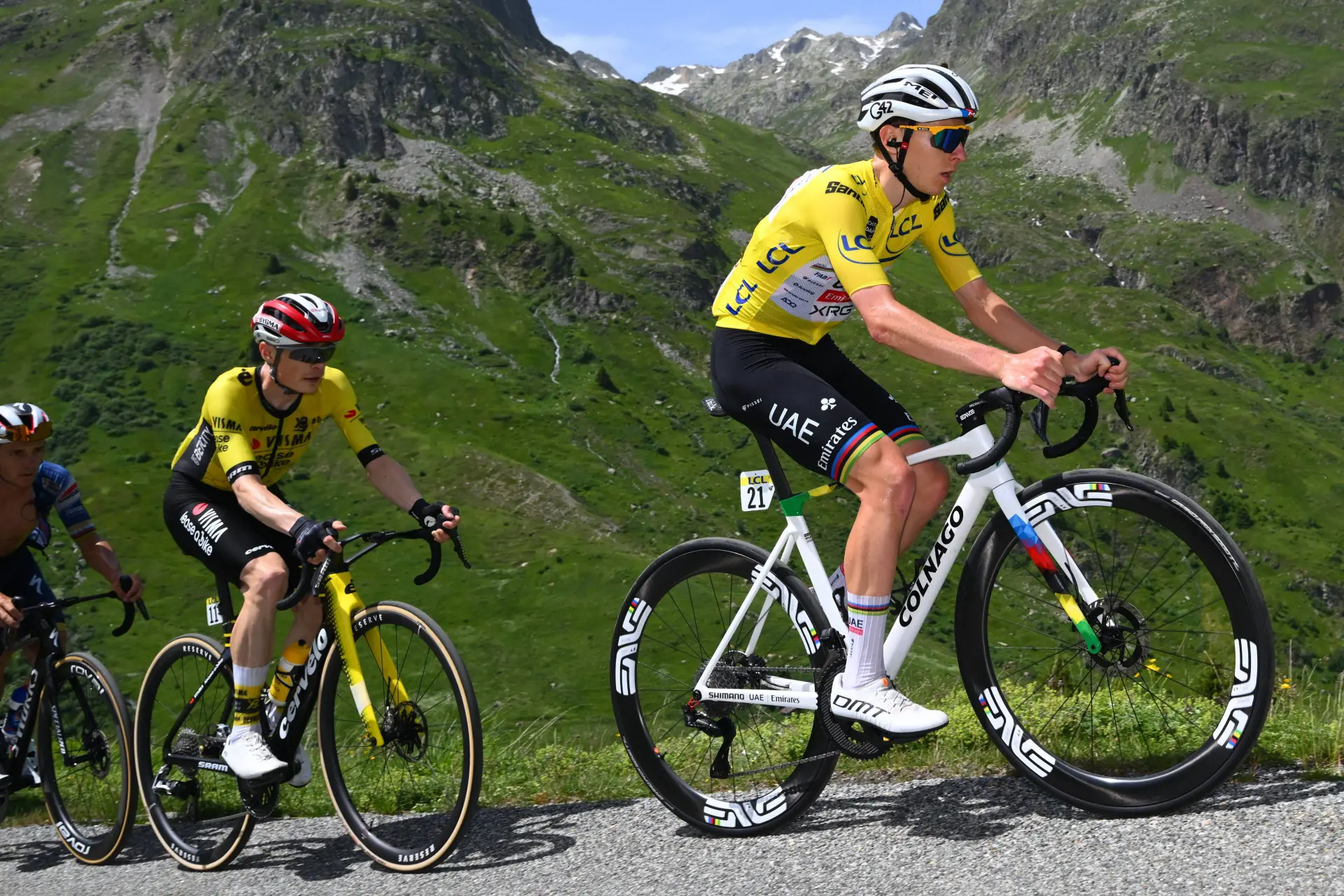
For Bardet, who was himself one of the favourites prior to
the race, this was a proud consolation prize: he refocused on hunting mountain
points and by Stage 18 had seized the King of the Mountains title,
ensuring a French rider would stand on the Paris podium in polka dots.
Then came the fateful Stage 19, a day that will long
live in the nightmares for French supporters. The stage was short and intense,
set to cross the colossal Col de l’Iseran and finish in Tignes. Disaster struck
early, as Thibaut Pinot suddenly abandoned the race, overcome by a torn muscle
in his leg.
he images of Pinot sobbing on the roadside, forced to quit
when he was in career-best form, broke the hearts of fans nationwide. In an
instant, one of France’s twin hopes was gone. Still in shock from Pinot’s exit,
the French public then witnessed Egan Bernal launch a decisive attack on the
Iseran. Bernal flew up the highest pass of the Tour, dropping everyone,
including Alaphilippe.

Finally, the yellow jersey cracked, with Alaphilippe
trailing about 2 minutes behind Bernal over the summit of the Iseran. As if the
cycling gods themselves intervened, a sudden freak hailstorm and landslide
forced the organizers to halt the stage in mid-descent, declaring the times at
the Iseran summit as final. This meant no chance for Alaphilippe to recover
time on the descent, the stage was essentially frozen at the worst possible
moment for him, a cruel turn of fate.
Bernal inherited the yellow jersey that evening,
leapfrogging the Frenchman in the standings. In the span of a few hours,
France’s glorious dream had unraveled: Pinot was out, and Alaphilippe’s fairy
tale run in yellow had effectively ended.
The penultimate Stage 20 (shortened due to weather) was
a final, uphill march to Val Thorens. Alaphilippe, now riding on empty after
over two weeks of heroic effort, gave everything he had to try to claw back
time. The entire nation willed him on, but the Alps had taken their toll. On
that final climb, Alaphilippe cracked definitively, he was distanced for good,
losing several minutes.
The yellow jersey was gone for good, and even a podium
finish slipped away. As Vincenzo Nibali won the stage from a breakaway,
Alaphilippe fought bravely just to limit the damage alongside his teammates. By
the time the race rolled into Paris on Stage 21, Julian Alaphilippe had
fallen to fifth place overall, and so was not even able to stand on the podium.
Egan Bernal claimed the Tour de France title, while Geraint Thomas and Steven
Kruijswijk rounded out the podium. Romain Bardet officially secured the polka
dot King of the Mountains jersey for France, a small silver lining on an
otherwise sombre final weekend for the host country.
Once again, INEOS ruled the sport (although this was the
last time they won the Tour de France).
The 2019 Tour de France will forever be remembered in France
as the Tour of rekindled hope and dramatic heartbreak. For 14 incredible days,
Julian Alaphilippe carried the yellow jersey (the most by any French rider in
decades), delivering true and pure joy for the French fans. He won two
spectacular stages, one with a fearless late attack, another against the clock
in heroic fashion, and proved that panache can still triumph, at least for a
time, over calculated odds.
Read also

Thibaut Pinot’s Pyrenean triumph on the Tourmalet gave the
nation another iconic victory and a glimpse of a potential French Tour champion
in the making. Together, these two very different riders, Alaphilippe the
explosive showman, Pinot the pure climber, had France dreaming of a first Tour
victory since the 80s.
That is what made the final outcome so bittersweet. The emotional
arc of the 2019 Tour was like a classic drama: hope, belief, and ultimately
crushing despair. When it all fell apart in the Alps, France was left
collectively heartbroken, their dreams had been snatched away at the final
moment.

Bernal was ultimately the winner in 2019
Yet, in that heartbreak, there was also pride. Alaphilippe
and Pinot had given the country its most thrilling Tour in a generation, and
had allowed the French fans to dream once again. We have no doubt that many
young French cyclists first decided to ride competitively after those three
weeks in 2019.
In the end, 2019 was a Tour of hope. It did not deliver the
ultimate prize, but it brought French cycling back to the heart of the
spectacle, uniting fans in support of their own. The image of Julian
Alaphilippe in yellow, fighting with every ounce of spirit against the giants
of the sport, will live on as a symbol of the French fighting spirit. And
though French hopes were dashed in the final days, the legacy of that Tour is
an emotional one, proof that the passion for cycling glory in France burns as
brightly as ever.
And one day their dreams will come true again.


Fin MajorCycling Journalist
Fin Major is a UK-based writer at CyclingUpToDate and has been part of the team since 2024. He is the site’s main writer for FAQs and evergreen explainers and has written around 2,000 pieces for the platform. Alongside this work, he focuses on in-depth analysis and covers the biggest races on the calendar, including the Tour de France, the Giro d’Italia, and La Vuelta a España, providing clear context around performance trends, tactics, and key storylines.
In his reporting, Fin uses reputable data sources such as ProCyclingStats for results, statistics, and historical context. He places strong emphasis on careful sourcing, editorial accuracy, and updating articles promptly when new, verified information becomes available. Outside of writing, Fin is an active cyclist, which supports his practical understanding of the sport and its demands.
claps 0visitors 0
Just in

Popular news

Latest comments
- many people advise him to grow slowly and rather do giro and/or vuelta instead of tdf. but i can totally understand that he is not satisfied with taking over once pogi declines, but instead beat him in his prime. so if he goes for tdf again, i‘m all for it. let‘s hope that pogi recovers soon!Ketterechts07-11-2026
- So gracious to offer something no-one would be prepared to pay for. The Giro is not the Tour and doesn’t command the same interest or attract the same “elite” (those willing to pay to be a part of something they consider has ego boosting potential). Roadside viewing will always largely remain free for everyone outside circuits. Introduction of a symbolic entrance to mountain climbs is worthy of exploration. Asking 1-2€ isn’t going to repulse real fans (most will spend 50-100€ on their outing that day all things included) but will prevent a portion of the total knobhead thrillseekers who will join in any large gathering as long as it’s free, just because they’re attracted to crowds, without which it it difficult for them to work up their anti-social behaviour.Jumpyjohn07-11-2026
- How is radio going to help when someone went over a cliff or bridge or off the roadside into a forest unnoticed and is laying there unconscious?Jumpyjohn07-11-2026
- Yep, next we’ll be accusing F1 drivers of avoiding Le Mans.Jumpyjohn07-11-2026
- But on what is that opinion based? Are you holding him to a different standard than others? Are you saying he should do learn to like something he doesn’t Are you saying he hasn’t achieved enough Are you saying he pretends to be better than his results? It’s actually a really strange opinion to oust if you consider it objectively or rationally. Try applying it to others or yourself by asking if not EVERYONE should then be doing more? Nobody in athletics or swimming gets criticism for not expanding their repertoire when a rival or someone else does. In fact, most who move to another event get accused of running from their rival. Opinions are boring, the reasons behind them are what count.Jumpyjohn07-11-2026
- for a medical chief to throw things like is just bad. There are already radios which were banned for spectacle. allow radios. Gps trackers are not a complete solutionabstractengineer07-11-2026
- Yeah man...PogiSloFans07-11-2026
- any rider less than 25 whether they are really ready for the position of leadership of GT is probably not the case. I think Pogi himself suffered when he was defeated by Jonas in the TDF twice. But that would be the team's job to ensure support so that they can bounce back. It requires a team and time to get back up and win after getting knocked down.abstractengineer07-11-2026
- I'm very glad he got the big late Quickstep Vuelta win and I hope he has a few left for Euskaltel-Euskadi.flyer07-11-2026
- My memories of Ivan Basso aren't good but I liked his sister Elisa ok.flyer07-11-2026
Loading
Write a comment