Tom Pidcock considers going back to cyclocross and heads to Chile for January altitude training with Q36.5
Cycling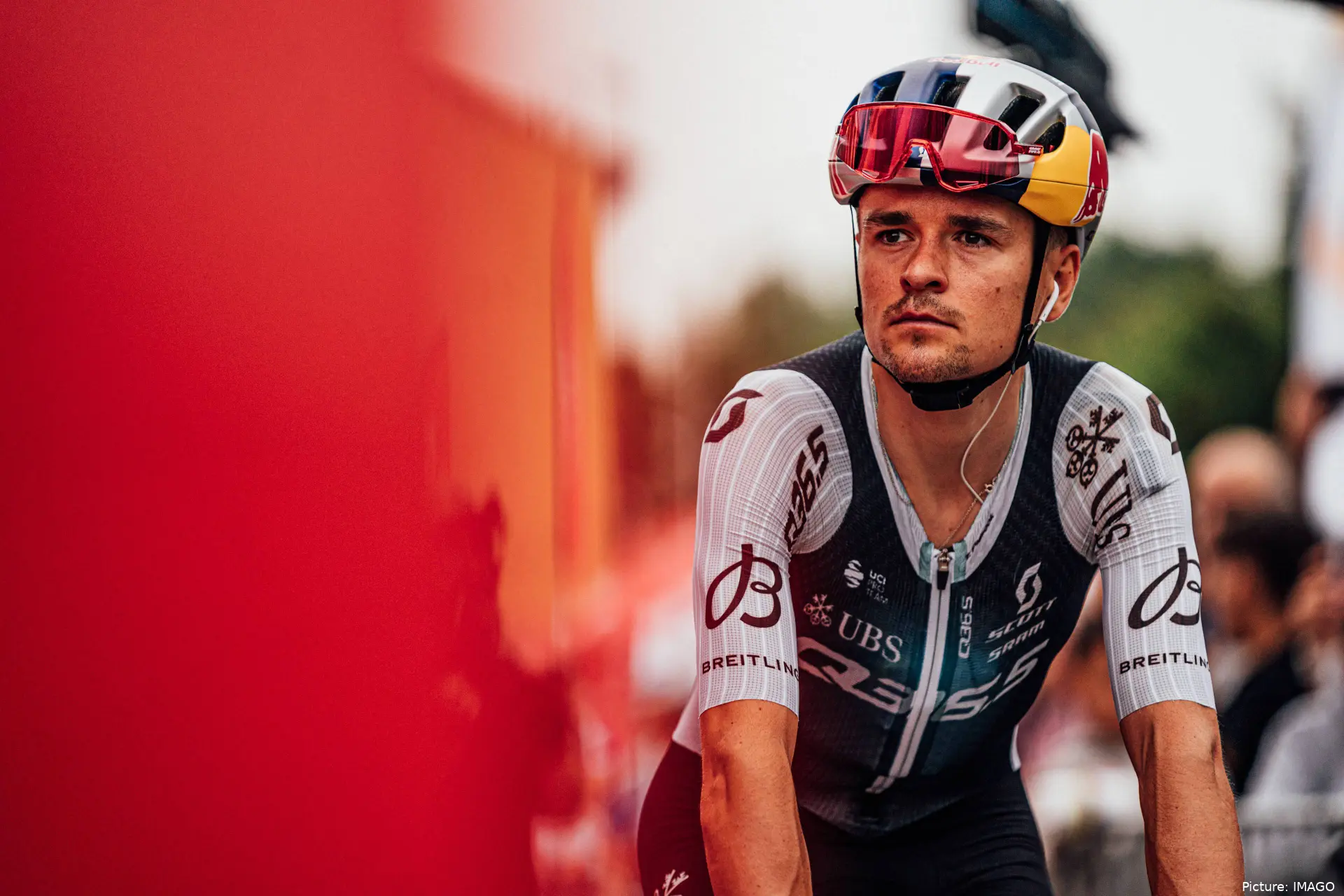
More and more pro cyclists are pushing the boundaries of 'tradition', and at this point in time, quite a few take up altitude training right from January onwards before the start of the season. That is the case with Tom Pidcock, who will be heading to Chile to train at 2700 meters of altitude soon with Q36.5 Pro Cycling Team; whilst a return to cyclocross is being considered for next winter.
"It's certainly possible that Tom will be back in cyclocross next season. Last season, Tom rode two Grand Tours and raced up to and including the Giro di Lombardia. Add to that all his mountain bike races, and you'll have over 80 race days," his coach Kurt Bogaerts told Sporza. The Briton had a very heavy schedule with racing at a top level from January to October, but handled it very well.
He not only managed to confirm his Grand Tour potential by finishing third at the Vuelta a España but also finished second to Tadej Pogacar at Strade Bianche, won the AlUIa Tour, and had several other top results throughout the year. His confidence has been boosted, and the sky seems to be the limit once again.
He has not competed in cyclocross this winter so as to adapt to the new team and prepare fully for the road season, but for next winter that is being considered. "If Tom were to start racing cyclocross again, he'd want to be competitive right away and compete for the gold".
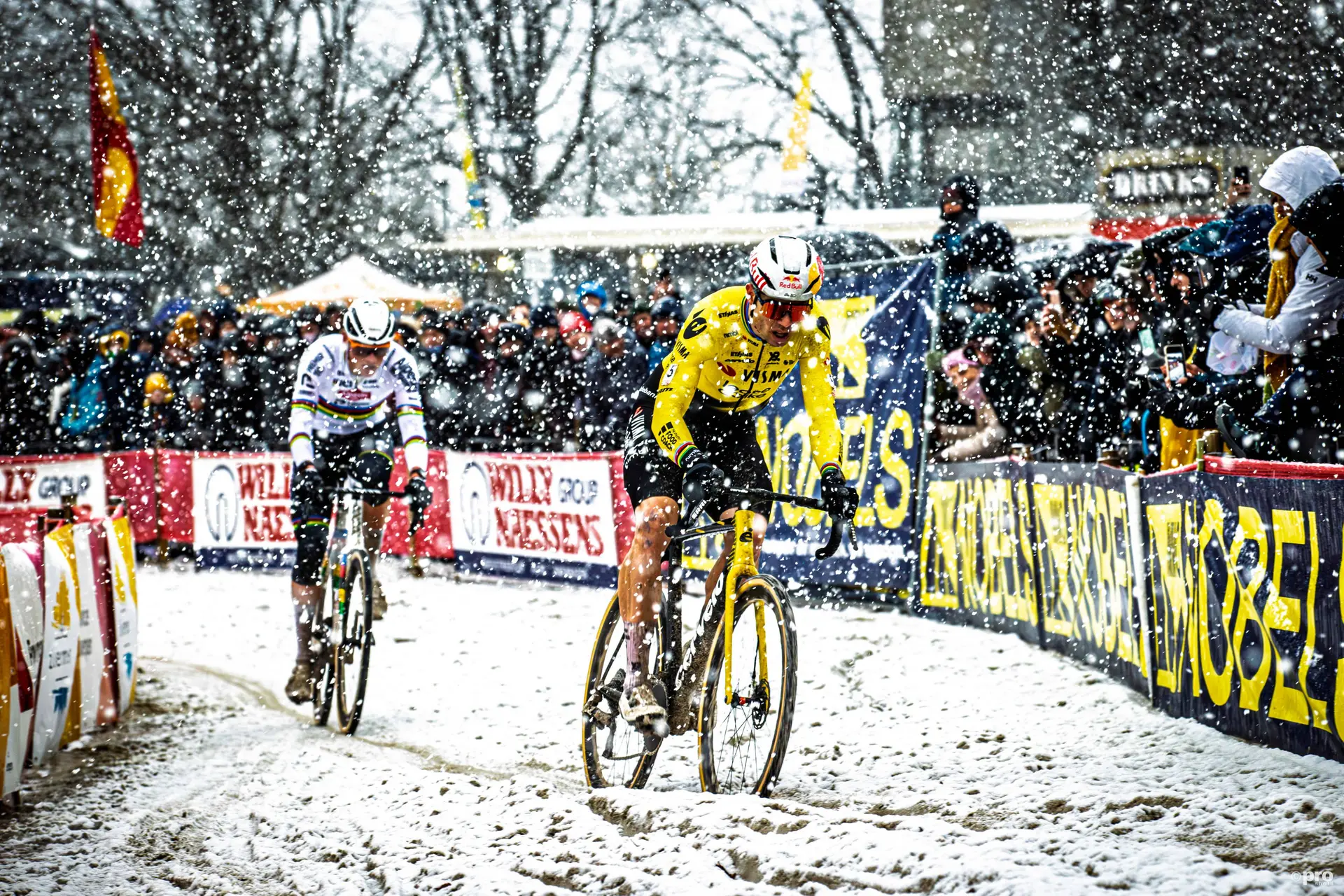
Now racing Pinarello bikes on all terrains, and with Quinten Hermans joining him on the cross bike, the Swiss team definitely has strong arguments to get their leader back on the mud. He is a former World Champion, and if Mathieu van der Poel does indeed skip cyclocross next year, it would open up the path to the rainbow jersey for many riders.
However that naturally comes with its challenges. "Because Tom didn't race cyclocross this past winter, he'd have to start from the back in his first cyclocross races," Bogaert explains. "Having to start from the back to catch up isn't ideal. If he maintains his good road ranking, Tom could start on the fifth row in the World Cup cyclocross races. That opens up possibilities."
Altitude training in... Chile
Pidcock's program for 2026 is still under wraps, and is one of the few top riders in that situation. He should aim for the spring classics naturally, however with the Swiss team dependent on wildcards, it is not known yet whether Pidcock will race the Giro d'Italia or Tour de France.
But now in January, he will be in South America, training at altitude in Chile. He was the one to make the call, and the team continue to put their confidence behind the Briton: "Tom himself was the driving force behind the idea when it was put forward at the end of last year. It was important that he was fully behind it".
This will be at 2700 meters of altitude, and a very unusual preparation towards the season. However with high risk may come high reward. "There, we'll find the perfect weather conditions for training, at the right altitude".
Weather at this time of year in the northern hemisphere hasn't fully stopped a few teams from taking up an altitude camp this early on, but Q36.5 believes they will have the edge over them. "The reason is simple: it was a matter of finding solutions to go on an altitude training camp. At this time of year, you need to be able to go on a training camp somewhere with a good climate for training, so you don't have to constantly improvise."
It is a relatively unknown destination for this sort of presence for the world-class peloton, but if it works out, it could become a more frequent destination for top teams. As Bogaerts describes it, it is very similar to what the riders find in the most popular European locations.
"In that respect, our training location is similar to Tenerife: there's one mountain where we're staying, and you can climb it from different sides. The advantage is that it's the beginning of summer there now, so it will be around 30 degrees Celsius in Santiago. On the mountain itself, it will still be 15 to 20 degrees Celsius," he concluded.

Rúben SilvaEditor-in-Chief
A founding contributor to CyclingUpToDate since its launch in January 2022, Ruben Silva has played a central role in shaping the site’s editorial direction and long-term growth. Before joining the project, he built his experience through independent blogging at Echelons Hub and by producing race previews for Ciclismo Internacional, developing a strong analytical voice rooted in daily engagement with professional cycling.
Beyond editorial work, he has been closely involved in the expansion and coordination of CyclingUpToDate’s wider network, helping establish and support sister platforms across multiple languages. This includes ongoing collaboration with CiclismoAlDia (Spanish), CiclismoAtual (Portuguese), WielrennenUpToDate (Dutch), and RadsportAktuell (German), contributing to a shared editorial vision and consistent international coverage.
He also helps oversee editorial governance across the network, setting standards for accuracy and consistency and coordinating updates or corrections when needed.
Originally from the Porto metropolitan area in Portugal, he holds a bachelor’s degree in Geography. His path into cycling journalism was shaped not through formal media training, but through independent reporting, community engagement, and sustained on-the-ground involvement in the sport.
Over the course of his career, he has conducted approximately 100 interviews across road cycling and cyclocross, ranging from one-to-one conversations and online formats to press conferences and on-site pre- and post-race coverage. His interviews include leading riders, team managers, and prominent figures within cycling media: Tadej Pogacar, Jonas Vingegaard, Mathieu van der Poel, Primoz Roglic, Wout van Aert, Joao Almeida and Tom Pidcock; managers like Patrick Lefevere and Joxean Matxin; and YouTube personality Bryan Kennedy (BKXC)...
Within 18 months of launch, he helped grow CyclingUpToDate’s English-language platform into one of the most-read cycling news websites, built entirely from the ground up. As both a professional journalist and lifelong cycling enthusiast, his focus remains on delivering accurate, timely, and well-contextualized coverage.
claps 2visitors 2
Just in

Popular news
Latest comments
- The article makes it sound like a great thing and something to be applauded. The reality is is gives the Americans another 6 years to fleece European cycling fans or force them to hunt around Europe with VPN’s for free feeds. Not something to be celebrated in my book. Before someone points out that coverage of this depth costs money, yes, I agree but not £30+ per month a fee I will wager will gradually increase now this deal has been cemented.Paul53119-10-2026
- Great. Thrilled. (Satire) Oh, how I miss the days of GCN. Still wear my GCN hoodie with pride.anonymouscyclist19-10-2026
- You could also look at it another way. How many riders have had better or more consistent results since the Tour?Jumpyjohn19-10-2026
- Whilst I love Tadej (and Remco, who deserves to be mentioned here, too), @JumpyJohn makes a valid point, and he isn’t wrong @MajorPayne. It is a fact that today’s official broadcasters of cycling struggle to keep our attention once the likes of Tadej (or Remco) attacks at ~80km or so. In the 142nd issue of Rouleur, Ned Boulting reflects on the often stressful paradox of commentating on a race that is effectively over before the broadcast window even hits its stride. In this edition, he centres on Remco’s 1hr solo at the Challenge Mallorca this year, and captures the panic and dread shared by the commentators when a dominant rider kills off the racing tension early. I recommend you read it, it’s a fascinating insight into the world of commentary, and the true viewing figures of today’s cycling. I must add here, I love Tadej and Remco, but I would be lying if my heart rate wasn’t higher when watching the World Championships this year. And I’m sure Rob Hatch would say something akin regarding his commentary!anonymouscyclist19-10-2026
- The shattered women’s marathon record was clean and highly surprising and then a few months later the athlete was very positive in another test for something not taken by mistake when recording far less impressive results. Sounds to me like the problem is still the age old one, detection is often way behind. Just like with crime, it’s not because you can’t catch the criminals that you aren’t aware of the crime.Jumpyjohn19-10-2026
- Listen, you have a point but on the other hand in cycling, once some of the riders go solo and build a minute’s gap, there’s hardly any action left to watch. Cycling is definitely not for today’s generations of accelerated viewing. Other people find skydiving or chess exciting but you can’t force everyone to feel the same.Jumpyjohn19-10-2026
- That’s a funny one. Yeah obviously he’s more aero than some but most of the aero effect at elite level is the bike. Now you have me starting to feel sorry for the guy behind him when he pulls a groupetto.Jumpyjohn19-10-2026
- Knew a World Tour promotion was coming for Ben this season. Thrilled for him, and can't wait to see what he can do at this level. Another one to watch at the TTs.anonymouscyclist19-10-2026
- It honestly breaks my heart to see this. I had a feeling this might happen over the last few years, but I kept praying it wouldn't, and that Joey would find his niche, especially back racing alongside his brother. After growing up racing alongside PH-MAS, the Pidcock brothers have always felt like one of our own, as we’ve watched them grow from Club level all the way up to PC and WT. I wish Joey nothing but the best of luck in whatever he does next, but selfishly… I do wish for him to move into the role of Q36.5 team staff.anonymouscyclist19-10-2026
- Predictable, sure! But boring??? OMG! Was Mike Tyson predictable and boring in his prime? Air Jordan? Schumacher or Senna? OMG!!!MajorPayne19-10-2026
Loading
Write a comment