Javier Ares: "Simon Yates was a fundamental pillar for Vingegaard to even try to impose himself on Tadej Pogacar"
Cycling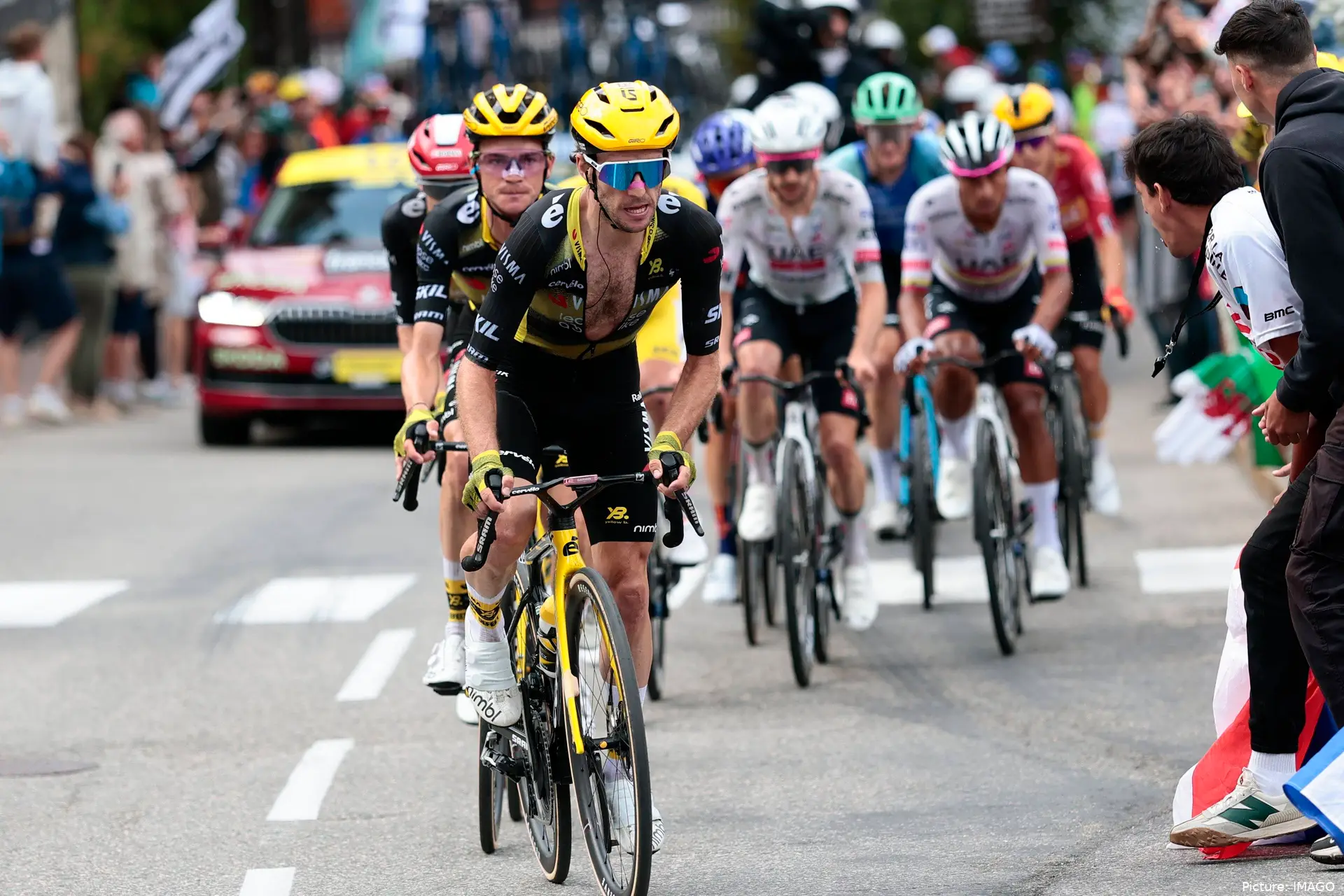
The retirement of Simon Yates from professional cycling continues to prompt deep analysis across the sport. After the initial shock, one of the most authoritative voices to unpack the decision has been Javier Ares, the veteran Spanish cycling journalist, who devoted much of his YouTube show to outlining the context, possible causes, and consequences of the Briton’s departure. His measured, expansive remarks help explain not only Yates’ case, but also the current state of the professional peloton.
Ares began by framing the gradual restart of racing after the Christmas break, noting that even for those glued to the sport it is necessary “to reconnect with family and step away—also for one’s sanity—for a few days, a couple of weeks from the cycling world.” In that limbo between seasons, when reviews, awards, and forecasts usually dominate, a story landed that blew up any prior plan. “He did it with a truly surprising piece of news,” he said, referring to the statement signed by Simon Yates announcing his retirement “without even starting the season.”
For Javier Ares, the shock was profound for several reasons. Not only because of the rider’s age, 33, but also his recent condition and the wins secured just months ago. “It’s been a huge surprise for everyone, not only because he’s a rider coming off winning the Giro d’Italia last year, showing a remarkable level,” he explained, also recalling his stage win at the Tour de France in Mont-Douai. However, the journalist stressed that the most striking aspect was not just the what, but the how and the when.
In assessing Yates’s own statement, Ares highlighted that the Briton spoke of reaching the right moment to leave cycling, prioritizing family and other parts of life. “Something that could be perfectly acceptable for a 33-year-old rider,” he noted, while adding that it is unusual “not just because of age, but because of the form he is in.” From there, the journalist introduced a key element: speculation is inevitable. The retirement came while the team was already at camp in the Comunidad Valenciana and just days before announcing their goals to the 2026 season.
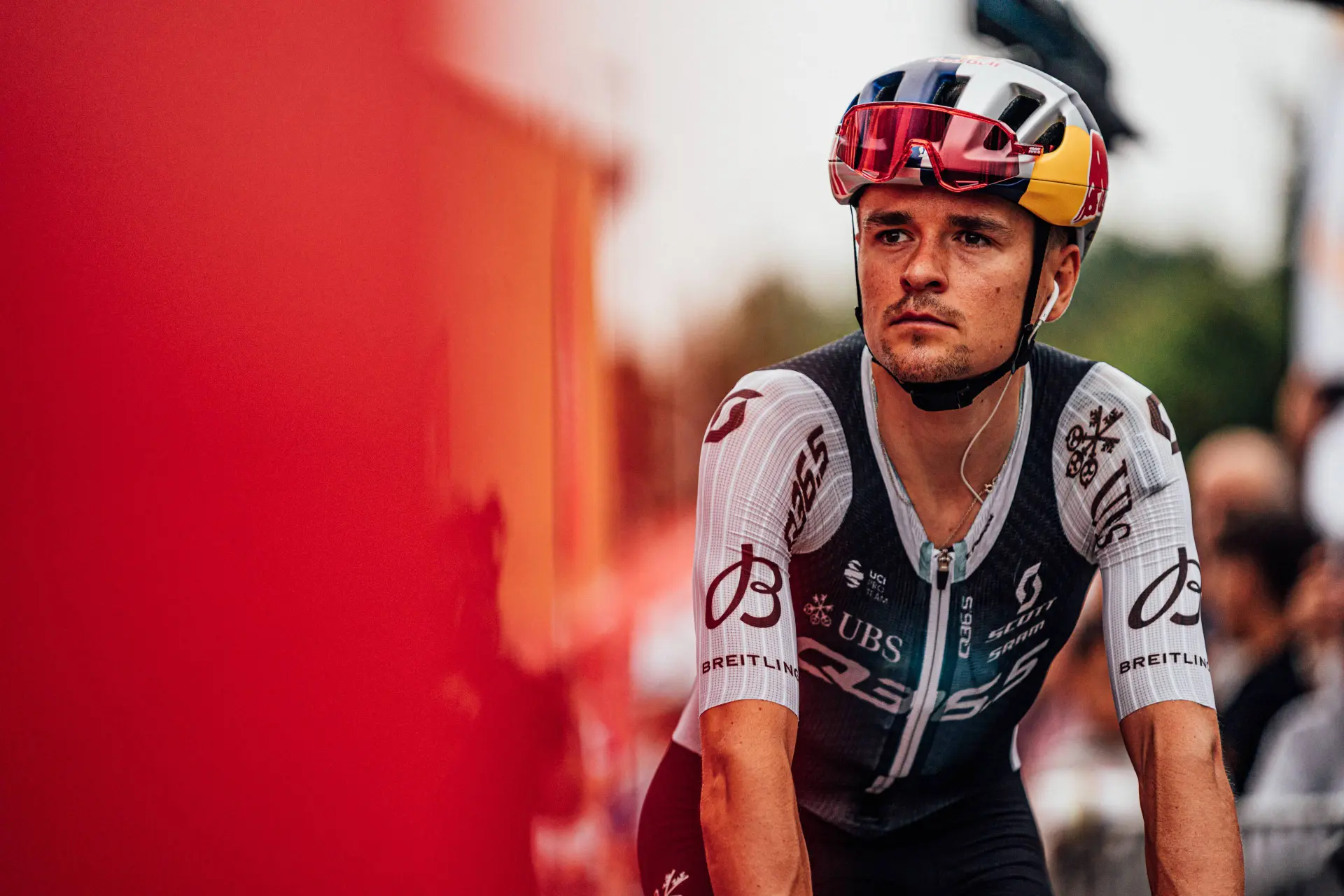
That timing detail is, for Ares, one of the main flashpoints. He recalled that the team had already unveiled its kit, plans for Jonas Vingegaard — including a Giro–Tour double — are virtually set, and everything pointed to a structured season. “Then a piece of news breaks that isn’t the moment, the place, nor the most expected timing,” he summarized. In that context, he floated the possibility of an emotional load tied to the start of a new season, the return to camps, and the separation from family, especially after the holiday pause.
Javier Ares did not rule out that the decision stemmed from a long period of reflection, as Yates himself suggested. Even so, he put an obvious contradiction on the table: “If you’ve mulled it over for a long time, the logical, normal thing is to do it at the end of the season or shortly before this one starts, but not with the team already in camp.” That observation does not question the legitimacy of the choice, but it explains why it feels so disconcerting for the cycling community and fans.

Simon Yates won the Giro d’Italia in dramatic fashion in 2025. @Sirotti
Sporting significance of his farewell
Beyond the timing, Ares focused a large part of his analysis on the sporting meaning of the retirement. “The consequences of losing Simon Yates mean the farewell to a great who, moreover, leaves at a peak moment,” he stated. In a sport where many riders extend their careers beyond their major successes, Yates takes a different path. According to the journalist, the norm is “to squeeze the most out of a career, financially,” something he considered perfectly understandable and human.
The review of the Briton’s career was thorough. Ares recalled the 2018 Vuelta a España, where Yates beat Enric Mas and Miguel Ángel López, sealing his first Grand Tour victory. From there, he listed a series of stage and overall wins that cemented his stature: stage victories at the Tour de France, six stages at the Giro d’Italia, and the symbolism of winning on the Colle delle Finestre, scene of one of the toughest episodes of his career years earlier. “A top-class climber, a very spectacular climber,” he said, underlining his ability to shine on steep summit finishes.
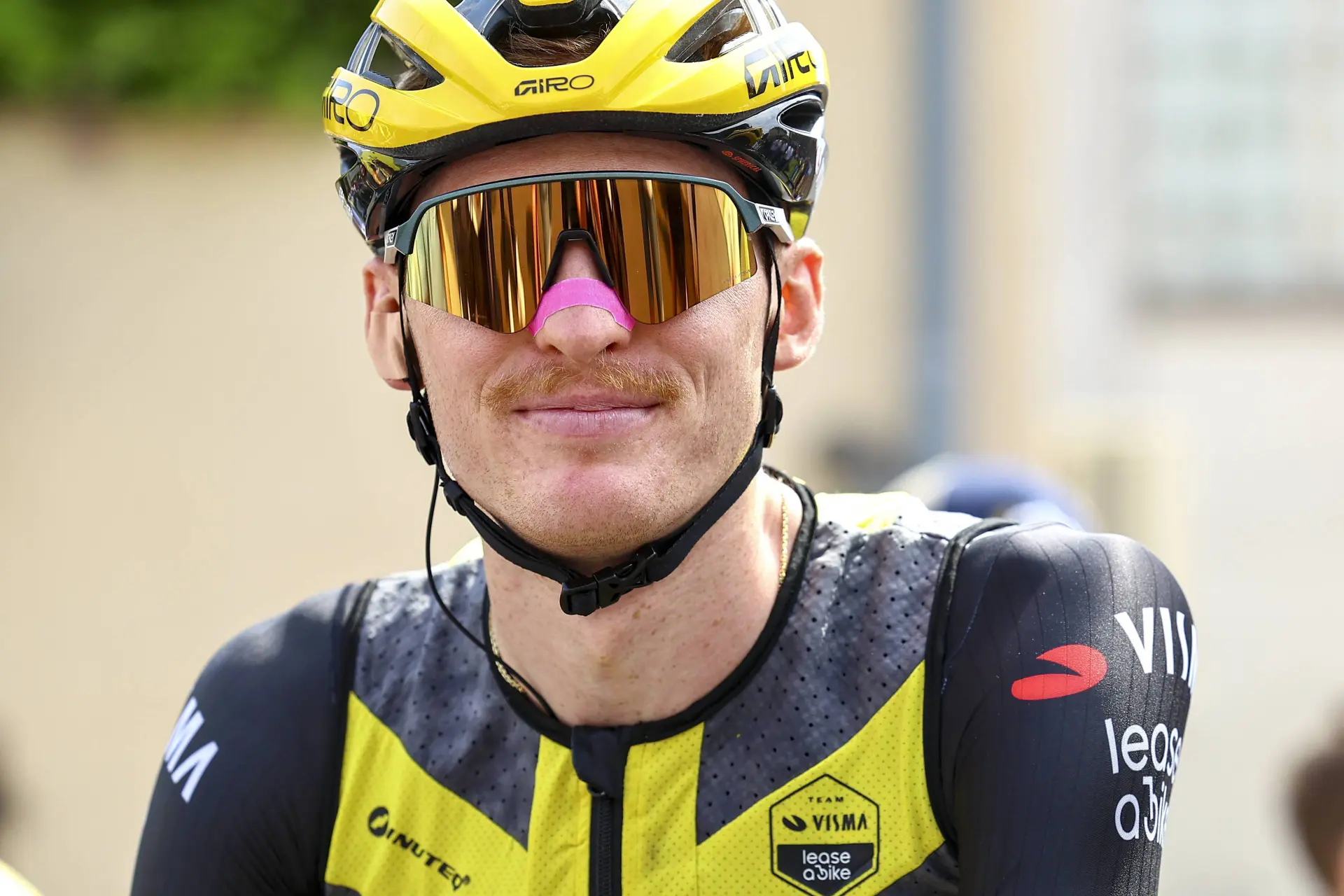
In that sense, Ares concluded that, from a strictly sporting perspective, the retirement is understandable. “I’ve won the Giro, I’ve won the Vuelta, I can’t aim for much more; we’ll leave it here, peace and move on,” he summarized as a possible inner reasoning by the rider. However, the analysis did not stop there. The journalist recalled that Yates was still under contract with his current team and that his role went beyond personal glory.
The Briton’s departure leaves, according to Ares, a very notable gap in the team structure, especially with Jonas Vingegaard’s major goals in mind. “Simon Yates was a fundamental pillar for Vingegaard to even try to impose himself on Tadej Pogacar at the next Tour de France,” he stated emphatically. The retirement adds to other recent exits and forces a rethink of the team’s internal balance, with no real scope to go to market for a reliable replacement.
Ares also dwelled on the broader consequences of this decision, noting that while Yates’s retirement won’t cause an earthquake in cycling, it does invite serious reflection. “Everything is fleeting,” he said, highlighting the enormous demands of modern cycling. A “Spartan” life of total commitment that not everyone is willing to prolong once they feel they have achieved their goals.
No need to continue?
In the final stretch of his analysis, the journalist suggested that cases like Yates’s could set a trend or at least serve as a mirror for other riders. “It’s very likely there are riders of this profile, who have done almost everything, are 33 years old, and don’t feel the need to extend their careers,” he explained, stressing that not everyone prioritises financial gain or mere professional continuity.
Simon Yates’s retirement, in Javier Ares’ words, comes “earlier than expected” and forces a period of introspection about today’s cycling. It’s not only the exit of a rider with a notable palmarès and a career full of memorable moments, but also the opening of a debate about career length, the weight of personal sacrifice, and the relentless demands of the top level. A debate that, as the journalist made clear, goes far beyond one name and reaches the entire professional peloton.
Rúben SilvaEditor-in-Chief
A founding contributor to CyclingUpToDate since its launch in January 2022, Ruben Silva has played a central role in shaping the site’s editorial direction and long-term growth. Before joining the project, he built his experience through independent blogging at Echelons Hub and by producing race previews for Ciclismo Internacional, developing a strong analytical voice rooted in daily engagement with professional cycling.
Beyond editorial work, he has been closely involved in the expansion and coordination of CyclingUpToDate’s wider network, helping establish and support sister platforms across multiple languages. This includes ongoing collaboration with CiclismoAlDia (Spanish), CiclismoAtual (Portuguese), WielrennenUpToDate (Dutch), and RadsportAktuell (German), contributing to a shared editorial vision and consistent international coverage.
He also helps oversee editorial governance across the network, setting standards for accuracy and consistency and coordinating updates or corrections when needed.
Originally from the Porto metropolitan area in Portugal, he holds a bachelor’s degree in Geography. His path into cycling journalism was shaped not through formal media training, but through independent reporting, community engagement, and sustained on-the-ground involvement in the sport.
Over the course of his career, he has conducted approximately 100 interviews across road cycling and cyclocross, ranging from one-to-one conversations and online formats to press conferences and on-site pre- and post-race coverage. His interviews include leading riders, team managers, and prominent figures within cycling media: Tadej Pogacar, Jonas Vingegaard, Mathieu van der Poel, Primoz Roglic, Wout van Aert, Joao Almeida and Tom Pidcock; managers like Patrick Lefevere and Joxean Matxin; and YouTube personality Bryan Kennedy (BKXC)...
Within 18 months of launch, he helped grow CyclingUpToDate’s English-language platform into one of the most-read cycling news websites, built entirely from the ground up. As both a professional journalist and lifelong cycling enthusiast, his focus remains on delivering accurate, timely, and well-contextualized coverage.
claps 5visitors 5
Just in
Popular news
Latest comments
- I remember that crash seemed quite innocuous when I was watching it live on tv (even though he lay motionless afterwards, but the cameras moved on with the race after a few minutes), and then being shocked to find out on the news later that it was a fractured femur (from my limited knowledge, it takes a big impact to fracture the femur bone). Anyway, all the best to him, but even if he doesn't ever reach his best again, he will always be a grand tour winner, which is more than a lot of pro cyclists can claim!Pogboom29-11-2026
- Well deserved, but he needed all the luck, as he clearly isn't on the same level as Pogi and MVDP.
 Front24229-11-2026
- Surprise,surprice....Best mate of Thomas. Still so "Clickey" at Ineos. Will never change.
 Senna196029-11-2026
- 20 20 vision
 leedorney29-11-2026
- Today there is huge risk, You can go from earning millions to just a normal person earning a daily wage in a matter of months. Only those that think they dont have much to lose or have a narcissistic personality like Lance might do it but the constant hounding/stress led to him also confessing in the end. Most of the explosion was due to the benefits and the certainty that they will not get caught due to no test developed for EPO/blood transfusion. Epo test was only developed in 2000.abstractengineer29-11-2026
- They have got a Belt around the stomach Called Tadej that keeps a tight leash to prevent bursting, but No Pogi and you can see the effectabstractengineer29-11-2026
- whats UAE then?
 Davide29-11-2026
- will be great having him back, some more competition for Thibuat and co.Davide29-11-2026
- Quinn opening mouth and insterting foot! Must be the red hat he wears !frieders329-11-2026
- This guy is 1 of thee most bizarre interviewees ever; 'It took a while definitely for me to figure it out and then after the season what to do, in which direction to go. And the thing was that, yeah, you know, then I started thinking and the more I was thinking the more I didn't know actually what to do. So at the end I really needed to let it go, you know, to look from a bit different perspective on some things' - can we have that in plain English and if you ever see him on video, you don't know what you've watched or get the gist lolleedorney28-11-2026
Loading
1 Comments