“This was really one big mess” – Zonneveld slams ASO and UCI after messy Tour de France stage 3
Cycling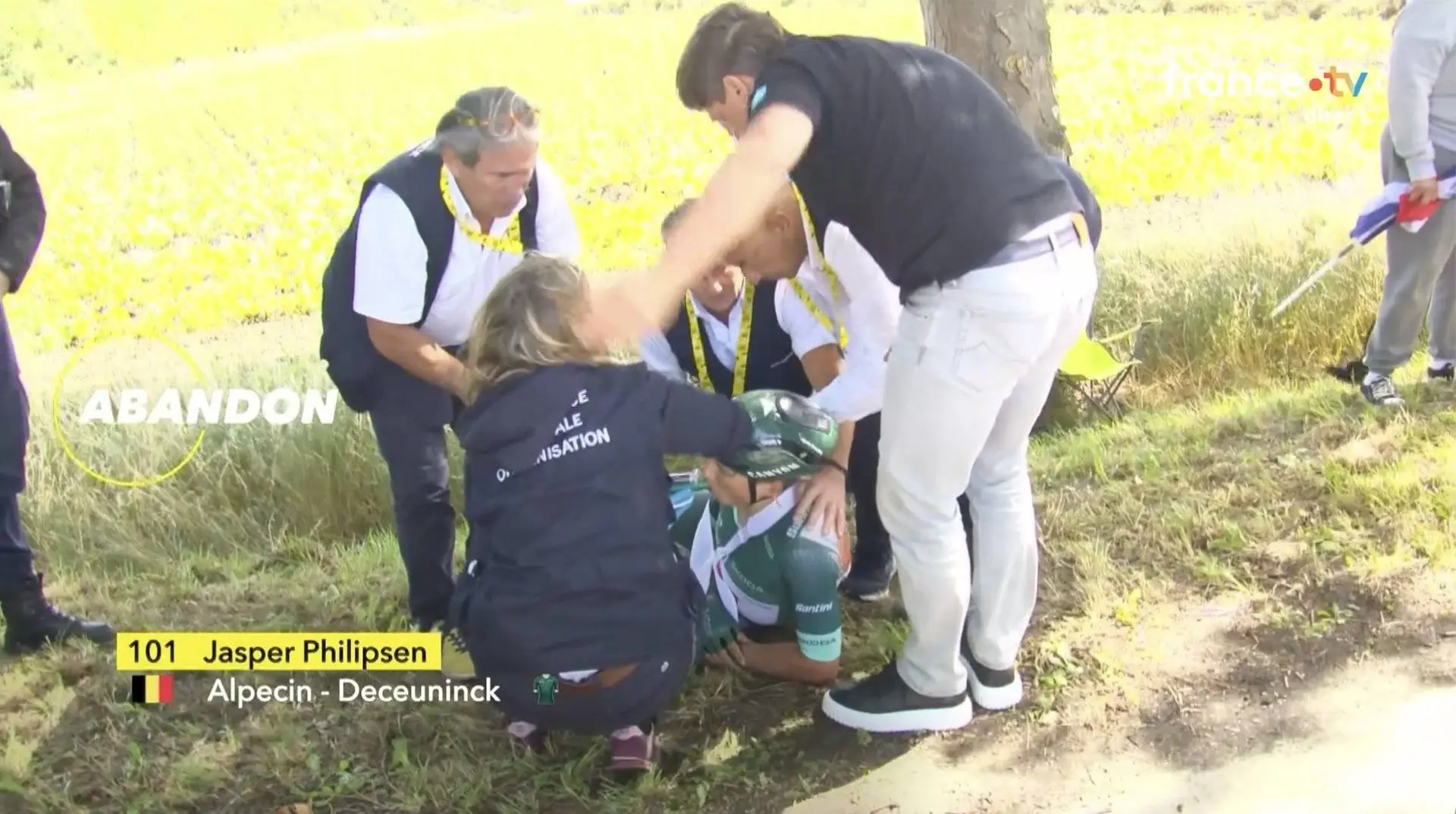
Stage 3 of the 2025 Tour de France descended into turmoil,
with a series of crashes that sparked fierce criticism from journalist Thijs
Zonneveld. Speaking on the podcast In De Waaier, Zonneveld placed the blame
squarely on race organiser ASO and governing body UCI, describing the stage as
predictably dangerous and irresponsibly planned.
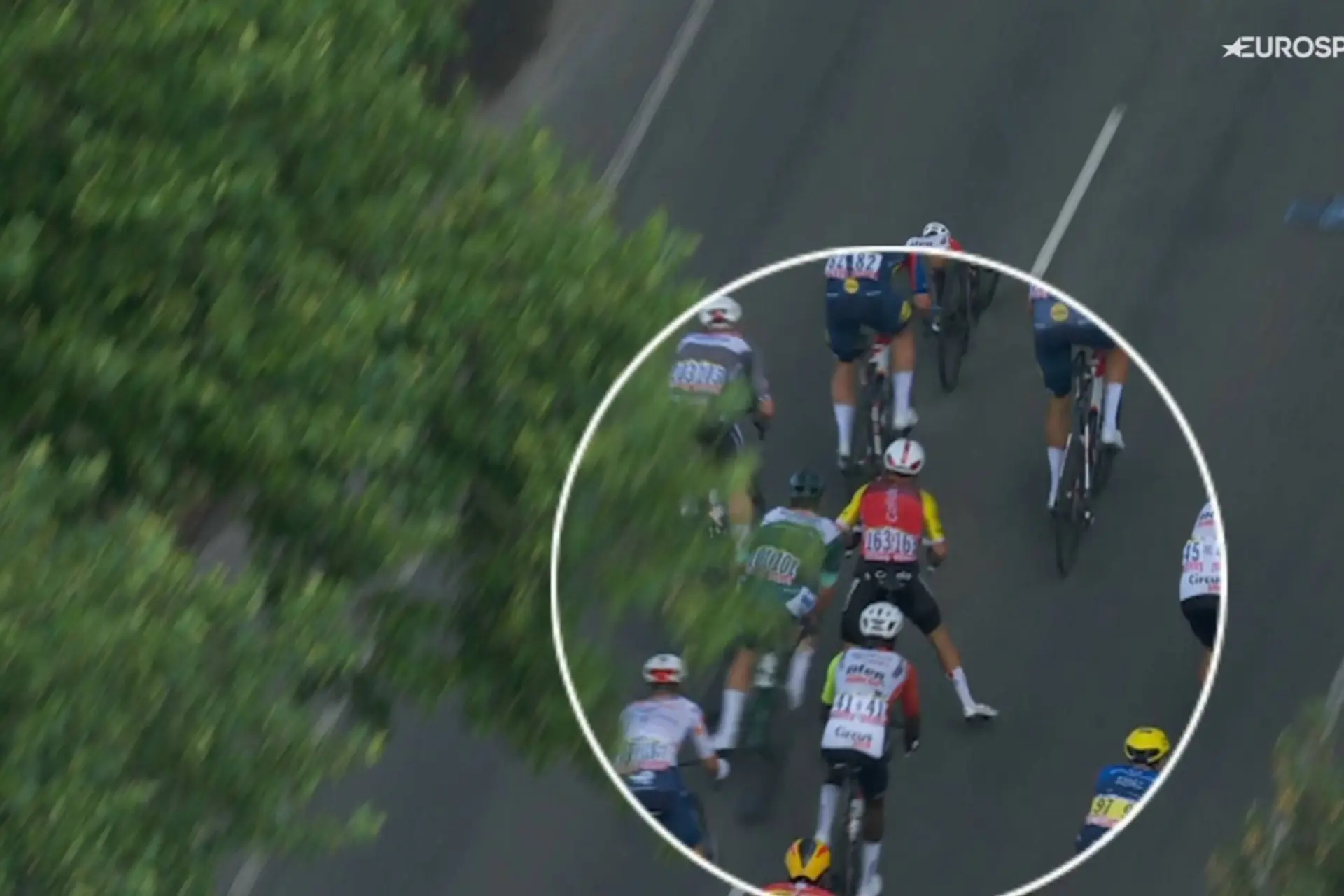
Jasper Philipsen was forced to abandon the race after going
down during the intermediate sprint. The carnage didn’t end there, Jordi Meeus
and Remco Evenepoel were also caught up in the chaos during a disorderly final
stretch.
Read also
“This was really one big mess,” Zonneveld said.
“Unfortunately, it was a mess that you could see coming for two or three days.
On paper it already looked like crap and in reality it was even crappier. I
can't say anything else.”
Zonneveld pointed to a narrowing in the road with three
kilometers to go as a key hazard. “A narrowing three kilometres from the
finish, where they just threw some fences on the road and riders suddenly have
to go from two lanes to one lane. You know that the peloton has to go through
there eight, nine wide,” he said. The final kilometre was even more
treacherous, with a chicane that left no margin for error.
“You can draw where it happens,” he continued. “When they
cross, through the chicane, from right to left... Then you're going to have a
crash on the left. I find it very sad to say, but this is just: f*ck around and
find out. Make a fucking mess of it and this is the result.”
In Zonneveld’s view, the organisers are failing in their
duty to protect riders, pushing teams to consider legal action.
“Teams have already taken matters into their own hands more
in the past year. That is the only way it can be done. The ASO will not do it,
the UCI will not do it, they actually just don't give a damn about the riders.
Just keep throwing down those fences everywhere. I fear that the next step is
that the teams will take measures and perhaps even sue the ASO.”
He acknowledged the likely consequences of such action,
including exclusion from future editions. “Then the ASO will say next year:
man, don't come. Then you are actually going to make war. But I don't know
anymore. I don't know what should spark the changes.”

Responsibility, Zonneveld argued, lies with both the
organiser and the governing body. “There are simply two parties that are
responsible for this. The ASO is not allowed to just put it that way and the
UCI has to approve it. They both just don't give a shit, I can't say it any
other way.”
The recurring nature of such incidents is taking its toll.
“I notice myself... It's really a repetitive record,” he said. “You get angrier
and angrier about it. Everyone says the same thing: unbelievable, they get
desperate, they do it again.”
Despite the risks, riders are caught in a bind, especially
in a Tour with limited sprint opportunities. “There are four real sprint
opportunities in this Tour. Stage one was a fan stage, so there are only three.
If today is an easy stage with that headwind, should you say as a professional
athlete: we are not participating? That is of course essentially exactly what
you do not do in sports, namely give up in advance. It is very bad that that
choice is put in the shoes of athletes. That is intrinsically wrong.”
His final point: the people with the most power in the sport
seem unwilling to act. “If the richest and most powerful party in cycling and
the party that makes the rules both... Yes, today they are just looking at the
birds and the leaves, instead of: guys, this sprint is not possible.”

Fin MajorCycling Journalist
Fin Major is a UK-based writer at CyclingUpToDate and has been part of the team since 2024. He is the site’s main writer for FAQs and evergreen explainers and has written around 2,000 pieces for the platform. Alongside this work, he focuses on in-depth analysis and covers the biggest races on the calendar, including the Tour de France, the Giro d’Italia, and La Vuelta a España, providing clear context around performance trends, tactics, and key storylines.
In his reporting, Fin uses reputable data sources such as ProCyclingStats for results, statistics, and historical context. He places strong emphasis on careful sourcing, editorial accuracy, and updating articles promptly when new, verified information becomes available. Outside of writing, Fin is an active cyclist, which supports his practical understanding of the sport and its demands.
claps 4visitors 4
Just in

Popular news
Latest comments
- "...In a weakened field" Most definitely ! YAWN !frieders319-10-2026
- Noted. But I had to appease his fans.MajorPayne19-10-2026
- I wonder if he'll race Challenge Mallorca
 Rafionain-Glas19-10-2026
 - Head to head time-splits: Jay Vine vs Remco Evenepoel: 10.5 km - Vine lost 45 seconds to Evenepoel 34.2 km - Vine lost a further 1:10, and was caught in the vicinity of that checkpoint. Note: I remember Vine getting caught before the second checkpoint, and ProCyclingStats log supports that, however, the gap at the second checkpoint was less than 2 minutes. 45.4 km - Vine lost only 16 seconds Of course, Vine lost less time in the middle section than the early section, but at the final segment rate, he'd have lost 15 seconds in the opening section and and 34 seconds in the middle. It is possible that Vine paced himself very well but that seems unlikely. In comparison with Stefan Küng: Kung lost: 26 seconds at T1. A further 1:11 by T2. A further 40 seconds by the finish. Relative to Evenepoel, Küng did slow down by the end. Maxime Decomble: Lost 47 seconds at T1. A further 1:20 by T2. A further 26 seconds by the finish. Mikkel Bjerg: Lost 37 seconds at T1. A further 1:34 by T2. A further 46 seconds by the finish. It is not concrete evidence that Vine cheated though it certainly doesn't absolve him. However, watching the race, I am 100% sure that Vine did not pull over and follow a different line when Remco passed him. Remco pulled away quite quickly, but the gap did not balloon and Vine definitely got aero assistance.Rafionain-Glas19-10-2026
- That ship has sailed years agovappaxbipmv19-10-2026
- He doesn't have to. I'd be perfectly happy if he loses SB if he then wins everything elsevappaxbipmv19-10-2026
- Please don't put Remco in the same sentence as Tadej. It's disrespectful to Tadej. Please make a note of this.KissinKate19-10-2026
- ....and you just described how americans are fleecing american fans as well. We don't even get the eurosport coverage you get. What you see on yurrup HBO is not available in this country. Trust me, being a cycling fan sucks everywhere.KissinKate19-10-2026
- While media outlets point to the loss of Richard Carapaz, Kasper Asgreen, and rising talents like Steinhauser as a sign of trouble, this is actually classic EF Pro Cycling tactical pivot at play. Operating on less than half the budget of state-backed super-teams, Jonathan Vaughters smartly maximized Carapaz’s return on investment by turning high salary and health setbacks into Tour stage wins, Yellow, and the Polka Dot jersey, before freeing up vital capital when his valuation peaked. Let us be completely honest here: Carapaz’s departure to NSN is strictly about securing one final massive payday before calling time on his career, rather than building a lasting sporting legacy. EF built a squad around him and gave him tactical freedom that few teams would offer, but given his ongoing health concerns and age, keeping him at that price point represented an unsustainable risk. It is very unlikely he will match the freedom or success he enjoyed at EF with his new team, making this move a pure business decision for a veteran rider cashing in on his remaining value. In contrast, while signing Tao Geoghegan Hart carries its own physical risk, it comes at a vastly different financial scale that protects EF's bottom line while offering immense upside. Replacing that climbing depth won't happen overnight, but bringing in Tao fits EF’s proven reclamation playbook perfectly by providing a low-pressure, culture-first environment for a proven Grand Tour winner to find his magic legs again. Backed by a secured core in Ben Healy, Neilson Powless, and Sean Quinn through 2029, EF isn't crumbling; they are simply resetting their wage structure, staying nimble, and betting on high-ceiling upside where richer teams only see risk.wambo19-10-2026
- This is classic EF Pro Cycling: where other WorldTour squads see risk and injury recovery as a liability, Jonathan Vaughters sees high-ceiling potential and an opportunity to build a custom runway for a rider's resurgence. While Richard Carapaz's high salary and health setbacks made a traditional Grand Tour victory unlikely against today's dominant talents, EF smartly maximized every ounce of his ability by pivoting toward high-visibility targets like a Tour de France stage win, the Yellow Jersey, and the King of the Mountains title. Now, with Carapaz moving on, Tao Geoghegan Hart’s ceiling when healthy is undeniable, and after a tough couple of years recovering from his Giro crash, EF's patient, culture-first approach might be the exact environment he needs to find his magic legs again. EF has consistently proved that they do not need the largest budget in the peloton to extract elite value and deliver memorable performances. By giving Tao the time and tactical freedom to rebuild without overwhelming pressure, this move could easily pay huge dividends and shock a lot of people in the coming seasons.wambo19-10-2026
Loading
Write a comment