“There are two guys at the top who, in the past, facilitated doping” – Analyst welcomes scrutiny of UAE Team Emirates - XRG dominance
CyclingSaturday, 14 February 2026 at 14:14
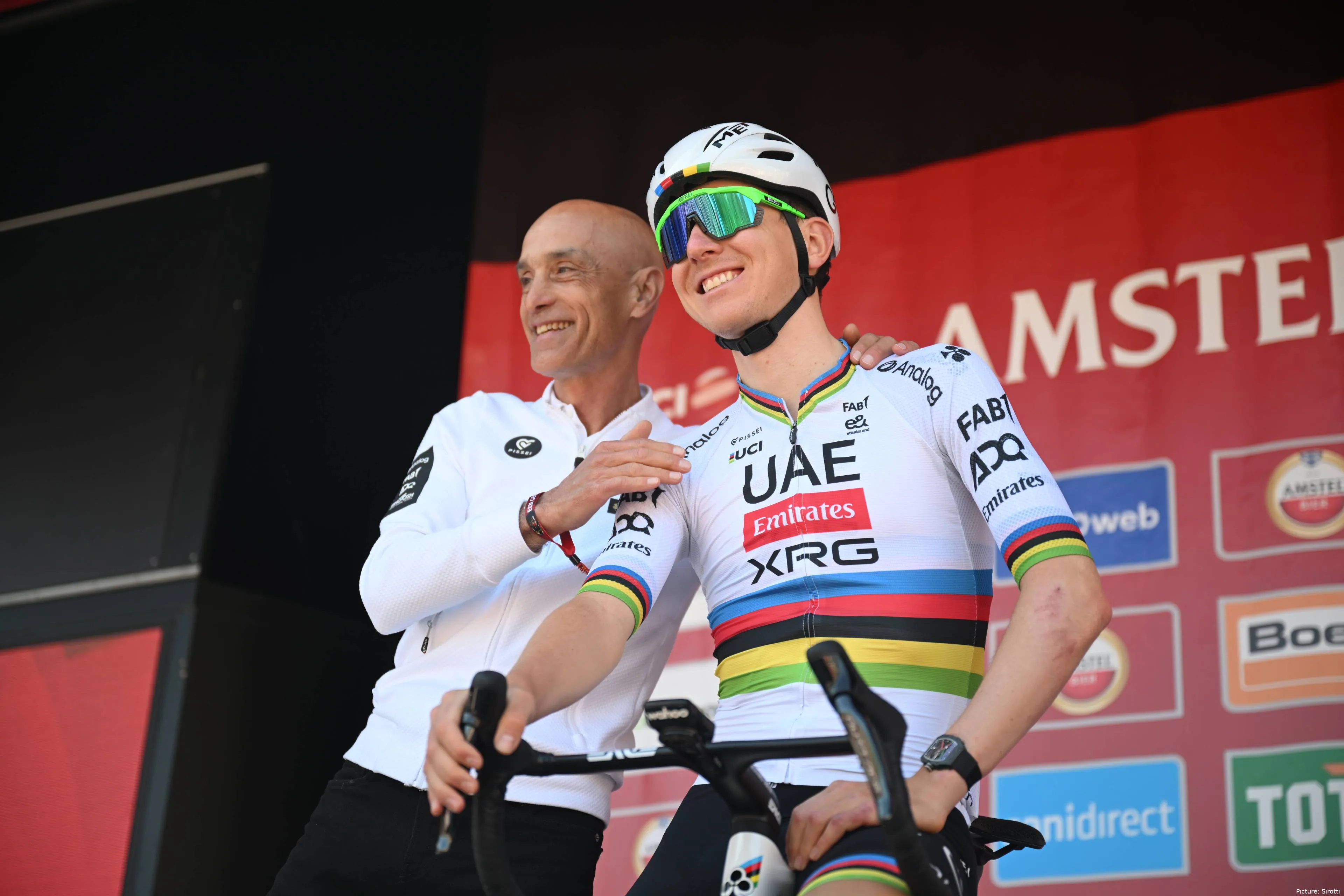
When a team reshapes the competitive order of the peloton, success alone is never the full story. In cycling, dominance inevitably drags history back into view.
That is the context in which analyst Thijs Zonneveld believes scrutiny of UAE Team Emirates - XRG is both logical and unavoidable. Not because of what the team are doing now, he stresses, but because of who is running it and what cycling has lived through before.
“I think it’s good that the question is being asked,” Zonneveld says in quotes collected by Wieler Revue. “There are two guys at the top who, in the past, facilitated doping.”
The remark has been widely interpreted as confrontational. In reality, it functions more as a diagnosis of why UAE’s dominance triggers suspicion so quickly in modern cycling.
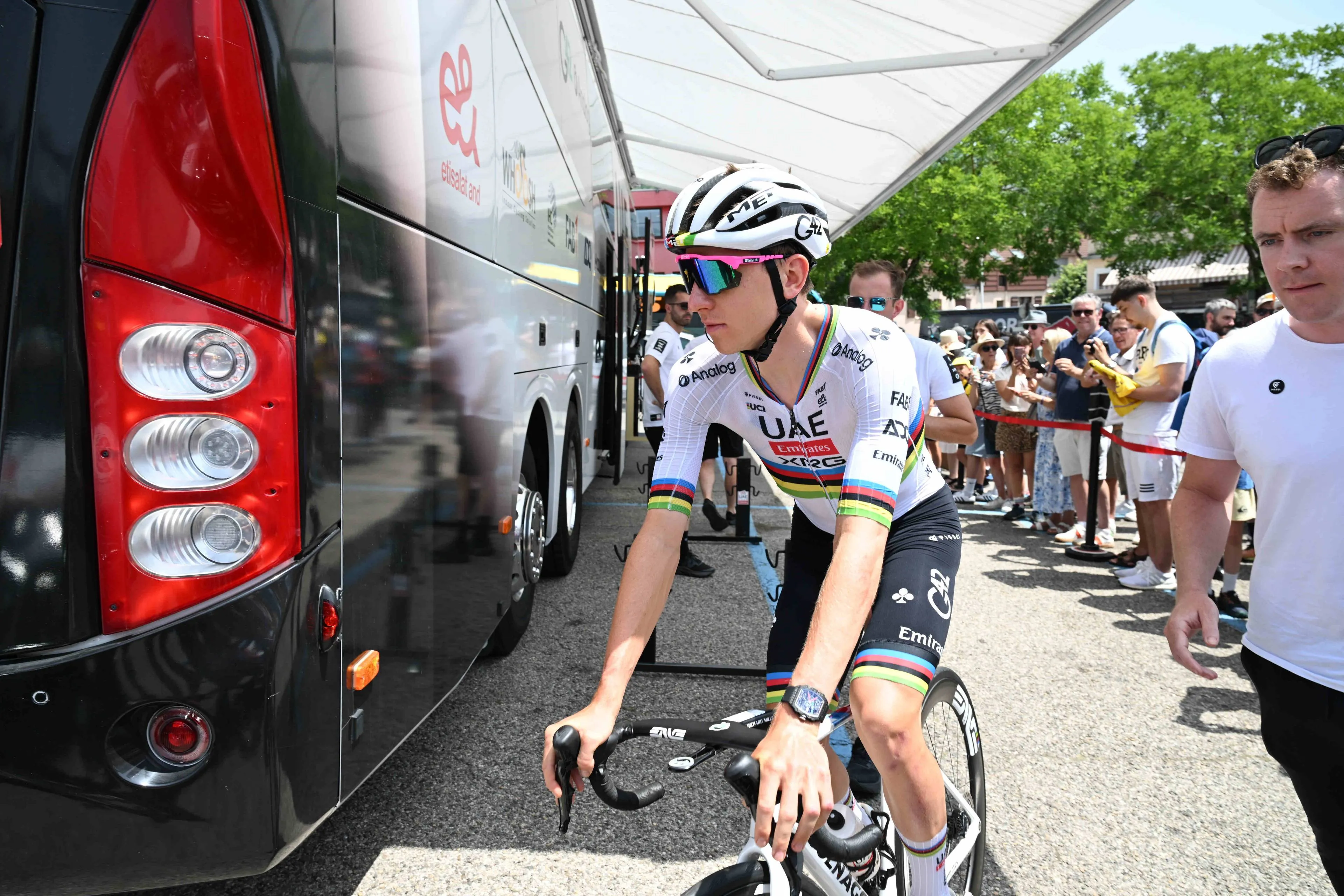
Why leadership history still matters
Zonneveld’s comment refers to the long careers of senior UAE figures Mauro Gianetti and Joxean Fernandez Matxin, both of whom were active in professional cycling during eras later defined by widespread doping.
Gianetti’s own racing career included a notorious medical incident at the 1998 Tour de Romandie, where he collapsed and was hospitalised after the suspected use of an experimental oxygen-carrying substance. No anti-doping violation was ever proven, and no sanction followed, but the episode became part of cycling’s collective memory.
As a team manager, Gianetti later led squads such as Saunier Duval during periods when riders including Riccardo Ricco and Leonardo Piepoli tested positive for blood-boosting agents. Again, Gianetti himself was never sanctioned, but the team’s collapse during the 2008 Tour de France left a lasting imprint on how his management career is viewed.
Matxin’s background overlaps with that same period. He served in sporting leadership roles on teams that were later engulfed by doping scandals, without ever being personally charged or sanctioned. His name persists in these discussions not because of proven wrongdoing, but because of proximity to some of cycling’s darkest chapters.
This history, Zonneveld argues, explains why UAE’s present-day success is filtered through a different lens than that of many rivals.

UAE's Matxin is one of those "two guys at the top" referenced by Zonneveld
Scrutiny is not accusation
Crucially, Zonneveld draws a firm line between suspicion and evidence. “You have to look at what evidence there is,” he said. “And that is zero. Yes, they ride fast, but that is not proof.”
That distinction is the fulcrum of his argument. The past may explain why questions are asked, but it does not provide answers about the present.
In other words, UAE’s dominance triggers scrutiny because cycling has been here before. But repetition of the question does not equate to confirmation of wrongdoing.
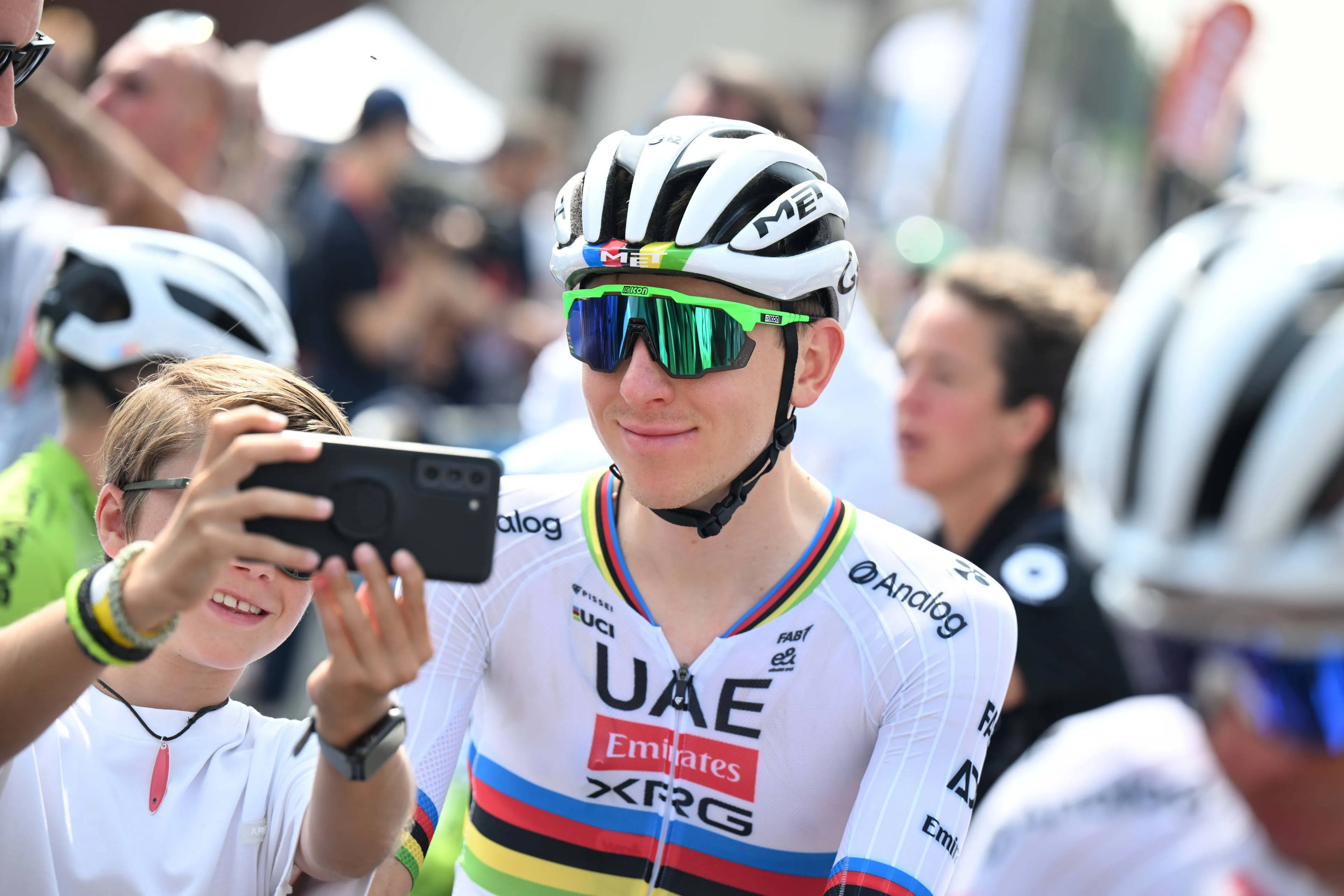
Structural power, not clandestine advantage
If not doping, then what explains the scale of UAE’s superiority? Zonneveld points not to physiology, but to structure.
“The entire WorldTour peloton wanted Isaac Del Toro and Jan Christen, but both chose the same team,” he said. “That obviously has to do with money.”
In modern cycling, financial power translates directly into depth. Depth becomes control. Control becomes sustained dominance. UAE’s ability to sign multiple elite talents simultaneously has allowed them to build a system that overwhelms rivals across different terrains and race types.
From the outside, that kind of advantage can appear unnatural. From inside the sport, it is increasingly familiar.
Why the past is unlikely to repeat itself
Former rider and commentator Jose De Cauwer is dismissive of the idea that cycling’s old mistakes could simply be replayed at the highest level today.
“I can’t imagine those two guys, Gianetti and Matxin, being so stupid as to make themselves guilty of that again,” he said.
That confidence is rooted in how radically the sport has changed. The biological passport, expanded testing regimes and external monitoring have made organised team-wide doping programmes extraordinarily difficult to conceal.
Zonneveld shares that view. “More than that, I find it hard to imagine that you could still run doping programmes today where an entire team suddenly rides better and it doesn’t come out,” he said. “As an individual, there is still room to manipulate the biological passport, but across an entire team? I just can’t imagine that.”
When dominance becomes the trigger
The paradox facing UAE Team Emirates - XRG is not unique. In cycling, prolonged dominance has historically been the spark that reignites doubt, regardless of whether evidence exists.
Teams that win occasionally are celebrated. Teams that win relentlessly are interrogated.
Zonneveld’s position sits deliberately in the middle. Scrutiny, he argues, is reasonable given the sport’s past and the backgrounds of those in charge. But without evidence, scrutiny must remain exactly that.
In the absence of proof, UAE’s success is best understood not as a mystery, but as the product of money, recruitment and execution at a scale few teams can match. Speed alone, as Zonneveld puts it, remains performance, not a verdict.
claps 9visitors 9
Just in
Popular news
Latest comments
- Quinn Simmons win this? You must be joking !frieders304-04-2026
- Calm down Pogi PR boy !frieders304-04-2026
- Tadej better watch his back if he drops them one by one coz if they regroup behind him they’ll be back in no time and in a sprint, well, just about on Pidcock’s level. Remember, you only need a Remco and Skjelmose to reel in a Tadej.Mistermaumau03-04-2026
- Love Domenico - hope he has a good time without more injuries.Katla03-04-2026
- If we take into consideration all the excuses Remco has made: loose bike saddles, air conditioners, punctures that didn't occur, pot holes that don't exist (two journalists confirmed there was no pot hole in Catalunya), kicking water bottles, telling cyclists they have no balls, throwing tantrums... Remco is probably lying.Mou-Cro-HR03-04-2026
- Good for you Domenico, leave it all out there on the road my friend.Jezla03-04-2026
- It will be like the "And Then There Were None" from Agatha Christie. Pogi will drop them one by one. Redbull secret or not will not matter at all. Regarding the article both are lyingabstractengineer03-04-2026
- RE riding sets for an extra exciting race...
 leedorney03-04-2026
 - This is great!mij03-04-2026
- as a Belgian, to win Flanders, especially on one’s debut against this field, would be history.mij03-04-2026
Loading
9 Comments