
In an era where elite riders routinely change teams in search of marginal gains, better contracts, or fresh motivation, Mathieu van der Poel stands as a near-total outlier. While the modern peloton is defined by movement, his career has been defined by continuity.
From his teenage years through to becoming one of the most dominant one-day riders of his generation, Van der Poel has remained under the guidance of the Roodhooft brothers. It is a relationship that began long before WorldTour status, Monument victories, or rainbow jerseys, and one that has quietly shaped both rider and team in parallel.
“We have a unique story together,” Van der Poel said on the Alpecin-Premier Tech YouTube channel, reflecting on a partnership that has spanned more than half his life.
That sense of uniqueness is not rooted in sentiment alone. It is grounded in time, shared risk, and mutual evolution.
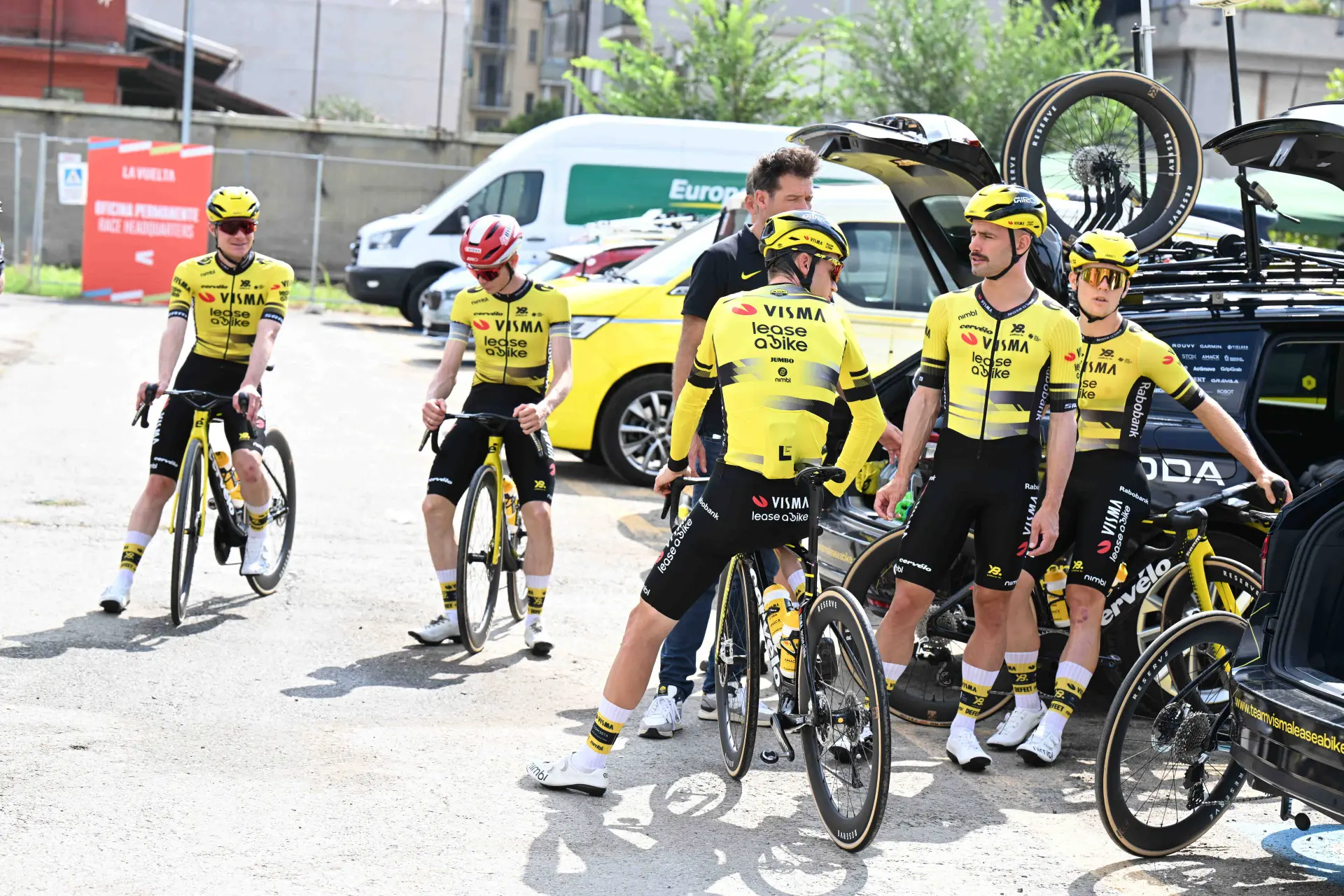
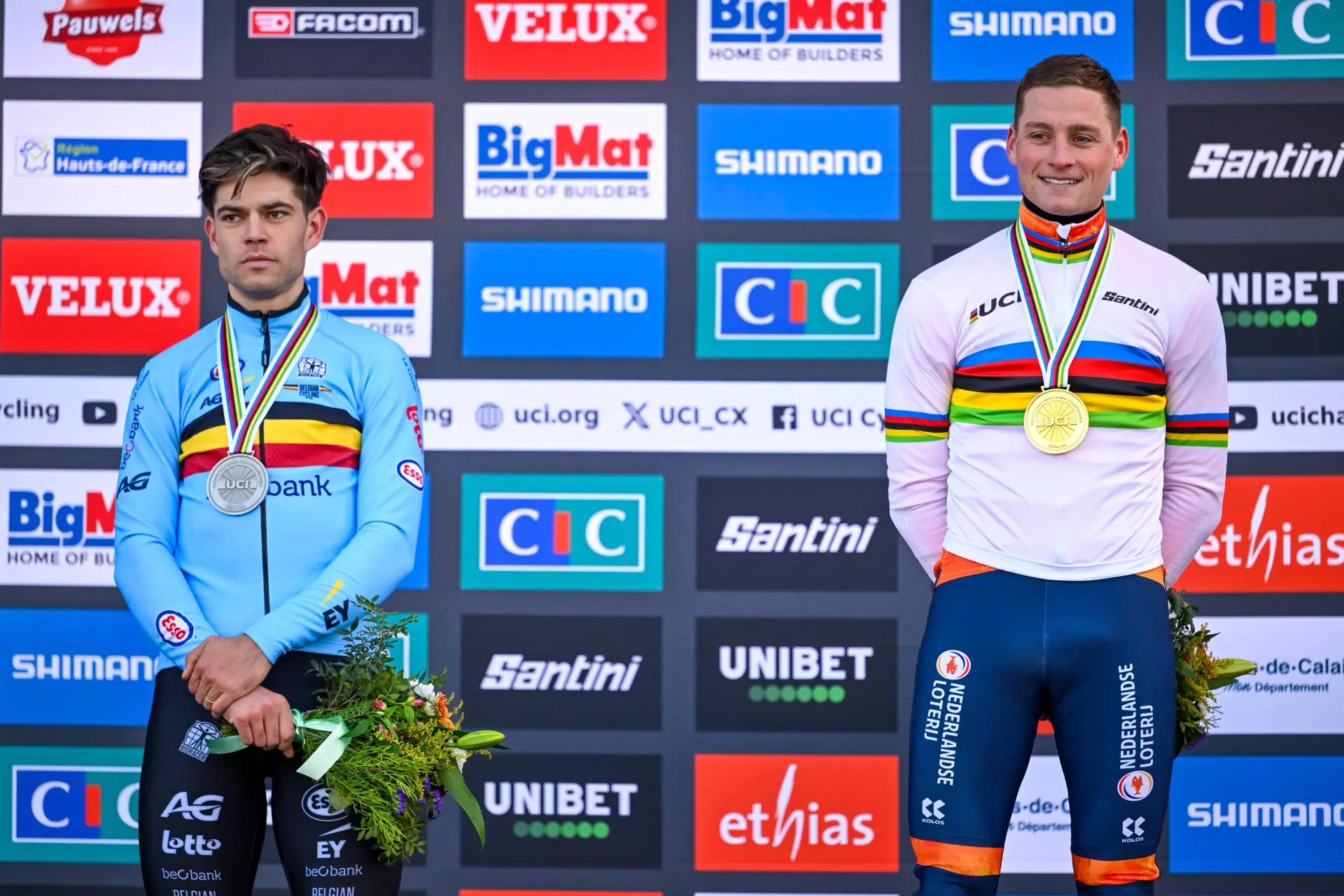
From teenage prodigy to generational leader
When Van der Poel first arrived in the Roodhooft setup, he was still a teenager taking his earliest steps towards professional cycling. Philip Roodhooft recalled that first meeting clearly.
“The first time Mathieu was with us, he was 15 years old. Now he’s 31.”
Those early years were marked by raw talent rather than polish, but even then, the trajectory was obvious. Van der Poel progressed rapidly, winning races at an age where most riders are still learning the demands of elite competition. What followed was not a one-sided rise, but a process that forced the team to grow just as quickly.
Christoph Roodhooft described the moment that reality became unavoidable. “If we want to keep this guy, we have to challenge him, ride bigger races and grow as a team.”
That decision proved decisive. Rather than allowing Van der Poel to outgrow his environment, the Roodhoofts reshaped it around him. The team expanded its ambitions across disciplines, built a WorldTour structure, and ultimately became a platform capable of supporting one of the most versatile riders the sport has seen.
Loyalty built on trust, not comfort
Van der Poel’s career has justified that faith. He has dominated cyclocross across multiple eras, won the sport’s biggest one-day races on the road, and claimed world titles across disciplines. At every stage, the option to leave has existed.
Yet he has stayed.
“The reason I’ve been here for so long is because I feel at home,” Van der Poel explained. “It feels more like family than work.”
That distinction matters. This is not loyalty born of stagnation or safety. Van der Poel’s programme has evolved continuously, from cyclocross-centric seasons to carefully targeted road campaigns built around Monuments and world championships. The stability of his environment has allowed for evolution without friction.
Crucially, the relationship has endured not only through success, but through setbacks and recalibration. “We’ve experienced many successes but also disappointments together,” he said. “I think we’ve always supported each other.”
A modern rarity in elite cycling
As Alpecin-Premier Tech has grown into a WorldTour force, the rider team dynamic has inverted. What began as a small project built around a prodigious talent is now an established structure supporting multiple leaders, yet Van der Poel remains its defining figure.
In a peloton increasingly shaped by short-term contracts and constant movement, his career tells a different story. Not of stagnation, but of shared ambition. Not of being held back, but of being understood.
That is why, even as his palmares rivals the greatest Classics riders of the modern era, Van der Poel’s most unusual achievement may be the one that does not appear on any results list at all.
He never left.

Kieran WoodDeputy Editor-in-Chief
Kieran Wood is a sports journalist based in Wales and has been active in journalism since 2022. He regularly contributes to DartsNews.com and CyclingUpToDate.com, where he covers professional cycling and darts. In cycling, his work includes liveblogs from major races, including the Tour de France, the Giro d’Italia, and La Vuelta a España, alongside race reports and analysis. He has also conducted interviews with professional riders.
His reporting spans the full racing calendar, from one-day classics to stage races, with a focus on accurate, real-time coverage and clear contextual analysis. For statistics, results, and historical context, he regularly uses resources such as ProCyclingStats. To support reporting on rider activity and training context where relevant, he also references Strava.
In his work, Kieran places strong emphasis on careful sourcing, editorial accuracy, and updating articles as new, verified information becomes available.
claps 10visitors 10
Just in
Popular news
Latest comments
- Eventually Pogi will get older and slower. Father Time will favor the young. The question is whether he can beat Pogi before Pogi decides to retire. You never know... Pogi may retire after winning paris-roubaix :)b3tlla14-10-2026
- i think he can continue to race for maybe another 2 years till he drops out of podium contention. With his TT and his follow the leader in the Mountains,he should not need too many teammates too.abstractengineer14-10-2026
- Aren't they still shopping around for a main sponsor for next year?wrsty14-10-2026
- How broke is visma now? wtf they cant even fight moviestar and decathlon for riders and lose both their mid targets based on their budget and they cant even get those? Crazy...:/miguel13-10-2026
- TT But he won by a minute so he could have cut down on some of it
 Rafionain-Glas13-10-2026
 - weight is measurable. power is measurable. So why didn't he prepare that way from the TDF if he wanted to beat Pogi and after Pogi wasn't going to be there, to win.abstractengineer13-10-2026
- I hope Thibau and Tibor don't do the sameRafionain-Glas13-10-2026
- Seixas is exactly what I would like Pogi to be mentally and in his statements. Both come across as shy and who don't talk much but with Seixas, you can see that he enjoys success, that it boosts his ego, unlike Pogačar who seems to feel increasingly uncomfortable the more he wins. He's won so many times, people are saying he's boring. The french media hate him for winning so much, the french cycling fans are booing him... etc. etc. But remember one thing, Seixas will never physically reach Pogi's level. He's excellent, but he isn't at that level nor will ever be. His talking to the media, his relationship with people is already at a high level.PogiSloFans13-10-2026
- Paul Seixas is now the second-best rider in the world.megasmacky13-10-2026
- When will they start dropping Pogi? Oh yeah, when Pogi reaches 40+ years, that's when young cyclists will start dropping him. But until then... eat your hearts out and cry. Pogi will remain the G.O.A.T. for years to come. Capish?PogiSloFans13-10-2026
Loading
1 Comments