“We found the solution through motor control” – UAE insider reveals how Tadej Pogacar’s brain helps make him so hard to beat
Cycling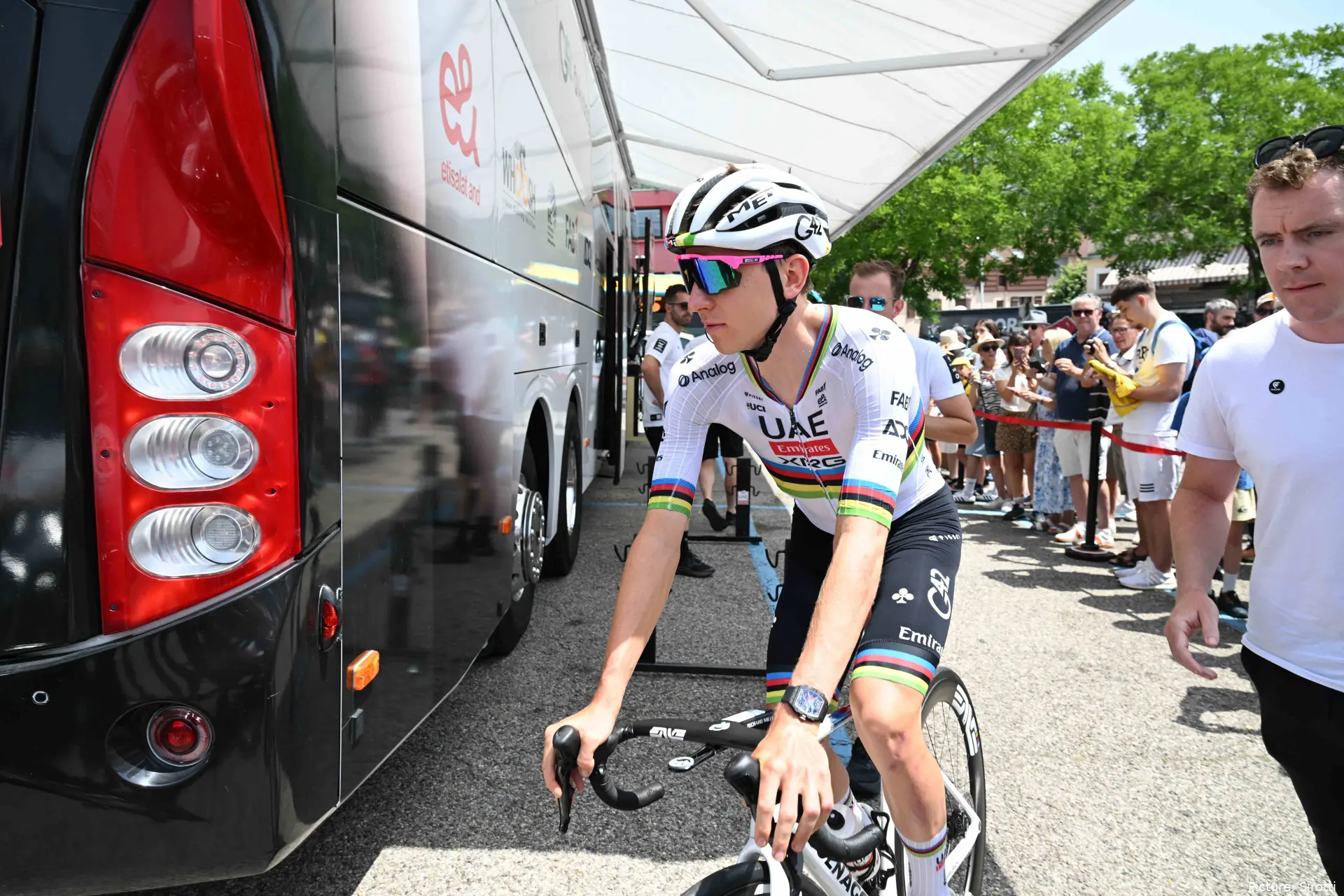
Dominance is usually explained in watts, weight, training blocks and talent. But inside UAE Team Emirates - XRG, one of the most important performance shifts has happened somewhere far less visible: in the way riders’ brains control their bodies.
That is the picture painted by Michele Del Gallo, long-time physiotherapist and osteopath with the team, speaking in an in-depth interview with Bici.Pro. His comments lift the lid on a quieter revolution inside UAE, one that has reshaped how riders prepare, how they move and, ultimately, how they perform when it matters most.
Del Gallo describes a team that no longer looks for answers only in muscles and power numbers, but in how the brain recruits and coordinates the body under pressure. “We found the solution through motor control,” he explained.
It is a line that sounds abstract, but it sits at the heart of why riders like Pogacar can look effortless when others fade.
The problem was not in the legs
Testing before the season revealed something unexpected. Many riders were not pushing equally with both legs. “Thanks to the tests we carry out before the season starts, we noticed that many riders have a difference in strength between one leg and the other,” Del Gallo said. “In the end it was a recruitment problem: on one side the athlete managed to recruit 100 per cent of the muscle fibres, while in the other leg he recruited fewer.”
The issue was not weakness in the muscle itself. It was that the brain was not activating both sides in the same way. That imbalance wasted energy and limited performance long before fatigue ever set in.
So the focus shifted. Not to heavier gym work or harder intervals, but to teaching the brain how to send better instructions.
Why ‘activation’ is not really a warm-up
Fans often see Pogacar and his teammates using resistance bands before races. It looks like a simple warm-up. Del Gallo says it is nothing of the sort. “What is the point of warming up for five minutes before a race that will last five or six hours, where the difference is made right at the end?” he asked. “Instead, the work on motor control lasts throughout the whole race. They will pedal in a different way, use less energy and find themselves in a better situation at the finish.”
The exercises are designed to change how the brain fires muscles during effort, not just to get blood flowing. The effect is meant to stay with the rider for the whole stage.
That is why the work happens not only on race mornings, but also in training camps, hotels and rest days. It is about building new automatic patterns, not something a rider can consciously “think” through at 90 pedal strokes per minute.
Read also
The brain beats the strongest core
Modern cycling talks endlessly about core strength. Del Gallo is blunt about its limits. “You can have the strongest core you like and be number one in those exercises,” he said, “but if when you give the command to push on the pedal, the brain does not do it in the right way, having such a strong core is useless.”
Muscles do not decide when to work. The brain does, using patterns built over time. If the brain does not include the core or recruits one side differently, even the strongest body cannot use its full potential. “You do not consciously decide which muscles have to contract, the brain decides based on patterns,” Del Gallo explained. “If within this movement pattern you do not have activation of the core, when you push on the pedal the brain will not recruit it.”
So the goal is to make correct activation automatic, not something riders have to think about when racing at full speed.

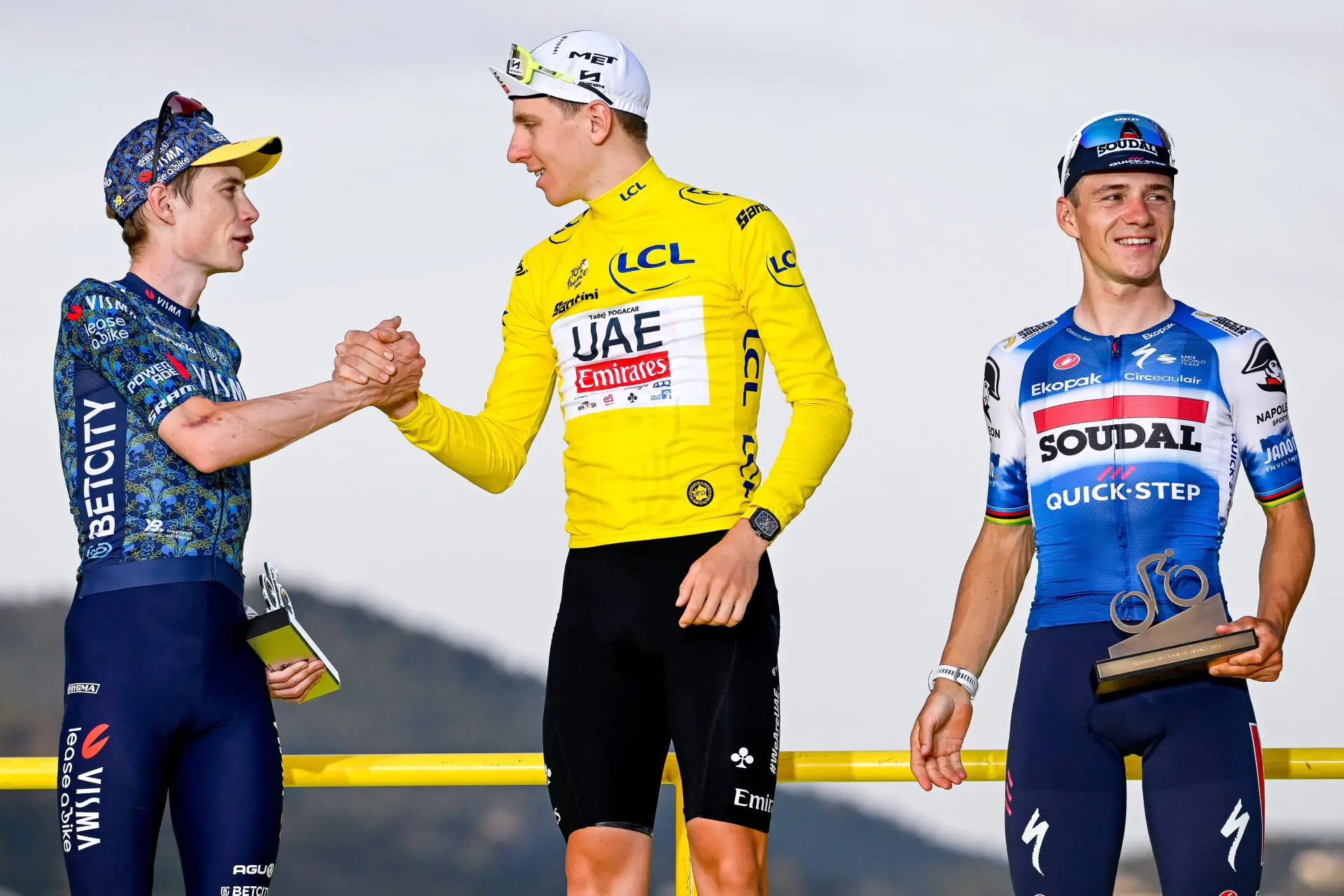
With multiple Grand Tours, Monuments, World Championships and more, Tadej Pogacar has emerged as the dominant rider of his generation
Why UAE feels ‘another planet’
The technical work sits inside a wider cultural shift at UAE, one Del Gallo traces back to leadership. “It was another planet compared to where we are now,” he said when comparing the team today with the one Pogacar joined in 2019.
He points to Mauro Gianetti’s influence and to an environment that encourages initiative. “He gives us all freedom, each in our own area, to bring something new,” Del Gallo said. “It is always people who make the difference, and the sum of the best from each person, even if it is made up of small things, ends up producing the biggest improvement.”
That trust also means investment. When staff identify something that can make riders better, it gets backed. “If there is a need to make investments, they are made, it is not a problem,” Del Gallo said. “Mauro trusts us.”

Why it shows in Pogacar
Pogacar is not winning because of one magic trick. But in a sport decided by tiny margins, being able to use more of your body, more efficiently, for longer, matters.
Teaching the brain to recruit muscles better means riders waste less energy, produce a more even power output through each pedal stroke, and reach the final kilometres in better condition when races are decided.
That is why what looks like a simple band routine is part of something much deeper. It is not about warming up muscles. It is about reprogramming how the body works under pressure.
In an era obsessed with numbers, UAE’s insider message is almost old-fashioned. The biggest gains are not always found in data files or gym weights.
Sometimes, the real advantage is in teaching the brain how to use what the body already has.


Kieran WoodDeputy Editor-in-Chief
Kieran Wood is a sports journalist based in Wales and has been active in journalism since 2022. He regularly contributes to DartsNews.com and CyclingUpToDate.com, where he covers professional cycling and darts. In cycling, his work includes liveblogs from major races, including the Tour de France, the Giro d’Italia, and La Vuelta a España, alongside race reports and analysis. He has also conducted interviews with professional riders.
His reporting spans the full racing calendar, from one-day classics to stage races, with a focus on accurate, real-time coverage and clear contextual analysis. For statistics, results, and historical context, he regularly uses resources such as ProCyclingStats. To support reporting on rider activity and training context where relevant, he also references Strava.
In his work, Kieran places strong emphasis on careful sourcing, editorial accuracy, and updating articles as new, verified information becomes available.
claps 8visitors 5
Just in
Popular news
Latest comments
- See, you can write a sensible comment without just slagging off everyone else! Well done!👏😆 🫣Lozza12-10-2026
- Seixas best chance is obviously UAE. They are the best team in history of the sport and they developed pogacar into the goat. They also developed Del Toro to be nr 2 in world. Seixas would become unstoppable at UAE. Lets see if Seixas stays at decathlon but if UAE comes knocking its impossible to say no. Barcelone and real madrid combined into one team, thats UAE in cycling it feels like..miguel12-10-2026
- I think he does or goes to whichever team gives him the scope to become the rider everyone thinks he'll be when Tadej stops.. that simpleslappers6612-10-2026
- I remember at one time he was mentioned in the same breath as Seixas. no more. Onley has a lot of work to do to be deserving of that.mij12-10-2026
- I hope he goes to Bahrain-Victorious to mentor Jakob
 Rafionain-Glas12-10-2026
 - I hope he stays! Cycling is more fun with Primoz, even if he is not winning.mij12-10-2026
- yes for sure, there will be more chances for him at Euro than Lombardia. I wonder if that emotion wasn't also because he knows he has now been eclipsed by a younger rider w/o his goals being checked off. At least when Seixas over takes Tadej someday, Tadej will have accomplished his major goals. He still has Roubaix left, but Seixas isn't a threat there. And he should find a year to get Vuelta. Remco now is behind at least 2 riders w/o ever having won a Tour, one monument to his name, and the next few World Championships are not Remco friendly. I would still take Remco's wins though!!!mij12-10-2026
- Remco was at 100%. He raced as expected: 15th best on the climbs and then best in the sprint of the chasing group. Exactly what he did at Liège-Bastogne-Liège, where he was on similar form. His win in Amstel was comparable to Quebec or the EurosRafionain-Glas12-10-2026
- "inside the tent pissing out" is an idiom based on a quote from President Lyndon Johnson. Not sure if you're saying you don't understand the term. The full phrase is "it's probably better to have him inside the tent pissing out, than outside the tent pissing in."wrsty12-10-2026
- Pissing out?? Who is forcing them? They can follow Ayuso's example. And they can be leaders on another team. Ayuso's example again. :)MajorPayne12-10-2026
Loading
6 Comments