The Simon Yates conundrum: Visma reportedly scrambling to replace Giro winner after surprise retirement
CyclingWednesday, 14 January 2026 at 09:38

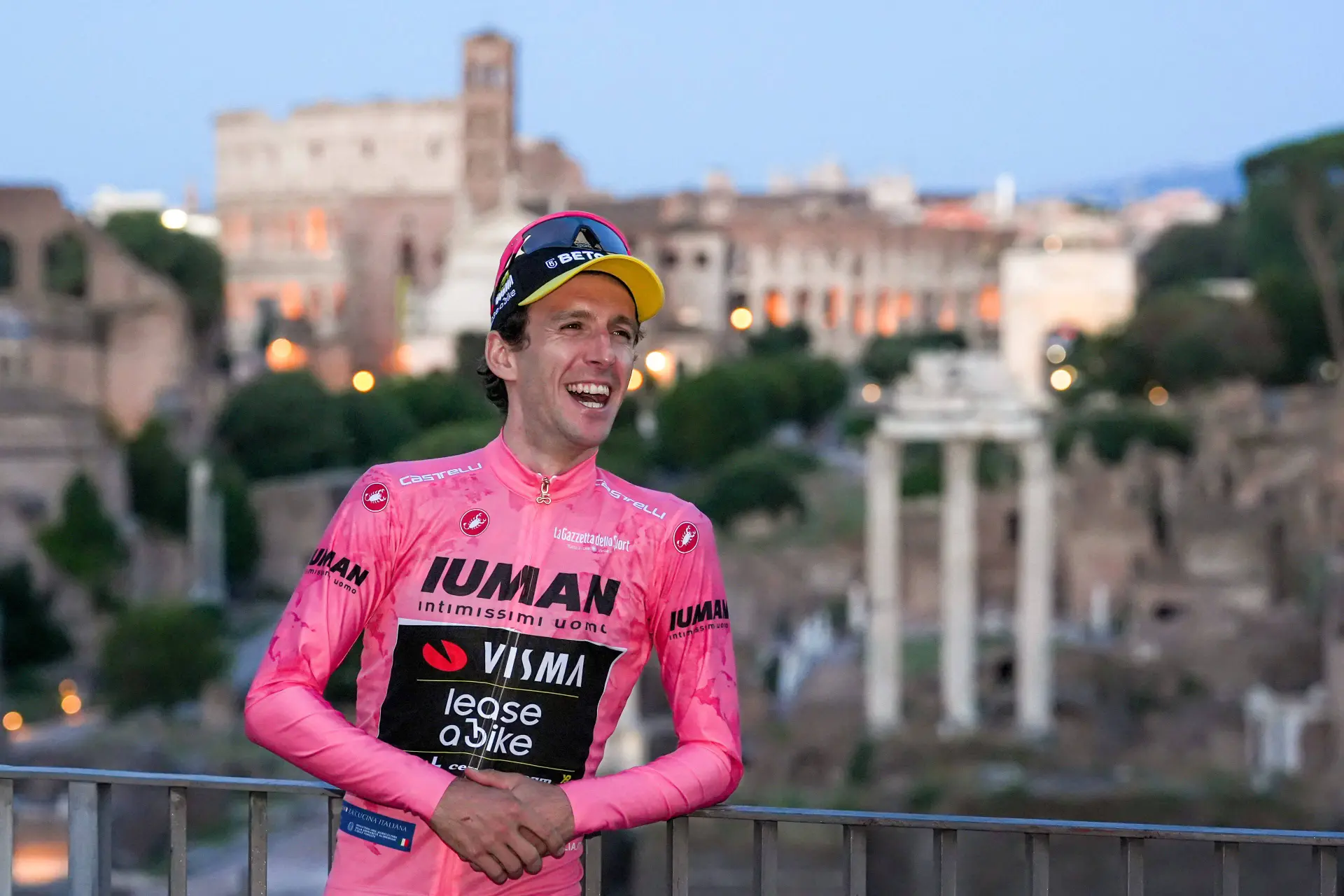
Simon Yates did not just leave a gap in Team Visma | Lease a Bike’s roster. He left it at the worst possible moment.
When Visma confirmed Yates’ immediate retirement, the team framed it as the close of a final season that delivered the Giro d’Italia and a Tour de France stage win. But behind that official tone, the timing has created a practical problem.
According to Wielerflits sources, Visma were also caught off guard by how suddenly the decision arrived and are now still weighing what to do with the open roster spot as January moves on. In simple terms, this is not a calm, planned transition. It is reaction.
A late decision with early consequences
That sense of damage control echoes the criticism already voiced publicly. Danish analyst Emil Axelgaard said Visma had “reason to be unhappy” with how late Yates chose to stop.
Yates had a contract running to the end of 2026. He attended the December training camp, appeared in kit launch material and took part in the Giro route presentation as defending champion. His programme for the coming season had already been drawn up.
Wielerflits report that the final call only came during the Christmas period, when Yates felt he could no longer fully recharge for another season. That detail matters. It means Visma were still planning with him when the window to react was already closing.
Why this is so hard to fix
Even with money available, timing matters more than budget. At this point in the winter, most riders of Yates’ level are locked into contracts and embedded in their own teams’ plans. Signing someone comparable in mid-January is described as close to impossible. Any attempt to buy out a contract would be expensive, uncertain and politically complex.
That reality is exactly what Axelgaard was pointing at when he said the late timing leaves Visma with little chance to respond properly. The market is simply not built for this moment.
So the problem is not only that Yates has gone. It is that he has gone at a point where clean solutions no longer exist.
What “replacement” really means now
Replacing Yates like-for-like is largely theoretical. The names being discussed in reporting range from riders whose best years are already behind them, to climbers still trying to establish themselves at top level. Some are available precisely because their recent results have not justified new contracts. Others would require Visma to rethink roles and expectations across the team.
One rider quoted in the wider reporting, Antoine Huby, summed up the type of market this is. He said he continues to train as if he already has a contract, ready if a team calls. That is not the same market in which Grand Tour winners are normally found.
Any move now would be less about finding “the next Yates” and more about finding someone who can make a weakened structure work.
Turning inward instead of outward
Because of that, the most realistic response may be internal rather than external.
Visma have operated with similar squad sizes before and can use riders from their development team in some race selections. Riders already in the system are likely to move up the hierarchy rather than being replaced by a single incoming leader.
That would not recreate what Yates offered. But it might allow Visma to stabilise without forcing a bad decision just to look busy.
It also fits the wider picture of this winter. Visma have talked more about structure and planning than revolution. Yates was part of that structure. His retirement forces them to bend it rather than rebuild it cleanly.
From personal ending to team problem
For Yates, the timing delivers something rare. He leaves on a high, with a Giro and a Tour stage in his final season.
For Visma, the same timing creates exactly the scenario Axelgaard warned about. A decision that may be understandable personally, but damaging collectively because it came too late.
Now, according to Wielerflits, the team are still weighing what to do rather than announcing a replacement. That alone says enough.
Read also

Kieran WoodDeputy Editor-in-Chief
Kieran Wood is a sports journalist based in Wales and has been active in journalism since 2022. He regularly contributes to DartsNews.com and CyclingUpToDate.com, where he covers professional cycling and darts. In cycling, his work includes liveblogs from major races, including the Tour de France, the Giro d’Italia, and La Vuelta a España, alongside race reports and analysis. He has also conducted interviews with professional riders.
His reporting spans the full racing calendar, from one-day classics to stage races, with a focus on accurate, real-time coverage and clear contextual analysis. For statistics, results, and historical context, he regularly uses resources such as ProCyclingStats. To support reporting on rider activity and training context where relevant, he also references Strava.
In his work, Kieran places strong emphasis on careful sourcing, editorial accuracy, and updating articles as new, verified information becomes available.
claps 1visitors 1
Just in

Popular news

Latest comments
- provided that pogi will (need to) come back to the vuelta in 2027 to finish what he started, the vuelta will ultimately have benefited from his crashout this year ... they get to have him as a headliner 2 years in a row!Ketterechts16-09-2026
- we are witnessing the dismantling of a team that dominated the peloton for a long time. the past few years have been grim, and with the current personnel policy, the years ahead are unlikely to be any better.Ketterechts16-09-2026
- like father like sonmij16-09-2026
- lucky guy. good for him for signing the big contract. surprised IPT coughed up the money considering the extent of it.mij16-09-2026
- vos is going for gravelmij16-09-2026
- wow 50 is insane. good for him.mij16-09-2026
- I mean, probably not - but this WC is going to be about ten guys who all seem capable in the moment. A real unknown outcome, I cannot wait.wrsty16-09-2026
- Spain besmirched Israhell over Ceuta; Israhell has taken over Colombia government; Sevilla is Spanish; Colombian police are intimidated by Israhell, hence police CAN DO NOTHING.bike-anarkist16-09-2026
- Welcome to normal people’s lives. He’s lucky they had no clue who he is or else he’d have been stolen.Jumpyjohn16-09-2026
- Courageous man, hope it works out for him or else …Jumpyjohn16-09-2026
Loading
2 Comments