“There are no risks in his solo attacks” – Tadej Pogacar’s coach reveals why cycling’s boldest moves are anything but reckless
CyclingTuesday, 13 January 2026 at 09:33
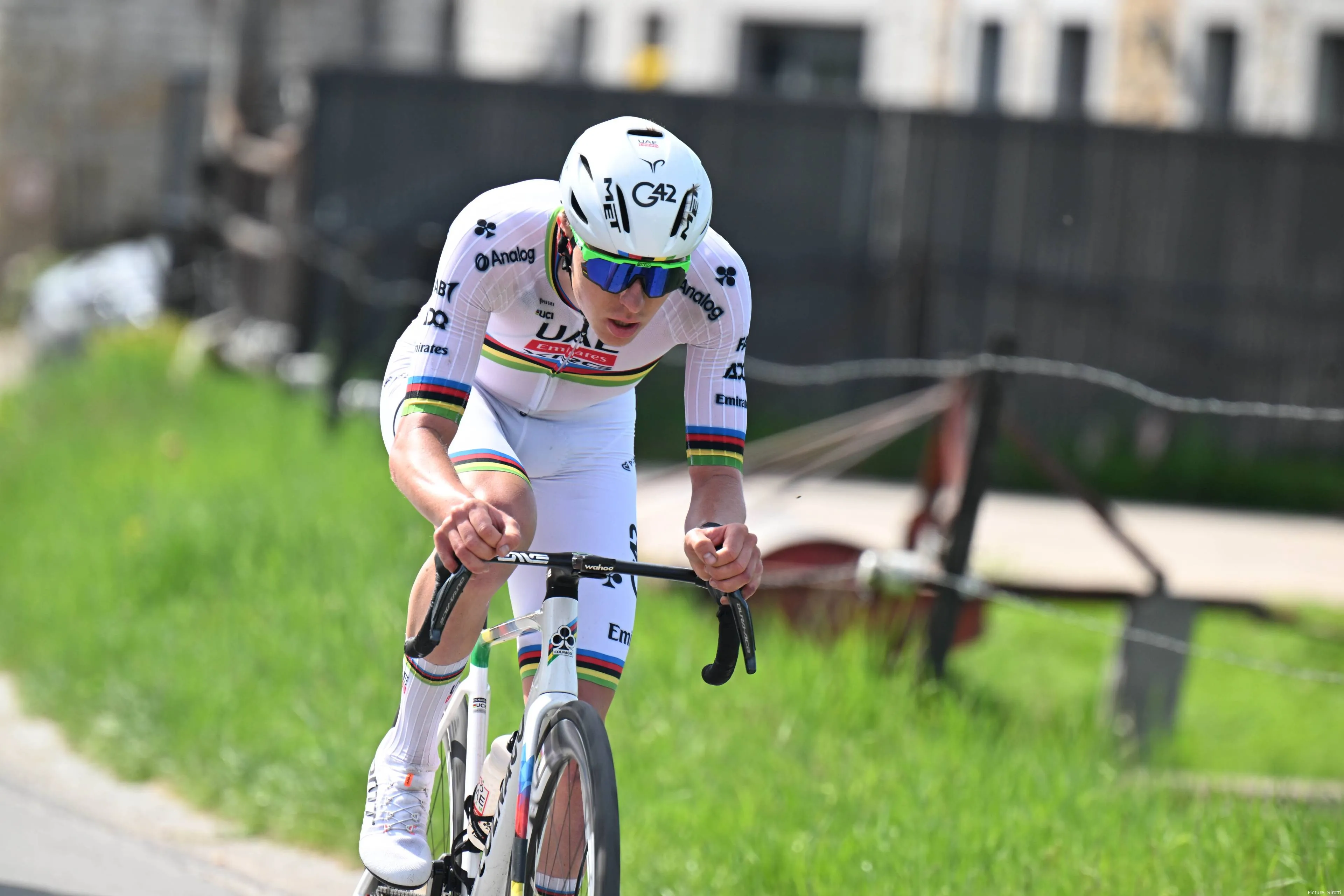
When Tadej Pogacar lights up a race from distance, the reaction is almost always the same. It looks wild. It looks emotional. It looks like a gamble that should blow up in his face.
But inside UAE Team Emirates - XRG, that reading of Pogacar is completely wrong. “There are no risks in his solo attacks,” says his coach Javier Sola, in conversation with Bici.Pro. “Power and endurance come from foundations built with years of specific work.”
That single line flips the entire Pogacar story on its head. What looks chaotic from the roadside is, in reality, built on systems, structure and long-term planning.
His most spectacular days are not moments of madness. They are the moments the plan is designed to release him.
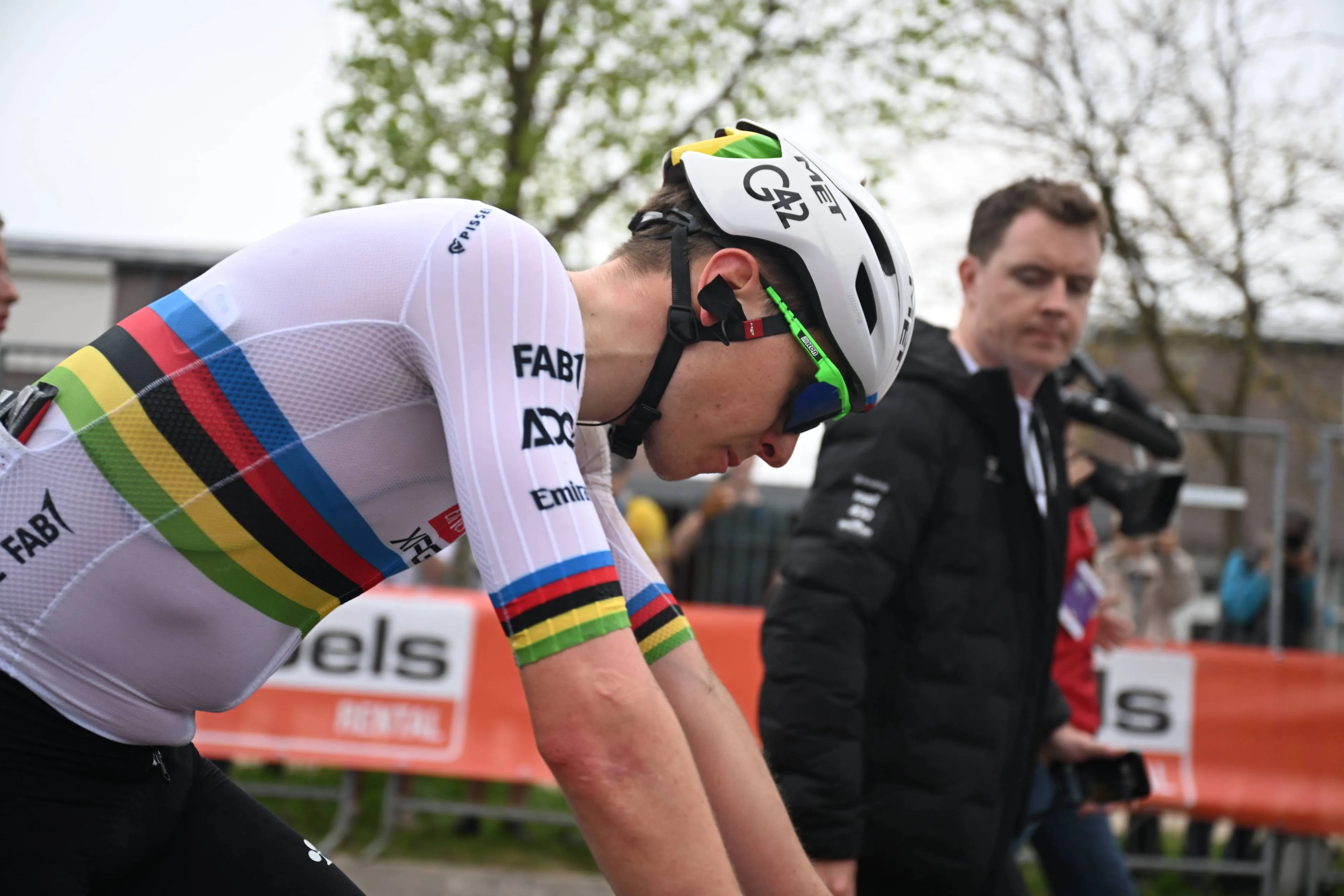
Why Pogacar’s attacks are not reckless
Sola’s explanation does not start with watt numbers or race tactics. It starts away from the bike. “Strength and conditioning work off the bike is not an accessory but a central pillar of the programme. Everything is preparation.”
For years, Pogacar’s development has been driven as much by gym work and conditioning as by what he does on the road. Sola links that directly to his evolution as a rider. “It is mainly thanks to strength work that he improved in 2025. This has also allowed him to improve his body composition.”
Less body fat, more muscle, and better structural strength mean Pogacar can hold extreme efforts for far longer than most riders ever could. That is why his long solo moves are not acts of hope.
That is what turns certain days into modern cycling folklore. Around 81 kilometres solo to win Strade Bianche in 2024. Nearly 50 kilometres alone to take Il Lombardia later that same season. Roughly 75 kilometres solo at the 2025 European Championships. More than an hour alone at the 2025 World Championships. Even his “shorter” raids, like Liège in 2025 from around 30-plus kilometres out, still sit far beyond what most riders would ever dare attempt.
Those are not emotional lunges. They are durations that only make sense if the rider knows, long before he attacks, that his body is built to survive it. “The concept of balance between aerobic endurance and muscular strength is essential to sustain prolonged efforts on climbs, in time trials and in race transitions,” Sola explains. “And in this Tadej is very strong, but it is something we have built and that we are building over the years.”
What fans see as a rider riding on instinct is actually the final expression of years of carefully layered physical work. Pogacar does not attack because he feels good. He attacks because his preparation allows him to.
Experience turns power into control
Raw power alone does not explain why Pogacar so often gets these moves right. Sola points to something else that has grown quietly alongside his physical development. “Add to that the fact that he is becoming more and more experienced. And his efficiency increases, we saw this especially in time trials.”
That experience is what turns strength into judgement. Pogacar is not simply stronger than before. He is better at knowing when he can hurt the race and when he should not. His attacks look daring, but they are timed around his own understanding of his limits.
Sola is clear that Pogacar is still improving. “Tadej has margins. Pogacar has not yet reached the absolute limit of his possibilities. It is still possible to increase strength and intensity without compromising the management of overall effort.”
Even without reaching that ceiling, his current level already allows him to do things that most riders cannot attempt safely. The long-range solos that have defined recent seasons are not exceptions. They are a feature of how he is built.
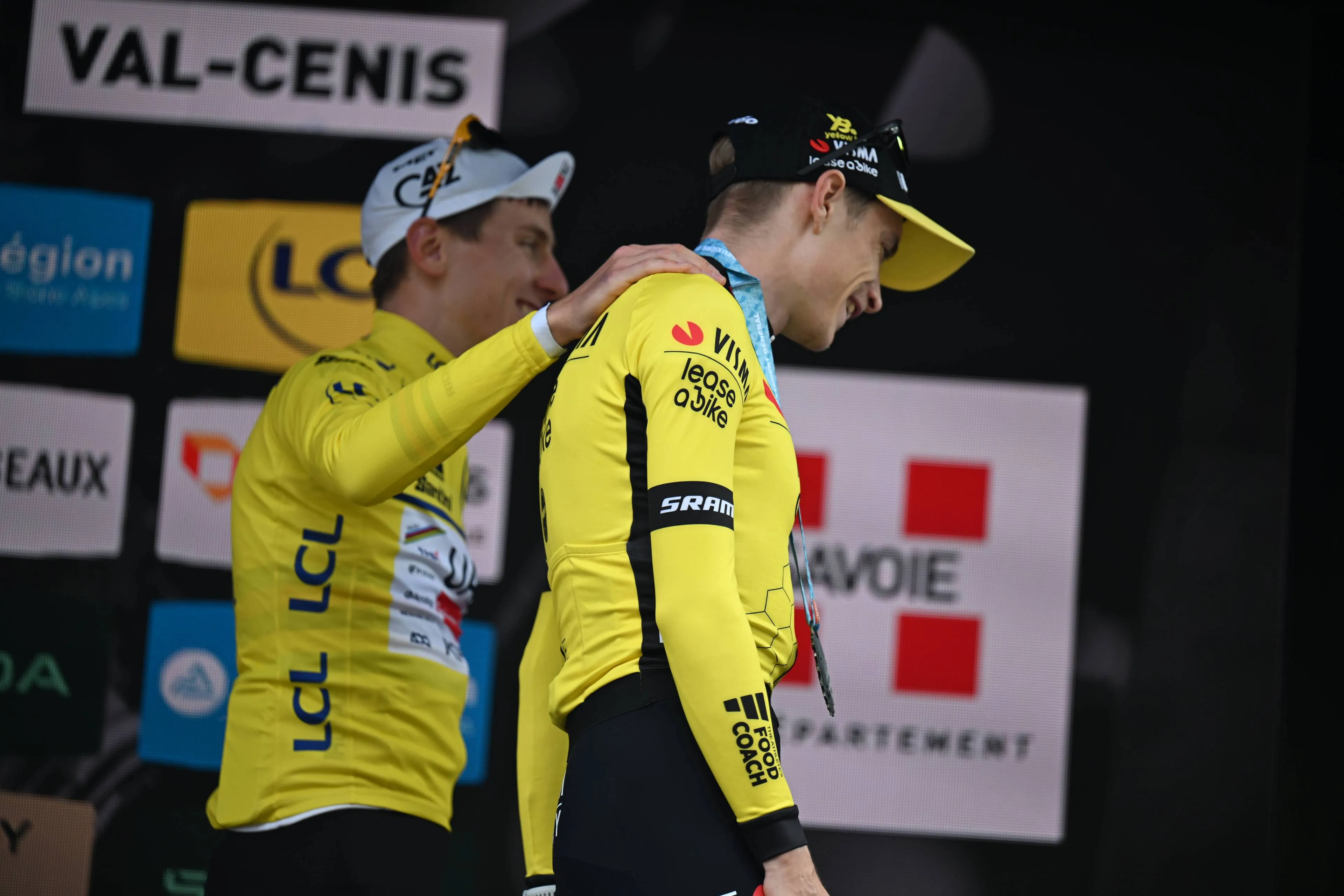
Not just watts, but intelligence
Inside UAE Team Emirates, the aim is not to turn Pogacar into a rider who only follows numbers. The goal is to make him smarter as well as stronger. “The objective is to make the rider not only stronger, but smarter in managing his energy, able to adapt to different phases of the race with strategic precision. It is not just about watts,” explains Jeroen Swart, Head of Performance, speaking to Bici.Pro.
That idea explains why Pogacar’s attacks often feel perfectly placed within a race’s rhythm. He does not only have the power to go long. He has the understanding of when the race will allow it.
The team deliberately works his preparation in cycles, alternating aerobic focus with high-intensity phases, building a rider who can both wait and strike. With a calendar that is not overloaded with race days, Pogacar has the space to absorb that work properly.
“We want a deeper understanding of overall physiological responses,” say Sola and Swart, “so as to push personal limits without exposing the rider to unnecessary risks.”
The aim is not bravery. The aim is control.
Fueling the boldest moves
One of the biggest changes behind modern long-range attacks is not in training but in nutrition. “Ten years ago taking in 60 grams of carbohydrates per hour seemed impossible; today 120 is the norm,” Swart explains.
Every effort Pogacar makes is planned alongside what he eats before, during and after racing. The goal is stability. “The aim is always to keep energy homeostasis as stable as possible, avoiding metabolic ‘holes’ that can compromise performance at the end.”
Long solo moves only work if the rider can keep fuelling at high rates while riding at extreme intensity. That is why nutrition is no longer an afterthought. It is part of the attack itself. “Nutrition is calibrated precisely,” says Swart. “Sources of gradually released carbohydrates, electrolytes for fluid balance, and targeted supplementation at key moments of the stage and of training.”
What looks like courage on television is supported by feeding strategies that allow Pogacar to keep producing power long after most riders would be running empty.
The system behind the spectacle
Pogacar’s most famous victories often come from far out. Fans remember the images of him alone on the road, shoulders rocking, rivals scattered behind.
Inside UAE, those moments are not surprises. They are the visible result of a system built around strength, conditioning, experience, nutrition and constant monitoring. “It is no longer just about pedalling hard,” Swart says. “But about doing it with maximum system cohesion.”
That is why Pogacar’s wildest-looking moves are not treated as gambles inside his own camp. They are simply the moments when a long-built system is allowed to show what it was designed to do.
claps 9visitors 4
Just in
Popular news
Latest comments
- Brailsford's presence should be enough to stop them hiring Seixas.Renz14-03-2026
- Del toro is not Pog or Jonas and therefore can be challenged. the gaps are not huge, 30 s is doable. Only thing is if they leave it to the last k, it wont work since Del Tori has a kick almost as good as Pogabstractengineer14-03-2026
- Paul Sexias- But they should stop spending millions on riders who are not going to be on the podiumabstractengineer14-03-2026
- We will have to wait and see what the team is called once all sponsors are on board in 2027 so it is too early to rule DE as part of the name. JV is already 29 and has two years left on his contract so I don't see him as the answer. As for as strong as they used to be, it could be meant in relation to other teams now and not as they were in relation to other teams 10 years agoKAT14sc0914-03-2026
- The only rat in cycling owns a team with no name, the one with the most rat like character runs one, though, under the circumstances, attacking Christen is pretty rat like.Mistermaumau14-03-2026
- Avoiding the Pog obviouslyMistermaumau14-03-2026
- Chinese AI was humour to forgive the “writers” here for their sins. There is a way to block people, you’re obviously too stuck in your thoughts to see. And yes, I often get bored here by the banality of comments which have zero added thought value, they could all be AI generated slop so when I find something to debate, why not?Mistermaumau14-03-2026
- WVA is as tall with 8kg more and still climbs well. Not a particular fan but he’s capable of upsets so I’d be wary as leader.Mistermaumau14-03-2026
- C’mon the French quota will hardly count, Danes are taking over and have even gotten naming rights from Rat cliff, probably the most anyone has ever managed to squeeze out the old lemon. More chance of Jonas than Paul getting bought by them. And yes, maybe they can become as strong as they once were, problem is that some teams are now stronger so it’s just marketing speak.Mistermaumau14-03-2026
- Just like every parent now prefers to take their kid to school in a big solid car? Maybe he’s just a product of the society we’ve created, like Trump, or probably worse in most ways, Hegseth? In these days when most people limit risk-taking to letting an avatar die during gaming or gambling away their parents’ money, I think you’re pretty well looking at the wrong part of the risk spectrum. How much risk are you taking with your kids (if you have any)? Hear any riders ridiculing him or making fun of it? Know their official collective position on this? Thought about whether what he’s said might have changed an outcome, even if impossible to prove?Mistermaumau14-03-2026
Loading
1 Comments