“Tadej Pogacar is afraid of two riders: Vingegaard and Van Aert” - Visma’s anti-Pogacar tactics fuel genuine ‘hate’ from UAE, claims Thijs Zonneveld
CyclingThursday, 30 April 2026 at 18:30
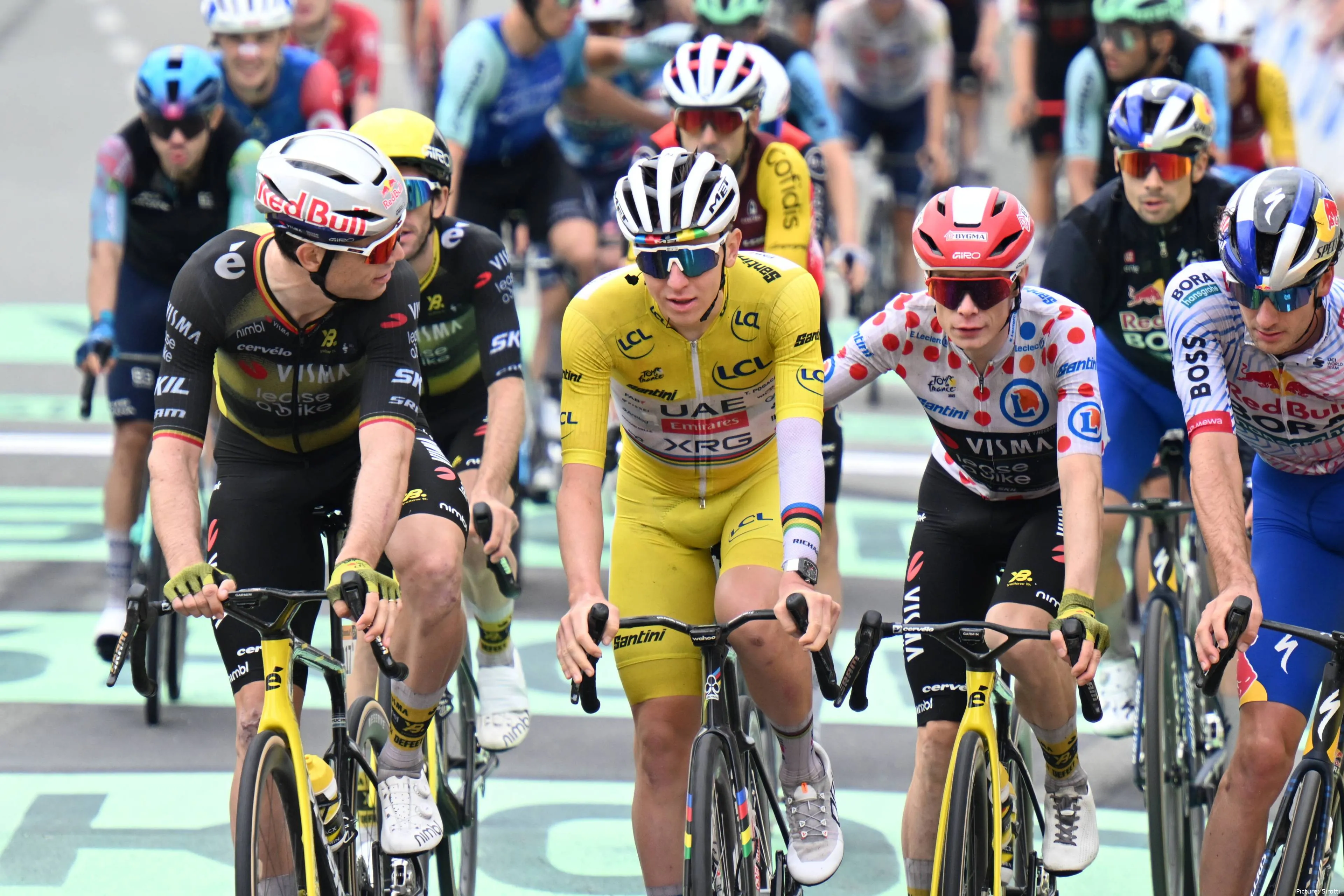
If Tadej Pogacar’s 2026 season has made him look close to untouchable, Thijs Zonneveld believes there is still one team capable of making him uncomfortable. Not because they try to match his style, but because Team Visma | Lease a Bike have built an entire racing identity around refusing to race on his terms.
That, according to Zonneveld, is what separates Visma from the rest of the peloton. Speaking on the joint In de Waaier and De Rode Lantaarn podcast, the Dutch analyst argued that the rivalry between Pogacar and Visma has become a full-blown tactical war.
“They are the only team that dares to play the game. Years ago, they already had this discussion. They looked at the numbers and saw back then that Pogacar was better,” said Zonneveld. “And that he would become even better if he started doing the same things in terms of equipment and nutrition. They were the first and only team to structurally choose to race anti-Pogacar.”
That anti-Pogacar approach has not just been theoretical. Jonas Vingegaard used Visma’s controlled, selective and often stubbornly disciplined style to beat Pogacar at the Tour de France in both 2022 and 2023. This spring, Wout van Aert then gave Visma another major victory over Pogacar, beating him in a two-up sprint at Paris-Roubaix after the Slovenian had already won Strade Bianche, Milano-Sanremo and the Tour of Flanders.
For Zonneveld, that is part of a far deeper rivalry than most fans see. “But the war between Visma and UAE is enormous. That clashes on every front. We still don’t realise how much is going on between those teams behind the scenes. For UAE, Visma are the only team they really hate.”
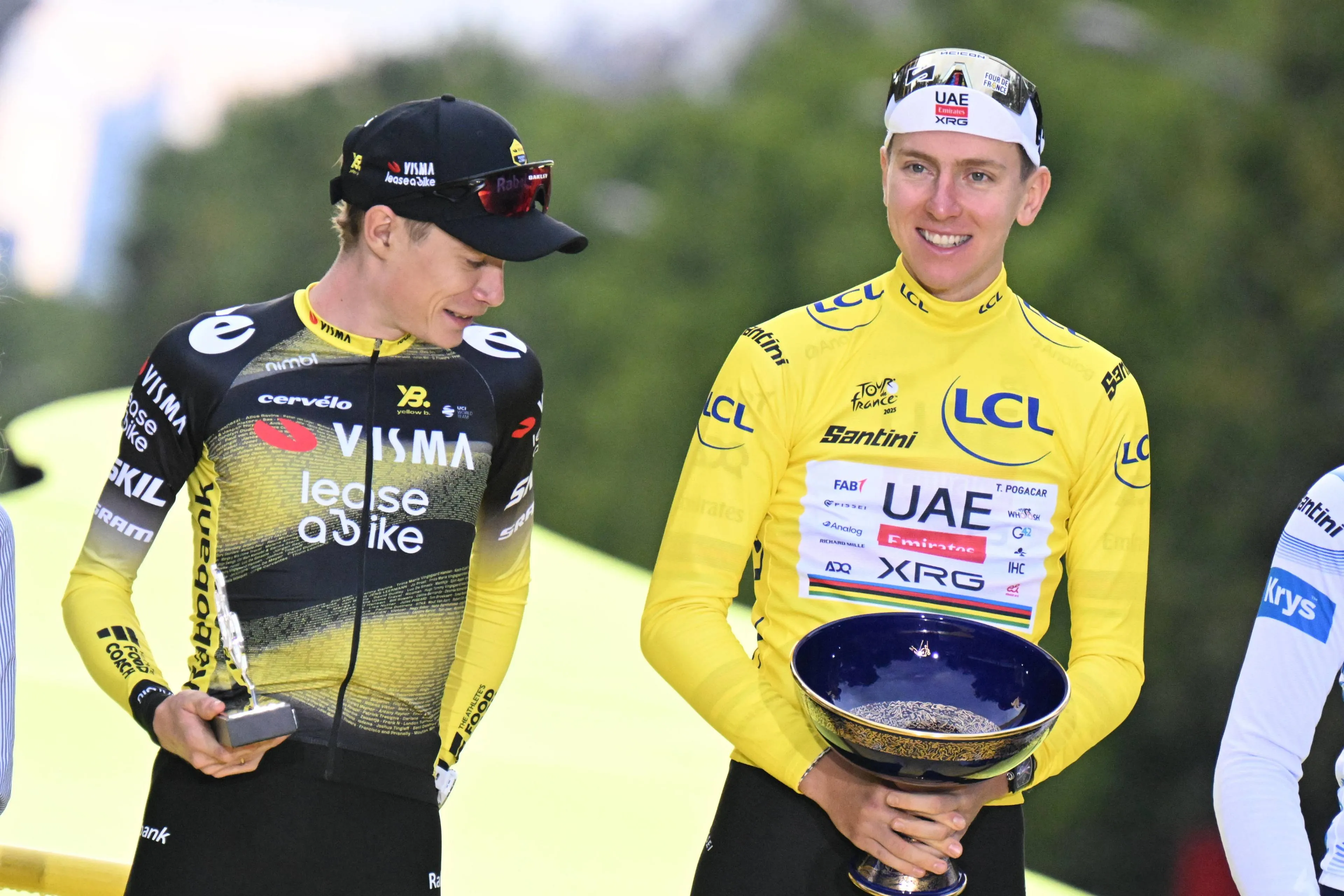
Visma’s price for refusing to play Pogacar’s game
The irony, in Zonneveld’s view, is that Vingegaard is often criticised for doing exactly what many say is needed against Pogacar. “Vingegaard is an example of that, because many cycling fans see him as boring. Or as someone who doesn’t have the guts, because he doesn’t follow moves. The reason he does that is because otherwise he gets dropped,” he explained.
That line matters because it cuts directly into the way Vingegaard is often judged against Pogacar. Pogacar has made 2026 his latest exhibition of range, power and aggression, winning across radically different terrain and coming within one sprint of adding Paris-Roubaix to his Monument collection. Vingegaard’s season has been different, with overall victories at Paris-Nice and the Volta a Catalunya, plus two stage wins in each, reinforcing his own authority in week-long stage racing.
Those are not identical routes to July, but they are both brutally effective. Pogacar has been proving he can win almost anywhere. Vingegaard has been proving, again, that he remains built for general classification control. “We want everyone to play that tactical game, and he is actually the person who plays the game we want to see,” Zonneveld said of Vingegaard. “He gets under Pogacar’s skin. I think Pogacar is afraid of two riders: Vingegaard and Van Aert.”
Others may help Pogacar, but Visma do not
That is where Zonneveld draws the sharpest contrast with the rest of the peloton. His criticism is not simply that Pogacar is better than everyone else, but that too many rivals end up racing in ways that suit him.
In that context, he argued that riders including Remco Evenepoel, Mathieu van der Poel and Paul Seixas can all be pulled into helping Pogacar’s race rather than breaking it apart. “Evenepoel in particular has the personality for it,” said Zonneveld.
That does not make Visma unbeatable, and Pogacar’s 2026 form hardly suggests vulnerability. But it does make their rivalry different. While others are often drawn into Pogacar’s rhythm, Visma have spent years trying to deny him that rhythm altogether.
With Vingegaard now targeting the Giro d’Italia before another Tour de France clash, and Pogacar looking stronger than ever after his spring campaign, the next chapter of the rivalry is not just about which rider has the better legs. It is about whether Visma’s anti-Pogacar blueprint can still disrupt the most dominant rider in the sport.
claps 0visitors 0
Just in
Popular news
Latest comments
- I'd forgotten about her gravel win. First year they had gravel world champsmobk30-04-2026
- "Certainly not a brutal stage" If a 246 km stage with 4400 m of climbing and the finish on a wind exposed climb that averages 8.6% for 13 km and goes into the double digits isn't brutal, I don't know what is
 Rafionain-Glas30-04-2026
 - it is an interesting point for sure. but let's look at Tadej's losses: 2022 TdF - Tadej had no team and was up against Jonas/Wout/Sepp/Primoz. Tadej did not have tactical acumen to know when to chase and when not to. It was constantly 4 or 5 JV vs Tadej. 2023 TdF - coming off injury. 2025 TdF - Jonas wins in a sprint at the end (could have been 2024). Regardless, Tadej did not fuel properly. This has been his achilles and likely cost him in 2022 as well. For all of the tales on UAE, without a doubt JV is a better run team, and the fueling or lack thereof is an example. 2025 TdF - Final stage, Wout wins, Tadej was not 100%. And he raced a full race, Wout took days off. Tadej was again missing his # 1 in Almeida so the team was not full strength. 2026 Roubaix - Tadej is not going to beat WVA or MVDP in a straight up sprint. Tadej had WVA on the ropes - Wout couldn't pull through. But even if he had, a completely fresh Tadej vs completely fresh WVA is never going to be a victory for Tadej on the sprint. Jonas could still win this year, it isn't in the bag for Tadej, but this might be a bit overstated to me.mij30-04-2026
- yeah, total Remco fan actually. and to have 2 monuments, a GT, multiple rainbows, single day races, one week tours and more - WOW. I would dream of this as I push my 0.9 W/KG LOL. But he just isn't making it happen.mij30-04-2026
- Mostly agree with this. Ineos feels like a super domestique team at best, right now. I wouldn’t say Remco is in a similar boat, but only because he is good enough to not let that happen. Whether he does, however, remains to be seen. Remco isn’t a GC rider, so until he and his team stop making him into a rider he is not, I believe he’ll continue riding into top 5 places at Grand Tours. His Vuelta win was fantastic, but the competition he faced made it incomparable to even the Giro, let alone the Tour. Remco is world best at TTs and one of the best 1-day riders in the pro cycling scene right now; if he channeled his energy into this, specialised his training to get the maximum out of these style of races, he will continue to grow the formidable reputation he’s built in recent years.anonymouscyclist30-04-2026
- I agree. He's super talented for sure, but there's something missing that I just can't put my finger on. I don't see him winning a Grand Tour, and that's not being a hater, it's just an opinion based on his past performances. He has too many bad days in the mountains, and maybe this is because he focuses too much on the TT. I think he's probably better suited to the Classics and 1 - 2 week stage races. If he really has genuine ambitions to win a Grand Tour, then he should sacrifice the Classics, lose a few kilos, and focus purely on stage races, like Vingegaard. The problem is that the Belgian public are still waiting for the next Merckx, and want him to win everything. Much as I admire his exceptional talent, I don't think he has either the mindset or the physiology to achieve thisPogthegoat30-04-2026
- Whilst I think Visma LAB need to improve, I think a move to Ineos would be the wrong decision. It would be a lateral move at best for Vingegaard. Ineos’ Grand Tour pedigree has significantly eroded since the Froomey days; they appear caught between eras, clinging to an outdated Sky playbook while struggling with internal cultural friction and a slow-moving executive hierarchy that hasn't yet proven the efficacy of its recent restructuring, with Brailsford back in charge. From the contract sign-off delays to public hints of cultural rot from the likes of Pidcock, Hayter, and Rowe, the environment seems fractured. While Visma-Lease a Bike has lost some key depth, they remain tactically superior, and light years ahead of Ineos’ stagnant methodology.anonymouscyclist30-04-2026
- the Giro is a good opportunity for some riders to podium but most will goto the TDF to get their asses kicked and finish an anonymous top 20.abstractengineer30-04-2026
- The problem is not that he got dropped by Pogi Paul but he got dropped by Skejlmose and other 2nd rung of puncheurs who a few years ago he dominated to win LBL.abstractengineer30-04-2026
- They labeled Moscon the new Boonen after 5th in PR and he turned out to be nothing like that. Their best results came from Froome who was labelled low talent.abstractengineer30-04-2026
Loading
1 Comments