“It’s like playing football on the same pitch as Kylian Mbappe” – French pro says cycling’s accessibility cuts both ways after Jonas Vingegaard’s fan-related training crash
Cycling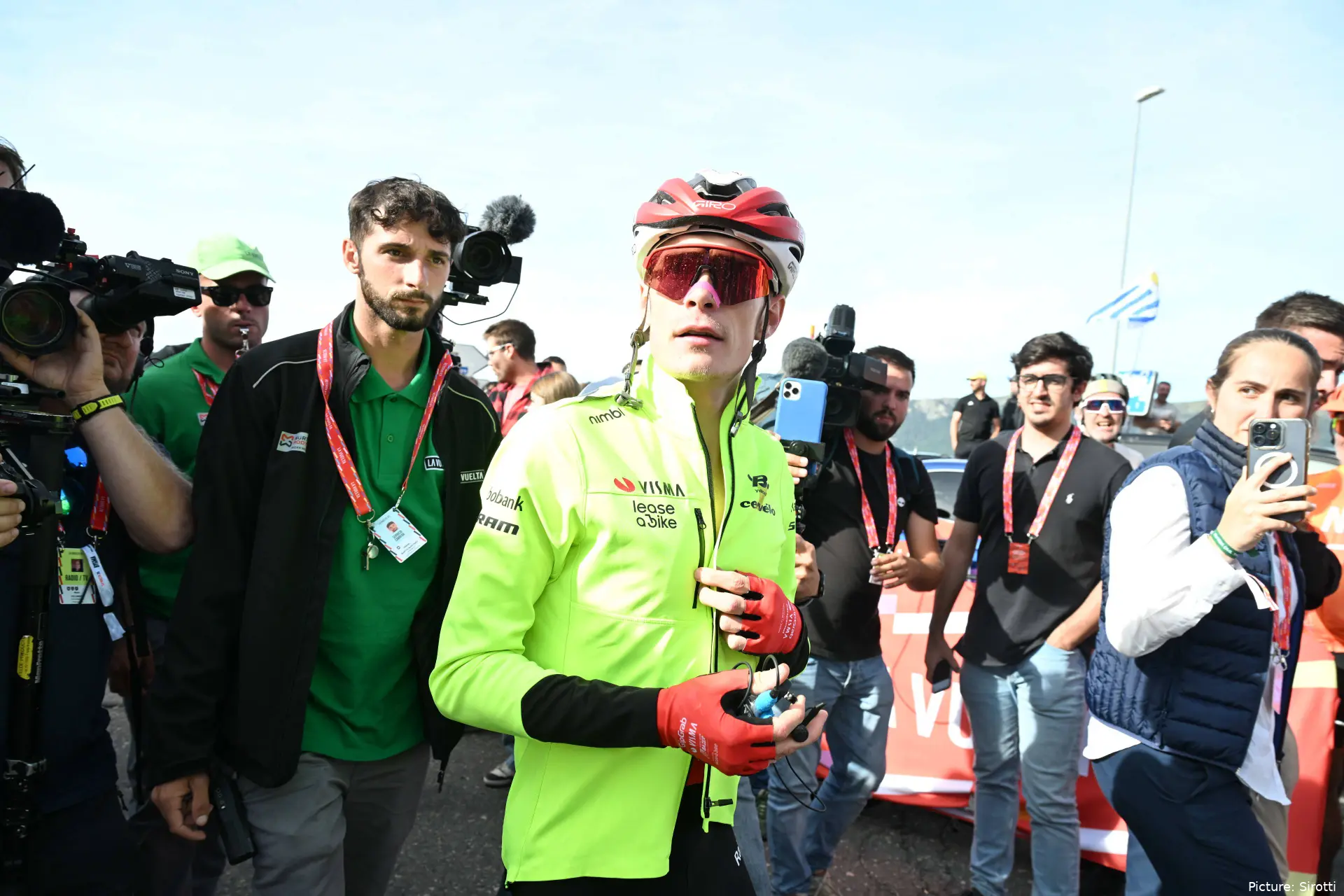
Jonas Vingegaard’s fan-related training crash in Spain has continued to frame a wider discussion inside the peloton, not only around boundaries and safety but around something more fundamental to cycling itself: accessibility.
After earlier reactions focused on frustration and respect amid increasingly crowded training roads, Cofidis rider Benjamin Thomas has offered a more reflective perspective, arguing that the very openness that causes tension is also central to the sport’s identity.
Thomas was speaking to RMC Sport just days after Vingegaard crashed while trying to distance an amateur rider during a training descent in southern Spain. While Team Visma | Lease a Bike confirmed that the Dane escaped without serious injury and publicly urged cyclists to give professionals space while training, Thomas avoided framing the incident as a simple case of fans overstepping the line.
Instead, he acknowledged that congestion on Spain’s winter training roads has reached a point where professional preparation regularly has to be adapted. “I was in Calpe for almost three weeks,” Thomas said in conversation with RMC Sport. “There are days when you can’t really train properly, and you’re forced to adapt.”
That reality, he explained, becomes most obvious on the most popular routes. “There were days when we went to the Coll de Rates, and we had series to do, and it was impossible,” Thomas said. “You spend your time overtaking people. When you’re overtaking two or three abreast, you’re in the middle of an effort, there are cars coming down, other cyclists descending in the opposite direction, you just say to yourself, ‘no, it’s fine, we’ll do that on the next climb.’”
Patience, responsibility, and limits
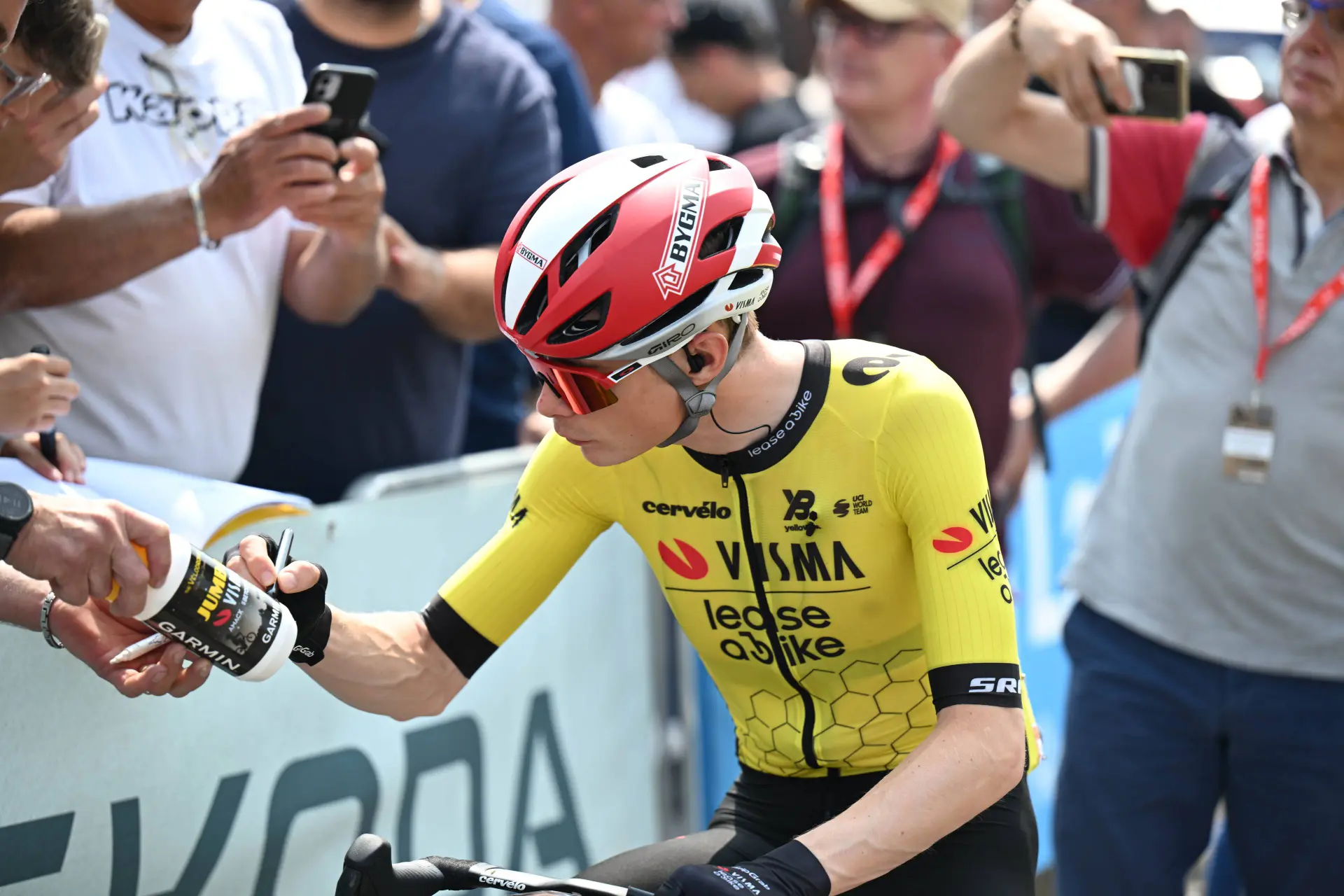
Thomas did not deny that the situation can be irritating for professionals trying to follow a training plan, but he repeatedly returned to the need for restraint on both sides. “Sometimes it’s a bit annoying,” he said, “but you just have to be patient and act responsibly.”
Crucially, he resisted the view that amateurs riding alongside professionals was a problem in itself. “It’s not a scourge,” Thomas said, while conceding that “there are situations where it’s really excessive.” What happened to Vingegaard, he added, was “unfortunate,” but not something that should automatically trigger calls to shut fans out of training environments altogether.
That tone stands in contrast to some of the sharper reactions to Vingegaard’s crash, including concerns that amateur riders following professionals can create dangerous situations at speed. Thomas instead framed the issue as one of scale and density, rather than intent.
“It’s also the magic of cycling”
Where Thomas differed most clearly from earlier voices was in his defence of cycling’s openness. He argued that being able to encounter the sport’s biggest names in ordinary training settings remains one of its defining features.
“It’s also the magic of cycling,” Thomas said. “You can train with or be overtaken by Van der Poel, Remco, Pogacar in training. Can you imagine? It’s like playing football and being on the same pitch as Mbappé,” he added with a laugh.
That accessibility, Thomas suggested, explains why many amateurs travel to Spain not solely to train but to experience proximity to the professional peloton. “It’s normal to understand people who are really happy and take the opportunity,” he said, describing riders who head to training hubs specifically “to see the pros and be around them,” sometimes more than to train themselves.
A debate shaped by popularity
Thomas did, however, acknowledge that the current trajectory may have consequences if congestion continues to increase. “If this continues in the long term, there will be teams who stop doing training camps there and find other locations,” he said, before adding that the region remains uniquely suited to cycling.
Placed alongside earlier comments from riders such as Paul Penhoet, who stressed that professionals are “working” and need that to be respected, Thomas’ remarks broaden the discussion rather than contradict it. Together, they outline the tension at the heart of the Vingegaard incident: a sport whose popularity and accessibility are growing faster than the infrastructure and etiquette needed to manage them.
In that sense, Vingegaard’s crash has become less about blame and more about balance. As Thomas’ comments underline, cycling’s openness is both its charm and its challenge, one that the peloton is now being forced to confront more openly than ever.

Kieran WoodDeputy Editor-in-Chief
Kieran Wood is a sports journalist based in Wales and has been active in journalism since 2022. He regularly contributes to DartsNews.com and CyclingUpToDate.com, where he covers professional cycling and darts. In cycling, his work includes liveblogs from major races, including the Tour de France, the Giro d’Italia, and La Vuelta a España, alongside race reports and analysis. He has also conducted interviews with professional riders.
His reporting spans the full racing calendar, from one-day classics to stage races, with a focus on accurate, real-time coverage and clear contextual analysis. For statistics, results, and historical context, he regularly uses resources such as ProCyclingStats. To support reporting on rider activity and training context where relevant, he also references Strava.
In his work, Kieran places strong emphasis on careful sourcing, editorial accuracy, and updating articles as new, verified information becomes available.
claps 2visitors 2
Just in

Popular news
Latest comments
- You're talking about being lucky if someone crashes out... I'm talking about quality.PogiSloFans24-10-2026
- He finished 2nd this year at the Tour. Pogacar crashed out of the Vuelta. If he had crashed out of the Tour, Remco would have won.acem8224-10-2026
- Lance never won a TdF, so not sure why he and Hincapie are listed here. I thought this was best domestiques for TdF winners.mij24-10-2026
- Pelizzaari is not Remco's domestiqueabstractengineer24-10-2026
- YetJumpyjohn24-10-2026
- Nibali got into the lead because he wanted the team car further forward in the caravan (I love this as a sign of tactical thinking). He solidified the lead on the rainy cobbles day when he was just brilliant, while other contenders crashed out on the wet roads. Strategic and skillful, yes, but the English roads weren’t as decisive as they might seem.RidesHills24-10-2026
- The Domedancy is the one designed for Seixas - anaerobic short climbs. Seixas isn't as good with the long climbs
 Rafionain-Glas24-10-2026
 - no i just type inivitable facts, nothing else. I wish UAE wasnt so damn good but hey the reality is they are. Visma on opposite direction crashing with no money and riders, coaches leaving mid contract ffs..i wish that wasnt the case but im not pretednig its not real when it is reality... RbH and Lidl i UAE cloesst opponents now thats clear. But if were real how can you stop that team with del toor and pogacar (greatest ever rider they made him) and you have mcnulty as a dom with (who would be captain in other teams and wins world and 10 more behind him..) history also says their the best team by far so what you want me to say? fake and be delusional and tell myself things? Its not a matter for praising anyone its a matter of beeing real nothing else, i wish visma for instance was better and like before but they cant buy any proper climbing guys cause their broke...heck they cant even keep their riders and coaches who flee mid contract what you want me to do lol.miguel24-10-2026
- Far as I recall, Nibali used the 2012 tdf UK stages to win it, most wanting to get them over with, cept he built his lead in them.. Armstrong's wrong, IF and it's an IF, the summers good in '27 like 26 then it'll be attritional.. if it's 'normal, then it'll be 50/50 on the weather, also the roads are VERY VERY narrow, very windng + on the 2nd steep short little climbs I know cause it goes thru my arse 👍
 leedorney24-10-2026
 - ❤️Lozza24-10-2026
Loading
Write a comment