“It cannot be justified” – ASO accused of ‘big mistake’ after snubbing Unibet ROSE Rockets for Caja Rural Tour de France 2026 wildcard
Cycling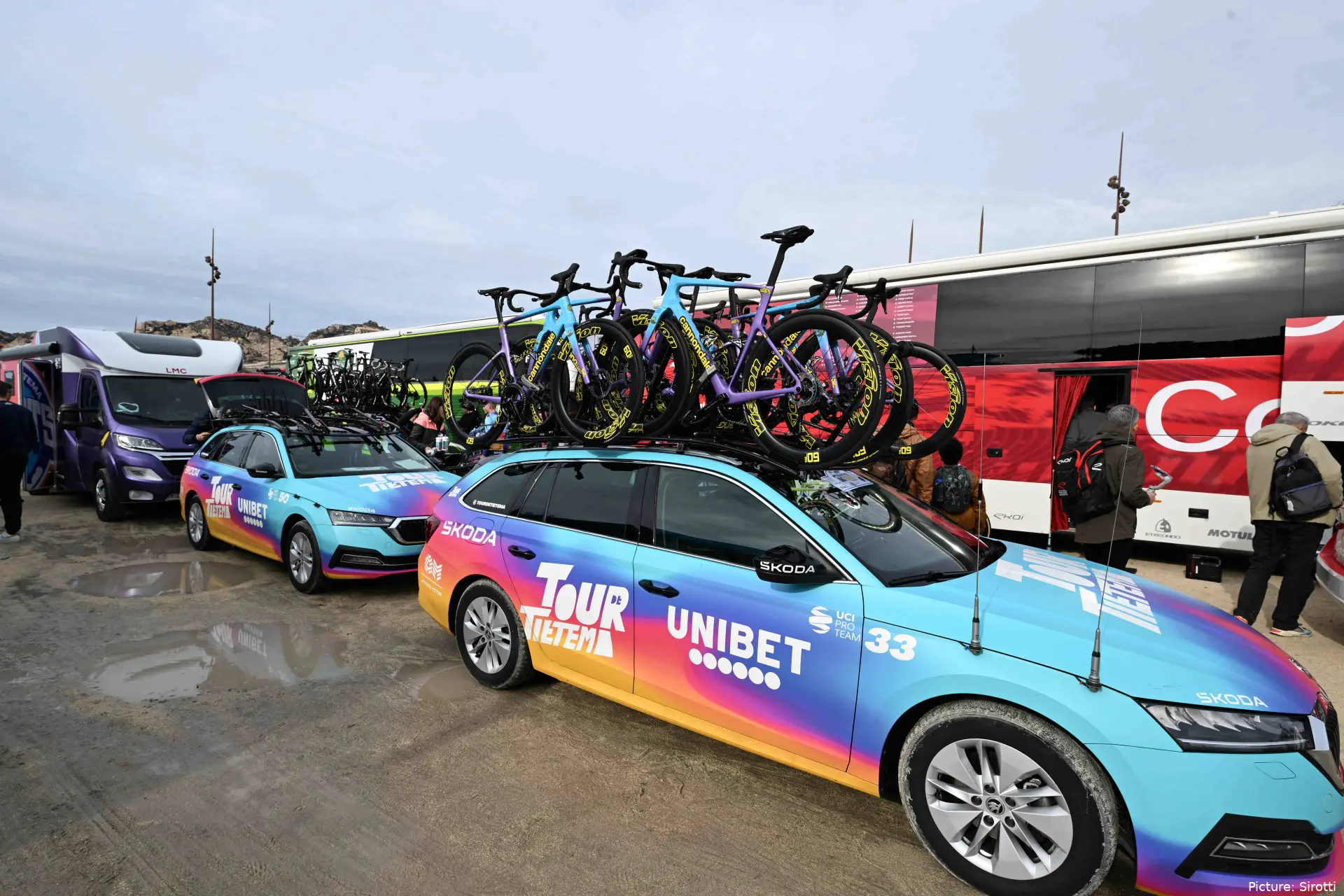
ASO’s decision to award a Tour de France 2026 wildcard to Caja Rural instead of Unibet ROSE Rockets has been labelled a serious sporting error, with Danish cycling expert Emil Axelgaard arguing that the choice cannot be defended on performance grounds.
Speaking to TV2, Axelgaard described the wildcard allocation as a “gigantic surprise”, particularly given Unibet’s aggressive sporting upgrade ahead of the 2026 season and the relatively limited competition for discretionary places this year.
“It cannot be justified from a sporting perspective,” Axelgaard said, after ASO confirmed Caja Rural as one of the wildcard selections while Unibet were left out.
The decision immediately stood out within the broader context of ASO’s confirmed Tour lineup. With the automatic WorldTeam places fixed and the highest-ranked ProTeams already assured of entry, ASO were left with only a small number of discretionary wildcard slots. Those places ultimately went to established, traditional teams rather than the heavily reinforced Unibet project.
Axelgaard questions sporting logic behind ASO call
Axelgaard made clear that he had expected Unibet ROSE Rockets to be selected almost by default this year, pointing to both squad strength and structural positioning.
“I saw it as almost certain that they would select Unibet this year, when there is very little competition for places,” he said. “The team has even obtained a French licence, and they have clearly stepped things up for the coming season with names like Groenewegen, Poels and even a French hero in Lafay.”
Unibet’s winter recruitment placed proven Tour stage winners and established Grand Tour performers on the roster, while also aligning the team more closely with the Tour de France’s French identity through its licence switch. From Axelgaard’s perspective, that combination should have carried significant weight in the wildcard discussion.
“From a sporting point of view, they therefore have far more to contribute than Caja Rural,” he added, noting Unibet’s strong early-season performances in Spain as further evidence of competitive readiness.
Principle over performance in ASO’s wildcard thinking
According to Axelgaard, ASO’s decision appears to be rooted less in immediate sporting value and more in long-standing organisational principles. He suggested the Tour organisers prefer to evaluate teams first in races such as Paris-Nice or the Criterium du Dauphine before granting them access to the Tour de France.
That approach worked in Caja Rural’s favour, having already been tested by ASO in recent seasons, while Unibet remain comparatively new at the very top tier despite rapid progress. The Tour’s 2026 Spanish Grand Depart may also have played a subtle role, reinforcing Caja Rural’s geographical appeal even as Unibet now operate under a French licence.
Still, Axelgaard argued that those factors should not outweigh the road quality.
“I see it as a big mistake from a sporting perspective,” he said. “Caja Rural simply cannot offer what Unibet can.”
Depth gap between the two teams
Axelgaard pointed specifically to Unibet’s rider depth when outlining why he believes the wildcard decision falls short. He highlighted signs of resurgence from Dylan Groenewegen, rapid development from Lukas Kubis, and Victor Lafay’s encouraging return to form following injury.
By contrast, he acknowledged that Caja Rural did produce flashes of promise during the Vuelta a Espana, where riders such as Abel Balderstone and Jaume Guardeno enjoyed breakthrough moments. However, he questioned whether those performances would translate to the demands of the Tour de France.
“They had a small breakthrough at the Vuelta, but they will come up short at the Tour,” Axelgaard said. “It cannot be justified from a sporting point of view.”
A decision that will continue to be debated
With Unibet ROSE Rockets investing heavily in their sporting project and positioning themselves clearly with the Tour de France in mind, their omission from the 2026 race is likely to remain a talking point throughout the season.
Axelgaard’s assessment cuts to the core of the debate. While ASO’s wildcard philosophy may prioritise continuity and controlled progression, critics argue that the Tour risks sidelining teams capable of delivering greater sporting impact in favour of safer, familiar choices.
For now, ASO’s decision stands. But as Unibet continue to perform and Caja Rural prepare for the sport’s biggest stage, the question of whether this wildcard can truly be defended is unlikely to go away.

Kieran WoodDeputy Editor-in-Chief
Kieran Wood is a sports journalist based in Wales and has been active in journalism since 2022. He regularly contributes to DartsNews.com and CyclingUpToDate.com, where he covers professional cycling and darts. In cycling, his work includes liveblogs from major races, including the Tour de France, the Giro d’Italia, and La Vuelta a España, alongside race reports and analysis. He has also conducted interviews with professional riders.
His reporting spans the full racing calendar, from one-day classics to stage races, with a focus on accurate, real-time coverage and clear contextual analysis. For statistics, results, and historical context, he regularly uses resources such as ProCyclingStats. To support reporting on rider activity and training context where relevant, he also references Strava.
In his work, Kieran places strong emphasis on careful sourcing, editorial accuracy, and updating articles as new, verified information becomes available.
claps 0visitors 0
Just in


Popular news


Latest comments
- You're talking about being lucky if someone crashes out... I'm talking about quality.PogiSloFans24-10-2026
- He finished 2nd this year at the Tour. Pogacar crashed out of the Vuelta. If he had crashed out of the Tour, Remco would have won.acem8224-10-2026
- Lance never won a TdF, so not sure why he and Hincapie are listed here. I thought this was best domestiques for TdF winners.mij24-10-2026
- Pelizzaari is not Remco's domestiqueabstractengineer24-10-2026
- YetJumpyjohn24-10-2026
- Nibali got into the lead because he wanted the team car further forward in the caravan (I love this as a sign of tactical thinking). He solidified the lead on the rainy cobbles day when he was just brilliant, while other contenders crashed out on the wet roads. Strategic and skillful, yes, but the English roads weren’t as decisive as they might seem.RidesHills24-10-2026
- The Domedancy is the one designed for Seixas - anaerobic short climbs. Seixas isn't as good with the long climbs
 Rafionain-Glas24-10-2026
 - no i just type inivitable facts, nothing else. I wish UAE wasnt so damn good but hey the reality is they are. Visma on opposite direction crashing with no money and riders, coaches leaving mid contract ffs..i wish that wasnt the case but im not pretednig its not real when it is reality... RbH and Lidl i UAE cloesst opponents now thats clear. But if were real how can you stop that team with del toor and pogacar (greatest ever rider they made him) and you have mcnulty as a dom with (who would be captain in other teams and wins world and 10 more behind him..) history also says their the best team by far so what you want me to say? fake and be delusional and tell myself things? Its not a matter for praising anyone its a matter of beeing real nothing else, i wish visma for instance was better and like before but they cant buy any proper climbing guys cause their broke...heck they cant even keep their riders and coaches who flee mid contract what you want me to do lol.miguel24-10-2026
- Far as I recall, Nibali used the 2012 tdf UK stages to win it, most wanting to get them over with, cept he built his lead in them.. Armstrong's wrong, IF and it's an IF, the summers good in '27 like 26 then it'll be attritional.. if it's 'normal, then it'll be 50/50 on the weather, also the roads are VERY VERY narrow, very windng + on the 2nd steep short little climbs I know cause it goes thru my arse 👍
 leedorney24-10-2026
 - ❤️Lozza24-10-2026
Loading

“Are the Rockets going to ride the Tour de France in 2026?” Today we got the news that we did not receive a wildcard for this year’s Tour de France. 2026 is going to be an incredible year anyway. Keep dreaming with us. Let’s Rocket. 🚀
Write a comment