“It’s a desperate move by the INEOS Grenadiers” – Leading British cycling figure questions Oscar Onley transfer
CyclingMonday, 02 February 2026 at 10:52
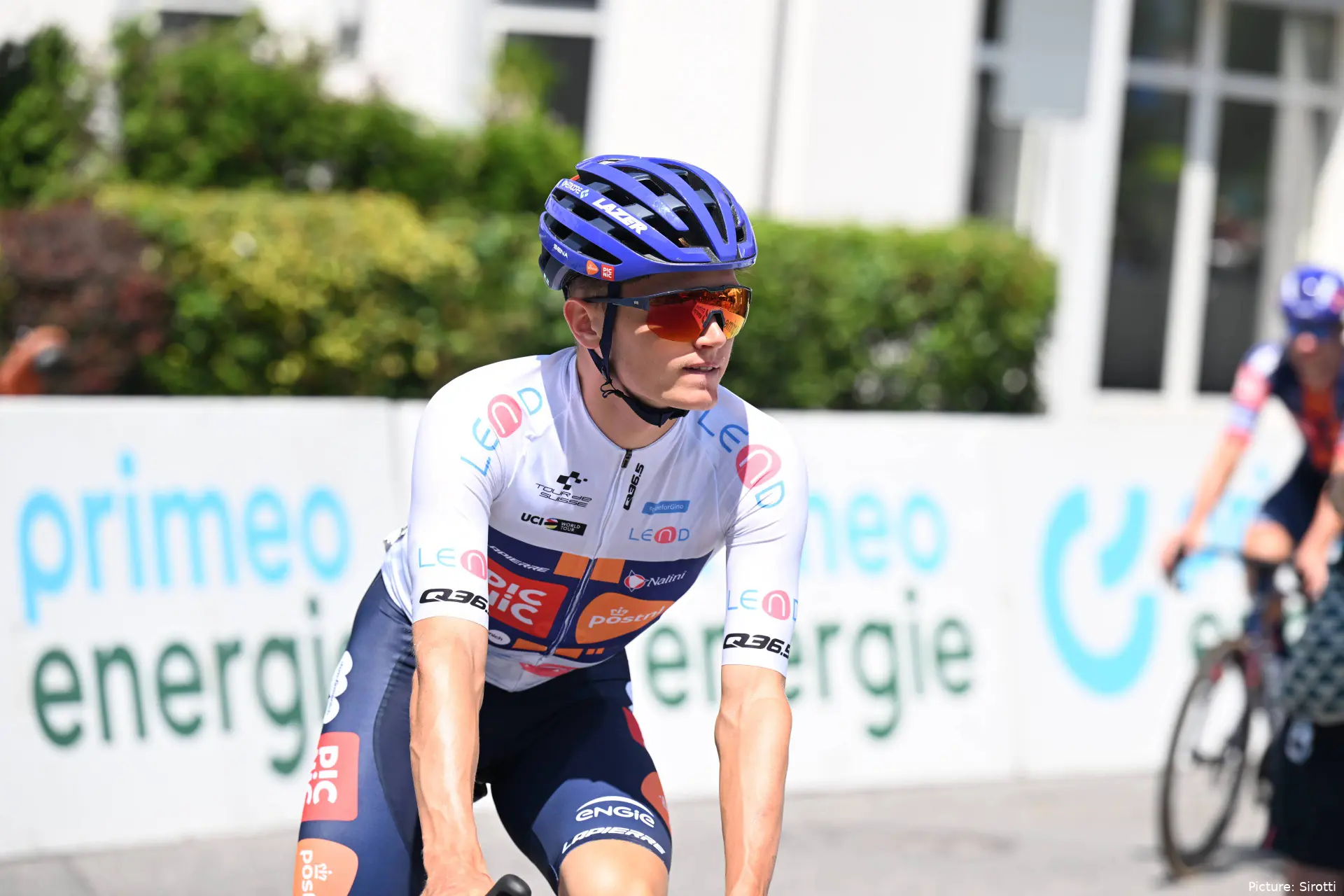
Oscar Onley’s move to INEOS Grenadiers looked, on the surface, like the natural next step for a rider who had just finished fourth at the Tour de France. A British climber stepping into Britain’s most decorated team felt logical, ambitious and timely.
Brian Smith sees it very differently. Speaking on the road.cc Podcast, the former professional rider, team manager and long-time commentator did not question Onley’s ability. He questioned the situation surrounding the move, the timing, and the environment the 23-year-old is stepping into at a pivotal moment in his development.
“Oscar Onley shouldn’t have gone to INEOS.” That is the line that frames everything that follows.
The team he believes Onley should have stayed with
Smith made it clear that, in his view, Picnic PostNL was the ideal place for Onley to continue his progression after his breakthrough Tour. “I’d have suggested that he should stay at Picnic-PostNL. And the team could have invested in two or three riders, which they did with James Knox.”
He believes the environment around Onley last season was a key part of why the Scot was able to ride so freely to fourth in Paris. “I feel as if Picnic-PostNL developed him and it’s a group he enjoyed being part of, more of a family team who were there to support him, asking him to do the best he can.”
That atmosphere, he suggests, is very different from the one Onley now enters. “And now he’s been taken out of that environment, to an environment where it’s ‘we have to deliver’.”
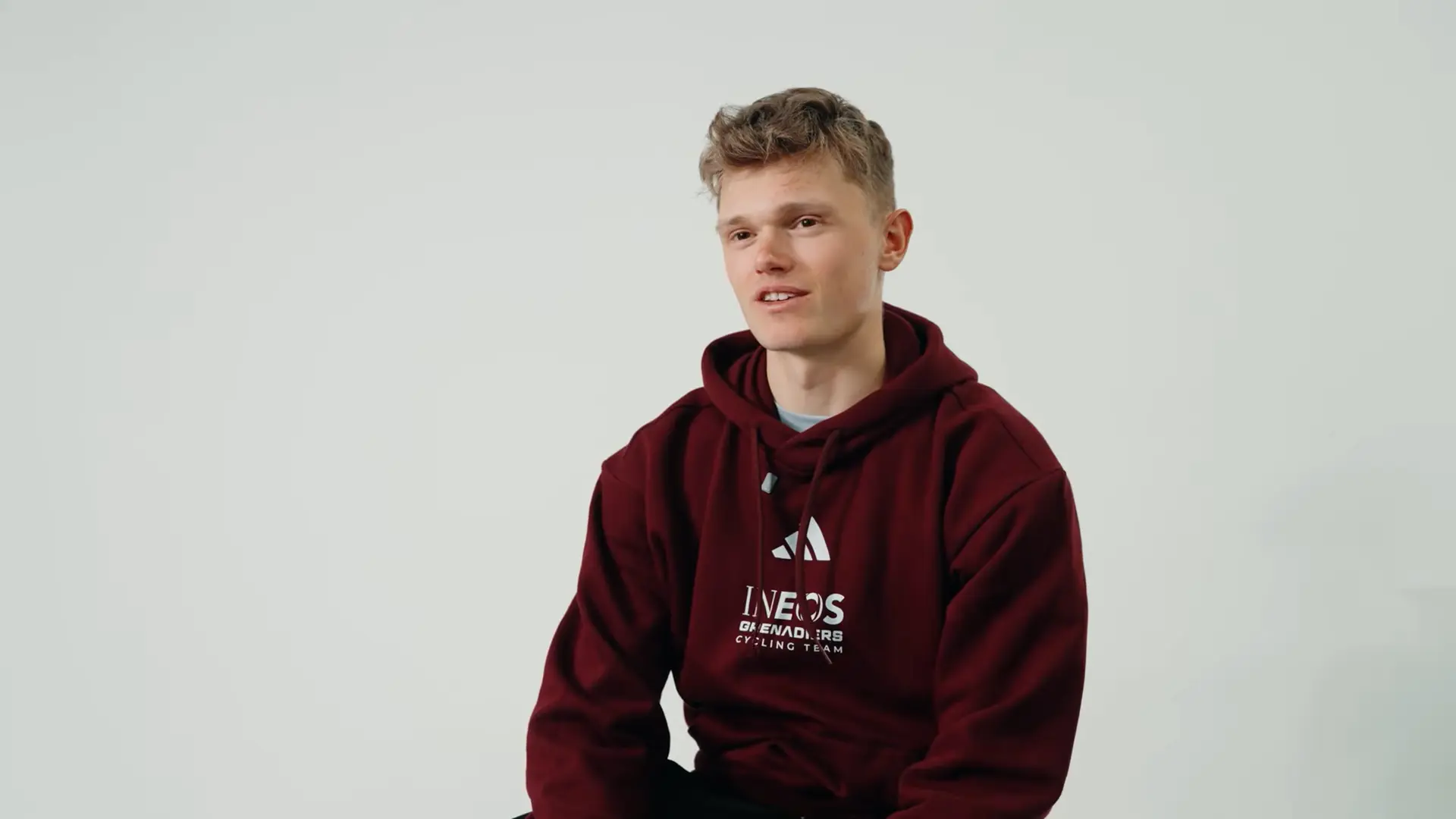
A move that happened very late
Smith also revealed how late the transfer unfolded. “I was led to believe that this was so late in the day this happened that Oscar’s flight to the Tour Down Under was already paid for, that’s how late it went.”
To him, that timing is significant. It does not suggest a long-term, carefully planned project. It suggests urgency. “Okay, it’s big money. But I think it’s a desperate move by the INEOS Grenadiers, because they’re under severe pressure to deliver in grand tours, especially at the Tour de France. If the figures I’ve seen published are true, it’s a huge amount of money to buy a rider out of their contract.”
That pressure, Smith believes, is the real story behind the move.
“Pressure. Pressure’s the word”
When asked to summarise his concern, Smith did not hesitate. “Pressure. Pressure’s the word.”
He believes that is the single biggest difference between the environment Onley leaves and the one he now joins. “And the big thing he’ll have, which I don’t think he would have had with Picnic, is the pressure.”
In Picnic PostNL, Onley was allowed to grow into a leader. At INEOS, he arrives as part of a team that needs a leader immediately.
The reality of the era he is stepping into
Smith framed the sporting challenge in the clearest possible terms. “Can Oscar Onley beat Pogacar, Vingegaard, and Evenepoel? That’s the big question.”
His answer is pragmatic rather than dismissive. “I think he’s better looking at a Giro or a Vuelta if he wants to win a grand tour for them.”
That view aligns closely with Onley’s own recent comments about the gap to the very top and the realistic routes to a first Grand Tour victory. The difference is that INEOS are defined by one race above all others. “There’ll be huge pressure on him to deliver a big performance. Can he do it? I hope he does. But he’s up against some anomalies in cycling, probably the best ever era of grand tour riders.”
That line captures the balance in Smith’s view. Support for the rider. Doubt about the circumstances.

Onley took a breakthrough 4th place at the 2025 Tour de France
A development curve interrupted
Onley’s fourth place at the Tour de France did not come in isolation. It came after a season in which Picnic PostNL built their entire approach around him. Team roles, race programmes and tactics were designed to support his growth.
Smith believes that process was still underway.
In his eyes, the move to INEOS interrupts that curve. A rider still learning what he is capable of has stepped into a team where patience is not part of the vocabulary.
He is no longer the rider being protected. He is the rider expected to deliver.
The difference between potential and expectation
Smith’s concern is not about whether Onley can one day win a Grand Tour. It is about whether this is the right moment, and the right place, for that journey to continue.
He does not doubt Onley’s talent. He doubts the environment.
The shift from a “family team” to a “we have to deliver” team is, in his view, the central risk. A rider who was allowed to grow now has to perform under the heaviest spotlight in British cycling.
And that is why, in the bluntest terms possible, Brian Smith believes Oscar Onley should have stayed exactly where he was.

Kieran WoodDeputy Editor-in-Chief
Kieran Wood is a sports journalist based in Wales and has been active in journalism since 2022. He regularly contributes to DartsNews.com and CyclingUpToDate.com, where he covers professional cycling and darts. In cycling, his work includes liveblogs from major races, including the Tour de France, the Giro d’Italia, and La Vuelta a España, alongside race reports and analysis. He has also conducted interviews with professional riders.
His reporting spans the full racing calendar, from one-day classics to stage races, with a focus on accurate, real-time coverage and clear contextual analysis. For statistics, results, and historical context, he regularly uses resources such as ProCyclingStats. To support reporting on rider activity and training context where relevant, he also references Strava.
In his work, Kieran places strong emphasis on careful sourcing, editorial accuracy, and updating articles as new, verified information becomes available.
claps 14visitors 7
Just in
Popular news
Latest comments
- I thought this team was on the decline.mij14-09-2026
- No rider is losing "credibility" over this. It's a sprint stage, not a GC stage. Very often, a sprint stage is effectively neutralized at 5 km, sometimes 3 km. The lap was a bit more at 10 km--not a big deal. And, the lap was not chosen for the specific distance. Practically, that way, the GC would finish at the same finish line, simplifying the timekeeping and logistics. Cycling is changing/has to change. The speeds are too high on courses too rough. Assymetrically, the rewards, salaries, and demands to win so high, losses to crashes have ruined riders and their teams full seasons. Too many great riders taking one or two years to return to top form. The violence of the sport the machismo these "analysts" pretend and want to amp up is what cost the sport its credibility as sport. Cycling can't be just blood and guts.JM14-09-2026
- Loved this edition. So exciting, so interesting. Loved the scenery, the riders, the whole thing. I watched every day.wrsty14-09-2026
- no-one holding his number i noticewrsty14-09-2026
- LOVE that winners kit. the blue really pops. Plus it's just nice to see a special kit that isn't UAE, Visma, INEOS or RBBH - the only GT winners for the last 8 years or so (IIRC)wrsty14-09-2026
- Well Seixas knows he can't take del Toro to a sprint. Torito won the sprint and still had enough time to take a bow
 Rafionain-Glas14-09-2026
 - 7 looks better without UijdtebroeksRafionain-Glas14-09-2026
- And congratulations to Afonso Eulálio too! He's becoming a better rider in every race!Lobz7713-09-2026
- UAE seem to own this race. Del Toro was oddly far back in the peloton several times, a case of patience and conserving effort. Ben Healey was fabulous in animating the race but I do wish he’d do it a lap or two later in order to make it to the finish. Ayuso still doesn’t make sense to me in how he races but heading into domestique role was a nice moment (something he rarely did at UAE). And Evenepoel? He had an anger moment and that derailed him somehow: the guy is fascinating how he goes apeshit sometimes, often only after the race has gotten away from him and he doesn’t have it in the legs anymore. In sum: congratulations del Toro, and he and Seixas are going to make for a very interesting race 2 weeks from now!RidesHills13-09-2026
- Who cares if Mas or Roglič or Gall or anyone else won this boring Vuelta. I see comments on this site, after Pogi crashed, went down at least 25%. Pogi haters and other fools on this site won't admit it. While they celebrated Pogi's crash and saying the Vuelta was "exciting again," the reality is that the second and third weeks of the Vuelta attracted far fewer viewers. David Bavin-HobbsIn on PRO CYCLING: "A cycling world that has been dominated for years by Pogačar and UAE Emirates-XRG—and in a world where people talk about the sport being “boring,” “monotonous,” and “unexciting”—the Slovenian’s withdrawal provided a very enlightening insight. For although Pogacar had the Vuelta firmly in his grasp, far more people were watching when he was in the race versus after his departure. The statistics website Procyclingstats shared a rather bizarre graph showing the sharp drop in visitor numbers since Pogacar was forced to withdraw. In recent years, there had always been an increase in unique visitors during the first and second weeks of the Vuelta. However, Pogacar’s withdrawal resulted in a 15 percent drop."PogiSloFans13-09-2026
Loading
3 Comments