“Making the Grand Tour team should be hard” – Why UAE’s newest American is embracing life inside Tadej Pogacar’s support squad
Cycling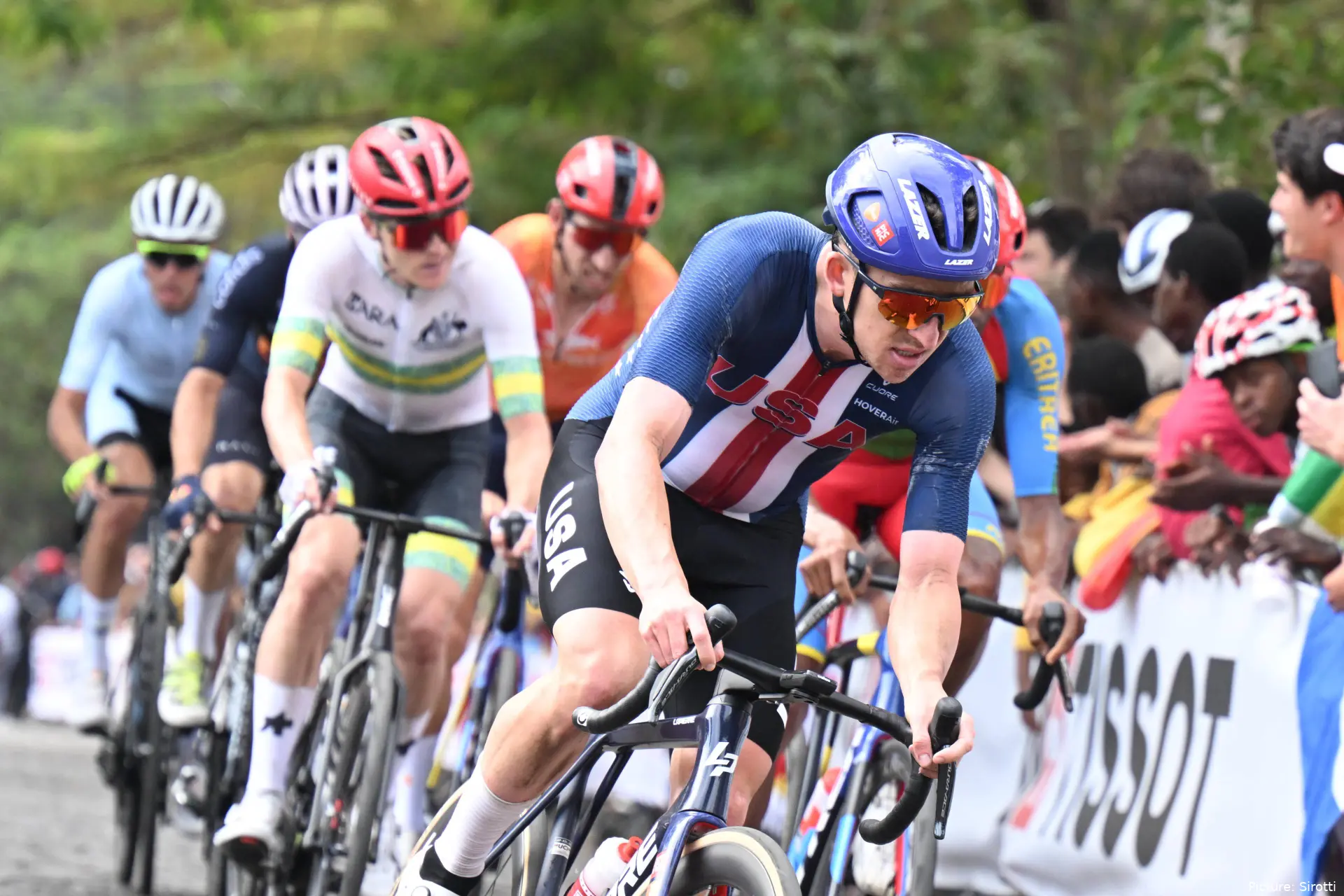
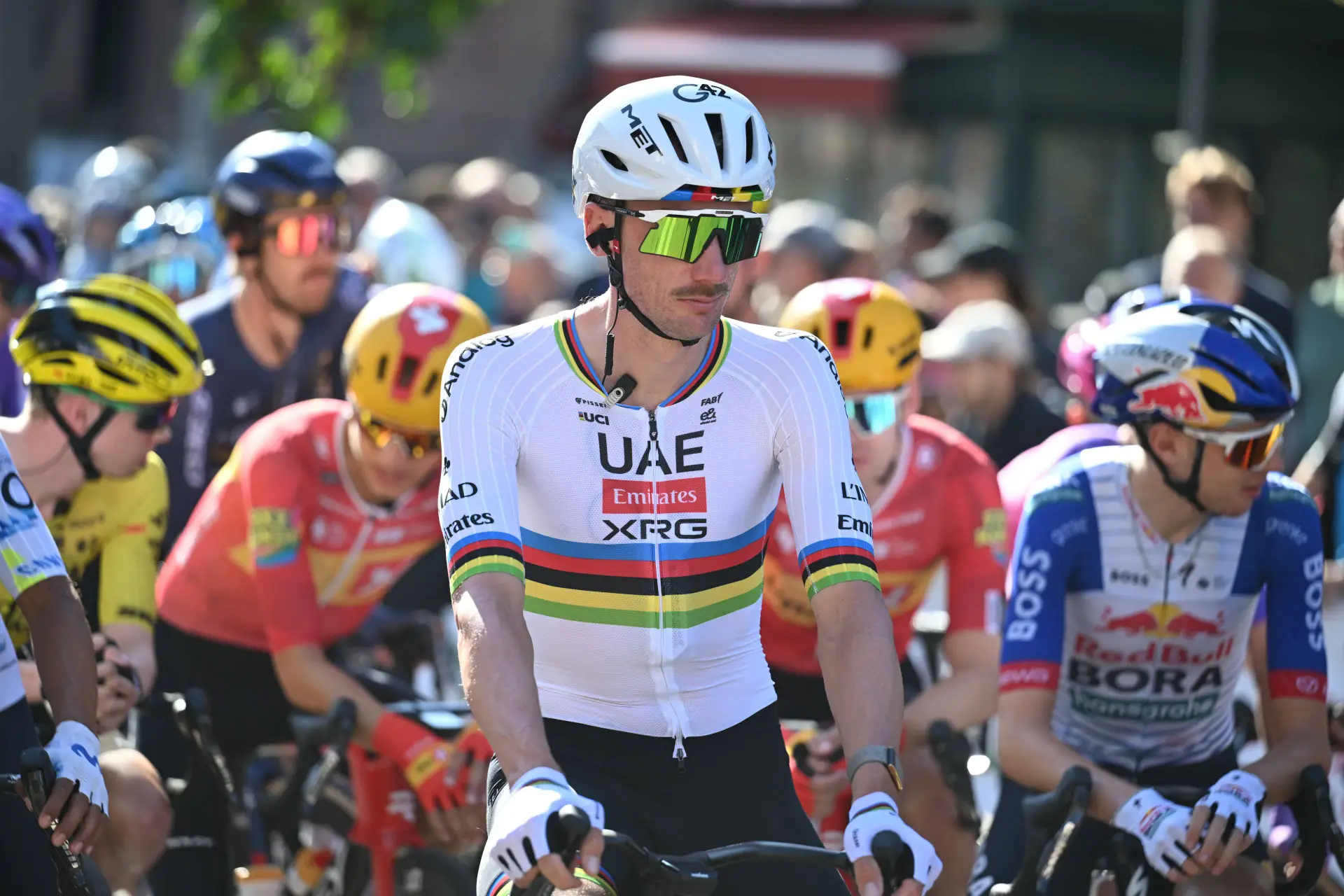
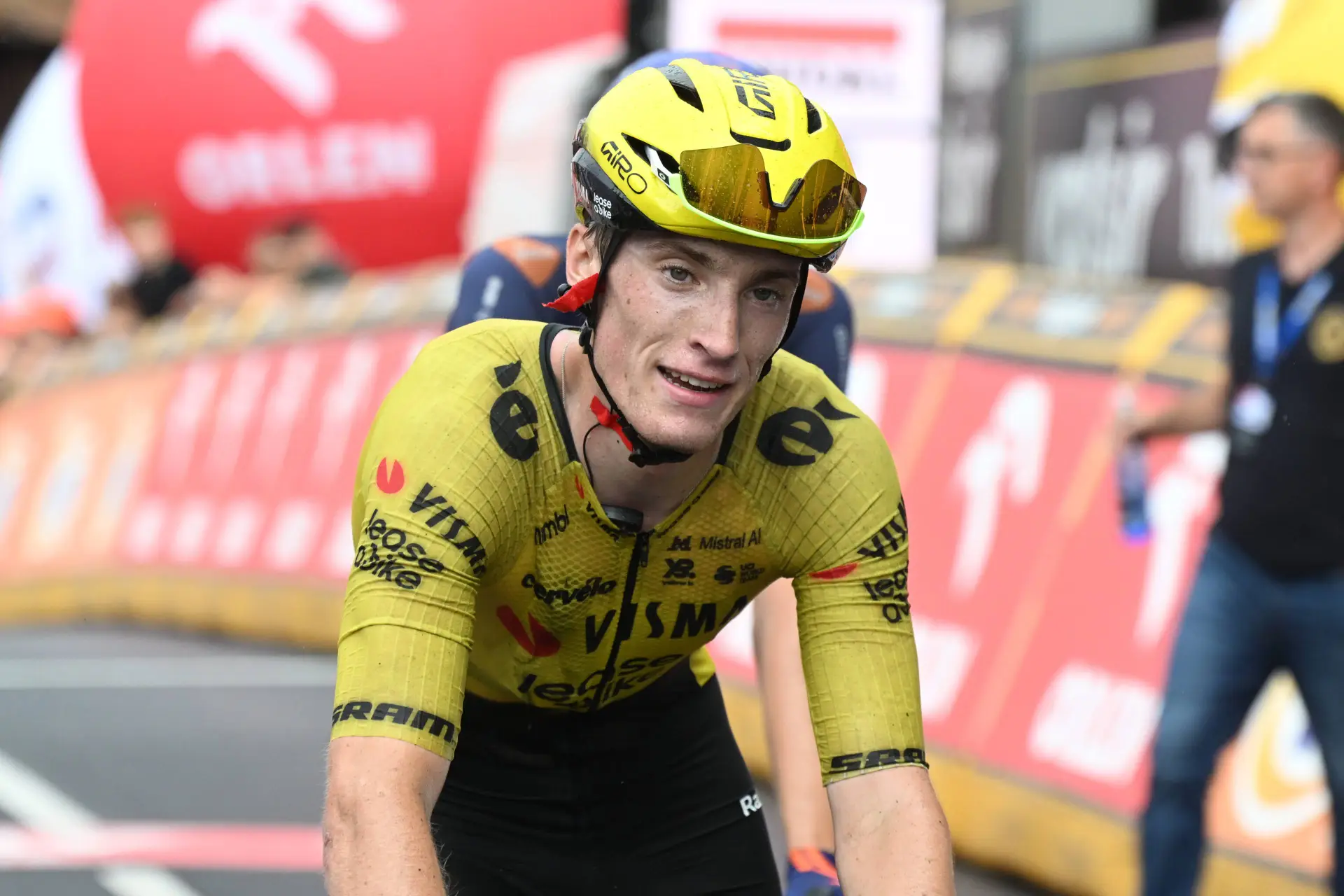
For many riders, moving to the most dominant team in the peloton is about security. For Kevin Vermaerke, it was about the opposite. As he prepares for his first season with UAE Team Emirates - XRG, the American is stepping into an environment where selection is ruthless, expectations are uncompromising, and nothing is guaranteed.
“Making the Grand Tour team should be hard,” Vermaerke said when reflecting on his move in conversation with Cycling News.
Rather than being intimidated by that reality, he has actively sought it out.
Leaving comfort behind to find clarity
Vermaerke arrives at UAE after five seasons with Picnic PostNL, a period that gave him experience across Grand Tours and Monuments but also left him searching for direction. “I felt like I had kind of maxed out my time there,” he explained. “In order for me to keep growing and take the next step in my career, I really needed to push myself into something new.”
That search for clarity is central to why UAE appealed. Unlike teams where leadership can shift race to race, UAE’s hierarchy is unmistakable, built around Tadej Pogacar and a clearly defined support structure. For Vermaerke, that structure is not restrictive. It is motivating.
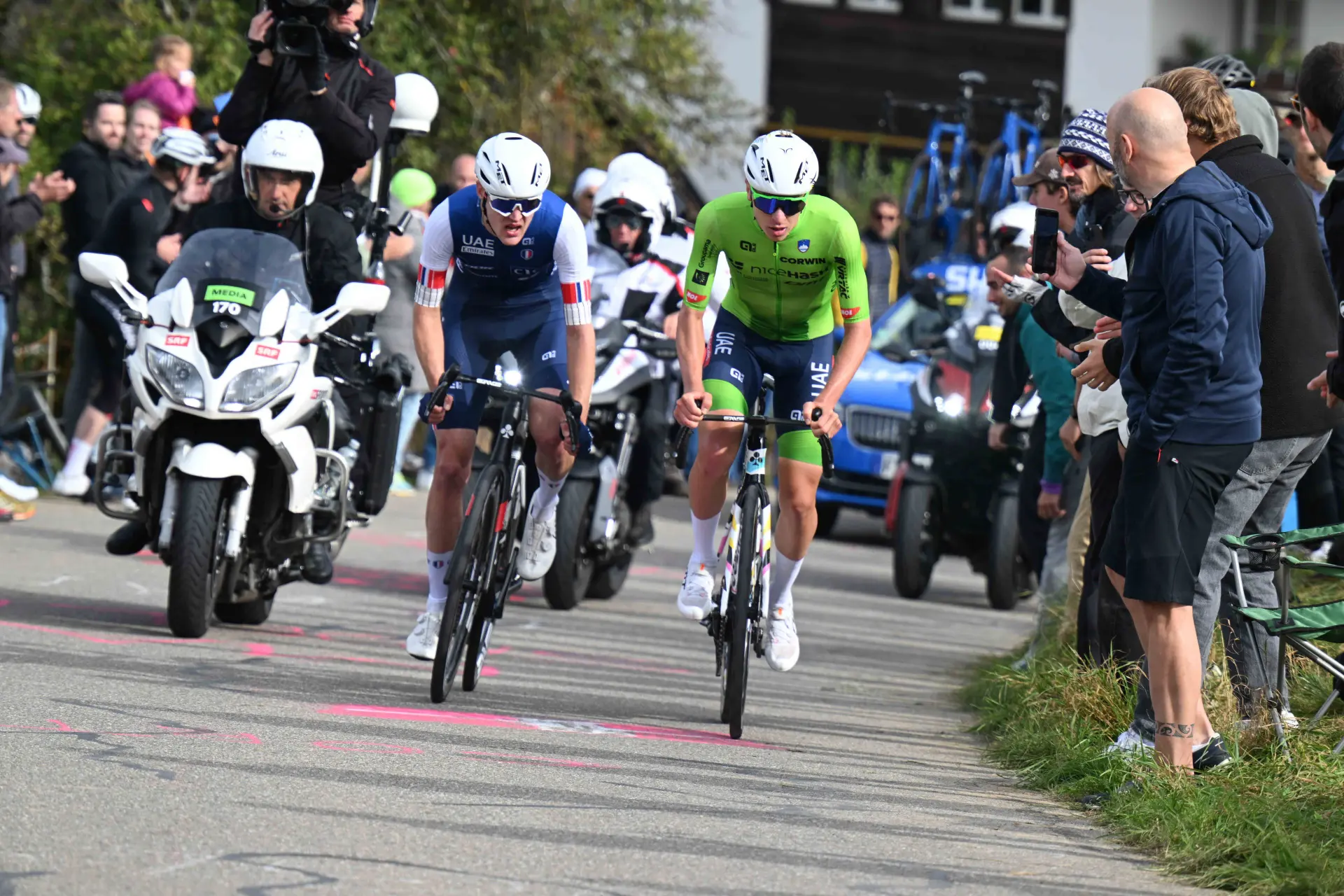
At the 2025 Vuelta a Espana, thrown in as a late replacement, he repeatedly found himself in long breakaways, only to be beaten by riders wearing the same colours he would soon join. “Unfortunately, I always found myself up against someone that was a little bit stronger,” he said, gesturing toward his new teammates. The frustration of missing out was matched by a realisation that he was measuring himself against the highest possible standard.
Learning alongside the sport’s benchmark
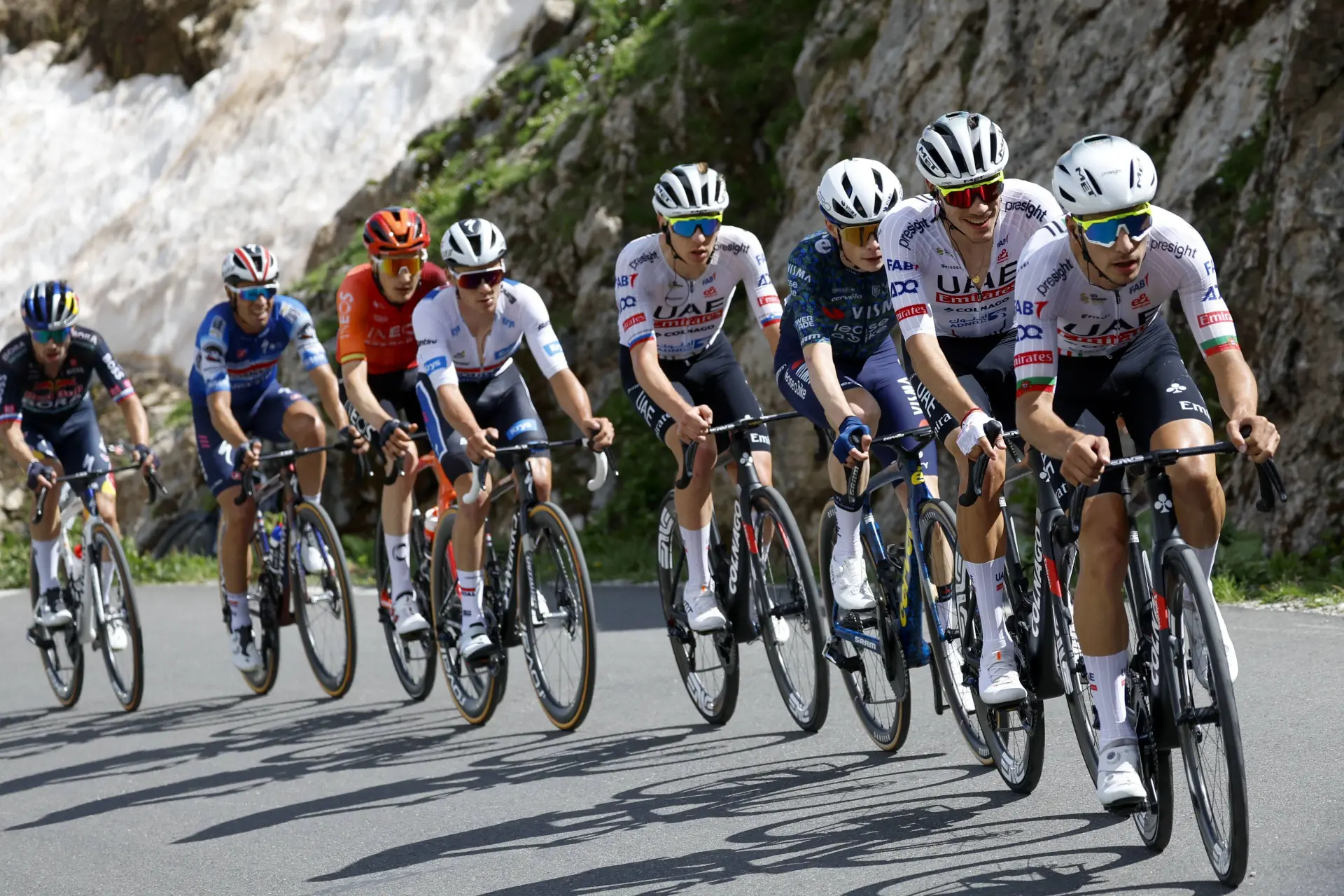
That standard is embodied by Tadej Pogacar, whose presence shapes both expectations and opportunity inside the team. Vermaerke is clear-eyed about what that means. “Accepting that Pogacar is the best isn’t part of what we’re about,” he said, explaining that internal competition remains fundamental even inside a dominant structure.
Rather than seeing Pogacar’s level as something that limits personal ambition, Vermaerke views it as a reference point. “Coming into a team like this where I have the best coaches, best nutritionists and best teammates, they’re going to give me the tools,” he said. “It’s up to me to ultimately use those tools to prove myself.”
That environment, he believes, is what separates UAE from the rest. “Everybody’s pushing each other in a really healthy way,” he explained, describing a culture where standards are enforced daily, not imposed from above.
Choosing the hardest path forward
By early 2025, Vermaerke had already decided that change was needed. “I really wanted to go to a top team where I felt like I would get the most out of myself with the resources and the personnel that they have,” he said. Conversations with UAE sporting director Joxean Matxin quickly confirmed that alignment.
What followed was not a promise of leadership or an easier route to results, but a clear-eyed discussion of role, competition and opportunity. “I think I have a good programme of a few one-week WorldTour races where I can help guys like Almeida, Del Toro, Pogacar,” Vermaerke explained. Alongside that, he sees space to race for himself when conditions allow. “Half the time I’ll be doing that and half the time I’ll be doing other races with the opportunity to go for myself and try and get a win.”
That breakthrough victory remains the missing piece. “The next step in my career is kind of getting that breakthrough first pro win,” he said, framing 2026 less as a reinvention and more as a proving ground.
Patience before progress
Vermaerke is realistic about what lies ahead. He has even acknowledged that riding a Grand Tour in 2026 is not a given. “Maybe not doing one Grand Tour this year,” he said, outlining a willingness to step back in the pecking order to rebuild confidence and sharpen race craft.
For UAE’s newest American, joining the peloton’s most demanding squad is not about hiding behind success. It is about discovering how far he can go when the bar is set by the best rider of his generation.

Kieran WoodDeputy Editor-in-Chief
Kieran Wood is a sports journalist based in Wales and has been active in journalism since 2022. He regularly contributes to DartsNews.com and CyclingUpToDate.com, where he covers professional cycling and darts. In cycling, his work includes liveblogs from major races, including the Tour de France, the Giro d’Italia, and La Vuelta a España, alongside race reports and analysis. He has also conducted interviews with professional riders.
His reporting spans the full racing calendar, from one-day classics to stage races, with a focus on accurate, real-time coverage and clear contextual analysis. For statistics, results, and historical context, he regularly uses resources such as ProCyclingStats. To support reporting on rider activity and training context where relevant, he also references Strava.
In his work, Kieran places strong emphasis on careful sourcing, editorial accuracy, and updating articles as new, verified information becomes available.
claps 4visitors 4
Just in
Popular news
Latest comments
- He finished 2nd this year at the Tour. Pogacar crashed out of the Vuelta. If he had crashed out of the Tour, Remco would have won.acem8224-10-2026
- Lance never won a TdF, so not sure why he and Hincapie are listed here. I thought this was best domestiques for TdF winners.mij24-10-2026
- Pelizzaari is not Remco's domestiqueabstractengineer24-10-2026
- YetJumpyjohn24-10-2026
- Nibali got into the lead because he wanted the team car further forward in the caravan (I love this as a sign of tactical thinking). He solidified the lead on the rainy cobbles day when he was just brilliant, while other contenders crashed out on the wet roads. Strategic and skillful, yes, but the English roads weren’t as decisive as they might seem.RidesHills24-10-2026
- The Domedancy is the one designed for Seixas - anaerobic short climbs. Seixas isn't as good with the long climbs
 Rafionain-Glas24-10-2026
 - no i just type inivitable facts, nothing else. I wish UAE wasnt so damn good but hey the reality is they are. Visma on opposite direction crashing with no money and riders, coaches leaving mid contract ffs..i wish that wasnt the case but im not pretednig its not real when it is reality... RbH and Lidl i UAE cloesst opponents now thats clear. But if were real how can you stop that team with del toor and pogacar (greatest ever rider they made him) and you have mcnulty as a dom with (who would be captain in other teams and wins world and 10 more behind him..) history also says their the best team by far so what you want me to say? fake and be delusional and tell myself things? Its not a matter for praising anyone its a matter of beeing real nothing else, i wish visma for instance was better and like before but they cant buy any proper climbing guys cause their broke...heck they cant even keep their riders and coaches who flee mid contract what you want me to do lol.miguel24-10-2026
- Far as I recall, Nibali used the 2012 tdf UK stages to win it, most wanting to get them over with, cept he built his lead in them.. Armstrong's wrong, IF and it's an IF, the summers good in '27 like 26 then it'll be attritional.. if it's 'normal, then it'll be 50/50 on the weather, also the roads are VERY VERY narrow, very windng + on the 2nd steep short little climbs I know cause it goes thru my arse 👍
 leedorney24-10-2026
 - ❤️Lozza24-10-2026
- No, it's not about him crashing... he just won't win. Ad acta.PogiSloFans24-10-2026
Loading
Write a comment