“It might be too big a change” – Murmurs inside the peloton suggest tradition could block Tadej Pogacar’s Giro–Vuelta switch
Cycling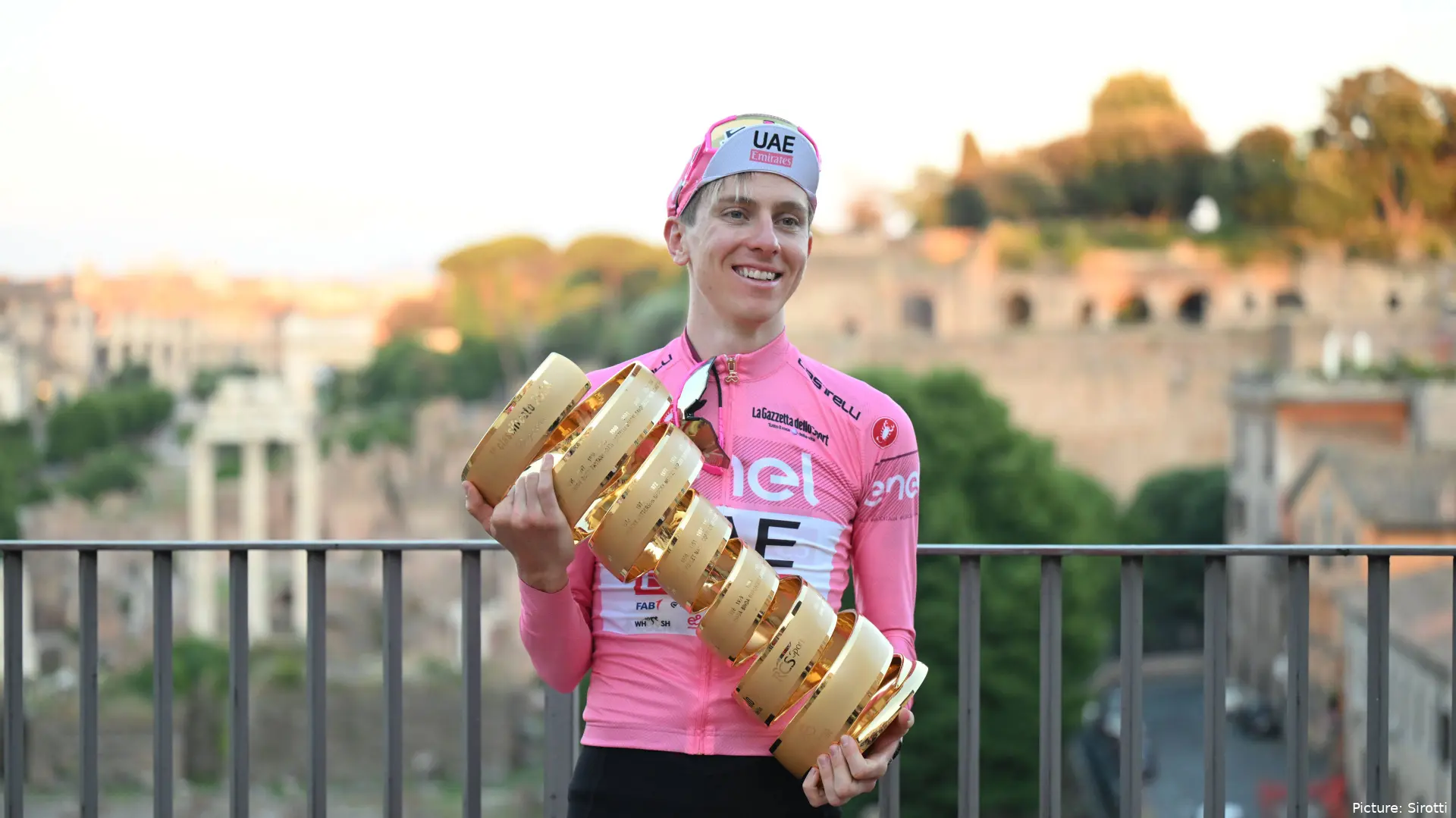
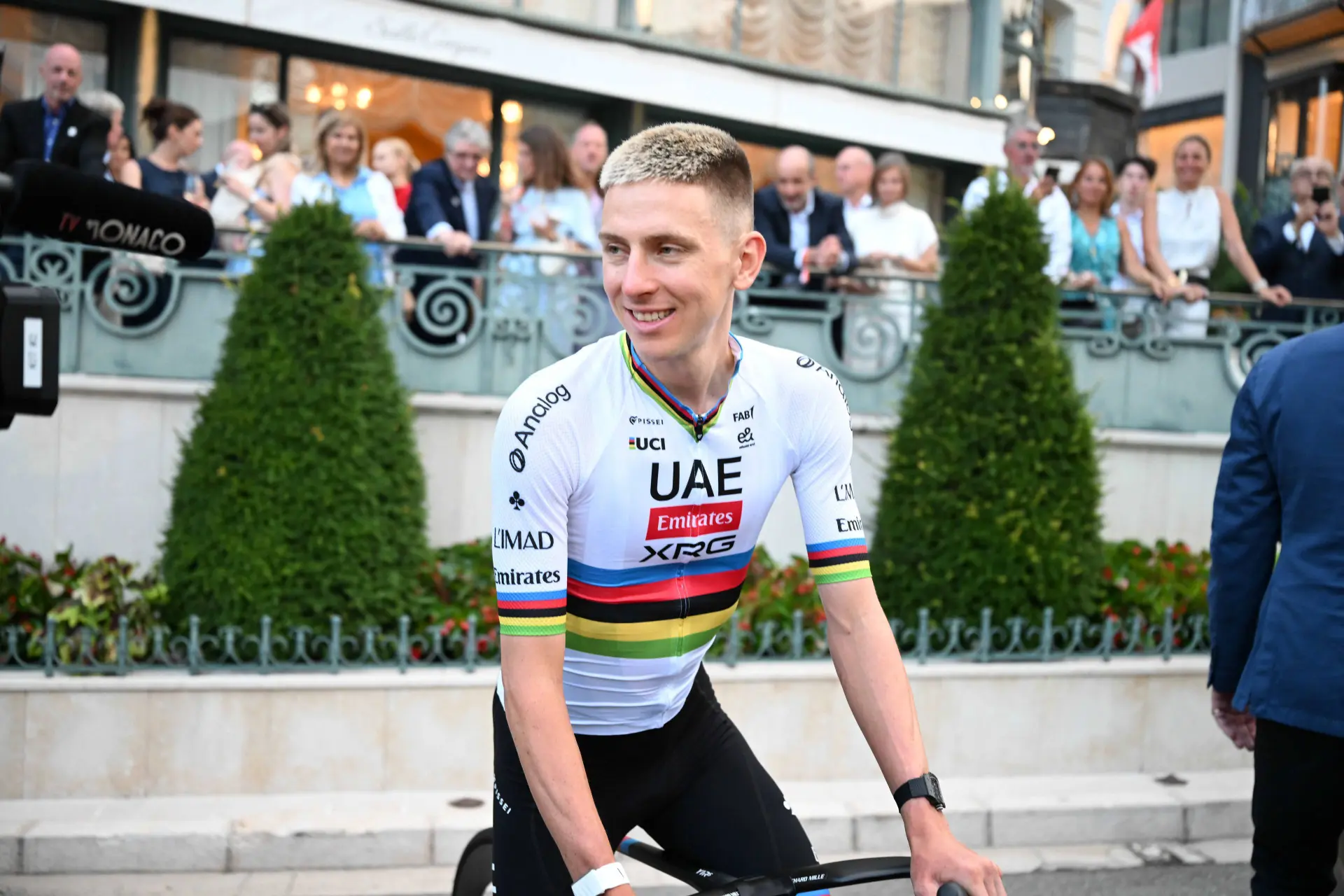
In modern cycling, innovation rarely fails because it lacks logic. More often, it fails because the sport is not ready to let go of what it has always done. That tension sits at the heart of the debate sparked this winter by Tadej Pogacar, whose call to reshuffle the Grand Tour calendar has exposed how powerful tradition still is inside the peloton.
“I’ve been saying for years that it would be much better if the Giro and the Vuelta swapped dates,” Pogacar said, arguing that weather conditions and rider participation would benefit if Spain’s Grand Tour moved to the spring.
The idea itself is simple. The reaction to it has not been.
When logic meets cycling’s immovable calendar
From a sporting perspective, Pogacar’s reasoning is hard to dismiss. The Tour–Vuelta double remains one of the most demanding combinations in the sport, particularly for riders who also target the World Championships. A calendar shift would, in theory, reopen the Vuelta to riders currently forced to choose.
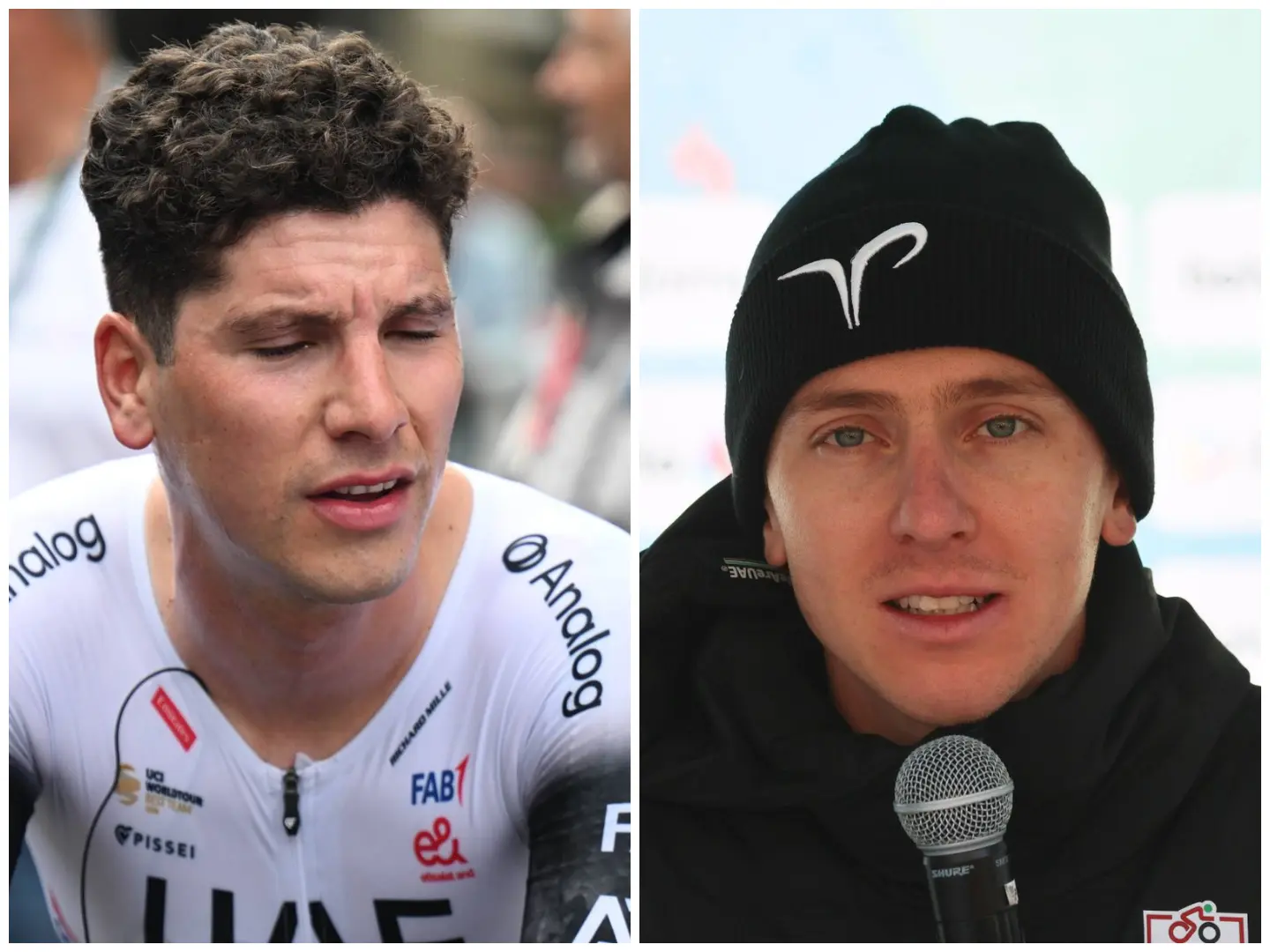
Inside UAE Team Emirates - XRG, the proposal has been met with open minds rather than defensiveness. Team manager Joxean Fernandez Matxin admitted the idea had not occurred to him previously, but said Pogacar’s explanation changed that. “When I read Tadej’s explanation, I thought there’s actually something in that,” he said in quotes collected by Sporza.
Matxin’s support is rooted less in ambition than in logistics. “For example, we can never reconnoitre the Giro climbs because there is so much snow there in April,” he explained, pointing to repeated experiences of stages being cancelled or neutralised due to cold or rain. From his base in Spain, the contrast is obvious. “In Spain, the weather in May is nicer than in Italy.”
Yet logic, in cycling, has never been the only currency.
A sport shaped by memory, not just margins
Across the peloton, the response has been notably cautious. Not because the idea is radical, but because it would disturb an order that has remained largely untouched for decades.
Ralph Denk, manager of Red Bull - BORA - hansgrohe, offered a reminder that the calendar has already evolved once before. “When I started racing 40 years ago, the Vuelta took place in April,” he said, recalling a time when Spain hosted the season’s first Grand Tour.
But Denk was equally quick to question whether exceptional weather moments justify wholesale change. “Two years ago there was that Livigno stage in the Giro when snowfall on the Umbrail Pass caused chaos,” he said. “But does that happen every year? I don’t think so. Last year, for example, the weather during the Giro was excellent.”
The implication is clear: isolated problems may not be enough to outweigh the comfort of familiarity.
Why tradition still wins
At Lidl-Trek, sports director Steven de Jongh captured the underlying hesitation more directly. “In itself, I would find it logical for the Giro and the Vuelta to swap places, especially if you look at the weather,” he said. “But the race is tied to tradition, so it might be too big a change.”
That sentence, more than any other, explains why Pogacar’s idea is unlikely to gain traction quickly. The Grand Tours are not just races. They are institutions, bound to broadcasters, organisers, sponsors and national identities.
De Jongh also pointed to a practical complication that logic alone cannot solve. The Giro and the Vuelta are run by different organisers, RCS and ASO, respectively. Even if sporting arguments align, coordination at that level would be far from straightforward.
A debate that outgrows its instigator
For Pogacar, the calendar discussion is not framed as a demand, but as an observation. Yet the response it has triggered shows how resistant cycling remains to structural change, even when proposed by its most dominant rider.
The irony is that Pogacar’s status may work against him here. His success allows him to question the system, but it also makes it easier for the system to say no.
For now, the Giro–Vuelta switch remains hypothetical. Not because it lacks merit, but because in a sport defined by history, changing dates may prove harder than winning races.

Kieran WoodDeputy Editor-in-Chief
Kieran Wood is a sports journalist based in Wales and has been active in journalism since 2022. He regularly contributes to DartsNews.com and CyclingUpToDate.com, where he covers professional cycling and darts. In cycling, his work includes liveblogs from major races, including the Tour de France, the Giro d’Italia, and La Vuelta a España, alongside race reports and analysis. He has also conducted interviews with professional riders.
His reporting spans the full racing calendar, from one-day classics to stage races, with a focus on accurate, real-time coverage and clear contextual analysis. For statistics, results, and historical context, he regularly uses resources such as ProCyclingStats. To support reporting on rider activity and training context where relevant, he also references Strava.
In his work, Kieran places strong emphasis on careful sourcing, editorial accuracy, and updating articles as new, verified information becomes available.
claps 14visitors 10
Just in


Popular news
Latest comments
- Pelizzaari is not Remco's domestiqueabstractengineer24-10-2026
- YetJumpyjohn24-10-2026
- Nibali got into the lead because he wanted the team car further forward in the caravan (I love this as a sign of tactical thinking). He solidified the lead on the rainy cobbles day when he was just brilliant, while other contenders crashed out on the wet roads. Strategic and skillful, yes, but the English roads weren’t as decisive as they might seem.RidesHills24-10-2026
- The Domedancy is the one designed for Seixas - anaerobic short climbs. Seixas isn't as good with the long climbs
 Rafionain-Glas24-10-2026
 - no i just type inivitable facts, nothing else. I wish UAE wasnt so damn good but hey the reality is they are. Visma on opposite direction crashing with no money and riders, coaches leaving mid contract ffs..i wish that wasnt the case but im not pretednig its not real when it is reality... RbH and Lidl i UAE cloesst opponents now thats clear. But if were real how can you stop that team with del toor and pogacar (greatest ever rider they made him) and you have mcnulty as a dom with (who would be captain in other teams and wins world and 10 more behind him..) history also says their the best team by far so what you want me to say? fake and be delusional and tell myself things? Its not a matter for praising anyone its a matter of beeing real nothing else, i wish visma for instance was better and like before but they cant buy any proper climbing guys cause their broke...heck they cant even keep their riders and coaches who flee mid contract what you want me to do lol.miguel24-10-2026
- Far as I recall, Nibali used the 2012 tdf UK stages to win it, most wanting to get them over with, cept he built his lead in them.. Armstrong's wrong, IF and it's an IF, the summers good in '27 like 26 then it'll be attritional.. if it's 'normal, then it'll be 50/50 on the weather, also the roads are VERY VERY narrow, very windng + on the 2nd steep short little climbs I know cause it goes thru my arse 👍
 leedorney24-10-2026
 - ❤️Lozza24-10-2026
- No, it's not about him crashing... he just won't win. Ad acta.PogiSloFans24-10-2026
- I'm always gutted to see the road season come to an end, but the excitement for cyclocross to kick off totally makes up for it.anonymouscyclist24-10-2026
- Nah, Pogi will Baby Hulk - "smash" - Remco. Ad acta !!!PogiSloFans24-10-2026
Loading
3 Comments