“I want my team to be the best... but I still smile when INEOS win” – Luke Rowe admits to Geraint Thomas lingering ties despite Decathlon role
Cycling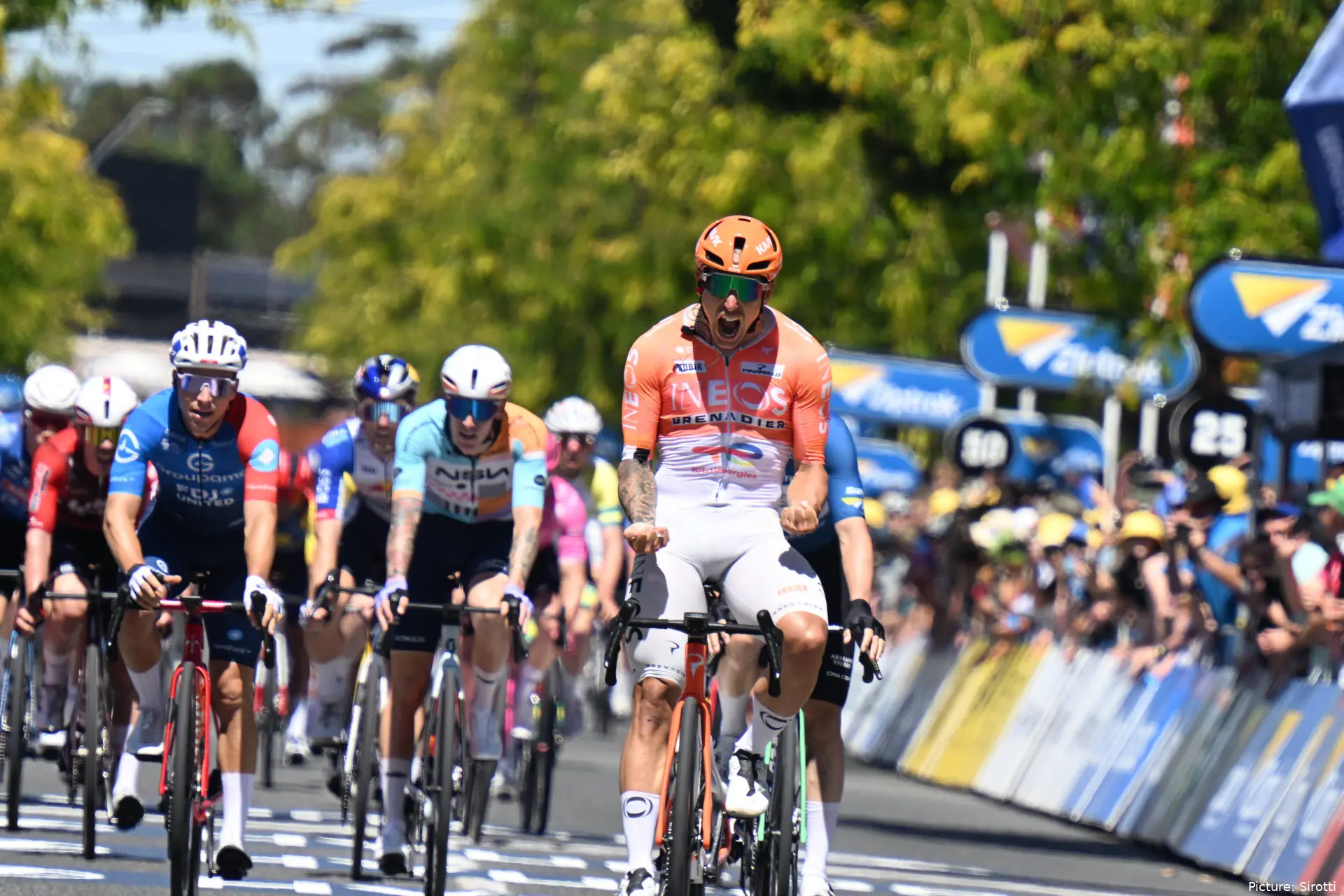
For Luke Rowe, the Tour Down Under did more than open the 2026 WorldTour season. It quietly underlined how difficult it is to ever fully detach from a team that shaped almost an entire professional life.
Now working with Decathlon CMA CGM Team, Rowe joined long-time friend and former team-mate Geraint Thomas on the latest episode of Watts Occurring to reflect on a race that delivered extreme heat, disrupted stages, a kangaroo collision and a series of British sprint victories. Yet amid all that chaos, it was a candid admission about INEOS that lingered longest.
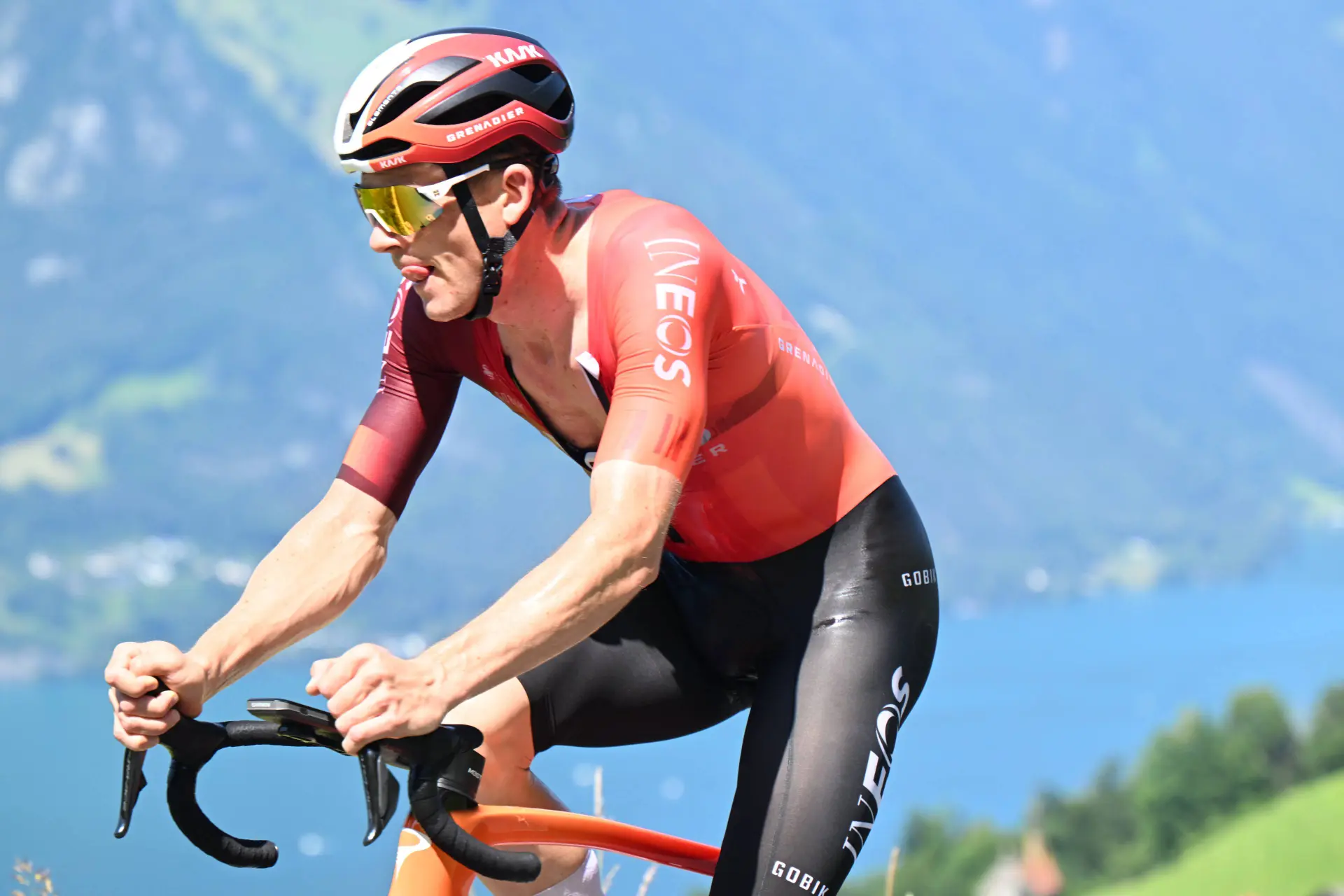
Rowe spent his entire racing career inside the Sky and INEOS system before stepping into a rival role. Watching the Tour Down Under unfold from the other side of the fence has not erased those instincts. “I was at Sky and INEOS a long time, and I want my team to be the best team in the world at Decathlon,” Rowe said. “But still, when INEOS win, I still have a smile. It’s my second favourite team.”
Thomas immediately understood the feeling. Between them, the pair represent more than two decades inside the same environment, the same buses, the same unwritten rules of the peloton. Changing employers does not rewrite that history overnight. “There’s always guys that you like, that you know a bit in other teams,” Thomas replied. “You know what they’re like and you want to see them do well.”
The Tour Down Under, with its blend of low-pressure racing and familiar faces, proved the perfect setting for those emotions to surface.
A race that exposed both chaos and character
From the opening days in Australia, Rowe and Thomas framed the Tour Down Under as a race that rewards adaptability more than rigid planning. Heat warnings shortened stages, crosswinds reshaped expectations and general classification ambitions were derailed before they could properly settle.
“What should have been wasn’t,” Rowe said when reflecting on stage four. “The day that I thought Johnny would take some time bonuses and take the lead, I couldn’t have been more wrong.”
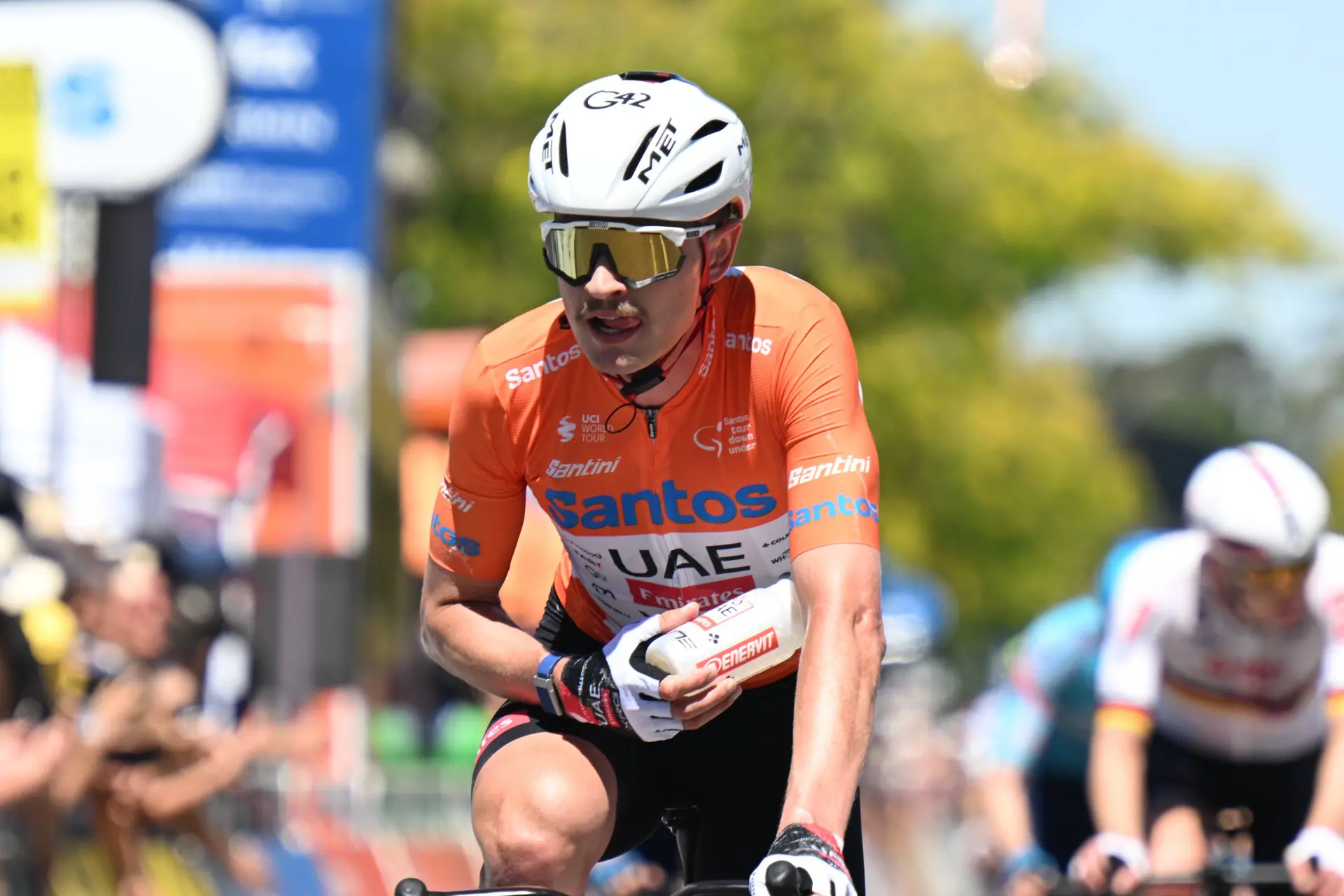
Early crashes and the removal of key sections due to fire risk forced teams to improvise. UAE, in particular, endured a difficult run through the week. “They had a stinker,” Rowe said. “There was some bad luck there.”
Even with those disruptions, the race delivered moments that reminded both hosts why the Tour Down Under remains a valuable season opener. Riders were forced to react in real time, not hide behind calculations. “In a reduced sprint down under, which isn’t the same level as a Paris or a Tour de France, you have to race the race for what it is,” Rowe explained. “They executed it brilliantly.”
That willingness to commit was most evident in the sprint stages, where British riders dominated the results despite the unpredictable conditions.
British wins and old instincts kicking in
Sam Welsford’s victory stood out not just for the result, but for how it was achieved. The lead-out unfolded from deep in the bunch, requiring perfect timing rather than textbook positioning. “To play devil’s advocate, if they tried that 20 times, the stars would line up maybe five times,” Rowe said. “But to do world-class lead-outs now, you also have to risk and gamble.”
The execution, rather than the outcome alone, impressed both hosts. Rowe found himself particularly pleased for riders he has known for years. “I was more happy for Swifty than I was for Sam,” he admitted. “To see him still performing at that level, still giving a world-class lead-out, still timing it to perfection, it was fantastic.”
Thomas highlighted how trust inside the lead-out train can override panic in moments where the race appears lost. “He said they were stuck in the back with about a kilometre to go and thought it was over,” Thomas recalled. “But having someone like that there, you just put all your confidence in them.”
Those instincts, honed inside the INEOS system, still resonated with Rowe as he watched from a different team environment.

The kangaroo moment that defined the week
If the Tour Down Under delivered an image that travelled far beyond cycling circles, it came on the Stirling circuit. A kangaroo strayed into the race, triggering a crash that involved Jay Vine and left the peloton shaken. “Correct me if I’m wrong, but the kangaroo just bounced into the peloton and caused a crash,” Thomas said.
Rowe’s reply captured the surreal nature of the incident. “Old Skippy caused carnage. You can’t get more down under than that, can you?”
Footage showed the animal hobbling away, while Vine’s race ended with far more serious consequences. The incident became a talking point not because of novelty alone, but because it underscored the uncontrollable risks that remain in professional cycling. “It came right to left,” Rowe said. “Jay Vine was involved.”
The aftermath only deepened the sense of misfortune. “He broke his scaphoid and had an operation,” they added. “That bone has terrible blood flow. It takes ages to heal.”
For two riders who have both endured long injury recoveries, the moment carried a sobering edge beneath the humour.
Read also
A race that still matters inside teams
Despite its reputation as a warm-weather curtain-raiser, Rowe was clear that the Tour Down Under still carries weight internally, especially for squads trying to build early momentum. “As a team, if you can go there and get something from it and come back and the whole team’s buzzing, it matters,” he said. “You felt it at camp, didn’t you?”
Thomas agreed, noting how results ripple through training camps thousands of miles away. “You wake up in the morning and hear there’s been a win,” he said. “Everyone’s buzzing from it. It gives you momentum.”
That perspective explains why Rowe found himself emotionally invested, even while watching successes from his former team.
The Tour Down Under, with its mixture of familiarity and freshness, stripped things back to basics. Riders raced instinctively, teams committed fully to opportunities, and old allegiances surfaced without warning.
For Rowe, the week in Australia reinforced a simple truth about life after racing. Changing colours does not erase relationships, memories or habits built over a decade.
In a sport obsessed with marginal gains and clean breaks, it was one of the most human moments of the opening WorldTour race.

Kieran WoodDeputy Editor-in-Chief
Kieran Wood is a sports journalist based in Wales and has been active in journalism since 2022. He regularly contributes to DartsNews.com and CyclingUpToDate.com, where he covers professional cycling and darts. In cycling, his work includes liveblogs from major races, including the Tour de France, the Giro d’Italia, and La Vuelta a España, alongside race reports and analysis. He has also conducted interviews with professional riders.
His reporting spans the full racing calendar, from one-day classics to stage races, with a focus on accurate, real-time coverage and clear contextual analysis. For statistics, results, and historical context, he regularly uses resources such as ProCyclingStats. To support reporting on rider activity and training context where relevant, he also references Strava.
In his work, Kieran places strong emphasis on careful sourcing, editorial accuracy, and updating articles as new, verified information becomes available.
claps 0visitors 0
Just in

Popular news
Latest comments
- While media outlets point to the loss of Richard Carapaz, Kasper Asgreen, and rising talents like Steinhauser as a sign of trouble, this is actually classic EF Pro Cycling tactical pivot at play. Operating on less than half the budget of state-backed super-teams, Jonathan Vaughters smartly maximized Carapaz’s return on investment by turning high salary and health setbacks into Tour stage wins, Yellow, and the Polka Dot jersey, before freeing up vital capital when his valuation peaked. Let us be completely honest here: Carapaz’s departure to NSN is strictly about securing one final massive payday before calling time on his career, rather than building a lasting sporting legacy. EF built a squad around him and gave him tactical freedom that few teams would offer, but given his ongoing health concerns and age, keeping him at that price point represented an unsustainable risk. It is very unlikely he will match the freedom or success he enjoyed at EF with his new team, making this move a pure business decision for a veteran rider cashing in on his remaining value. In contrast, while signing Tao Geoghegan Hart carries its own physical risk, it comes at a vastly different financial scale that protects EF's bottom line while offering immense upside. Replacing that climbing depth won't happen overnight, but bringing in Tao fits EF’s proven reclamation playbook perfectly by providing a low-pressure, culture-first environment for a proven Grand Tour winner to find his magic legs again. Backed by a secured core in Ben Healy, Neilson Powless, and Sean Quinn through 2029, EF isn't crumbling; they are simply resetting their wage structure, staying nimble, and betting on high-ceiling upside where richer teams only see risk.wambo19-10-2026
- This is classic EF Pro Cycling: where other WorldTour squads see risk and injury recovery as a liability, Jonathan Vaughters sees high-ceiling potential and an opportunity to build a custom runway for a rider's resurgence. While Richard Carapaz's high salary and health setbacks made a traditional Grand Tour victory unlikely against today's dominant talents, EF smartly maximized every ounce of his ability by pivoting toward high-visibility targets like a Tour de France stage win, the Yellow Jersey, and the King of the Mountains title. Now, with Carapaz moving on, Tao Geoghegan Hart’s ceiling when healthy is undeniable, and after a tough couple of years recovering from his Giro crash, EF's patient, culture-first approach might be the exact environment he needs to find his magic legs again. EF has consistently proved that they do not need the largest budget in the peloton to extract elite value and deliver memorable performances. By giving Tao the time and tactical freedom to rebuild without overwhelming pressure, this move could easily pay huge dividends and shock a lot of people in the coming seasons.wambo19-10-2026
- The article makes it sound like a great thing and something to be applauded. The reality is is gives the Americans another 6 years to fleece European cycling fans or force them to hunt around Europe with VPN’s for free feeds. Not something to be celebrated in my book. Before someone points out that coverage of this depth costs money, yes, I agree but not £30+ per month a fee I will wager will gradually increase now this deal has been cemented.Paul53119-10-2026
- Great. Thrilled. (Satire) Oh, how I miss the days of GCN. Still wear my GCN hoodie with pride.anonymouscyclist19-10-2026
- You could also look at it another way. How many riders have had better or more consistent results since the Tour?Jumpyjohn19-10-2026
- Whilst I love Tadej (and Remco, who deserves to be mentioned here, too), @JumpyJohn makes a valid point, and he isn’t wrong @MajorPayne. It is a fact that today’s official broadcasters of cycling struggle to keep our attention once the likes of Tadej (or Remco) attacks at ~80km or so. In the 142nd issue of Rouleur, Ned Boulting reflects on the often stressful paradox of commentating on a race that is effectively over before the broadcast window even hits its stride. In this edition, he centres on Remco’s 1hr solo at the Challenge Mallorca this year, and captures the panic and dread shared by the commentators when a dominant rider kills off the racing tension early. I recommend you read it, it’s a fascinating insight into the world of commentary, and the true viewing figures of today’s cycling. I must add here, I love Tadej and Remco, but I would be lying if my heart rate wasn’t higher when watching the World Championships this year. And I’m sure Rob Hatch would say something akin regarding his commentary!anonymouscyclist19-10-2026
- The shattered women’s marathon record was clean and highly surprising and then a few months later the athlete was very positive in another test for something not taken by mistake when recording far less impressive results. Sounds to me like the problem is still the age old one, detection is often way behind. Just like with crime, it’s not because you can’t catch the criminals that you aren’t aware of the crime.Jumpyjohn19-10-2026
- Listen, you have a point but on the other hand in cycling, once some of the riders go solo and build a minute’s gap, there’s hardly any action left to watch. Cycling is definitely not for today’s generations of accelerated viewing. Other people find skydiving or chess exciting but you can’t force everyone to feel the same.Jumpyjohn19-10-2026
- That’s a funny one. Yeah obviously he’s more aero than some but most of the aero effect at elite level is the bike. Now you have me starting to feel sorry for the guy behind him when he pulls a groupetto.Jumpyjohn19-10-2026
- Knew a World Tour promotion was coming for Ben this season. Thrilled for him, and can't wait to see what he can do at this level. Another one to watch at the TTs.anonymouscyclist19-10-2026
Loading
Write a comment