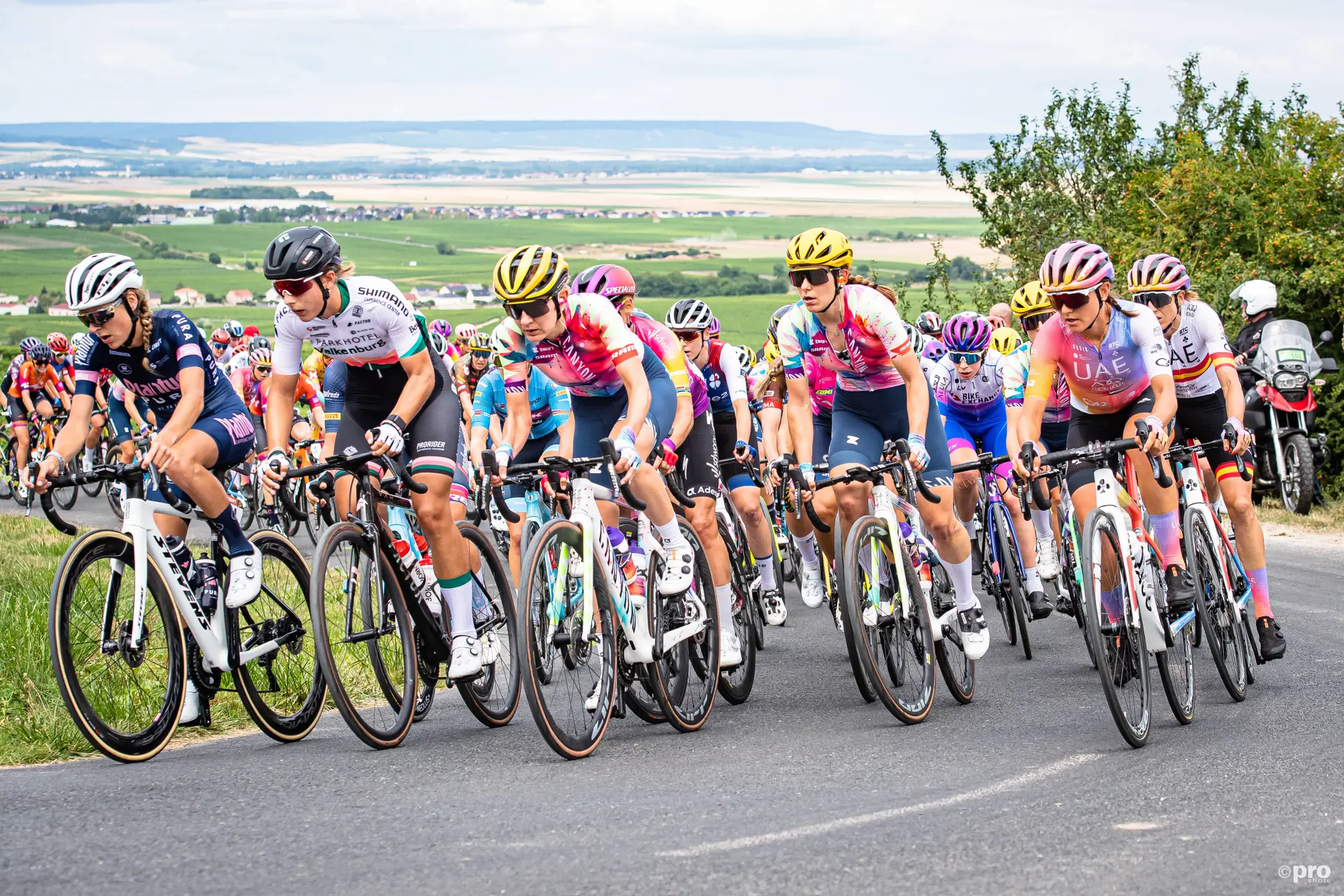
The Tour de Romandie Féminin began this afternoon not with a celebration of elite women’s racing, but with a firestorm of controversy that saw six World Tour teams disqualified before a pedal was turned. Now, cycling’s governing body has responded in full, issuing a statement that not only defends its decision to enforce GPS tracking tests — but also accuses teams of undermining the sport’s collective efforts to improve rider safety.
“The Union Cycliste Internationale (UCI) regrets that certain teams on the start list for the Tour de Romandie Féminin have refused to comply with the rules for the race related to the implementation of GPS trackers as a test for a new safety system,” the statement began.
The UCI test, implemented at the Swiss three-day stage race, was intended as a trial run ahead of a full rollout at the 2025 Road World Championships in Kigali, Rwanda. Under the scheme, one rider per team was required to carry a small (63g) GPS tracking device across the race’s three stages, with the aim of improving crash response times and enabling live monitoring by medical and race officials.
But five teams — Canyon//SRAM zondacrypto, EF Education–Oatly, Lidl–Trek, Team Picnic PostNL, and Team Visma | Lease a Bike — refused to comply with the protocol, citing concerns over liability, logistics, and the manner in which the test was imposed. Their refusal to nominate a rider to carry the device led to their exclusion from the event.

In its statement, the UCI expressed surprise and frustration: “The decision of these teams to oppose the specific rules for the event is surprising, and undermines the cycling family’s efforts to ensure the safety of all riders in road cycling by developing this new technology.”
“It is deplorable to witness the refusal of certain teams to move forward together to protect the safety of riders, and the UCI condemns their non-cooperation.”
The governing body made clear that the rules had been communicated well in advance — specifically on 7 August — and reiterated during the pre-race sport directors’ meeting. The GPS test, the UCI noted, had been mandated under Articles 1.3.073 and 2.12.007/3.5.3 of the UCI Regulations, which grant the organization authority to issue event-specific rules. “Teams were required to designate one rider on whose bike the GPS tracker would be fixed,” the statement reads. “Teams were given further explanations during the Sport Directors pre-event meeting.”
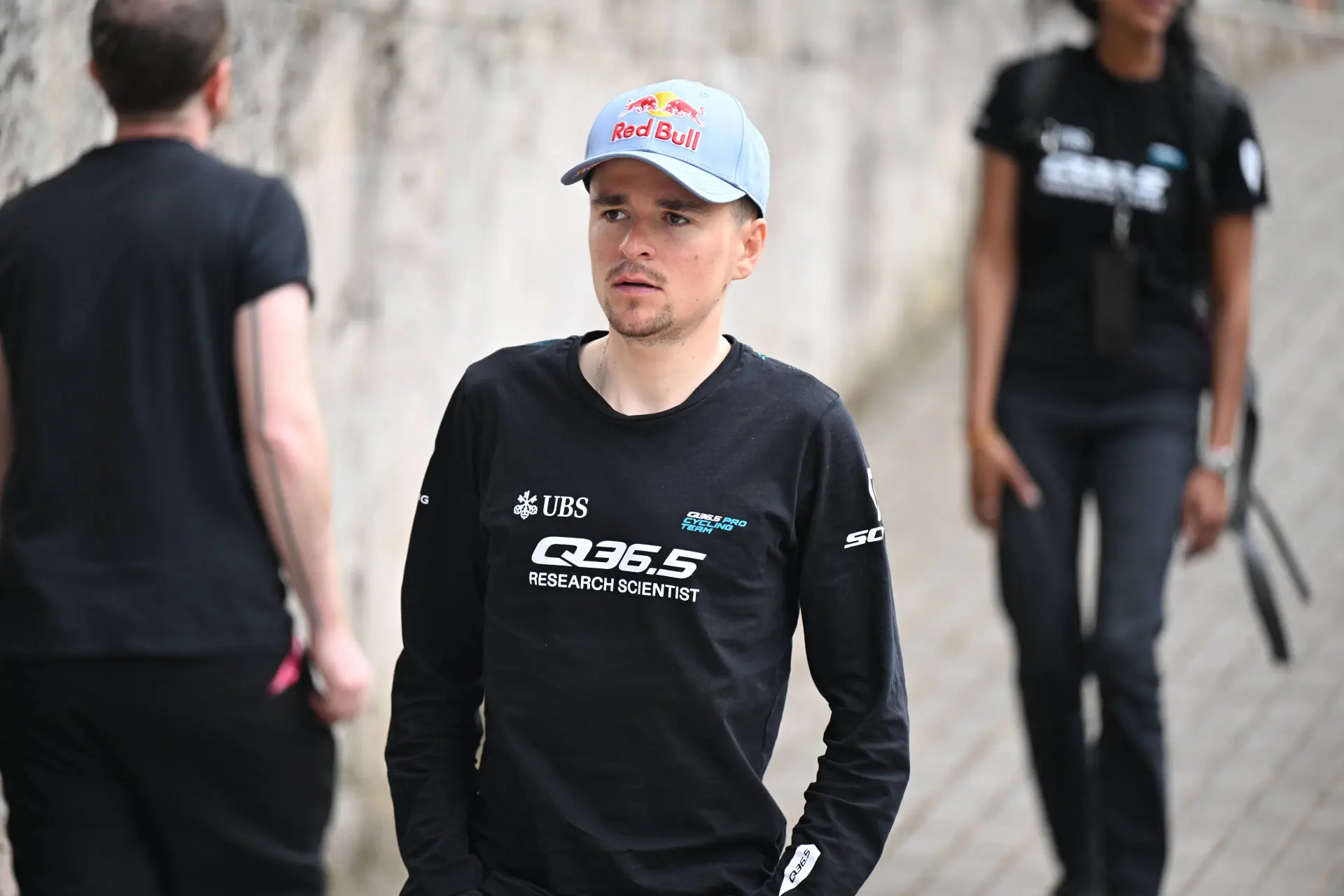
But as EF boss Jonathan Vaughters revealed in a widely circulated tweet, teams didn’t refuse the GPS per se — they objected to being forced to select which of their own riders would carry the device without clarity on performance implications or crash liability. Instead, some asked the UCI to assign the rider themselves. The request was denied. “For me?” Vaughters wrote. “Using [a] World Tour event as testing ground is wrong. Beyond that, once you’ve chosen to impose your will; refusing to select which riders get to be the victims and throwing that decision on the teams? Not right. And then disqualifying teams for not choosing the victim?”
That version of events was not acknowledged in the UCI’s rebuttal, which instead claimed: “The UCI regrets that certain teams have objected to the test by not nominating a rider to carry the tracking device and have therewith opted to be excluded from the Tour de Romandie Féminin.”
In what many read as a politically charged footnote, the UCI also highlighted that most of the disqualified teams are affiliated with Velon, an organization that develops its own telemetry and GPS systems — and which has had an ongoing and at times adversarial relationship with the UCI over data rights and commercial access. “It should be noted that most of these teams are part of the Velon organisation which is the owner of its own data transmission system and is working on the development of its own GPS tracking system,” the UCI said.
That line — seemingly implying a conflict of interest or ulterior motive — may inflame rather than calm tensions. The teams themselves have thus far framed their refusal not in commercial terms, but in ethical and operational ones: a lack of consultation, limited technical support, and insufficient risk evaluation.
What Now?
The Romandie Féminin continues with a depleted peloton and a leadership vacuum in the women’s field — both Demi Vollering (illness) and six entire teams are missing from the start list.
The UCI has hinted that further consequences could follow: “In view of this situation, the UCI shall consider if other measures are warranted in accordance with the UCI Regulations.”
That could mean disciplinary action against teams, renewed debate over GPS standardization, or — more optimistically — a hard reset in how innovations like this are implemented.
The disqualified teams haven’t issued full statements yet, but the fallout has already exposed rifts in cycling’s fragile ecosystem — between governance and competition, safety and sovereignty, and innovation and control.


Kieran WoodDeputy Editor-in-Chief
Kieran Wood is a sports journalist based in Wales and has been active in journalism since 2022. He regularly contributes to DartsNews.com and CyclingUpToDate.com, where he covers professional cycling and darts. In cycling, his work includes liveblogs from major races, including the Tour de France, the Giro d’Italia, and La Vuelta a España, alongside race reports and analysis. He has also conducted interviews with professional riders.
His reporting spans the full racing calendar, from one-day classics to stage races, with a focus on accurate, real-time coverage and clear contextual analysis. For statistics, results, and historical context, he regularly uses resources such as ProCyclingStats. To support reporting on rider activity and training context where relevant, he also references Strava.
In his work, Kieran places strong emphasis on careful sourcing, editorial accuracy, and updating articles as new, verified information becomes available.
claps 0visitors 0
Just in

Popular news
Latest comments
- The article makes it sound like a great thing and something to be applauded. The reality is is gives the Americans another 6 years to fleece European cycling fans or force them to hunt around Europe with VPN’s for free feeds. Not something to be celebrated in my book. Before someone points out that coverage of this depth costs money, yes, I agree but not £30+ per month a fee I will wager will gradually increase now this deal has been cemented.Paul53119-10-2026
- Great. Thrilled. (Satire) Oh, how I miss the days of GCN. Still wear my GCN hoodie with pride.anonymouscyclist19-10-2026
- You could also look at it another way. How many riders have had better or more consistent results since the Tour?Jumpyjohn19-10-2026
- Whilst I love Tadej (and Remco, who deserves to be mentioned here, too), @JumpyJohn makes a valid point, and he isn’t wrong @MajorPayne. It is a fact that today’s official broadcasters of cycling struggle to keep our attention once the likes of Tadej (or Remco) attacks at ~80km or so. In the 142nd issue of Rouleur, Ned Boulting reflects on the often stressful paradox of commentating on a race that is effectively over before the broadcast window even hits its stride. In this edition, he centres on Remco’s 1hr solo at the Challenge Mallorca this year, and captures the panic and dread shared by the commentators when a dominant rider kills off the racing tension early. I recommend you read it, it’s a fascinating insight into the world of commentary, and the true viewing figures of today’s cycling. I must add here, I love Tadej and Remco, but I would be lying if my heart rate wasn’t higher when watching the World Championships this year. And I’m sure Rob Hatch would say something akin regarding his commentary!anonymouscyclist19-10-2026
- The shattered women’s marathon record was clean and highly surprising and then a few months later the athlete was very positive in another test for something not taken by mistake when recording far less impressive results. Sounds to me like the problem is still the age old one, detection is often way behind. Just like with crime, it’s not because you can’t catch the criminals that you aren’t aware of the crime.Jumpyjohn19-10-2026
- Listen, you have a point but on the other hand in cycling, once some of the riders go solo and build a minute’s gap, there’s hardly any action left to watch. Cycling is definitely not for today’s generations of accelerated viewing. Other people find skydiving or chess exciting but you can’t force everyone to feel the same.Jumpyjohn19-10-2026
- That’s a funny one. Yeah obviously he’s more aero than some but most of the aero effect at elite level is the bike. Now you have me starting to feel sorry for the guy behind him when he pulls a groupetto.Jumpyjohn19-10-2026
- Knew a World Tour promotion was coming for Ben this season. Thrilled for him, and can't wait to see what he can do at this level. Another one to watch at the TTs.anonymouscyclist19-10-2026
- It honestly breaks my heart to see this. I had a feeling this might happen over the last few years, but I kept praying it wouldn't, and that Joey would find his niche, especially back racing alongside his brother. After growing up racing alongside PH-MAS, the Pidcock brothers have always felt like one of our own, as we’ve watched them grow from Club level all the way up to PC and WT. I wish Joey nothing but the best of luck in whatever he does next, but selfishly… I do wish for him to move into the role of Q36.5 team staff.anonymouscyclist19-10-2026
- Predictable, sure! But boring??? OMG! Was Mike Tyson predictable and boring in his prime? Air Jordan? Schumacher or Senna? OMG!!!MajorPayne19-10-2026
Loading
Write a comment