“I’m convinced if Pellizzari hadn’t been racing with Evenepoel, he would have fought him” – Giro winner sees huge potential in Red Bull’s Italian talent
Cycling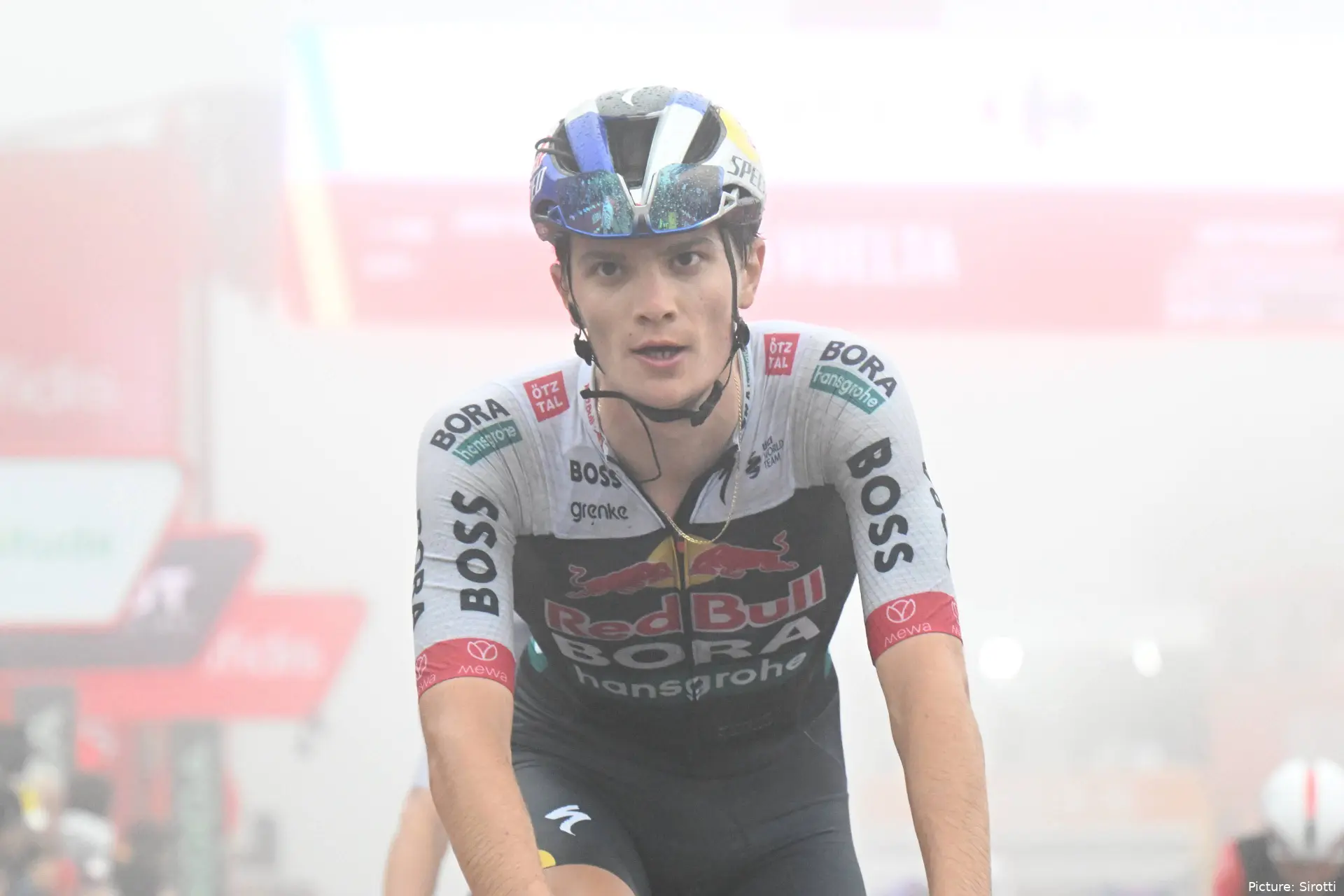
Red Bull - BORA - hansgrohe’s early 2026 storyline has been obvious from the outside: Remco Evenepoel arrives, wins immediately, and the team’s Tour de France project starts to look serious fast. What the Volta a Comunitat Valenciana revealed from inside the race convoy, though, is that the new structure may be developing a second, quieter edge.
Stefano Garzelli, the 2000 Giro d’Italia winner now living in Valencia, was involved in the organisation of the race and watched the key moments unfold up close. When asked for his biggest takeaways, he did not start with Evenepoel. “I say Giulio Pellizzari. Good, good, I’m happy,” Garzelli said in conversation with Bici.Pro. “When someone goes against the grain like that, it’s great.”
That reaction matters because Pellizzari’s 2026 has already been framed internally as a season of consolidation and responsibility. After a breakout stretch across 2024 and 2025, he is now expected to be part of Red Bull’s Grand Tour depth rather than simply a name for the future. The Giro d’Italia is central to that, and Pellizzari has openly described it as his main objective.
Speaking to Marca earlier this winter, he said: “The Giro d’Italia is my big objective, and also my favourite race.”
What Garzelli actually saw in Valencia
Garzelli’s enthusiasm was not based on vague potential. He pointed to specific, high-cost actions that are easy to miss if you only read results. “First stage, I was in the car,” he explained. “Twenty riders remain, a 15-kilometre-long straight, he goes alone, headwind in his face. They catch him with 1,500 metres to go, then victory for Girmay.”
That kind of move does not guarantee a result, but it does signal confidence and intent, and it also hints at why Red Bull rates Pellizzari as a rider capable of taking responsibility in hard races.
The bigger moment, though, came on stage four, when Red Bull began to shape the race properly in the finale. Garzelli’s description of the team’s order is the detail that should make people look twice.
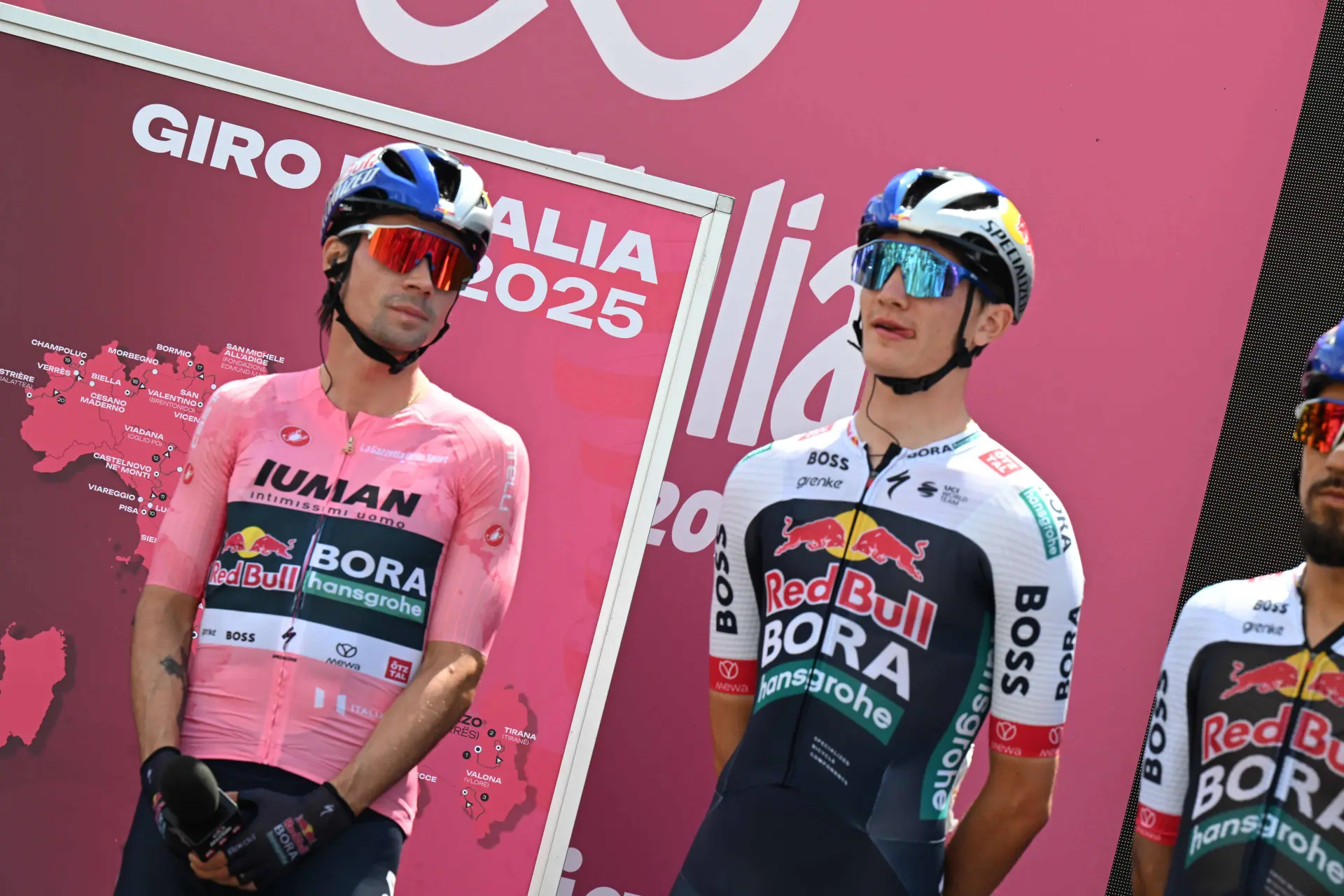
“In the fourth stage, about 30 kilometres from the finish, the Red Bull train was Pellizzari, Vlasov and Evenepoel, in this order,” he said. “He started pulling for 15 kilometres between flat roads and little ramps, and he made almost everyone crack, even Vlasov. Six riders remained.”
This is where the wider context matters. Evenepoel is the headline leader, but Red Bull’s 2026 plan is built around depth and flexibility. When someone like Pellizzari is riding ahead of the team’s established GC engine room in that moment, it is not decoration. It is trust.
Garzelli then delivered the line that made the week feel like more than a supporting ride. “I am convinced that if Pellizzari hadn’t been racing with Evenepoel, he would have fought it out with him,” he said.
That is not a prediction about a season. It is an assessment of a level, right now, and the significance is obvious with the Giro on the horizon.

Pellizzari starred for Red Bull at the 2025 Vuelta a Espana
Reinforcing what Pellizzari has already said about learning inside Red Bull
Pellizzari’s own comments earlier this winter align neatly with Garzelli’s take. He has been clear that he values proximity to champions rather than distance from them, and he has already framed his development inside the team as learning through racing.
“Last year I raced a lot alongside Roglic, and I learned many things from him,” he told Marca, before adding: “For me it is an honour to race with champions like them.”
Garzelli’s observations from Valencia essentially put evidence on top of those words. Pellizzari is not just present alongside leaders like Evenepoel, he is shaping races in front of him.
Garzelli also noted that Evenepoel himself recognised it.
He said Remco was impressed by Pellizzari’s work, and that he complimented and thanked him afterwards.
Evenepoel’s form is obvious, but the team dynamic is the point
Garzelli did not ignore Evenepoel’s own performance across the week. He described “great condition, great motivation and above all great tranquillity”, and he even noted how approachable Evenepoel appeared immediately after finishing.
But the more interesting point for Red Bull’s longer season is what Garzelli saw as an emerging dynamic inside the team.
“From the outside, you can see great harmony,” he said, before adding that Pellizzari was often the one pushing Evenepoel to attack and was almost the rider having to hold him back.
That is a striking detail because it matches the broader expectation around Red Bull this season. This team is not built around one voice. It is built around multiple leaders, multiple calendars, and a culture where strong riders are encouraged to be active rather than passive.
For Pellizzari, Valencia did not need to deliver a headline result to serve a purpose. If Garzelli’s verdict is right, it provides something arguably more valuable: proof that his level is already close enough to ride with the team’s biggest engine when the race is on the line.
And with the Giro d’Italia as his stated target, that is the kind of signal Red Bull will have wanted to see.


Kieran WoodDeputy Editor-in-Chief
Kieran Wood is a sports journalist based in Wales and has been active in journalism since 2022. He regularly contributes to DartsNews.com and CyclingUpToDate.com, where he covers professional cycling and darts. In cycling, his work includes liveblogs from major races, including the Tour de France, the Giro d’Italia, and La Vuelta a España, alongside race reports and analysis. He has also conducted interviews with professional riders.
His reporting spans the full racing calendar, from one-day classics to stage races, with a focus on accurate, real-time coverage and clear contextual analysis. For statistics, results, and historical context, he regularly uses resources such as ProCyclingStats. To support reporting on rider activity and training context where relevant, he also references Strava.
In his work, Kieran places strong emphasis on careful sourcing, editorial accuracy, and updating articles as new, verified information becomes available.
claps 11visitors 3
Just in
Popular news
Latest comments
- i think he can continue to race for maybe another 2 years till he drops out of podium contention. With his TT and his follow the leader in the Mountains,he should not need too many teammates too.abstractengineer14-10-2026
- Aren't they still shopping around for a main sponsor for next year?wrsty14-10-2026
- How broke is visma now? wtf they cant even fight moviestar and decathlon for riders and lose both their mid targets based on their budget and they cant even get those? Crazy...:/miguel13-10-2026
- TT But he won by a minute so he could have cut down on some of it
 Rafionain-Glas13-10-2026
 - weight is measurable. power is measurable. So why didn't he prepare that way from the TDF if he wanted to beat Pogi and after Pogi wasn't going to be there, to win.abstractengineer13-10-2026
- I hope Thibau and Tibor don't do the sameRafionain-Glas13-10-2026
- Seixas is exactly what I would like Pogi to be mentally and in his statements. Both come across as shy and who don't talk much but with Seixas, you can see that he enjoys success, that it boosts his ego, unlike Pogačar who seems to feel increasingly uncomfortable the more he wins. He's won so many times, people are saying he's boring. The french media hate him for winning so much, the french cycling fans are booing him... etc. etc. But remember one thing, Seixas will never physically reach Pogi's level. He's excellent, but he isn't at that level nor will ever be. His talking to the media, his relationship with people is already at a high level.PogiSloFans13-10-2026
- Paul Seixas is now the second-best rider in the world.megasmacky13-10-2026
- When will they start dropping Pogi? Oh yeah, when Pogi reaches 40+ years, that's when young cyclists will start dropping him. But until then... eat your hearts out and cry. Pogi will remain the G.O.A.T. for years to come. Capish?PogiSloFans13-10-2026
- I figure he would have found out how to outsprint Paul and take the win, maybe. He's 28 now but I would say he's right at the peak of his powers. It was great race though, Paul showed me something different about himself.awp13-10-2026
Loading
Write a comment