Dutch ex-pro calls for “competency test” before riders enter peloton: “For Jay Vine, it could have prevented a lot of crashes”
CyclingSunday, 30 November 2025 at 15:39
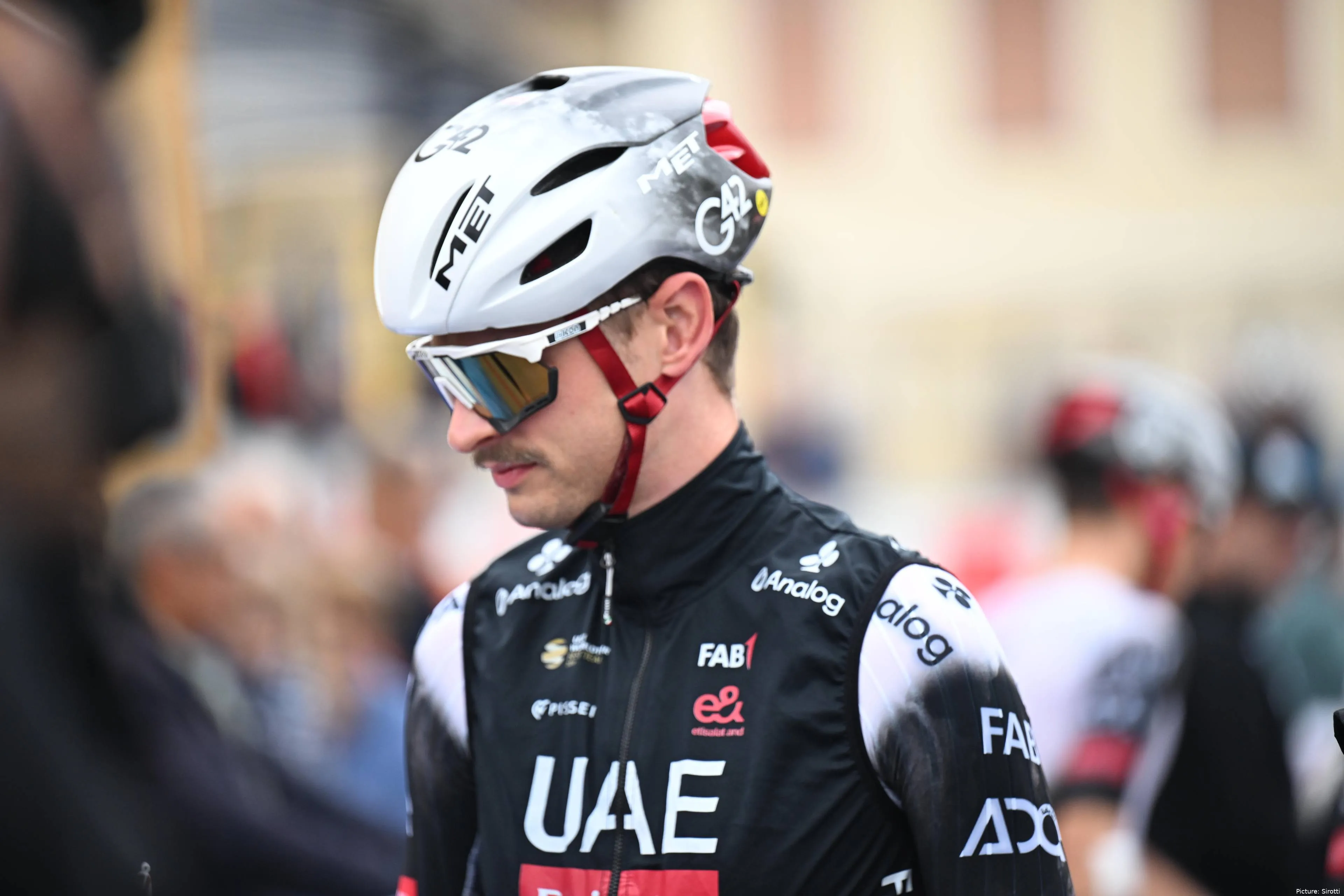
Calls for stricter safety standards in professional cycling resurfaced this week after former Dutch rider Stef Clement argued that newcomers to the peloton should be required to pass a basic skills test before turning pro.
In quotes collected by Wielerflits from Dutch TV talk show De Laatste Etappe at the Wielergala in Utrecht, Clement laid out a blunt assessment of the current system — and why he believes it no longer meets the demands of the modern sport.
Clement opened the discussion with a self-deprecating reflection on his own bike-handling reputation, saying: “I was often told I couldn’t handle my bike properly. And looking back, they were probably right.” But he emphasised that the issue is far broader than individual riders. “There’s no sort of competency test you need to pass before you can become a pro.”
According to Clement, the pathway is too heavily weighted towards physiological numbers, with little attention paid to real-world riding skills. “You just need to prove on an ergometer that you’ve got the engine, and then you’re set loose. It’s like being allowed to drive in Formula 1 with only a tractor licence and hoping for the best. Some sort of evidence of competence, some basic bike-handling, might actually be quite useful.”
Why Clement thinks the system is flawed
Pressed by presenter Sander Kleikers, Clement was confronted with the example of Jay Vine, whose rise to the WorldTour came via the virtual-racing talent programme Zwift Academy. Clement responded directly, saying: “Well, I reckon we could have prevented a lot of crashes. For him it would have been better to do a small crash-course first.”
The point, Clement stressed, was not to single out individuals but to highlight a structural gap. Riders can enter the sport with enormous physical potential yet limited experience in high-speed bunch racing — a mismatch he believes should no longer be left to chance.

Jay Vine's crash record is used as an example to press home Clement's point
A debate that is unlikely to go away
Clement’s proposal for a formal competency test — something akin to a minimum bike-handling standard for all new professionals — adds another thread to the growing conversation around rider safety. With the sport continuing to face questions over descending speeds, bunch crashes and the increasing number of young riders entering the WorldTour at an early age, suggestions that once sounded radical are beginning to find an audience.
Whether the peloton, the teams or the UCI are willing to embrace formalised skills testing remains to be seen. But Clement’s comments reflect a wider shift: the idea that raw power is no longer enough, and that modern cycling may require a rethink of what it means to be “ready” for the professional level.
claps 25visitors 11
Just in
Popular news
Latest comments
- The team has decided before rven 2026, he said on his YT video ... it's December 27th... They just announced it nowvampa01-04-2026
- Ahaha remco is like the hulk, make him angry early and he'll go beast modebruins3001-04-2026
- This could be fascinating. In 2022, he followed Roglic and Pogacar as a winner of both a monument and GT in the same year. Who knows, maybe he's aiming to do that again, and maybe he's deciding to focus more on classics. Or maybe he just wants to have a fun challenge? He's won some incredibly strong one-day races, and his style may really match the Ronde. Yes yes, his nemesis is Pogacar's acceleration on a steep climb. Let's see if he can have a rage-inducing incident early in the race rather than only after Pogacar has left him behind (I'm honestly not kidding about this).RidesHills01-04-2026
- A major result I see this season is that teams are coming together to pursue the lead rider on the super long solo attack. San Remo, they cohered and nearly caught Pidcock and Pogacar. E3, van der Poel got lucky that the chasing group sat up at just the last second. Today, Ganna and others kept attacking and didn't let up as the attacks were caught. The chasers aren't fighting for 2nd anymore, they've found a way to work hard, but together, to reel things in. I still think Pogacar will attack and win in Flanders (it took him how many attacks last year to shake people loose?), but I think this creates a particularly interesting situation for Roubaix. Who knows, the elite still usually win, but the chase sure is more interesting this year!RidesHills01-04-2026
- The relentless hills of the Ronde are different from the relentless cobbles of Roubaix. Ganna is built for the latter but not the former. I haven't been following his race agenda, but if he's going to Roubaix, I wonder how they help him prep for it in the next 11 days. His San Remo podium and this win (and past sprints) show he's a different rider from the time trial beast he started as.RidesHills01-04-2026
- Big names at this weekends Flanders, let's not forget, it's Pogacars to lose, everyone's riding to hang on, when Pog. pushes the button, youve gotta hope youre fine to alight the afterburners
 leedorney01-04-2026
 - Don't you love farce? My fault, I fear I thought that you'd want what I want Sorry, my dear But where are the clowns? Quick, send in the clowns Don't bother, they're hereJezla01-04-2026
- Some things are certain. ;)MajorPayne01-04-2026
- Actually the plan was for Remco to ride the Tour des Flandres, and it has been that for a VERY long time. More that 3 months ago on the 27th of December he did a recon, and in the video (only just released) he said he'd do it. Tricksy fella
 Rafionain-Glas01-04-2026
 - Yeah that's a big disappointment. He has said he's too heavy for Oude Kwaremont, Koppenberg, Paterberg, but he's Ineos's best rider. Last year he was better in Sanremo, and you could compare his win here to his podium at E3. But a top 5 is probably his best result - while at Paris-Roubaix he has a much greater chance so he might want more prepRafionain-Glas01-04-2026
Loading
11 Comments