2025 season review | UAE Team Emirates - XRG: 10 out of 10 year for the team of Tadej Pogacar?
CyclingSunday, 04 January 2026 at 10:51
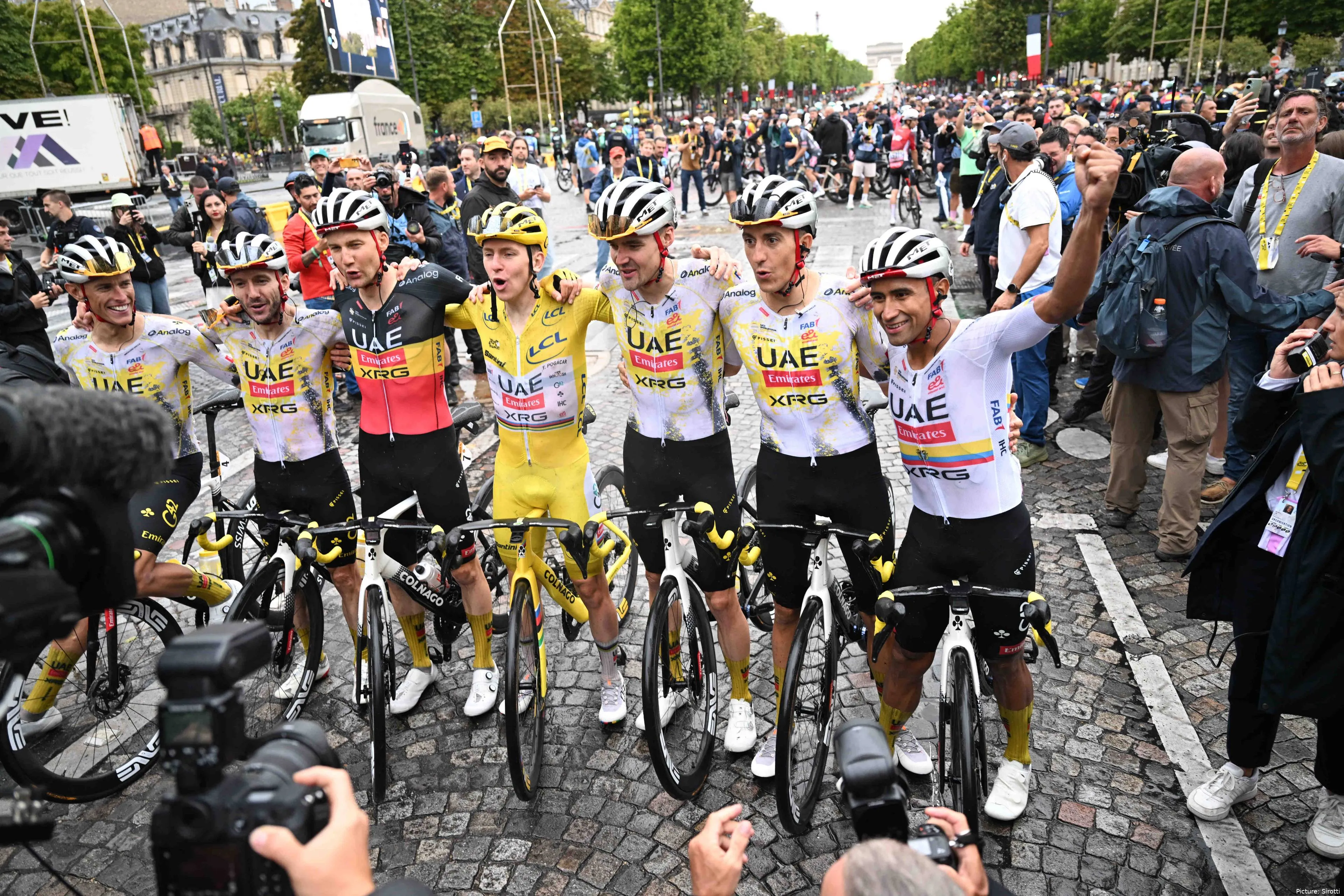
Today,
we have arrived at the team, and rider, everyone spent all of 2025 talking
about: UAE Team Emirates – XRG, the home of arguably the greatest rider we have
ever seen, Tadej Pogacar. The numbers alone tell one story, but the manner in
which they were achieved tells another: a team built for dominance, executing
with precision, and spearheaded by a rider who shaped the sport’s entire
competitive landscape. 2025 was not simply a strong year for UAE Team Emirates –
XRG, it was a continuation of the incredible standard they set in 2024.
The 2025
roster was constructed around Tadej Pogacar, the four-time Tour de France
champion whose presence allowed UAE to race with unstinting ambition. Around
him stood João Almeida, Juan Ayuso, Adam Yates, Tim Wellens, Brandon McNulty,
Rafal Majka, and a supporting cast capable of dictating races from Classics to
Grand Tours.
By
mid-season, UAE had accumulated 37 wins; by year’s end they had recorded 97,
more than any other team has managed in a single season. That return positioned
them at the summit of the UCI WorldTour rankings with over 40,000 points
towering over Team Visma’s 22,856 and Lidl–Trek’s 21,267.
Their
top-level performers remained consistent, but their domestiques, climbers, and
opportunists scored victories that previously would have eluded them. The
balance across the roster meant that even on days when Pogacar wasn’t present
or winning, the team still often was. The combination of versatility, tactical
daring, and squad depth turned what might have been an ordinary season for a
superteam into something close to unprecedented. Remember,
in 2024 they won two grand tours, two monuments, and 81 races in total. This year,
they went to the next level.
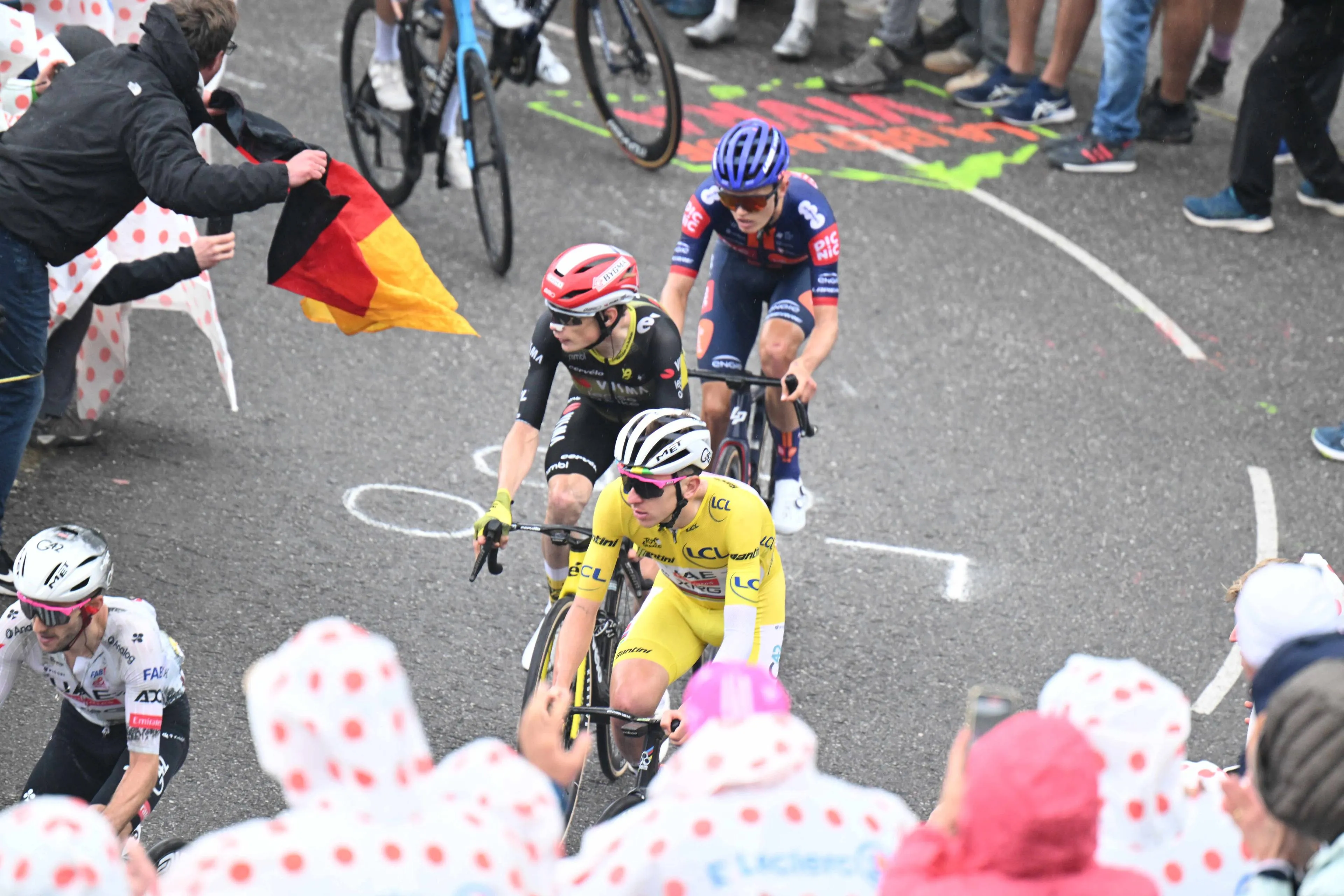
Spring Classics
UAE
started the year with intent on the gravel of Tuscany. At Strade Bianche, Pogacar
crashed heavily at high speed yet still rode away from Tom Pidcock and went solo
to claim the victory in Siena. It was the first big statement of the year: even
physically battered, he could outride a field of specialists. Weeks later at
Milano-Sanremo, he stood on the podium again, matching Mathieu van der Poel on
the Poggio and only losing ground in the final rush to the line. It was one of
the best moments of the year, but Sanremo is still one of the few races that
has eluded the Slovenia.
The next
landmark was the Tour of Flanders, where Pogacar responded to Van der Poel’s
surge on the Oude Kwaremont and powered away for his second career Ronde
victory. At Paris–Roubaix, making his debut on the cobbles, he stayed with Van
der Poel deep into the race and finished second after a late crash cost him any
chance of sprinting. We can’t wait to see Pogacar and Van der Poel face off
once again next spring at Sanremo and on the cobbles.
In the
Ardennes he was even more untouchable. At Amstel Gold Race he launched early
and arrived in a three-up sprint with Remco Evenepoel and Mattias Skjelmose,
losing in a photo finish in a massive upset to Skjelmose. Just days later at La
Flèche Wallonne, he attacked decisively on the Mur de Huy to take his second
title there. At Liège–Bastogne–Liège he struck long before La Redoute and rode
solo to the line. By the end of April he had won 2 monuments, several classics,
and was clearly in even better form than 2024.
Although
the Spring Classics were largely defined by Pogacar, the supporting cast still
contributed meaningfully. Juan Ayuso’s early-season wins at Faun-Ardeche
Classic and Tirreno-Adriatico showed how deep UAE’s talent ran. In virtually
every major Classic, the team’s white jersey appeared near the front, enforcing
race patterns rather than reacting to them. UAE’s spring was defined by
aggression: long-range attacks, relentless pacing, and a refusal to let rival
teams shape the final hour of racing. In 2024 they had been strong, in 2025
they were perhaps even more omnipresent.
Grand Tour Season
The
Grand Tours provided the clearest lens into UAE’s transformation from a team
reliant on its star, to one that could be set for many years of complete
dominance.
UAE
arrived at the Giro d’Italia without defending champion Tadej Pogacar, yet
still chased overall victory through Juan Ayuso and Adam Yates. The
breakthrough came early: Ayuso won Stage 7 to Tagliacozzo after outsprinting
his breakaway companions, with Isaac del Toro finishing second.
What followed,
was one of the most dramatic phases of the season. Ayuso struggled with bad luck,
caught up in many crashes, right at the moment where young Mexican Isaac del
Toro ascended to the top. Called by Tadej Pogacar “The Future,” Del Toro took
the pink jersey and won stage 17, and announced himself as a future star. He
looked set for the overall victory, but lost on a dramatic stage 20 where he
and Richard Carapaz marked each other, but let Simon Yates slip away to win for
Visma.
Still,
it is a mark of just how impressive Del Toro was as a youngster, that he was
disappointed with second place. He, without question, is a future grand tour
winner.
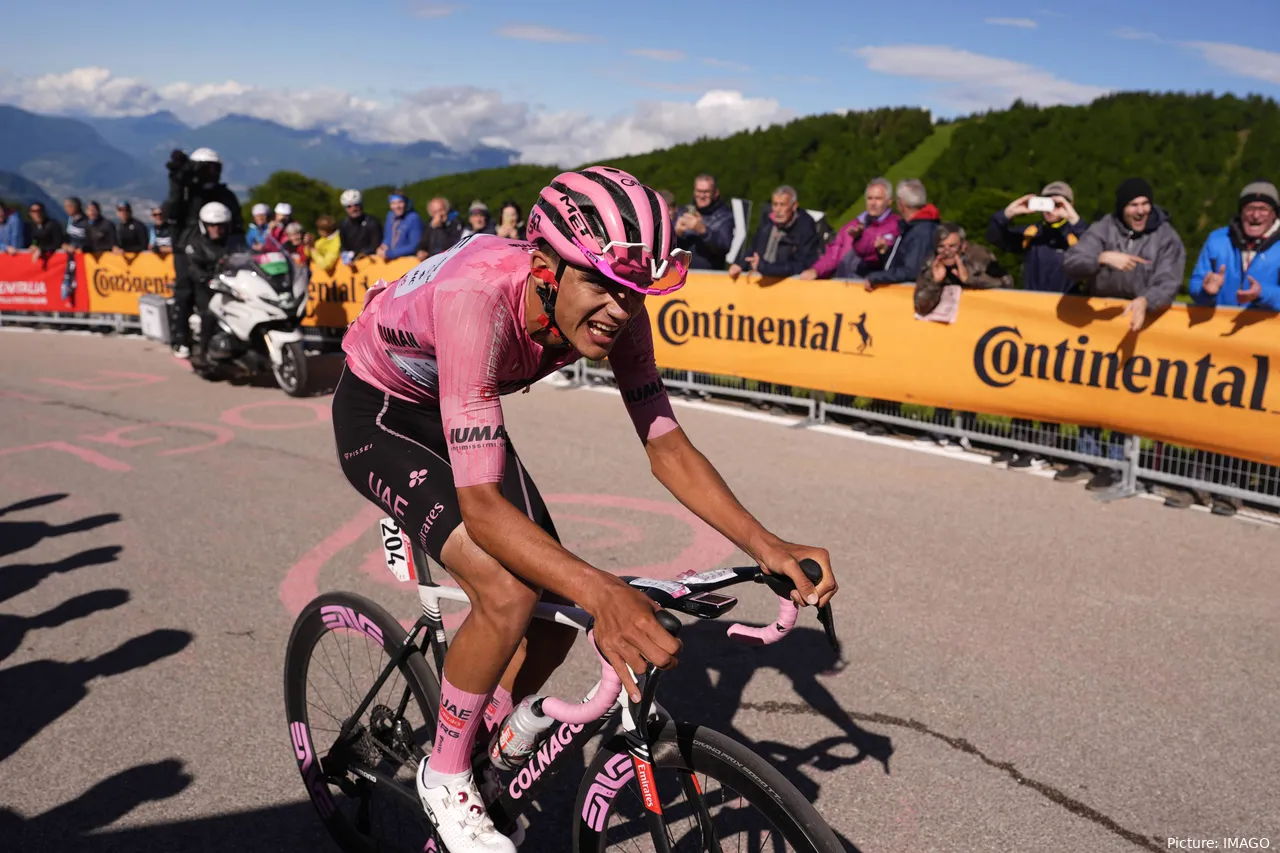
Isaac del Toro was the revelation of the Giro d'Italia
Tour de France
At the
Tour de France, the script returned to familiar territory, and the race
belonged to Tadej Pogacar. He won four stages, and in truth the race was over
before it really got going. Vingegaard did not look like he could challenge
Pogacar at any point, which is perhaps the first time we can say the Dane has
not caused him any trouble during the Tour. Pogacar wore yellow for 13 stages
and finished the race with his fourth career Tour title, along with the
mountains classification.
Support
riders like Adam Yates, Pavel Sivakov, and Tim Wellens kept the tempo as high
as needed, ensuring Pogacar remained shielded from chaos. Wellens also added a
breakaway stage win, pushing UAE’s total to five. The team’s only major setback
was the loss of João Almeida, who crashed hard on Stage 7 and eventually
abandoned Stage 9. Without him, UAE had a more fragile mountain train, but
Pogačar’s superiority eliminated any sense of vulnerability.
By
Paris, the victory margin was decisive. UAE had reasserted absolute command
over the sport’s most prestigious race, adding to their historic stage count
and reinforcing the idea that Pogacar stood alone at the top of modern cycling.
Without
Pogacar in Spain once again, the Vuelta a Espana tested UAE’s structure more
than its star power. João Almeida stepped into the leadership role with Ayuso
in support. Almeida’s defining moment came on Stage 13 atop the Alto de
l’Angliru, where he attacked and won, breaking Jonas Vingegaard’s rhythm. That
performance moved him into second on GC, a position he held through the
volatile final week. He finished the race +1:16 behind Vingegaard, and whilst
he was disappointed not to win, he finally showed that he is indeed one of the
world’s very best GC riders in his own right.
Ayuso was
arguably the main talking point of the Vuelta however. The team’s race was
overshadowed by a public bust-up between the rider and his team, after the team
unexpectedly announced his contract’s early termination mid-race.
Ayuso
said he had been given only 30 minutes notice before the press release and
accused the team of acting like a “dictatorship” and trying to “damage his
image.” He insisted there had been an agreement to defer the announcement until
after the Vuelta to avoid disrupting team morale or race dynamics.
The
timing sparked tensions internally: Ayuso was criticised for his lack of
support to co-leader João Almeida on key climbs, when Almeida struggled after a
rival’s attack. Despite that, Ayuso still claimed a stage win. But could he
have helped Almeida to win?
Overall,
the grand tours were a major success once again. In Italy they relied on youth,
in France they backed their champion, in Spain Almeida announced himself as the
GC man. But, a big question mark must be thrown over two things: Del Toro’s
throwing away of the Giro on stage 20, and the team’s lack of support for
Almeida at the Vuelta as they hunted stage wins. Whilst they achieved their
main goal of winning the Tour, some better tactics from the team could have
arguably seen them win all three grand tours.
Transfers
UAE’s
2026 transfer activity was remarkably restrained for a team coming off its
greatest season. They added Benoît Cosnefroy from AG2R to strengthen their
Classics lineup, promoted young Spaniard Adrià Pericas, and signed American
Kevin Vermaerke from Team Picnic PostNL. None of the additions were
headline-grabbing, but all will have an important role to play.
The
biggest departure was Juan Ayuso, who signed a long-term deal with Lidl–Trek.
Losing a 22-year-old Grand Tour podium finisher would hurt almost any other
team, but UAE still have Pogacar, Almeida, Yates, Del Toro, and a pipeline of
talent behind them. And in truth, for team morale, losing Ayuso could turn out
to be a good thing.
Final
Verdict: 9/10
UAE are
by the far strongest team in cycling, largely thanks to the supernatural talent
of Tadej Pogacar. But they are not quite a 10/10. Yes, they were extraordinary
by any standard, yet not entirely without questions. They reached their primary
objective by reclaiming the Tour de France and delivering a season that
produced a record-breaking 97 victories, the most of any team in history.
They led
the WorldTour standings by a huge margin, lit up the Spring Classics, and built
a roster that continued to rise rather than plateau. Across cobbles, gravel,
high mountains, and time trials, UAE dictated the shape of races and forced
every rival into a reactive posture.
But if
2025 was a near-complete season, the two Grand Tours without Tadej Pogacar did
leave room for scrutiny. At the Giro d’Italia, a stronger tactical plan for
Isaac del Toro on stage 20 might well have changed the outcome. At the Vuelta,
João Almeida carried the load admirably, but the team’s choice to chase stage
wins at key moments rather than build an uncompromising GC platform left him
slightly exposed. Had UAE tightened their focus around him earlier, the gap to
Jonas Vingegaard may have been narrower.
Even
with those caveats, the broader picture is unmistakable. UAE set the
competitive rhythm of the season, shaped the biggest races, and redefined what
dominance looks like in modern cycling. With Pogacar at full strength and
Almeida cementing himself as a Grand Tour contender, the team isn’t simply one
of the sport’s all-time most elite outfits, it is the benchmark against which
every other squad now measures its ambitions.
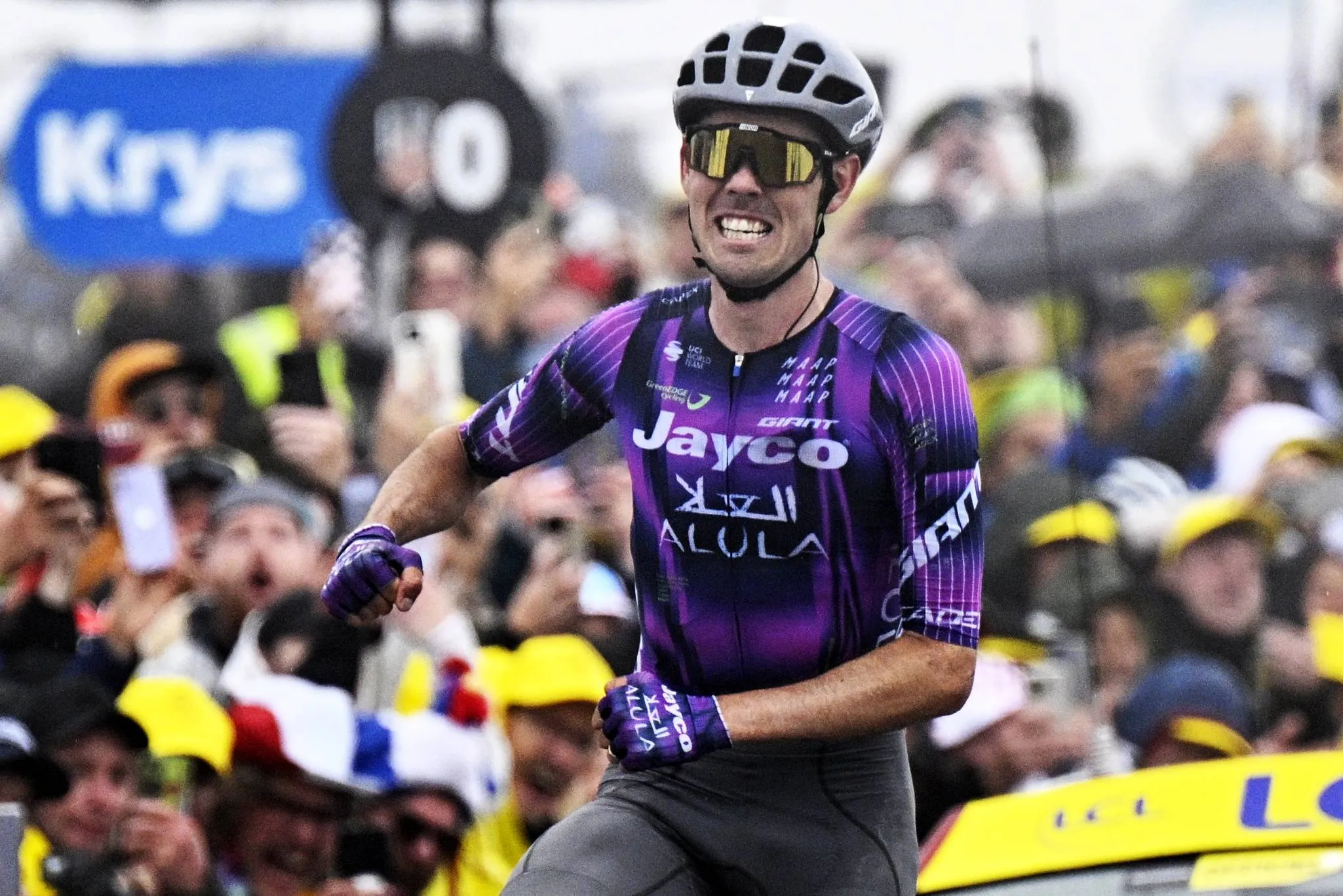
Discussion
Fin
Major (CyclingUpToDate)
From my
perspective, UAE Team Emirates - XRG’s 2025 season was incredible, even if it
wasn’t perfect. The biggest takeaway for me is how far ahead Tadej Pogacar now
looks compared with Jonas Vingegaard in July. After the Tour, it felt like the
gap had stretched, not narrowed, and it’s becoming difficult to imagine anyone
stopping Pogcčar from taking a fifth yellow jersey in 2026.
What
thrilled me most, though, were his spring battles with Mathieu van der Poel.
Their duels across Sanremo, the Ronde and Roubaix were, for me, the highlight
of the entire cycling year, two riders at their peak, pushing each other into
new territory. I cannot wait for March to come so the battle between the sport’s
two best riders can begin all over again.
But the
season wasn’t without frustrations. The Vuelta still nags at me, because it
felt like UAE lost sight of what mattered most. João Almeida had the legs to
stay much closer to Vingegaard, yet the team seemed intent on chasing scattered
stage wins rather than committing fully to his GC fight. Watching them burn
riders and energy on opportunistic attacks while Almeida needed support was
baffling. What on earth were they thinking not truly backing the Portuguese
rider?
Still,
despite those missteps, it’s clear UAE are the strongest team in world cycling,
and 2026 certainly looks set to continue that story.
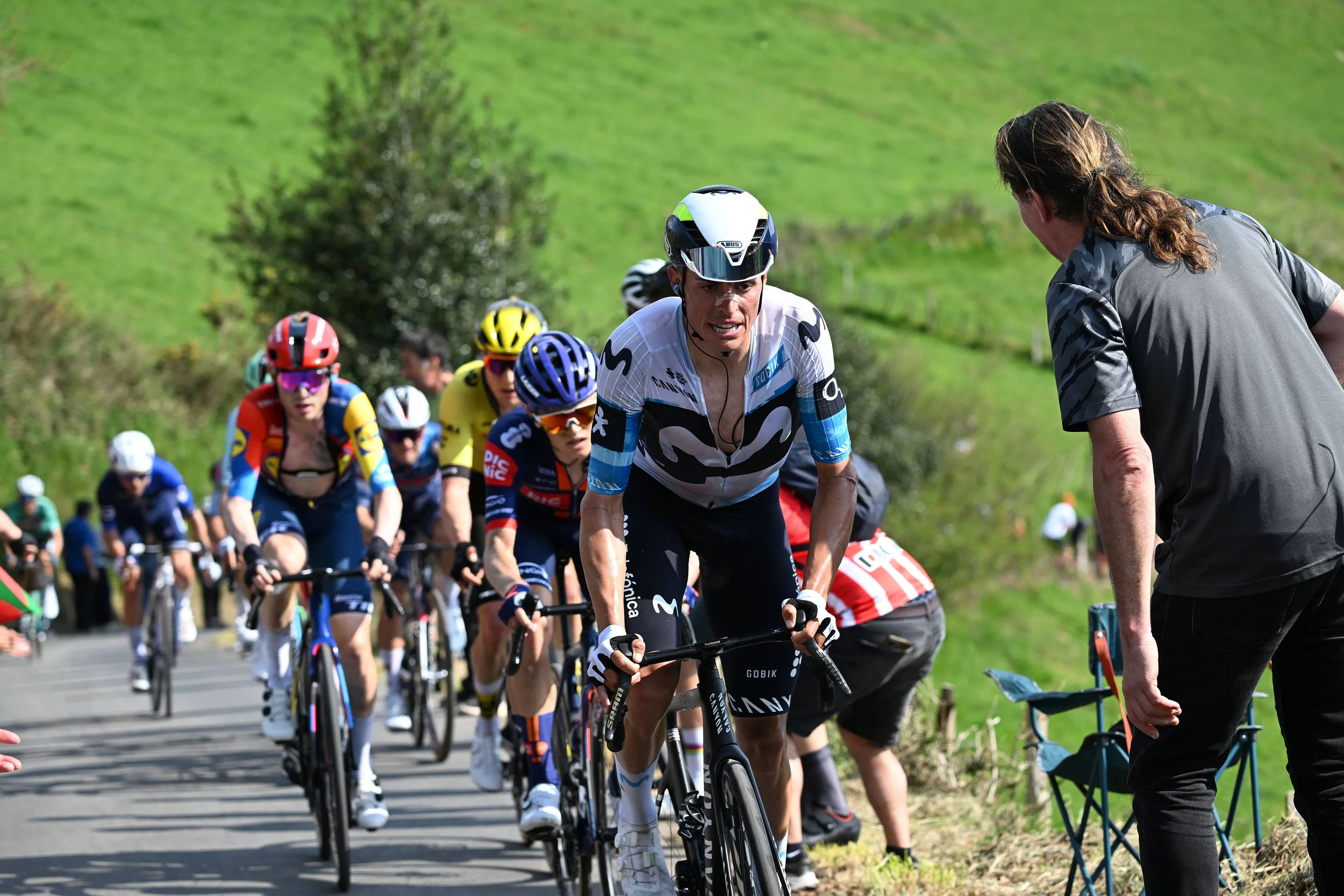
Rúben Silva (CyclingUpToDate)
I think we're going with a 10 out of 10, because who else could possibly take it? Tadej Pogacar keeps making history and the team also collectively made history with a beating of the previous stage win record. Quality and quantity all round. I think there could be a big discussion but actually the answer is rather simple, no other team can get to their level and even what they did this year might not ever be matched in the sport.
Pogacar won the Tour; three monuments (podium in the other two, another bit of history made); World and European Championships; Strade Bianche and Dauphiné which are the best non-monument or non-Grand Tour one and stage-races... Nothing to point, his season was simply perfect. Isaac del Toro had a breakthrough, won more than almost anyone this year and is frankly the rider who seems to be coming the closest to matching the level of his own leader. A one-two at next year's Tour is quite possible, I would say...
João Almeida won 3 out of the 7 main World Tour stage-races and still went on to finish second at the Vuelta a España and Algarve behind only Jonas Vingegaard... Juan Ayuso, despite his mishaps and abrupt departure from the team, has had a very strong season with the Tirreno-Adriatico added to his palmarès, as well as victories at the Vuelta, Catalunya and other races... Brandon McNulty won Montreal, Pologne, Luxembourg, Cro Race; which showcases very well how the team gives opportunities to all of its quality riders, even those who have domestique duties in the Grand Tours.
UAE have the money, it's easier when this is the case. But they manage a team of sharks very well, having a very high amount of race days and combining their elite team with under-23's to give opportunities to almost all of its riders to take wins throughout the year. That way when they have to work for their leaders, they do it willingly, as they don't have to fear not having UCI points or results to show for, and they have had their own chances. It just works well and is a crucial part of managing a modern team.
97 wins in a year is absurd and no-one's come even close, neither in quantity or quality. Riders like Tim Wellens, Jhonatan Narváez and Florian Vermeersch are racing at an extremely high level and would easily be leaders elsewhere in most classics, and the team continues to have an array of very young riders that could step up in the future to achieve even more.
Signings-wise the loss of Ayuso does mean losing quality, but the management won't be too bothered by it. There's no big name signing but that's because they kept all their other leaders, and I believe almost no-one in the team is unhappy with their position.
claps 0visitors 0
Just in
Popular news
Latest comments
- It was the original plan to have Jasper Philipsen sprint for the win, it won't be that way in Flanders, MvdP will work to reel POGAČAR in.alsene03-04-2026
- The Godfather of Saunier DuvalMistermaumau02-04-2026
- We hardly have cat. 5 races anymore, too complicated for organisers, more and more they mix up plenty of categories which makes things far more dangerous, we were 180 at the start for an 8 circuitMistermaumau02-04-2026
- I gathered that but for some I was the equivalent so just a bit of fun. I gather he’s still around, maybe he just took my advice?Mistermaumau02-04-2026
- He doesn't have to quit cycling for that? And maybe they don't want kids, not everyone doesvampa02-04-2026
- Primož Roglič will be the best domestíque. In order to facilitate Pogačar's long range solo win, he will attack early to get rid of all of Team Slovenia's domestíques. Due to being such a valiantly hard working domestíque, he will pay for his selfless efforts and crack, so Pogačar can't use him anymore. This will mean that Pogačar will have to launch very early. In the chasing group behind, Roglič will have recovered. He'll disrupt the cooperation in the chase by attacking, in the form of long, powerful turns on the front. And of course Pogačar wants a challenge, he does not want it ti be easy, so Roglič will pull fir the chasers to do so. Meanwhile, 20 year old Jakob Omrzel will be tge perfect domestíque
 Rafionain-Glas02-04-2026
 - Pogačar won two years, lost two years and won two years — will he lose this year?Rafionain-Glas02-04-2026
- Pogačar to crash in a very rainy Roubaix, taking him out of the following races. Disclaimer: nit limited to this yearRafionain-Glas02-04-2026
- Oh you fool who doesn't understand anything, IF Pogi wins Flanders AND Roubaix, then yes... he will probably win all 5 Monuments. LBL and Lombardy are his races to lose. It will be tough, especially Roubaix, but Pogi is the Greatest Of All Time... maybe he can pull it off. CAPISH? CAPISH? CAPISH?Mou-Cro-HR02-04-2026
- It would literally be awesome if Pogi pivoted to CX and maybe won both the CX and Gravel world championships - just for a larkmobk02-04-2026
Loading
2 Comments