2025 season review | Movistar: Mas' injury and Gavria's absence harm team, but young Spaniards take responsibility
Cycling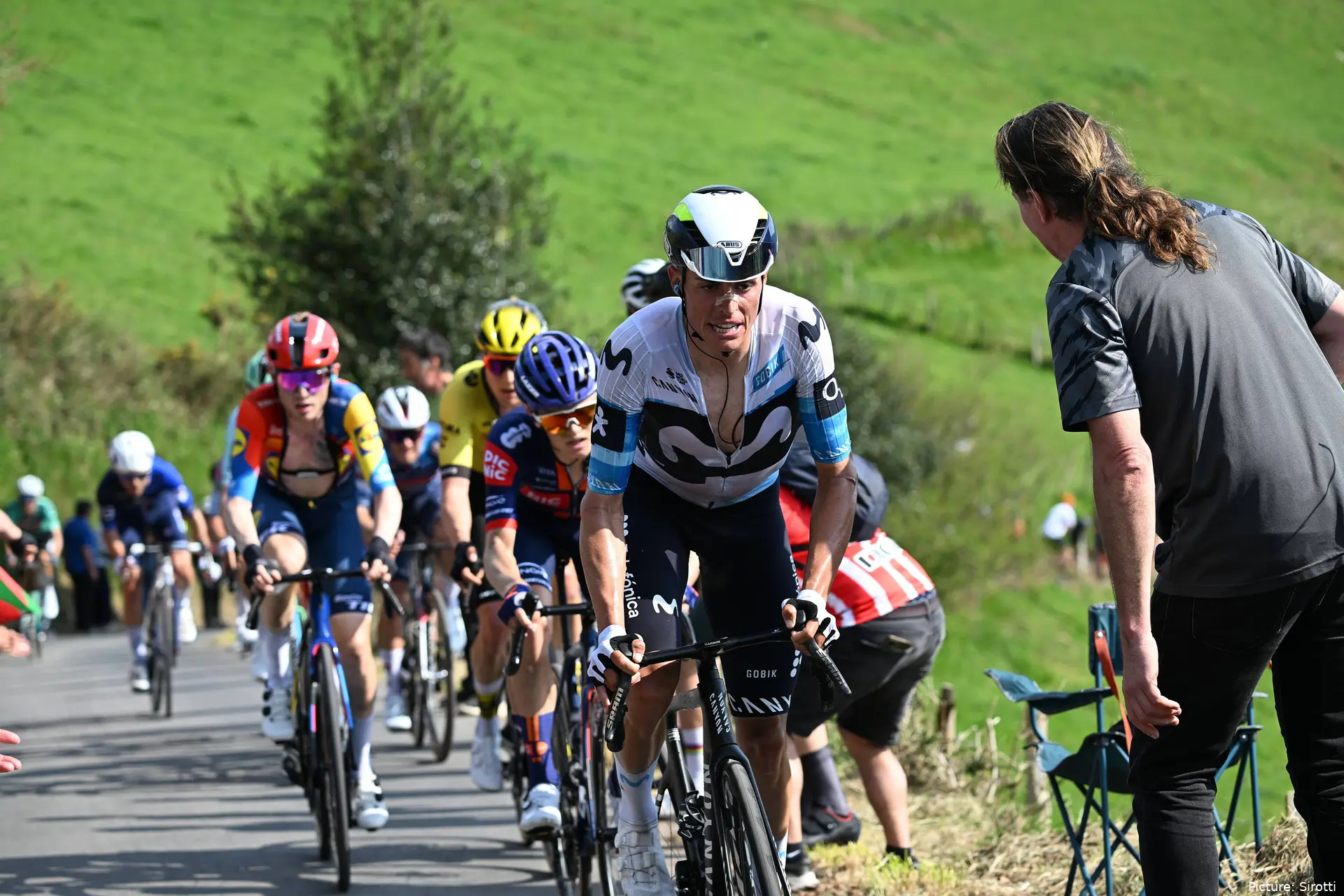
The 2025 road season has wrapped up, and for Movistar Team
it felt more like a damage-limitation exercise than a sucess. Spain’s
longest-running WorldTour squad mixed a few encouraging flashes with long
stretches of frustration and near-misses. They avoided outright disaster, but
rarely looked like the force they once were in Grand Tours and big one-day
races. This review walks through their year from the spring classics to the
three-week grand tours, then finishes with what their transfer moves might mean
for 2026.
Movistar’s roots stretch back to the Banesto days, with the
team historically built around Grand Tour contenders and strong Spanish
climbers. In 2025 the clear leader remained Enric Mas, a Grand Tour podium
specialist and four-time Vuelta a España podium finisher, who carried most of
Spain’s overall hopes. Around him, management tried to flesh out a more modern,
versatile squad.
Pelayo Sánchez added young climbing depth, Fernando Gaviria
offered veteran sprint experience, and Iván Romeo arrived as a hugely promising
all-rounder. Still just a young man, Romeo really did step forward, winning
stages in races like Valencia and the Critérium du Dauphiné and hinting at
future GC potential. On paper, it looked like a classic Movistar blend of
established leaders and ambitious youngsters, but making that mix work
consistently on the road proved much harder.
Strip everything back to the numbers and the story is pretty
straightforward. Movistar Team took 9 victories in 2025, with a good chunk of
those coming from national championships rather than big international wins. In
the UCI WorldTour team rankings they slid to 15th, two spots worse than 2024.
More tellingly, a couple of ProTeams outscored them over the
full season, Israel–Premier Tech, for example, finished ahead of them on points,
while Movistar hovered just above lower-ranked WorldTour squads such as Team
Jayco AlUla. For a team used to living closer to the sharp end of the table,
that mid-to-low pack position underlined how much 2025 fell short of their old
benchmarks.
Spring review
Movistar has rarely been a pure classics juggernaut, and
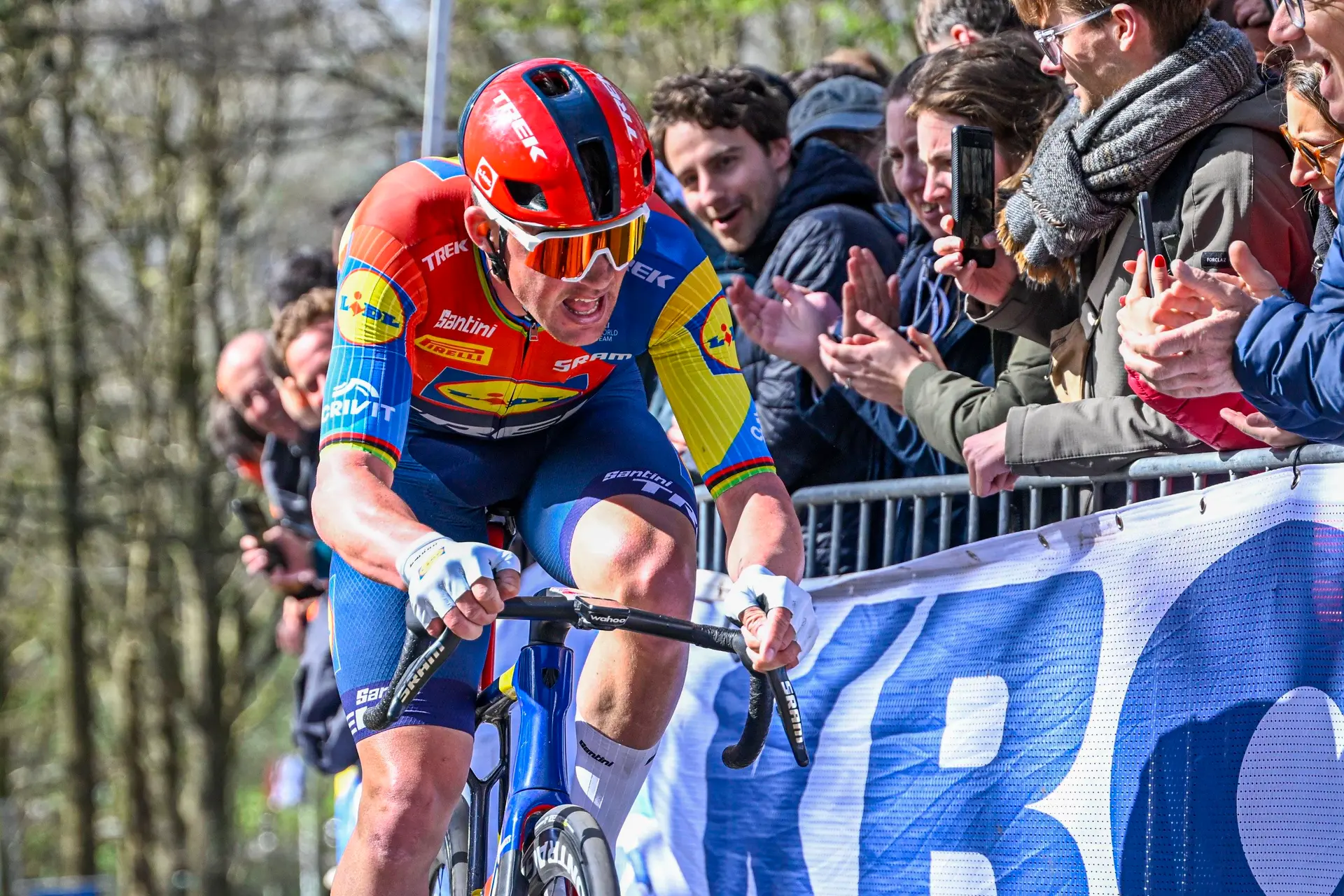
this year didn’t change that reputation. On the cobbles, Iván García Cortina
once again had to shoulder most of the responsibility. He rode very well to
finish 9th at the Tour of Flanders, a hard-earned top-10 in one of cycling’s
toughest Monuments, and one of the better individual rides of Movistar’s
spring. Beyond that, the team struggled to influence the biggest races.
At Milano-Sanremo they never really featured in the finale,
and Paris–Roubaix was even more anonymous, with no Movistar jersey visible when
the race split apart over the cobbles and nothing to shout about by the time
the bunch reached the velodrome.
If the cobbles were harsh, the Ardennes and other hilly
races didn’t offer much comfort either. The team normally expects to see more
from its climbers and puncheurs on those punchy courses, but 2025 was, as one
summary put it, “slim pickings” in the hills as well. Amstel Gold, La Flèche
Wallonne and Liège – Bastogne – Liège all passed without a serious Movistar
presence in the key moves. Enric Mas never really got going there either, and
later in the year his season was cut short by a vascular illness, leaving a big
hole in the team.
Instead, the bright spots came from slightly smaller or less
expected races. Barrenetxea took a very respectable 3rd at Eschborn–Frankfurt,
one of the few WorldTour one-day podiums Movistar managed in 2025. Earlier in
the year Javier Romo started strongly with 4th at the Cadel Evans Great Ocean
Road Race, hinting at good early-season form.
The pattern, though, was clear: tactical plans often came
down to getting one rider into a break and hoping they could hang on, because
the depth just wasn’t there. On the cobbles, Cortina regularly found himself
trying to freelance in groups stacked with stronger classics squads. In the
Ardennes, they lacked a punchy finisher to follow the very best on the decisive
climbs. New signings brought in to help didn’t move the needle much either, and
this was undoubtedly a quiet spring for Movistar Team.

Grand Tours
For Movistar, Grand Tours are normally the heart of the
project. In 2025 they were more a source of frustration than glory. Across the
Giro d’Italia, Tour de France and Vuelta a España, the team did not win a
single stagee, which is certainly an unusually barren return for a squad with
such a deep three-week history.
With Mas pointing at the Tour, Giro leadership fell to Einer
Rubio, and he quietly did a solid job. He rode himself into 8th overall in
Rome, a proper top-10 in a Grand Tour and very much a step in the right
direction for him. Yet even sympathetic analysts ended up calling his ride
“pretty impressive but anonymous,” consistent and worthy of respect, but never
really lighting up individual stages or threatening the podium.
The Tour was supposed to be Movistar’s main event. Mas had
looked reassuringly on track, with podiums at Volta a Catalunya and Itzulia and
a solid 7th at the Dauphiné suggesting he was ready to aim high in July again.
Instead, almost everything that could go wrong did.

Enric Mas briefly shone on Mont Ventoux before being caught. @Sirotti
A crash early in the race, combined with the discovery of a
thrombophlebitis in his left leg, left Mas a shadow of himself. He fought on
well into the second week, visibly below his normal level, before finally
climbing off in the Alps. Mas did spend some time alone at the front on the
Mont Ventoux stage, but could not manage to hold on for victory and abandoned
on stage 18. Losing their GC leader in that fashion ripped the heart out of
Movistar’s Tour plans.
From there, the team scrambled to chase stages, but the
breakthrough never came. Romo and young Iván Romeo both got themselves into
promising breaks in the mountains, only to fade in the final climbs or be
outgunned in the last kilometres. The Tour de France ended with no stage wins,
no top-10 on GC and a lot of “what if Mas had been healthy?” conversations.
The Vuelta has often been where Movistar salvages a season,
notably with Enric Mas. In 2025, without Mas and without any clear replacement
for his GC role, it offered no such rescue.
Again, Orluis Aular was the most reliable source of hope. He
racked up multiple top-5s and top-10s, including a painful second place on
Stage 15 behind Mads Pedersen. On the climbing days, youngsters like Pablo
Castrillo and Romo gave it a go from breakaways, especially in the mountain
stages, but every time someone else proved stronger or better-timed. Without
Mas anchoring the GC, their best overall rider finished outside the top 10,
well short of the podium standards the team has become accustomed to at their
home race. Judged as a whole, the Grand Tour campaign was miles away from
Movistar’s peak years.
Transfers
Given all that, it’s no surprise Movistar is shaking things
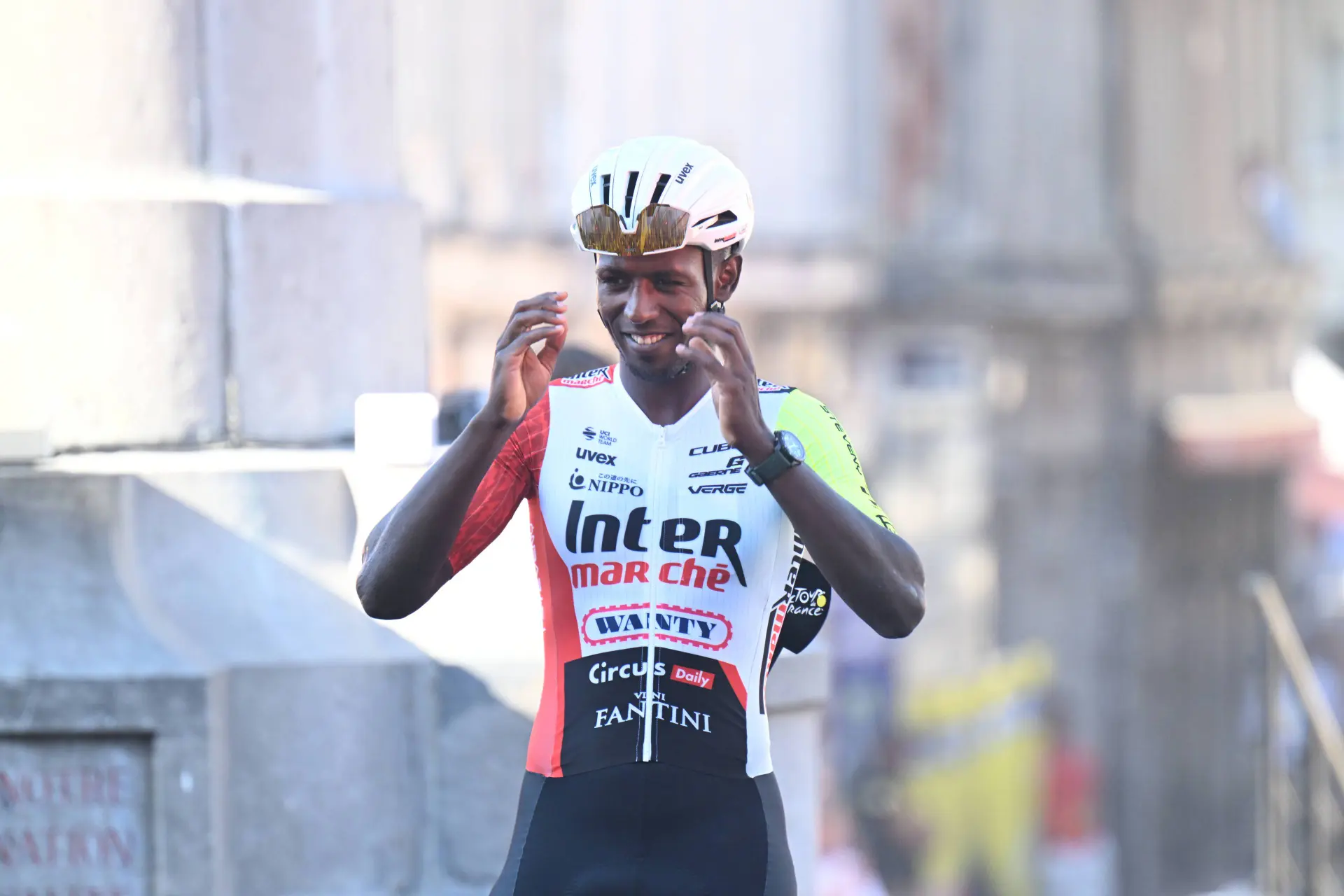
up. The headline move is the arrival of Cian Uijtdebroeks, the 22-year-old
Belgian climbing prodigy. He’s widely regarded as one of the top Grand Tour
prospects of his generation, and bringing him in from Visma is a statement of
intent. For the first time in a while, Movistar will go into Grand Tours with
two genuine GC leaders on paper: Mas and Uijtdebroeks.
They’ve also added Roger Adrià, a punchy climber who can
shine in week-long races and hilly classics, Juanpe López as another strong
mountain domestique with upside, and Raúl García Pierna joins the ranks too.

Can Cian Uijtdebroeks bring back the spark to Movistar's Grand Tour block?@Sirotti
To make room, there has been a sizeable clear-out. Riders
such as Gregor Mühlberger, Will Barta, Mathias Norsgaard and several veterans
including Fernando Gaviria and Davide Cimolai are moving on. The risk is that
Movistar loses a layer of road wisdom and depth, the hope is that the new,
hungrier names will more than compensate.
But, if Uijtdebroeks can live up to his potential, he could
be one of the best singings the team has ever secured.
Read also
Final verdict: 4/10
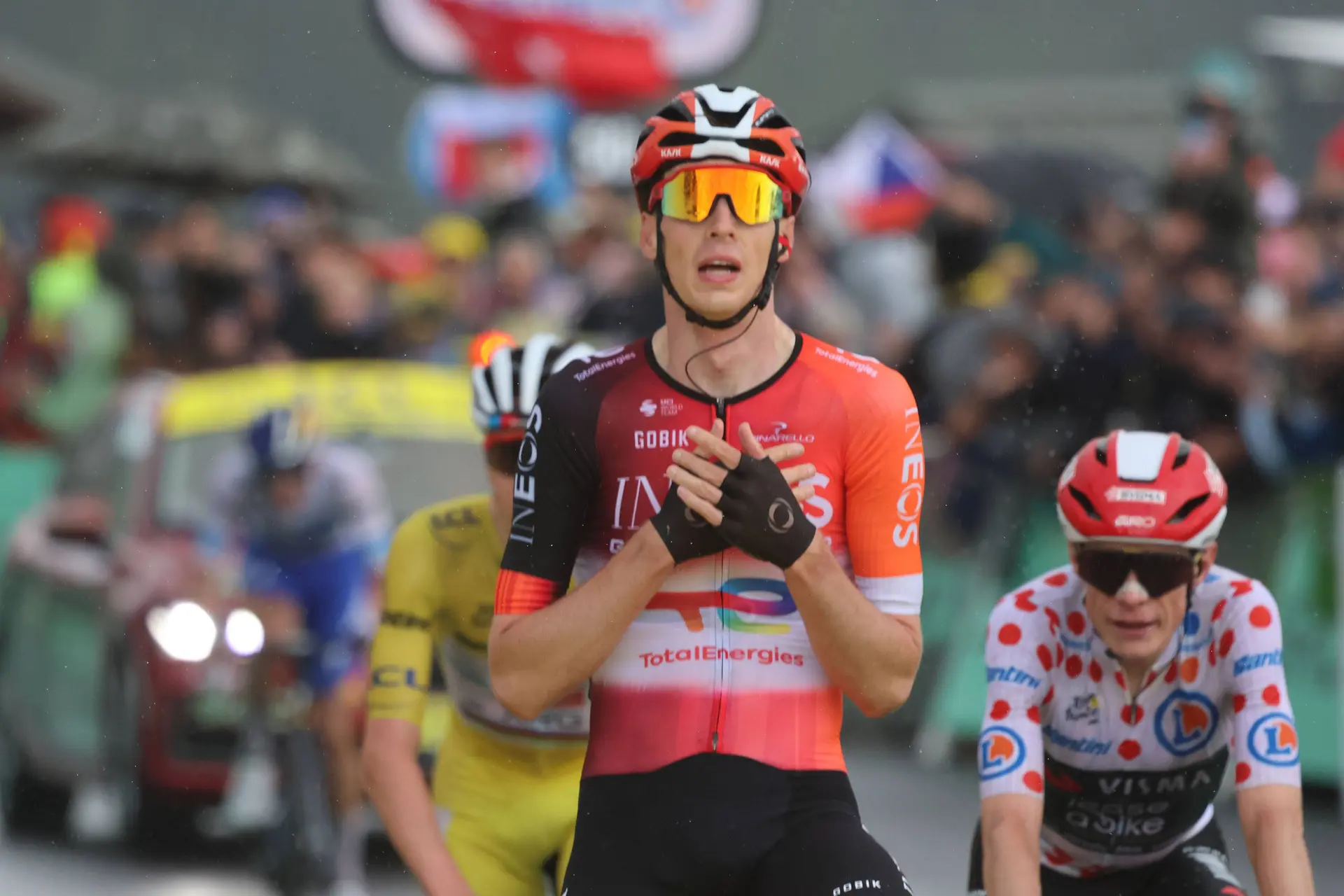
Put everything together and 2025 was clearly below
Movistar’s own standards. Yes, they had bright moments, but in the biggest
races they rarely dictated anything. No Grand Tour stage wins, no GC podiums,
no major classics trophies: it all adds up.
It was a hard season, but not a lost one. With Uijtdebroeks
and other reinforcements incoming, Movistar has given itself a chance to reset.
Now they have to turn that potential into results, or 2025’s struggles might
start to look less like a blip and more like a trend.
Discussion
Fin Major (CyclingUpToDate)
Looking back at Movistar’s 2025 season, I can’t pretend it was anything but underwhelming. For a team with their history, going winless in all three Grand Tours and barely influencing the big races felt flat. Even the bright moments couldn’t hide how often they came up short. But the one thing that genuinely gives me hope is the signing of Cian Uijtdebroeks. That’s a real swing ,a rider who could change the entire trajectory of the team. If he develops as expected, and can avoid the strange injuries he has suffered in the last 18 months, Movistar might finally have the spark they’ve been missing.
Rúben Silva (CyclingUpToDate)
Just not a whole lot to mention of Movistar is there. Enric Mas did start off his season strong, podiums in Catalunya and Itzulia are not to ignore but his second half of the year was a disaster due to health reasons. He was not racing the Tour at his real level and then an injury ended his season, he did not race the Vuelta and Italian classics where he usually performs best, leaving the team without its headliner for a meaningful part of the year. In his absence, a few riders stepped up, but for a World Tour tam, it was just enough to get by.
Movistar's story resembles a few others in the World Tour, such as INEOS but at a lower level. Budget and quality sort of remains the same, but many teams have taken a step up. Javier Romo and Ivãn Romeo have both performed very well this year and have put in some very strong rides, but there's only so much they could do to save the team's season. Einer Rubio actually showed a very good level at the Giro and Tour, but the same applies. Pablo Castrillo teamed up with Romeo almost all year long and honestly it's a group of Spanish riders that have really taken responsibility for the team's top performances, which does provide some good hope.
Orluis Aular also rode quite well this year, but again, not enough to put the team near the top. Fernando Gaviria was completely absent from the action, only hitting the front about 200 meters before the moment he should in just about any sprint he contested; Jefferson Alveiro Cepeda didn't follow up on his brilliant 2024 after coming from Caja Rural; Ruben Guerreiro and Pelayo Sanchez; Nairo Quintana didn't deliver on the hopes and the team's reputation isn't the very best taking into consideration he and Michel Hessmann were both signed after their anti-doping suspensions.
The team can look well into the future however, with Gaviria's departure certainly freeing up budget that is well used: The team's signing of Cian Uijtdebroeks was a power move, and the potential is high. Roger Adrià has the potential to be a new leader in the team, Raul García Pierna was signed after showing his best ever legs at the Vuela, Pavel Novak is a proper quality under-23 rider and Juan Pedro López can both deliver on the popularity and exposure side but if he has a good year, performance is also possible.

Fin MajorCycling Journalist
Fin Major is a UK-based writer at CyclingUpToDate and has been part of the team since 2024. He is the site’s main writer for FAQs and evergreen explainers and has written around 2,000 pieces for the platform. Alongside this work, he focuses on in-depth analysis and covers the biggest races on the calendar, including the Tour de France, the Giro d’Italia, and La Vuelta a España, providing clear context around performance trends, tactics, and key storylines.
In his reporting, Fin uses reputable data sources such as ProCyclingStats for results, statistics, and historical context. He places strong emphasis on careful sourcing, editorial accuracy, and updating articles promptly when new, verified information becomes available. Outside of writing, Fin is an active cyclist, which supports his practical understanding of the sport and its demands.
claps 0visitors 0
Just in

Popular news
Latest comments
- He didn't even try to sprint all outvappaxbipmv18-10-2026
- Campenaerts looked like a rolling pumpkin with that all orange leaders skinsuit !frieders318-10-2026
- He can take his dumb a$$ politics somehwere else !frieders318-10-2026
- good to have her back. fingers crossed she‘ll be able to stay!Ketterechts17-10-2026
- A tenner and he wins the Tour next year, too 😂anonymouscyclist17-10-2026
- the answer is either stick to classics or GTs but not bothabstractengineer17-10-2026
- the exodus already stared with Ciccone. Already they were struggling with two sprinters, now there are three. Also Ganna will demand leadership. Gall is the most proven GC, Ayuso has the most potential. GC leadership for everybody will be impossible. Literally a UAE style mess without pogi.abstractengineer17-10-2026
- I raced as an amateur for 12 years, including six years on my country’s national road cycling team. I secured two national titles and competed in three World Championships plus more than 15 international stage races. At 23, we travelled to Italy for a training camp—or so I assumed. On a rest day, we watched a presentation about adopting a more “professional” training approach. It was crystal clear what “professional” meant. That moment first exposed me to this dilemma. After returning from Italy, I left cycling—at least at the competitive level I had known. Over the following two years, the whole team was caught doping. I hold that everyone is innocent until proven guilty. In my view, current stakeholders operate on a different scale, and the sums involved are vast. I am unsure whether any doping would ever be revealed. I try to stay positive and enjoy the show. My 2c.
 vannpelt17-10-2026
 - Fiver he wins 🤣
 leedorney17-10-2026
 - “…measures to reduce speeds.” Might as well shorten the race course to just 50km as well? ASO generates at minimum €300m a year and 30- 40% profit. Maybe stop being greedy and spend more of the profit to protect the riders instead.b3tlla17-10-2026
Loading
Write a comment