2025 season review | Team Jayco AlUla: Did the Australian team fulfill its expectations with O'Connor, Matthews and more?
Cycling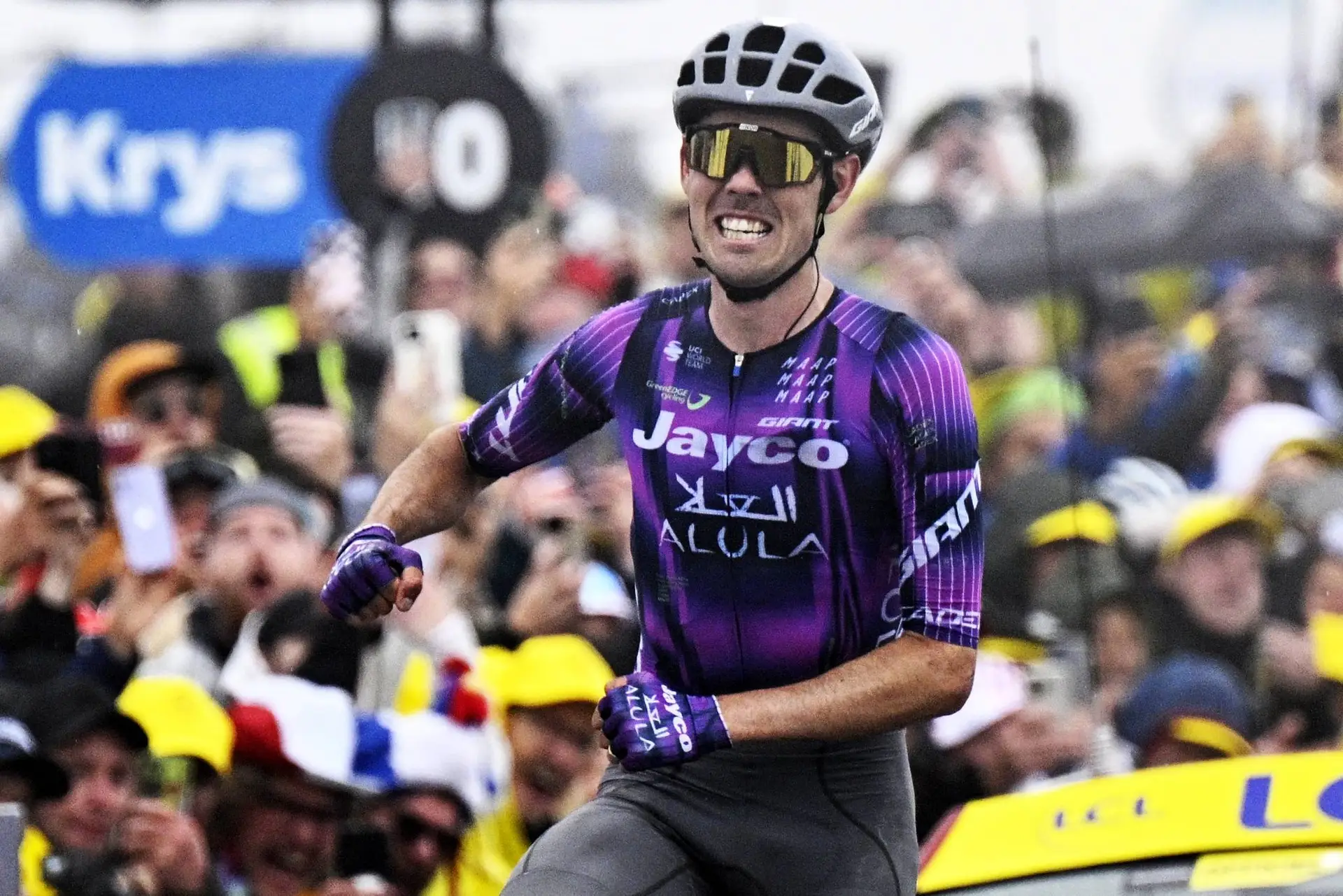
In today’s 2025 cycling season review, we will analyse the
campaign of Team Jayco AlUla. The 2025 season was a rollercoaster for Team
Jayco AlUla, Australia’s flagship WorldTour squad. They mixed a handful of big
wins with long stretches where they struggled to influence races. This review
looks at how they performed from the spring classics through the Grand Tours,
and how that measured against expectations. With Simon Yates departed to Team
Visma | Lease a Bike, the focus shifted to a new leadership group and the
question of whether they could keep the team at the top level.
Jayco AlUla, still carrying the GreenEDGE identity, has long
been the showpiece of Australian road cycling. Simon Yates supplied their
greatest GC results, including the 2018 Vuelta a España and fourth at the 2023
Tour de France, but left before 2025 for Visma. The team reshuffled around
veteran puncheur Michael Matthews, Dutch sprinter Dylan Groenewegen, rising
all-rounder Luke Plapp, Irish climber Eddie Dunbar and new GC spearhead Ben
O’Connor.
On paper, that goal was not met. Jayco AlUla slipped to 16th
in the UCI WorldTour rankings, down from 14th in 2024. For a roster
strengthened around O’Connor and supported by established names, general
manager Brent Copeland admitted they “should be at least in the top 10... not
back in 16th place”. The team still banked three Grand Tour stage wins and a
few one-day victories, but the collective return was below the level they had
aimed for.
Spring Review
The classics campaign captured the pattern of the whole
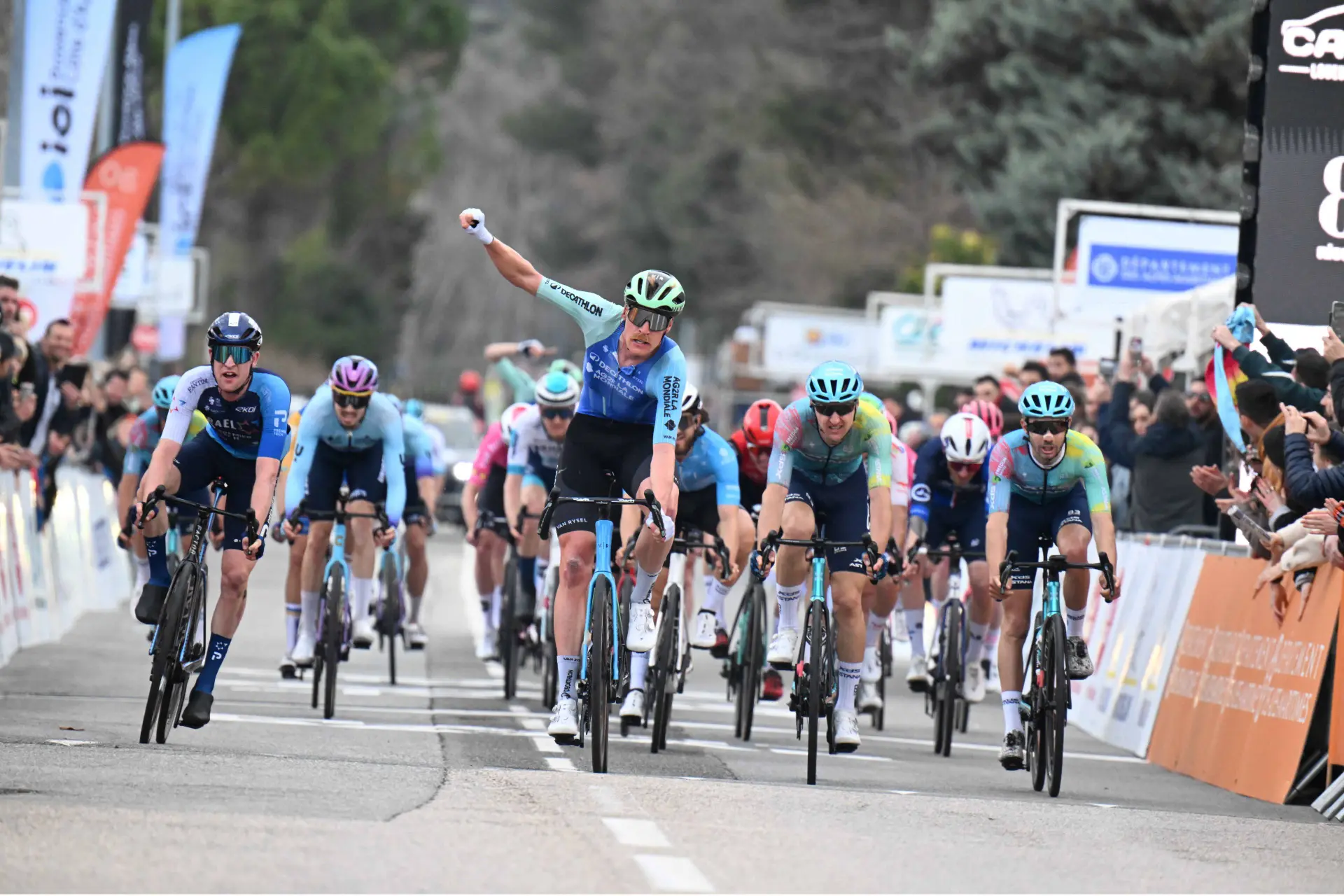
season: a couple of high points, but no knockout blows. At home, things started
well with Mauro Schmid’s victory at the Cadel Evans Great Ocean Road Race,
where he jumped clear late in Geelong and held off the favourites for an early
WorldTour win.
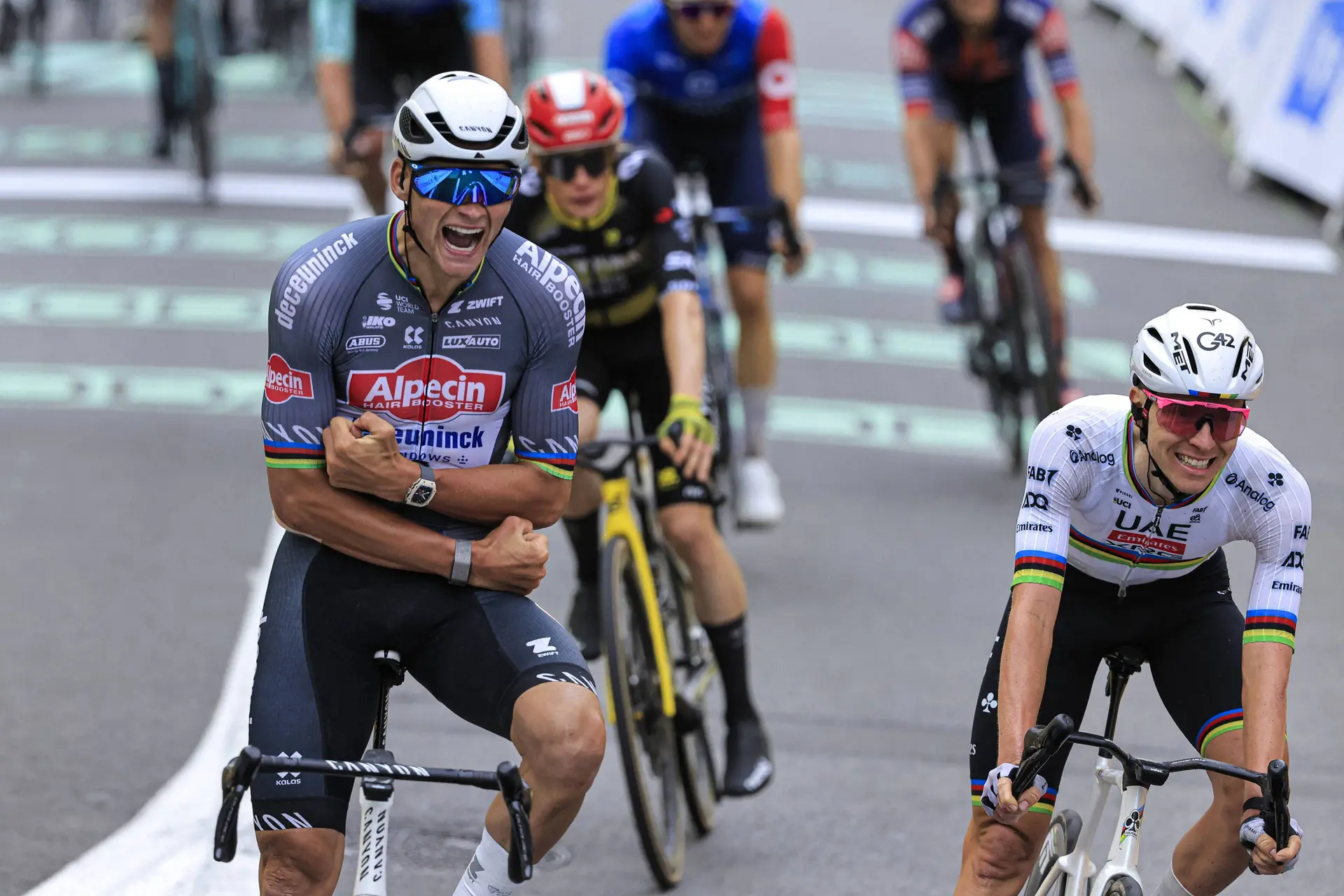
Milano - Sanremo brought them closest to Monument success.
Michael Matthews rode superbly, staying with the front group over the Poggio
and then winning the sprint for fourth from the chasers. Once again, though, he
watched a rival, this time Mathieu van der Poel, finish the job ahead. On the
cobblestones of Flanders and Roubaix, the limits of the roster were clear.
Without a pure cobbled leader, Jayco AlUla struggled to shape the racing and
were largely absent from the main action.
The Ardennes one-days offered more promise. Schmid proved
himself on steep, punchy terrain by taking tenth at La Flèche Wallonne and
fifteenth at Amstel Gold Race. Those rides did not place him in the fight for
victory, but showed that Jayco had a reliable option for hilly classics.
The best European one-day moment came on May 1st, when
Matthews sprinted to victory at Eschborn–Frankfurt. In summary, the spring
brought two good WorldTour wins and regular presence, but no Monument podiums
and a clear gap to the strongest classics teams.

Grand Tour Season
Team Jayco AlUla lined up at the Giro without a clear GC
favourite and targeted stage wins with Chris Harper and Luke Plapp. Their
approach paid off quickly. On Stage 8, Plapp attacked out of the breakaway on
the hilly road to Castelraimondo and held on to claim his first Grand Tour
stage victory, an important breakthrough for both rider and team.
Harper initially hoped for a top ten overall, but illness in
the second week ended that plan. He reset his goals and went all in for the
queen stage. On Stage 20, over the Colle delle Finestre and up to Sestrière, he
joined the early move and launched a long-range attack on the gravel climb. He
reached the finish alone after what was widely described as “the ride of his
life”. Harper finished only 23rd on GC, yet his win, combined with Plapp’s
earlier success and several minor placings from Zana, allowed Jayco AlUla to
leave Italy with two stages and enough to call it a “successful Giro”.
The Tour demanded a different plan. Ben O’Connor arrived as
clear leader, aiming for a strong overall and a headline mountain stage win,
while Groenewegen fronted the sprint train and Eddie Dunbar added depth for the
climbs. Given O’Connor was second at the Vuelta the year before, hopes were
pretty high for a strong result.

Ben O'Connor took the team's highlight victory on the Col de la Loze at the Tour de France. @Imago
The first week was difficult. Groenewegen struggled with
positioning and crashes, never managing to contest the final metres as he
wanted. After one messy finish into Valence he admitted “it just isn’t
happening… it couldn’t be any worse”, summarising his Tour in a single
sentence. Soon after, Dunbar crashed out on Stage 7 while in decent form,
ending his chance to rescue his season and weakening O’Connor’s support.
O’Connor gradually turned the race in his favour. On the
Alpine queen stage to the brutal Col de la Loze and Courchevel he took
advantage of hesitation among the main contenders, joining a strong break. On
the final climb he paced his effort better than his companions, dropped them
and rode alone to the finish at altitude. The victory instantly became one of
Jayco AlUla’s season highlights.
In the overall standings he hovered around the lower half of
the top ten before slipping to eleventh by Paris, having spent energy chasing
that stage. Still, a prestigious mountain win and a near–top ten on GC made for
a respectable Tour. The sprint project, by contrast, failed altogether.
Groenewegen left without a victory and later described his race as “not a
single top-ten”, acknowledging that his chances against the year’s dominant
sprinters were slim.
The Vuelta was the quietest of the three Grand Tours. On
paper, Dunbar’s double win in the 2024 edition made him an obvious leader, but
his troubled season continued. In reality, he never threatened the GC battle
and slid down the standings. He later called 2025 “a frustrating season”, and
his Vuelta summed that up. The team left Spain without a win.
Transfers
The uneven season has prompted a sizeable overhaul.
Groenewegen departs after three years to join the new Unibet Tietema Rockets
project, taking his sprint pedigree elsewhere. Dunbar moves to Q36.5 Pro
Cycling, seeking a reset. Chris Harper also heads to Q36.5, stripping away much
of Jayco’s climbing backbone.
New arrivals are geared toward reinforcing sprint and
classics depth while adding long-term GC projects. German sprinter Pascal
Ackermann joins on a two-year deal as main fast man, bringing Grand Tour stage
wins and a strong record in bunch finishes. Dries De Bondt and Andrea Vendrame
arrive to bolster the one-day squad and lead-out, and Alessandro Covi comes
from UAE Team Emirates as an important signing for hillier races and is
expected to help Matthews in events like Milano-Sanremo and Amstel.
Final Verdict: 6/10
Seen as a whole, Team Jayco AlUla’s 2025 campaign deserves a
6/10. They produced memorable days, Plapp and Harper winning in the Giro,
O’Connor conquering Col de la Loze, Matthews taking Eschborn–Frankfurt, but
those peaks were separated by long spells of underperformance.
The slide to 16th in the WorldTour rankings and the reduced
points total underline how often they came up short in everyday races. When
leaders like Groenewegen and Dunbar crashed, misfired or lacked form, there
were not always others ready to step in as regular winners. The team often
raced from the position of outsiders, relying on breakaways rather than
control.
There is enough quality around O’Connor, Matthews and the
new recruits to suggest improvement, but 2025 will be remembered more for
isolated successes than for sustained excellence.

Discussion
Fin Major (CyclingUpToDate)
I can’t shake the feeling that it should have been better in
2025 for Team Jayco AlUla. The highs were genuinely brilliant, and Ben O’Connor
winning on Col de la Loze reminded me why I have a soft spot for this team. But
the consistency just wasn’t there. Too many leaders misfired, the sprints went
nowhere, and slipping in the rankings said it all. Still, when this team gets
it right, they deliver real fireworks. I just wanted more of them.
Rúben Silva (CyclingUpToDate)
Not much to say on Jayco, a team that has not been able to keep up with the big moves of the massive-budget outfits at the top of the World Tour. Not their fault or responsibility, but there's only so much that could be done. I'm hesitant in criticizing the team because I'm aware that there is only half the money as in a team such as UAE or INEOS (although the latter doesn't look like it), but it's a year without much to show for.
In Australia they always ride well, and of course, they had victories to show for and start their year off in the right foot. Michael Matthews had a decent year, continuing to be consistent, but of course a victory in Frankfurt isn't enough to make it a great year, even if he remains very motivated and strong. Luke Plapp and Chris Harper both won at the Giro, saving the team's race, but the headlines were never on them. Dylan Groenewegen's sprinting mission didn't work out even with a great leadout, and so his departure from the team isn't a big surprise.
Ben O'Connor had a brilliant day at the Tour de France, winning the queen stage to Col de la Loze with a classic performance. It did save his Tour, but not his season. After a tremendous 2024 in which he battled against the very best in the world, he was always trying to find his level in 2025 without success.
Paul Double's GC wins at Slovakia and Guangxi were a positive surprise and evidence of a good signing that other teams missed out on, sure they are not top level wins but winning a World Tour stage-race is not for many and the Briton really did improve his level in the way expected after the move to the World Tour. An average year, but it's not expected that much will improve next year yet as the team lost a few quality riders and the transfers are a bit all over the place.

Fin MajorCycling Journalist
Fin Major is a UK-based writer at CyclingUpToDate and has been part of the team since 2024. He is the site’s main writer for FAQs and evergreen explainers and has written around 2,000 pieces for the platform. Alongside this work, he focuses on in-depth analysis and covers the biggest races on the calendar, including the Tour de France, the Giro d’Italia, and La Vuelta a España, providing clear context around performance trends, tactics, and key storylines.
In his reporting, Fin uses reputable data sources such as ProCyclingStats for results, statistics, and historical context. He places strong emphasis on careful sourcing, editorial accuracy, and updating articles promptly when new, verified information becomes available. Outside of writing, Fin is an active cyclist, which supports his practical understanding of the sport and its demands.
claps 0visitors 0
Just in


Popular news
Latest comments
- He should have been allowed to go to Movistar. Right now both arent a good fit for each other and are just wasting each other's time and effortabstractengineer08-11-2026
- Thibau Nys does exactly what Iserbyt is calling for
 Rafionain-Glas08-11-2026
- i did not see it. was the relegation justified or an overly hard decision? and don‘t cross riders deviate from straight lines all the time? bumping into each others when they cut corners, etc … why being more strict with the rules on the finish sprint?Ketterechts08-11-2026
- seems like we are advertising the website with pointless comments…Ketterechts08-11-2026
- So?Jumpyjohn08-11-2026
- The UCI do have their favorites.
 Front24208-11-2026
- On a positive note, you maybe notice turning this topic into a discussion has the benefit of eliminating certain participants who do not see how they can turn it back to their sole interest ;-)Jumpyjohn08-11-2026
- People see what they want to. I am actually the opposite of your accusation, probably more of a rebel than most of you who don’t get the big picture. The difference is, I don’t go moaning publicly about the consequences of my transgressions, I understand the need for rules and I take my OWN responsibility when deciding to ignore or break them or doing so involuntarily. I will also not hesitate to state my case or argue vehemently when relevant, sometimes it works, sometimes it makes things worse but that’s the price to pay for principles and having character.Jumpyjohn08-11-2026
- That may be but that was unknown to others and nothing says that’s the whole truth. Again, don’t try to misinterpret, it is a call and technically it is correct. Besides, even if there is a valid reason, that does not disqualify the ruling or punishment as far as the rules have been developed. I don’t think they’re as far as in football where for handball there is a distinction (in some ways and specific cases) between intentional or not. And football can be just as harsh and people live with it, eg the offside rule, also judged to within tiny fractions but often wrong or ignored. It’s the nature of every collective organisation and sometimes I wonder if our rebellion against it isn’t seated in the feelings we carry from the injustices we’ve felt personally, like being flashed driving 1km/h too fast when we are explained limits are just a security measure but we are absolutely certain not to have endangered anyone with our transgression. The problem is, nobody has better solutions and no 2 people have the same interpretation of where a limit should be.Jumpyjohn08-11-2026
- Because for you deviated implies the other rider MUST have been made to fall and fail to finish ??? I don’t know if you ride a bike but next time someone carves you up or drives dangerously close, just hold back from those feelings of changing something, reporting or filming or even complaining. Everyone will just say, hey you’re still here undamaged, doesn’t seem like anyone did anything.Jumpyjohn08-11-2026
Loading
Write a comment