2025 season review | Lidl-Trek: Mads Pedersen's eye-watering year; Milan's Tour de France green; and a brilliant year for the American team
Cycling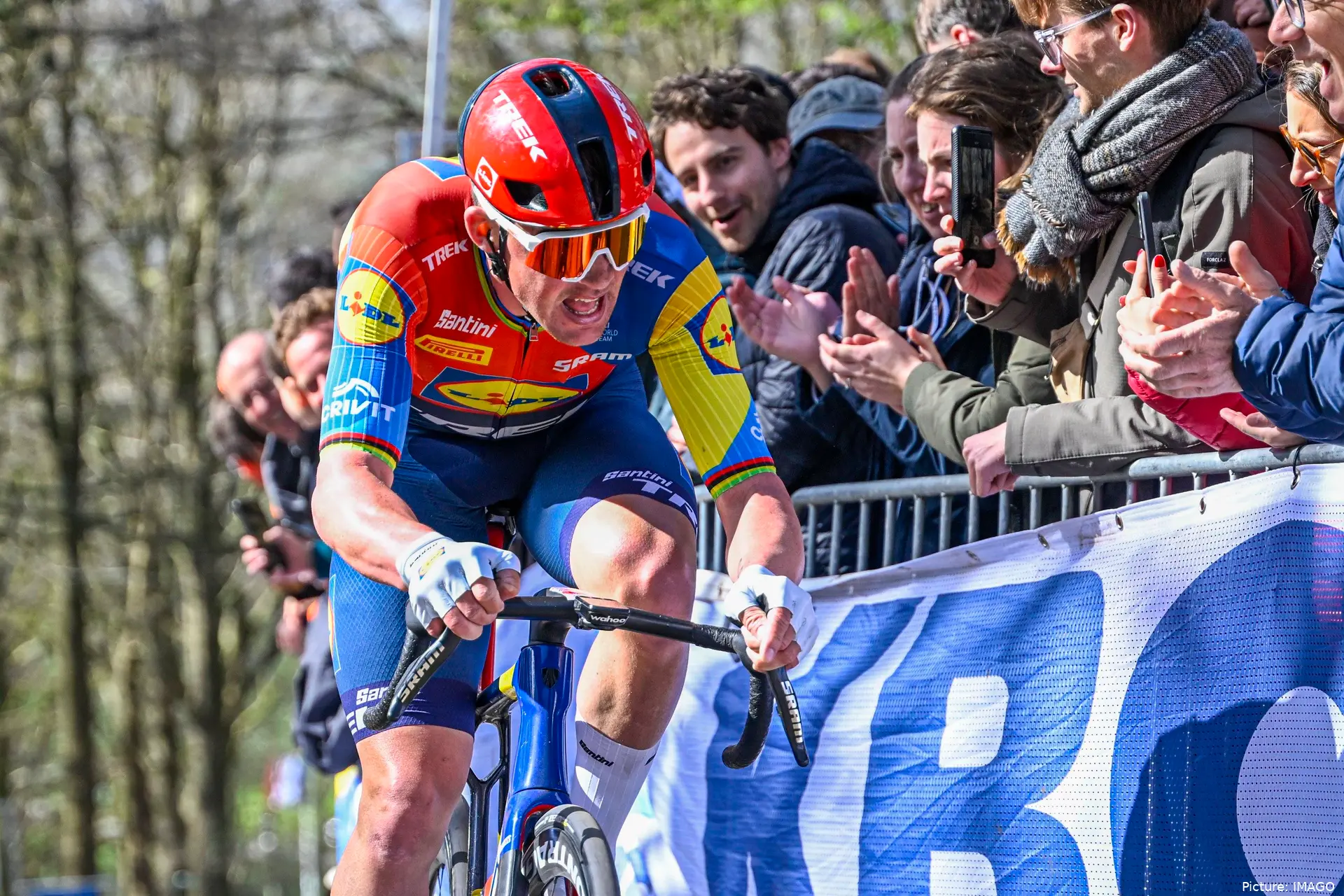
The 2025 season was a statement year for the men’s Lidl–Trek
road team. Across cobbles, hills, and high mountains, they seemed to be
everywhere that mattered, winning big and rarely going missing from the front
of races. From Mads Pedersen’s rampage through the spring to a historic sweep
of Grand Tour points jerseys, they operated like a team that finally believes
it belongs with the superpowers of the sport. This review takes a analytical
look at how Lidl – Trek built one of the standout campaigns of the year.
Lidl–Trek is an American-registered WorldTour team backed by
supermarket giant Lidl. For years their identity has revolved around the brute
strength and fast finish of Mads Pedersen, the 2019 world champion whose engine
makes him dangerous on everything from crosswinds to cobbled bergs. Around him,
the roster has been carefully built out into a genuinely balanced squad. In
2025, this team truly showed that they are far more than the Pedersen team.
Italian climber Giulio Ciccone brings Grand Tour stage
pedigree and an explosive uphill kick, especially on shorter climbs and one-day
races. Mattias Skjelmose, a rising Danish all-rounder, doubles as a week-long
stage race leader and a classics contender, and picked up one of the most
surprising wins of 2025. Classics stalwart Jasper Stuyven adds years of cobbled
experience, while Jonathan Milan, the hulking Italian sprinter, has blossomed
into a full-blooded Grand Tour fastman since joining.
On the scoreboard, 2025 was one of the best seasons in the
team’s history. Lidl – Trek racked up 46 victories, surpassing even their
strong haul from the previous year. That translated into third place in the UCI
team rankings, behind only UAE and Visma, and ahead of long-established giants
in the sport. They had been fourth the year before, so stepping onto the
year-end “podium” as a team felt like confirmation of a real upward trend
rather than a one-off hot streak.
The standout statistic, though, was their Grand Tour points
jersey sweep. Lidl–Trek did it in style: Mads Pedersen won the points jersey at
both the Giro d’Italia and Vuelta a España, while Jonathan Milan took green at
the Tour de France. That trio of jerseys, plus a nine-strong Grand Tour stage
win tally, summed up their year perfectly: consistent, sharp, and relentlessly
competitive on the sport’s biggest platforms.
Spring review
The spring was where Lidl – Trek really announced themselves
as a superteam in waiting. Led by a ferocious Pedersen, they turned the cobbled
classics into a long highlight reel.
At Gent – Wevelgem, Pedersen delivered one of the rides of
the season. He launched a long-range move and stayed clear over the final
climbs and crosswinds, and rode solo to his third victory in the race. Winning
Gent – Wevelgem once is career-defining for some, winning it three times, with
this kind of audacity, is surreal.
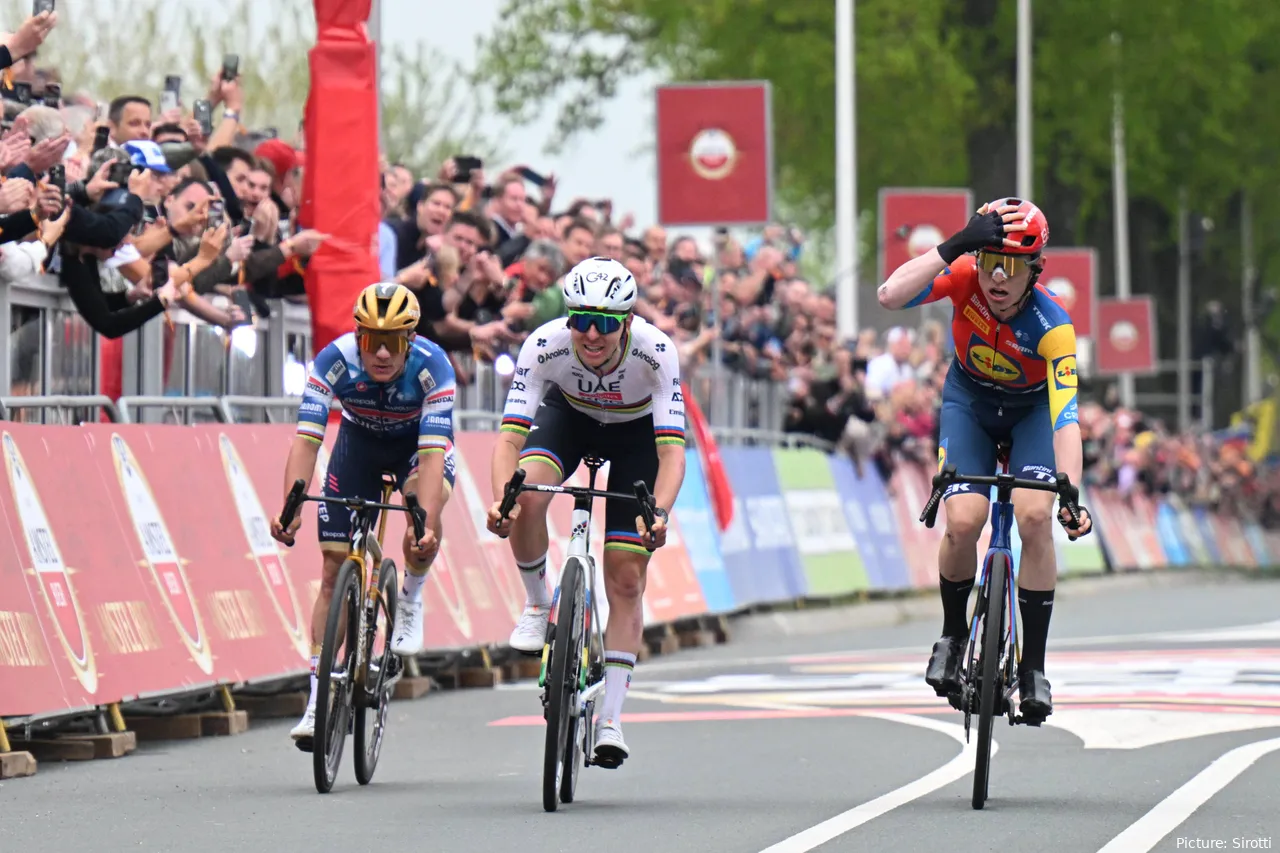
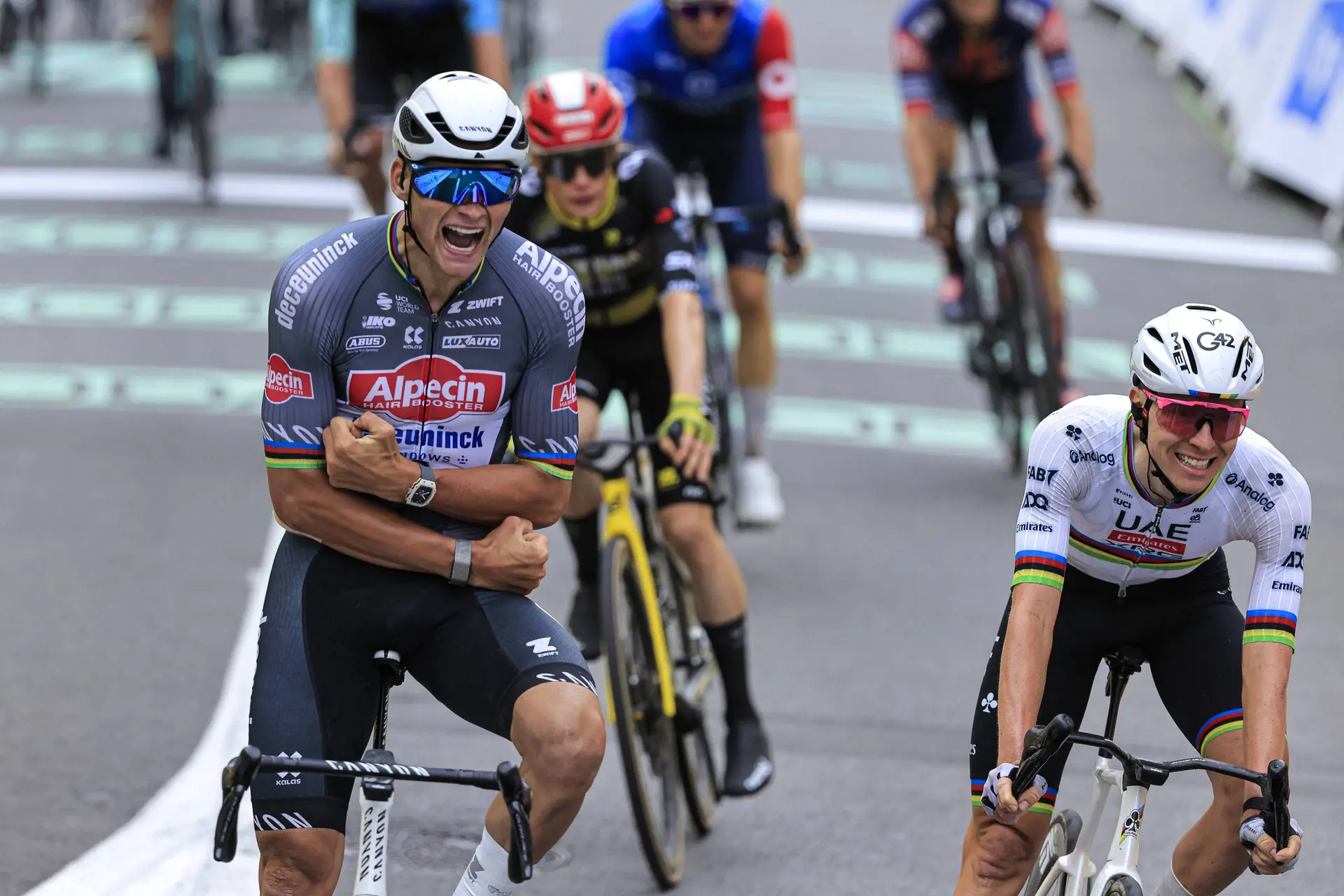
Where does Skjelmose's Amstel Gold Race win rank in your moments of 2025? @Sirotti
The momentum rolled straight into the Tour of Flanders. On
De Ronde’s brutal cobbled climbs, Lidl–Trek executed almost perfectly. Pedersen
was the best of the rest behind Pogacar, going toe-to-toe with Van der Poel and
Van Aert all the way to Oudenaarde. He ultimately sprinted to second behind
Pogacar, while Stuyven, having burned matches for the team all day, still
managed to take fifth.
Pedersen was also second at E3 and seventh at Milano-Sanremo,
keeping the team in the thick of every major narrative. But the highest drama
came at Paris–Roubaix. In the “Hell of the North”, Pedersen was right where he
needed to be when the race exploded, in a lead group with Van der Poel and Pogacar,
only to suffer a brutal puncture around 70 km from the finish. It was the
perfect example of the “the beauty and the beast” nature of Roubaix.
Somehow, he fought his way back into contention and, even
after that setback, salvaged third place on the velodrome ahead of Van Aert. As
he put it afterward, “I was unlucky to puncture when I did, but I recovered and
captured a podium result. I have to be satisfied with that.” Many observers
summed up his spring by saying he was “the best of the rest” behind the two
generational stars in Pogacar & Van der Poel.
The Ardennes continued the theme of success, this time with
the next generation leading. At Amstel Gold Race, Mattias Skjelmose produced a
career-defining performance, playing the finale with cold blood and
outsprinting Tadej Pogacar and Remco Evenepoel in a razor-thin photo finish. For a young
rider to outfox and outsprint those names in Amstel is the sort of result that
can reshape a career. It was perhaps the upset of 2025.
A week later, Giulio Ciccone stood on the podium at
Liège–Bastogne–Liège, his first Monument podium and a huge step in his
development as a one-day threat. Later in the year he underlined that
versatility with a win at Clásica San Sebastián.
By the end of April, Lidl–Trek’s spring résumé looked
ridiculous: wins at Gent–Wevelgem and Amstel, second at Flanders and Liège,
third at Roubaix, and a scattering of other top tens. If there was one regret,
it was that a Monument win slipped just out of reach. But in terms of
influence, consistency, and depth, they were right up there with the very best.
Grand Tours
If spring confirmed Lidl – Trek as classics royalty, the
Grand Tours proved they were much more than that. Across Italy, France, and
Spain, they turned sprints, time trials, and breaks into a season-long
highlight reel.
The Giro was Mads Pedersen’s playground. He won four stages,
dominated the sprint battles, and pulled on the maglia ciclamino in Rome. From
the opening weekend, he made his intentions clear: winning Stage 1 in a
head-to-head with Van Aert and briefly wearing the maglia rosa, a moment he
described as “the cherry on the cake” of that first victory. Over the following
days, he kept knocking off sprint & punchy finishes with ruthless
regularity.
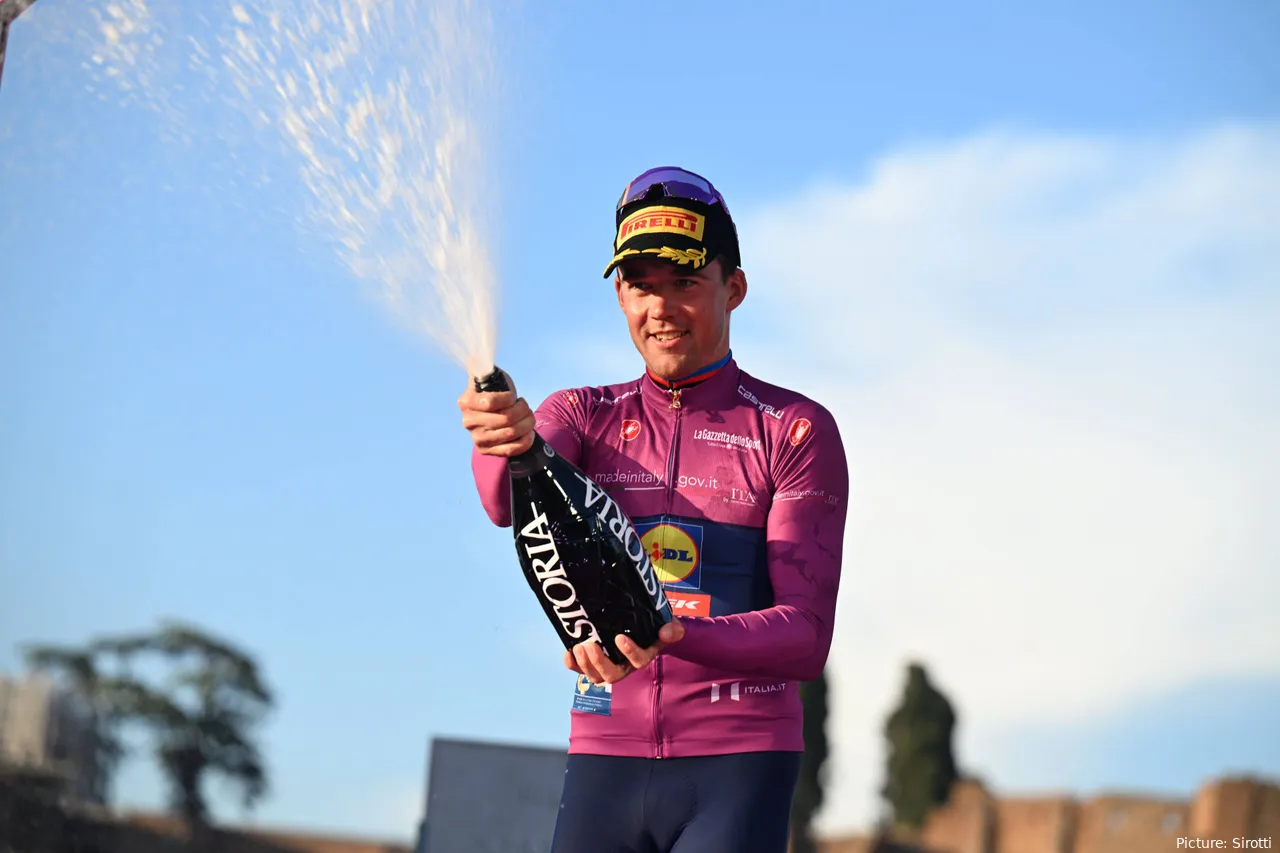
Pedersen was the standout star at the 2025 Giro d'Italia. @Sirotti
Behind him, the rest of the team was equally effective. The
squad’s Giro lineup was described internally as “one of the best performances
in team history”, and from the outside it was easy to see why. Daan Hoole
shocked the specialists by winning a long individual time trial, while Carlos
Verona grabbed an emotional mountain stage after going clear in the high Alps.
There were setbacks. Søren Kragh Andersen broke his wrist
early on, depriving Pedersen of a key lead-out man, and Ciccone’s crash ended
any realistic hope of a top GC result. But the way the team responded said a
lot about their culture. They attacked more, not less, and turned adversity
into more wins. By Milan, they had six stage victories, the points jersey, and
a reputation as arguably “the strongest in the race” in terms of stage-hunting
firepower. As Pedersen put it, “We wanted to make the race hard and we
did…Winning with a jersey on top makes it even more special.”
At the Tour de France, the spotlight shifted from Pedersen
to Jonathan Milan, who actually kept the Dane out of the lineup for July. Given
leadership for the sprints, he responded with a commanding display. Milan took
two stage wins and the green points jersey, instantly joining the top tier of
Grand Tour sprinters alongside Merlier, Philipsen and Girmay.
His first victory came in the opening week, a clean,
powerful sprint where he simply rode away from the rest on stage 8. The second,
on stage 17, was even more striking: a chaotic, rain-slicked finale that he
navigated with remarkable composure and power too.
Alongside Milan’s exploits, riders like Quinn Simmons gave
the team a constant presence in breakaways, often spending long hours up the
road to keep Lidl–Trek on the offensive. Skjelmose, trying to learn what it
means to lead GC at the Tour, hovered around the top 15 overall before having
to abandon on stage 14, one of the only negatives for the team during the race.
Even without a GC result, the Tour was a major success: two
stage wins, the green jersey, and a clear statement that Milan is a sprinter to
build around for years. The sight of him in green on the Champs-Élysées,
surrounded by teammates who had bought into the plan, felt like another turning
point for the team.
By the Vuelta, Lidl – Trek could have been forgiven for
running out of gas. Instead, they doubled down one more time. Pedersen returned
as leader, targeting stages and the points classification. Early on, he kept
bumping into faster finishes by inches, but his persistence paid off in week
three. In a hilly stage that finished with a small-group sprint, he joined the
break, played it smart, and then finished the job.
He added more high placings in the final week to secure the
points classification, completing his own Giro–Vuelta double and finalizing the
team’s all-three-Grand-Tours sweep. There was no GC push in Spain, but that was
never the plan. The mission was a jersey and a stage, and they got both.
Across the three Grand Tours, Lidl – Trek finished with nine
stage wins and three points jerseys. In a cycling world obsessed with yellow
and pink, that kind of consistency in the sprints and stages is another,
equally valid path to being one of the teams of the year.
Transfers
Looking ahead, Lidl– Trek
hasn’t simply decided to enjoy their success; they’ve moved to build on it. The
headline addition is Juan Ayuso, the Spanish prodigy and already a proven Grand
Tour podium finisher who has exited UAE Team Emirates – XRG in dramatic fashion.
His arrival instantly upgrades their GC potential and gives them a genuine
long-term leader for three-week races. Pairing Ayuso with Skjelmose and Ciccone
gives the team multiple cards to play in stage races.
They’ve also reinforced the engine room, bringing in riders
like Max Walscheid to beef up the sprint train and Mattia Sobrero for time
trials and mountain support. From within, they continue their habit of
promoting talent by stepping up young prospects from the development pipeline.
There are departures too. Jasper Stuyven’s move after countless
years with the team is a big emotional loss, and long-serving road captains and
domestiques moving on will require others to grow into leadership roles. But
the core remains: Pedersen, Milan, Ciccone, Skjelmose, and now Ayuso, form one
of the most balanced and dangerous spines in the sport.
Final verdict: 9/10
Judged across the full calendar, Lidl – Trek’s 2025 season
deserves a strong 9 out of 10. They were a constant factor in the biggest
races, produced some of the year’s most memorable rides, and made history by
sweeping the Grand Tour points jerseys. The only things missing were a Monument
win and a Grand Tour podium, the kind of ultimate prizes that are incredibly
hard to wrestle away from today’s two or three super-teams.
They didn’t just quietly collect results; they shaped races
and forced others to respond. With the squad they’re assembling and the
confidence gained from 2025, it feels like they are genuinely poised to take
this team to the very top of the sport in the coming years.
Read also
Discussion
Fin Major (CyclingUpToDate)
I honestly think that Lidl-Trek are the team best positioned
to challenge UAE and Visma in the coming years. What impressed me most wasn’t
just the wins, it was the variety of ways they won. Pedersen tearing through
the spring, Milan owning the sprints at the Tour, Ciccone and Skjelmose
stepping up in the Ardennes, and then the consistency across all three Grand
Tours… it all felt like a team hitting another level. Skjelmose’s win over
Pogacar and Evenepoel was one of my highlights of the year.
They’ve got depth, identity, and now a true GC weapon coming
in with Ayuso. That combination is rare. While UAE and Visma still set the
standard, Lidl–Trek looks like the one squad with the balance and ambition to
genuinely push them. For me, 2025 wasn’t just a strong season, it was the
season that convinced me Lidl–Trek is ready to join cycling’s top tier and go
head-to-head with the sport’s superpowers. My one question is how will Ayuso
impact the team’s chemistry?
Rúben Silva (CyclingUpToDate)
If any team deserves that 10/10 besides UAE, then it's Lidl-Trek. A boosted budget, but in reality their results aren't the product of money but of having their riders be well prepared and greatly motivated all year long. That is palpable, you have seen several riders seemingly punch above their weight and not many disappointments, with leaders such as Mads Pedersen and Jonathan Milan thriving in their fields as some of the world's very best. I mean take the win in the points classification in all Grand Tours in one season, the first team in history to achieve this... It is meaningful, and it does matter.
Now, let's be fair and point out a few negatives. It's its climbers. Juan Pedro López had his majestic 2022 Giro, and in 2024 won the Tour of the Alps. This year he was again inconsistent, and nowhere to be seen; Tao Geoghegan Hart started his season well at the Volta ao Algarve, but was nowhere to be seen the rest of the year; The signing of Lennard Kämna hasn't looked too profitable yet too, with the German not even being selected to a Grand Tour this year.
And Mattias Skjelmose, it's the way the team is dealing with him, I say this as someone who reads everything he says to the media as a whole, and also as someone who's talked and heard him talk in person. Skjelmose is someone who is unusually open with his thoughts, but it reveals issues. He 'accepted' to race the 2025 Tour de France without support and was given the promise he would race the 2026 Giro with full leadership and support. With Juan Ayuso, Mads Pedersen and Jonathan Milan all worthy of leadership, will he have this next spring? Certainly not, most likely Milan and his leadout will fly to Bulgaria alongside him. He was immediately vocal about how he wasn't told about Juan Ayuso's transfer to the team and doesn't seem like he is too happy to share that lead. And his contract ends in 2026, which puts pressure, and may just see him leave the team in search of what he is not getting.
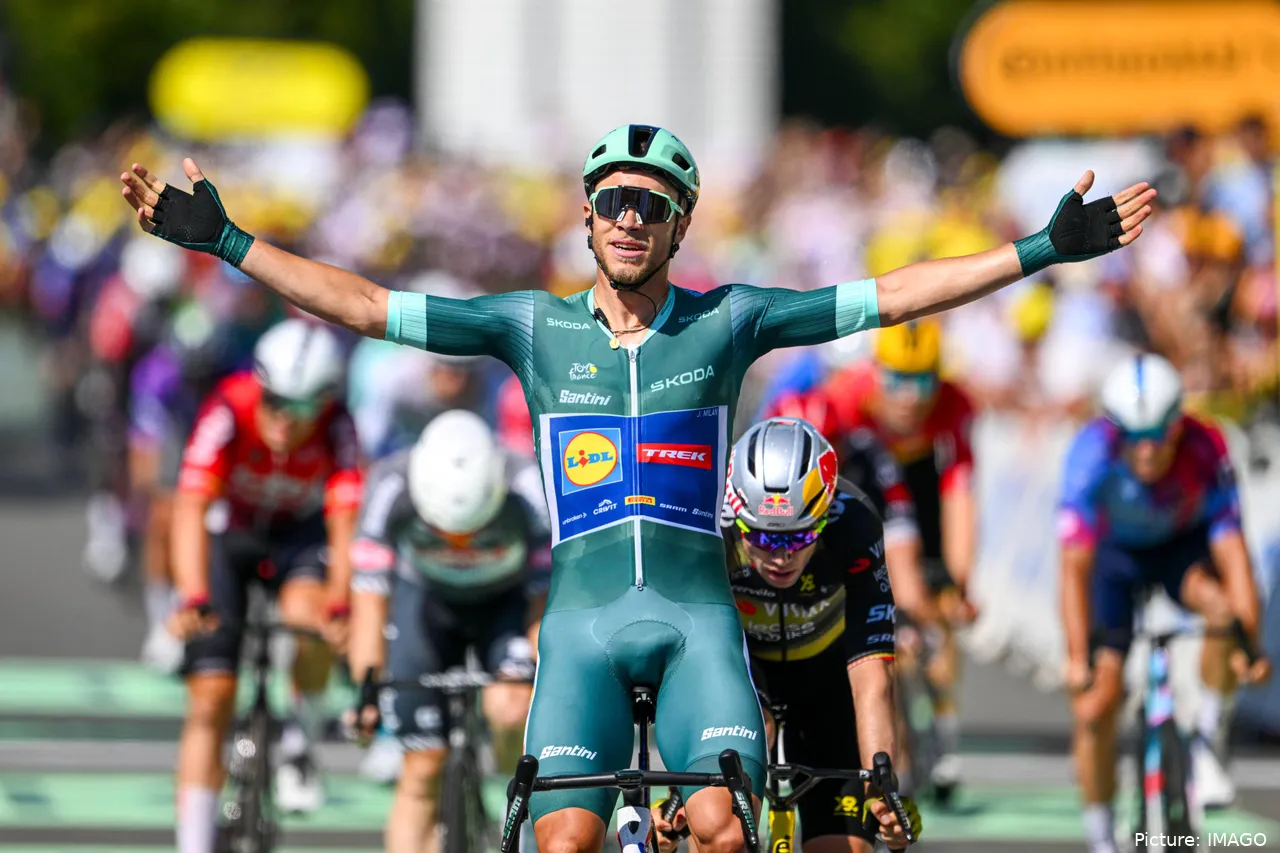
Jonathan Milan winning whilst wearing the green jersey at the Tour de France. @Sirotti
Now, I will not criticize Giulio Ciccone, but his repeated Grand Tour efforts once again came away without anything. I think there were good reasons to try it, but in the end, no benefit for a lot of focus and preparation. Now let's start on the good aspects, and there are many. I can, in all fairness, begin with Ciccone who has looked very strong again this year, getting back to his winning ways and with big ones (Clasica San Sebastian, opening stage of the Tour of the Alps, queen stage in Burgos); second at Liège; sixth at the World Championships... It's a strong season, and with him devoting fully to small stage-races and one-day races in 2026, we could see an even more improved version of him.
Skjelmose had a rocky year, partly over reasons mentioned above, but his victory at Amstel Gold Race over Pogacar and Evenepoel is the picture perfect win for the team. He was also fourth in the worlds, took a few nice wins over the year and performed well when it was expected of him, everywhere but the Tour de France.
Jonathan Milan, he's done it again. Winning green at the Tour de France with two stages, but he is not a one-side rider, as he won races all year long and has 7 World Tour wins to his name. His leadout with Simone Consonni, Edward Theuns and Jasper Stuyven is in my opinion the very best in the peloton. The latter also reached his best form once again in the classics which can't be overlooked, racing to Top5 in Flanders and E3 despite being a second man to Mads Pedersen.
And what to say of Pedersen, 'mad Mads'. He has reached 'alien' status with his crazy long-range attacks and endless energy and endurance. 2025 saw the best Pedersen, who only didn't win monuments because he is facing a prime Pogacar and van der Poel. But besides his win at Gent Wevelgem (in which he felt like he was playing with the competition), he was podium in Flanders, Roubaix and E3), won races all year long, supported riders like Skjelmose in his own ambitions; won stages and the points classification at both the Giro d'Italia and Vuelta a España. And his popularity has also grown as a result of his honesty and likeness in interviews, a refreshing sight against a backdrop of an ever more media-trained peloton where riders are usually very careful with what they say publicly.
Maybe you wouldn't count the results as much but some of the leadout men and classics specialists such as Quinn Simmons, Toms Skujins and Mathias Vacek have just ridden so impressively this year, the team got the best out of them truly. All three have won their national titles, Simmons was Top5 in Lombardia, Quebec and won in Suisse/Catalunya; Skujins was Top5 in Worlds/Europeans whilst Vacek's domestique work for Pedersen at the Giro was worth several wins of its own...
I truly believe the team can bring out the best of Juan Ayuso who is coming in, whilst another signing in Jakob Söderqvist (already highly impressive both with elite and under-23 team this year) just promises to raise the level of the team even further.

Fin MajorCycling Journalist
Fin Major is a UK-based writer at CyclingUpToDate and has been part of the team since 2024. He is the site’s main writer for FAQs and evergreen explainers and has written around 2,000 pieces for the platform. Alongside this work, he focuses on in-depth analysis and covers the biggest races on the calendar, including the Tour de France, the Giro d’Italia, and La Vuelta a España, providing clear context around performance trends, tactics, and key storylines.
In his reporting, Fin uses reputable data sources such as ProCyclingStats for results, statistics, and historical context. He places strong emphasis on careful sourcing, editorial accuracy, and updating articles promptly when new, verified information becomes available. Outside of writing, Fin is an active cyclist, which supports his practical understanding of the sport and its demands.
claps 0visitors 0
Just in
Popular news
Latest comments
- I thought Seixas had hit the end of the road from a fatigue standpoint, after the WC meltdown - and he still finished ok. This was impressive and an amazing return.mij11-10-2026
- totally, eating crow for breakfast this morning. after the world championships I thought we were looking at a late season fade from fatigue. way to go Paul!mij11-10-2026
- Well if UAE the best team in history comes knocking their the only team in the world who can get Seixas. Seixas will become unbeatable and incredible there. Lets see if he stays at decathlon or goes to UAE.miguel11-10-2026
- Pogi would have won the Vuelta at around 10 min. But it would have been boring for fools like you. Capish?PogiSloFans11-10-2026
- Rather than me describing the technology at length on here, If you google. Line-scan cameras. They are also sometimes called Slit-Scan cameras. Either search will fill you in. You can read all about how they. work. Enjoy! Just to be clear the cyclist is saying he wants to see exactly where the digital finish line is in relation to the actual physical finish. At this point we only have the word of the authority that the digital line corresponds to the exact starting edge of the physical finish line. That seems like a reasonable request to me.Prorodsandstuff11-10-2026
- 100% @Jumpyjohn, good point well raised.anonymouscyclist11-10-2026
- The media keep stirring the soup.. or spitting in it
 leedorney11-10-2026
 - Yes, he has won many races... second class races. He isn't the real deal... Seixas is the real deal. Capish?PogiSloFans11-10-2026
- What are you guys talking about? I'm not the one you guys think I am. I'm a Slovenian Pogi fan, that's all... the guy you're talking about is a Croation Ustasha. Capish?PogiSloFans11-10-2026
- It would be epic if Seixas came to UAE. 3/4 of the commentators on this site would stop watching cycling... ha ha ha ha ha ha...PogiSloFans11-10-2026
Loading
Write a comment