ANALYSIS | Three unforgettable Wout van Aert moments in cyclocross
CyclocrossThursday, 25 December 2025 at 10:46
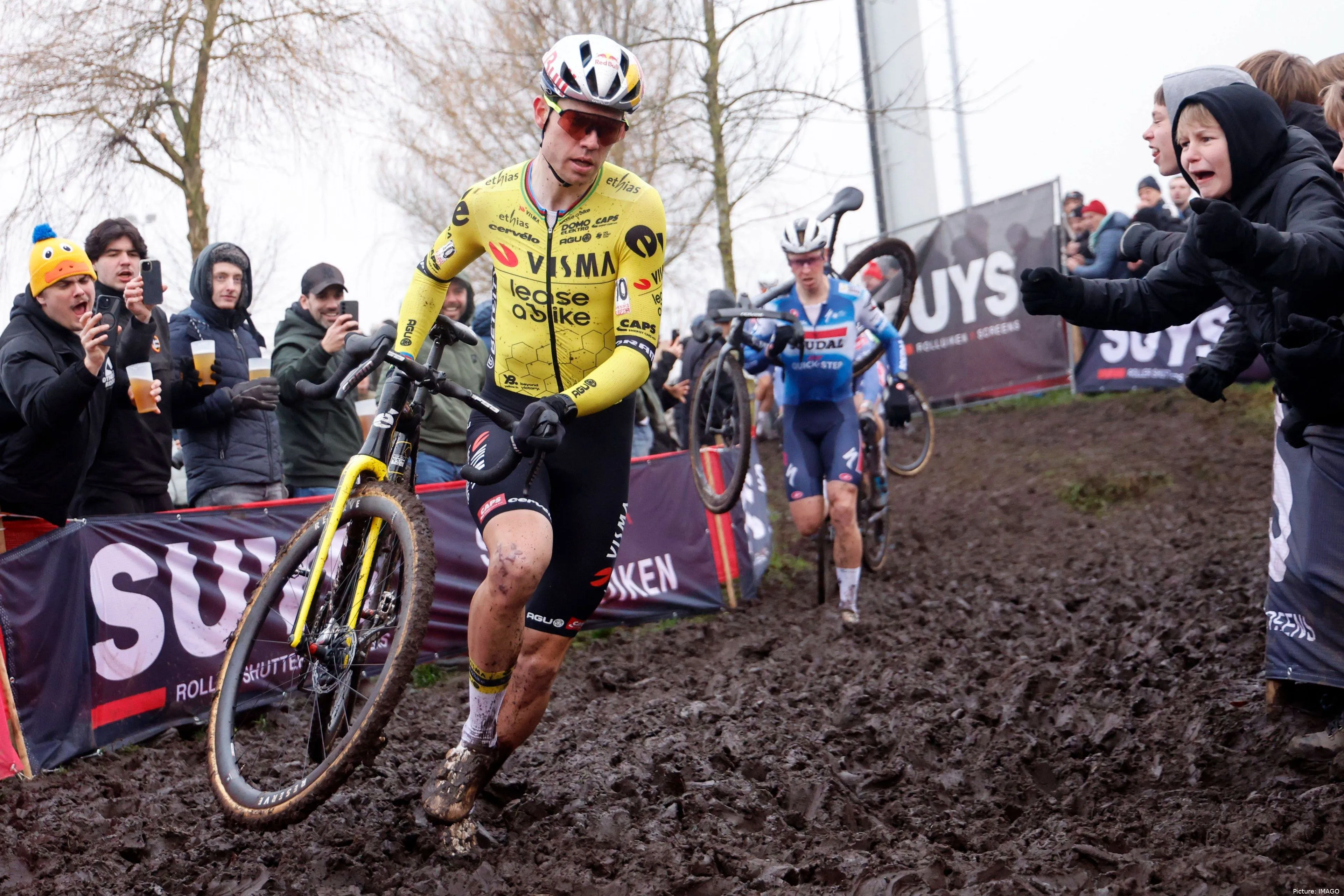
Today, Wout van Aert is finally back on his
cyclocross bike for the first time this winter. The Belgian’s rise to the top
of elite cyclocross was fast, forceful, and decisive, and in today’s article we
will review three of his greatest moments in the mud in his illustrious career
to date.
Winning three consecutive World Championship titles placed him in rare
company and defined an era of the sport in the late 2010s. Those victories did
not come quietly or by default; each arrived under different pressures, and
against a field stacked with rivals who would go on to define a generation.
Looking only at the defining details, these three races remain the clearest
markers of Van Aert’s dominance and his ability to deliver when the stakes were
highest.
First world title
The first of those moments came at
Heusden-Zolder on January 31, 2016, when Van Aert claimed his first elite World
Championship title. Racing on home soil in Belgium, the 21-year-old carried the
weight of expectation but also the memory of disappointment from the year
before.
The race unfolded as a tense contest between
the sport’s leading names and his arch nemesis Mathieu van der Poel, but it was
Van Aert who made the decisive move. He attacked on the final climb of the
former Formula 1 circuit, distancing Lars van der Haar and riding clear to the
finish alone.
For Van Aert, the significance went beyond the
jersey itself. After the race, he described the moment plainly and without
exaggeration: “Nothing compares to this feeling. Last year’s defeat is
forgotten now”. It was his first elite rainbow jersey, and it marked the
beginning of his reign at the top of cyclocross.

Wout van Aert will race Mathieu van der Poel in 5 races this winter. @Sirotti
Title defence in Bieles
Twelve months later, Van Aert returned to the
World Championships facing a very different set of circumstances. The 2017 race
in Bieles, Luxembourg, followed a difficult winter in which knee problems had
disrupted his preparation. Training time had been lost, and there were genuine
doubts about whether he could defend his title.
The
race conditions were brutal, with mud playing a central role in shaping the
outcome. Rather than riding defensively, Van Aert grew stronger as the race
developed. Rivals punctured, faded, or lost momentum, while he steadily moved
to the front. By the closing stages he was clearly the strongest rider in the
field, winning comfortably and securing a second consecutive world title by
over 40 seconds to Van der Poel.

His own reaction underlined how uncertain the
build-up had been. “I really didn’t expect this… I’m so happy with my second
world title,” he said afterward. He also admitted that the race had not begun
as a straightforward defense of his crown, explaining that “then in the second
lap I found my good rhythm”.
Hat trick in 2018
The third and most emphatic of Van Aert’s
championship performances came at Valkenburg on February 4, 2018. By then, the
narrative had shifted from whether he could win again to how decisively he
could stamp his authority on history. He was truly in this ascendancy over Van
der Poel at this stage.

Have we ever seen a rivalry like Wout van Aert and Mathieu van der Poel? @Sirotti
On the muddy Valkenburg course in the
Netherlands, Van Aert delivered a performance that left no ambiguity. He
dominated from the start, steadily increasing the pressure until Mathieu van
der Poel was dropped by the end of the second lap. From there, the race became
a long, controlled ride to the finish, with Van Aert crossing the line more
than two minutes ahead of the runner-up, which was actually Michael
Vanthourenhout on the day.
Van Aert himself framed the race as the high
point of his season. “I didn’t expect this… I think it was one of the best
races in my life on a bike…I expected a big battle but this was nice of
course,” he said. He was also clear about the meaning of the achievement,
adding, “It's the third consecutive world title for me. I worked really hard
for this. Now it's time to enjoy it.”
Read also
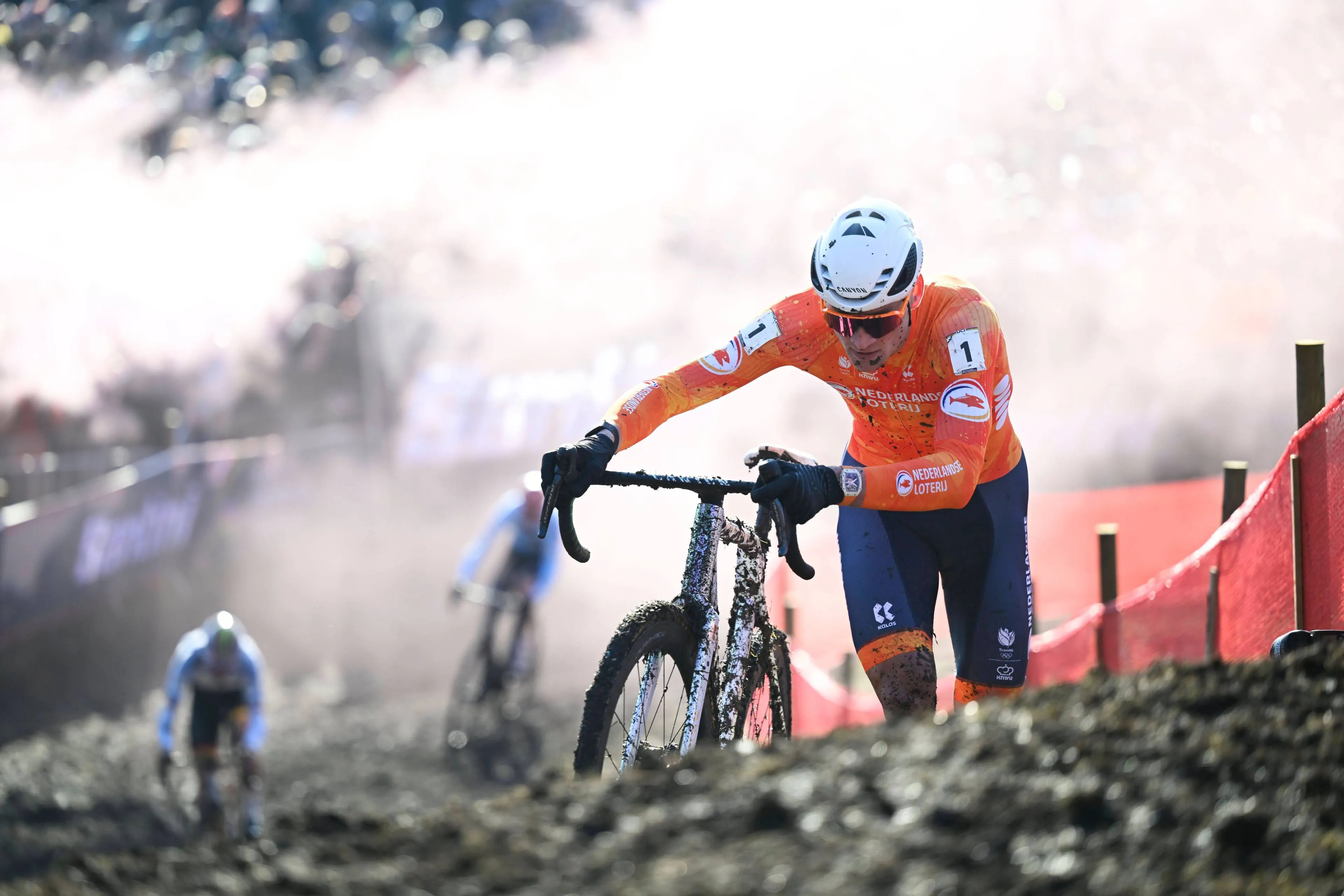
Taken together, these three races form a
complete picture of Van Aert’s elite cyclocross peak. The 2016 victory at
Heusden-Zolder announced him to the world and erased the memory of prior
defeat. Bieles in 2017 showed his ability to win despite physical setbacks and
uncertain preparation. Valkenburg in 2018 confirmed his place among the few
riders capable of winning three World Championships in succession.
Since then, it is fair to say that Mathieu van
der Poel has turned the tables and taken his cross ability to a level we have
never seen before in cyclocross. But, the only man that has been able to
challenge him in the 2020s has certainly been Van Aert. Can he do so again this
winter?
Each win mentioned above stood on its own, but
together they defined a period in which he set the standard for elite
cyclocross and reshaped expectations of what sustained dominance looked like at
the highest level of the sport.
claps 4visitors 4
Just in
Popular news
Latest comments
- 100% agree. Even at his strongest, Armstrong wouldn't dare attempt what Pogacar pulls off with regularity. I remember one time where Ullrich attacked on the Tourmalet when the race was to finish in Luz Ardiden. Both the solo attack, and Armstrong responding to neutralize it on his own, were simply unheard of at the time. Now we almost take such exploits from Pog and Vingegaard for granted.
 MarkFour02-04-2026
 - I agree, he can try... LOL! As I already wrote, he should never have won GT (Rogla DNF) and he never will again (Tadej, Jonas, Florian, Paul). Monument only after Tadej DNF.MajorPayne02-04-2026
- Look, winning 7 Tours can be a massive achievement, but it can't compare with Pogi or Merckx. Last year Pogi won the Tour, the WC, and was on the podium in Monuments 5X (3X1st, 1X2nd and 1X3rd)...never before done in history. Now compare this with Armstrong!?!?!?Mou-Cro-HR02-04-2026
- Not wishing I'll will but Pogacar & MvdP have never had a bad crash of those listed 👍
 leedorney02-04-2026
 - I'd like to see Remco win, that'd be exciting 💪leedorney02-04-2026
- As much as i despise him he is spot on was there a clean rider in his era??? At the top of the sport..paultryan200202-04-2026
- Winning 7 Tours (in a row!) is still a massive achievement. In 140 stages, Armstrong had only a handful of bad days, and almost no bad luck. Even in the one Tour in 2003 where the team didn't get their boosting products, he still managed to stay with Mayo and Ullrich at the front while the rest of the team was way down the mountain. It would be cool if Pogacar could get 6 Tours. But the pressure of last year's Tour coupled with dangerous riding made it look pretty unpleasant. It might be nice for him to take a Tour off and let the "fans" find something else to complain about.MarkFour02-04-2026
- Let's hope it's not Harry Kane
 Rafionain-Glas02-04-2026
 - ayuso literally wasn’t theremij02-04-2026
- Does Remco have the bike handling skills for Roubaix? And RVV for that matter?mij02-04-2026
Loading
1 Comments