“You can’t just ride three days of cyclocross without consequences” – Mathieu van der Poel’s father weighs in on swirling CX retirement rumours
Cyclocross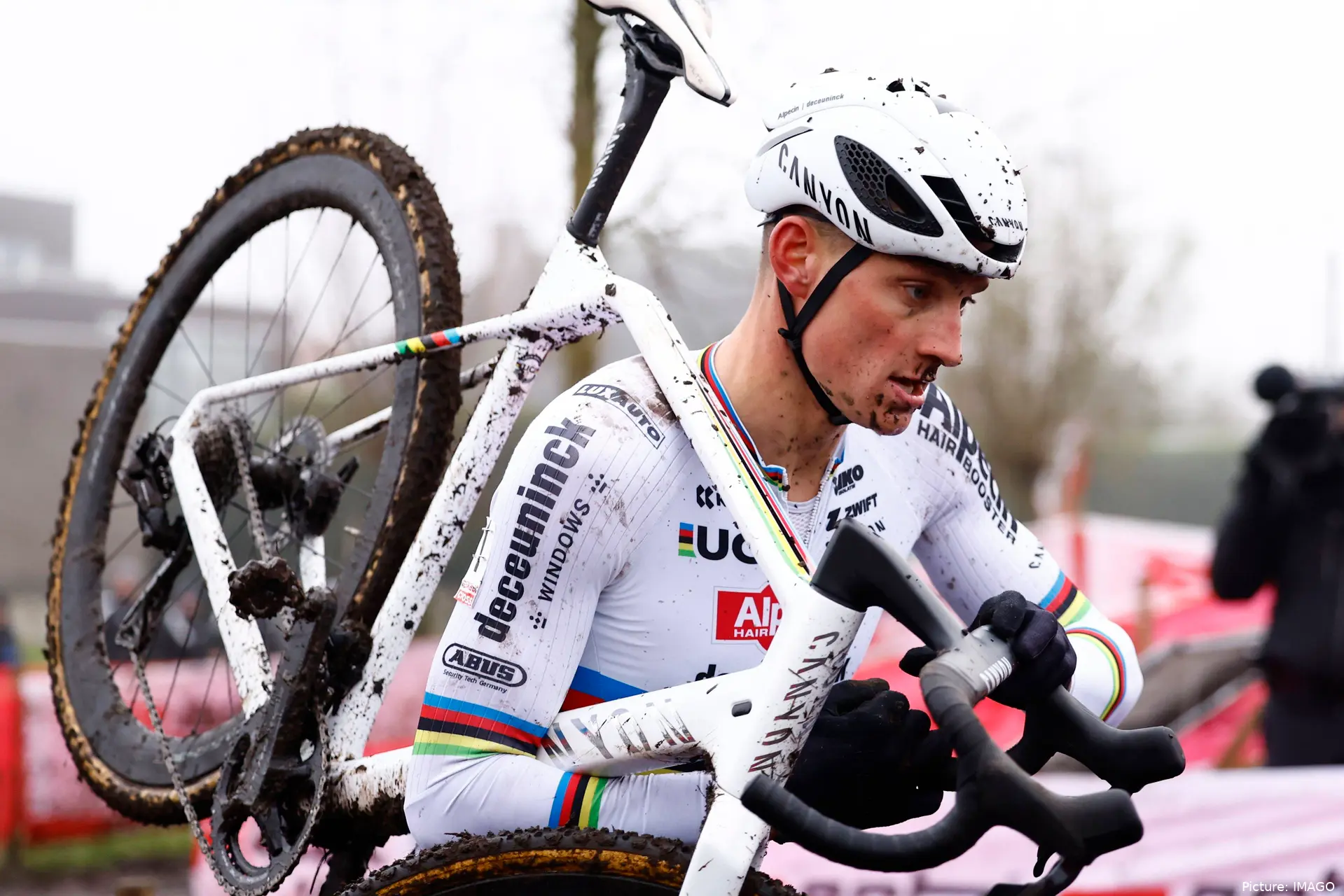
As speculation grows around how much longer Mathieu van der Poel will continue to commit fully to cyclocross winters, his father Adrie has offered a calm but revealing perspective on the physical and logistical demands that increasingly shape those decisions.
Speaking to In de Leiderstrui, Adrie van der Poel made clear that no definitive choice has been made, but acknowledged why the question keeps resurfacing as his son’s road ambitions expand.
“He has simply left the door open,” he explained, pointing to the difficulty of combining a deep road programme with an intense winter in the field.
“Maybe at some point he wants to ride all the way to Lombardy and then has to start building up again. That makes a cyclocross winter more difficult. This year, that was not a discussion.”
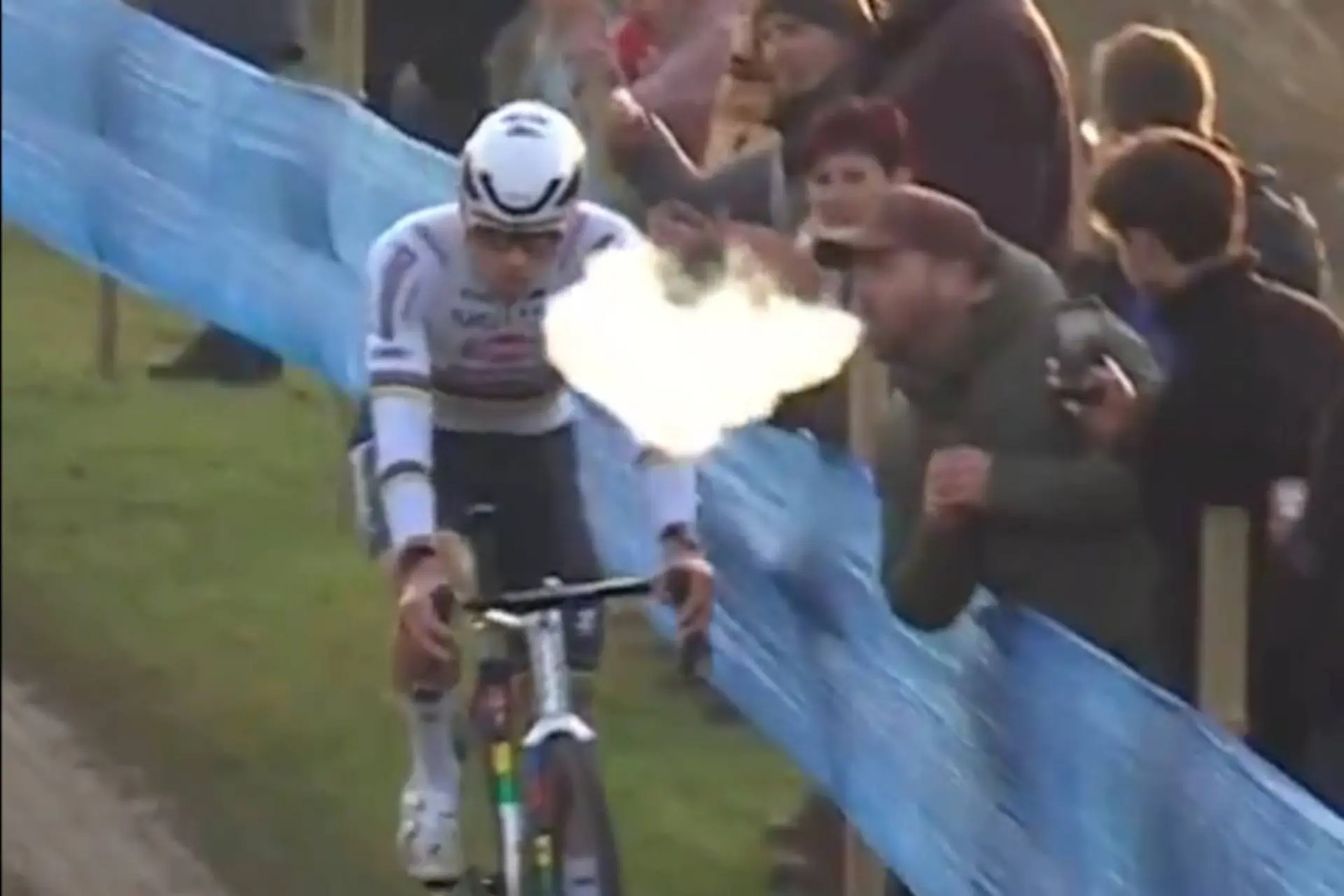
No decision made, but the door is open
Those remarks arrive against the backdrop of another winter in which Van der Poel has once again looked untouchable whenever he starts, reinforcing both his dominance and the sense that cyclocross now sits at a crossroads in his long-term planning. While the results suggest total control, the conversations around him are increasingly shaped by calendar management rather than competitive motivation.
The hidden cost of a cyclocross winter
Adrie van der Poel’s comments focused less on trophies and more on the everyday reality behind repeated race days. “It’s more than a full day,” he said when describing a typical cyclocross outing. “Sometimes you already do an hour of warm up riding in the morning, then it’s showering and straight off to the cross. If he then wins and there is a control, it takes an hour and a half before we can leave.”
The cumulative effect, he suggested, is often underestimated. “They are simply very intensive days. In the evening, we are usually only back between seven and eight o’clock, and then you still have to go to the masseur. Add it all together. You can’t just ride three days of cyclocross without consequences.”
Performance, pressure and the road trade off
That perspective adds further context to the wider conversation already unfolding this winter, where rivals have openly admitted that Van der Poel is operating at a level they struggle to influence. While the focus externally has been on results and margins, inside the Van der Poel camp the discussion appears far more practical, centred on workload, recovery and long term balance.
Adrie also addressed the recurring question of whether a winter without cyclocross could unlock further gains on the road. “We don’t know if he can still improve without racing cyclocross. We simply don’t know that,” he said, before acknowledging that the comparison with other multi-discipline stars inevitably plays a role. “He said: ‘Tadej doesn’t race cyclocross either, and he still rides a strong spring.’”
Alongside performance considerations, Adrie pointed to the constant pressure that accompanies sustained success. “Everyone is always watching him. And the more you win, the closer the non-win becomes,” he noted, framing the mental load as another factor that cannot be ignored.
Short term focus, long term questions
For now, there is no immediate decision looming. Adrie stressed that any shift in approach would be part of a broader planning cycle rather than a sudden break. “It’s fourteen days, a little under three weeks, and then he’ll be back in Spain,” he said, underlining how quickly the focus can turn back to road preparation.
In a winter where Van der Poel continues to dominate whenever he appears, his father’s words offer a reminder that the debate is not about motivation or ability, but about balance. The question is no longer whether he can keep winning in cyclocross, but how much of that intensity still fits into the wider arc of his career.

Kieran WoodDeputy Editor-in-Chief
Kieran Wood is a sports journalist based in Wales and has been active in journalism since 2022. He regularly contributes to DartsNews.com and CyclingUpToDate.com, where he covers professional cycling and darts. In cycling, his work includes liveblogs from major races, including the Tour de France, the Giro d’Italia, and La Vuelta a España, alongside race reports and analysis. He has also conducted interviews with professional riders.
His reporting spans the full racing calendar, from one-day classics to stage races, with a focus on accurate, real-time coverage and clear contextual analysis. For statistics, results, and historical context, he regularly uses resources such as ProCyclingStats. To support reporting on rider activity and training context where relevant, he also references Strava.
In his work, Kieran places strong emphasis on careful sourcing, editorial accuracy, and updating articles as new, verified information becomes available.
claps 9visitors 7
Just in
Popular news
Latest comments
- Can we get a comment from the UCI on this. The silence from Aigle is deafening! Come on cycling journalists , start annoying them to get a comment please.Paul53111-10-2026
- A shame to see him retire, I really liked him as a rider. His dignified tribute along with Matej Mohorovic to Gino Mader after his death was class and will always live in my memory. Enjoy your retirement.GregT11-10-2026
- A shame to see him retire, I really liked him as a rider. His dignified tribute along with Matej Mohorovic to Gino Mader after his death was class and will always live in my memory. Enjoy your retirement.GregT11-10-2026
- I thought Seixas had hit the end of the road from a fatigue standpoint, after the WC meltdown - and he still finished ok. This was impressive and an amazing return.mij11-10-2026
- totally, eating crow for breakfast this morning. after the world championships I thought we were looking at a late season fade from fatigue. way to go Paul!mij11-10-2026
- Well if UAE the best team in history comes knocking their the only team in the world who can get Seixas. Seixas will become unbeatable and incredible there. Lets see if he stays at decathlon or goes to UAE.miguel11-10-2026
- Pogi would have won the Vuelta at around 10 min. But it would have been boring for fools like you. Capish?PogiSloFans11-10-2026
- Rather than me describing the technology at length on here, If you google. Line-scan cameras. They are also sometimes called Slit-Scan cameras. Either search will fill you in. You can read all about how they. work. Enjoy! Just to be clear the cyclist is saying he wants to see exactly where the digital finish line is in relation to the actual physical finish. At this point we only have the word of the authority that the digital line corresponds to the exact starting edge of the physical finish line. That seems like a reasonable request to me.Prorodsandstuff11-10-2026
- 100% @Jumpyjohn, good point well raised.anonymouscyclist11-10-2026
- The media keep stirring the soup.. or spitting in it
 leedorney11-10-2026
Loading
4 Comments