
We’ve had big breaking news this week, especially for
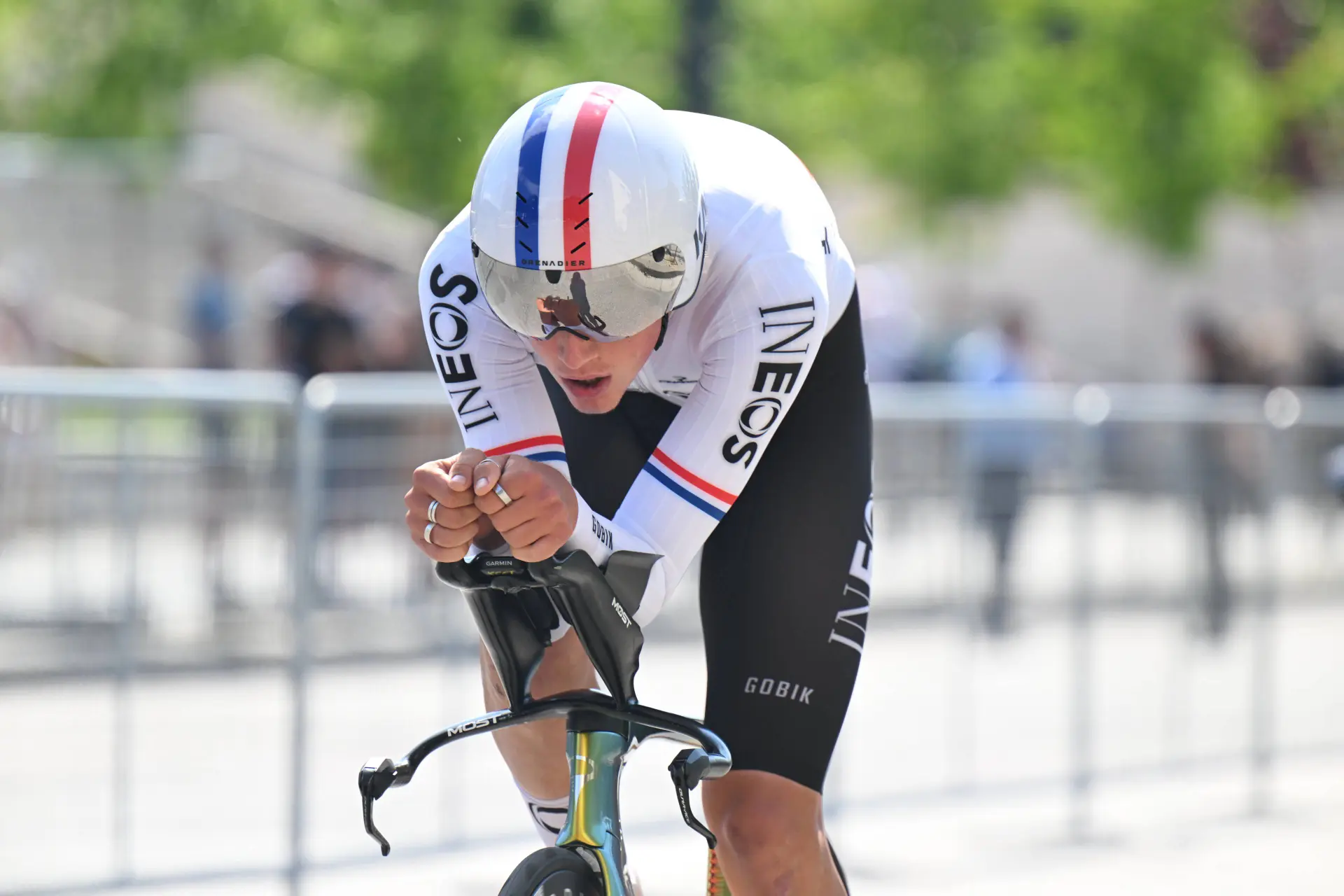
British cycling fans. The reported move of Oscar Onley to INEOS Grenadiers is
not just another transfer story cycling will forget by the next race weekend. If
completed, it would reshape how we talk about rider value, British cycling’s
next generation, and INEOS’ long-term direction. Above all, it would confirm
that 2025 was the season Oscar Onley crossed an invisible but decisive line.
Oscar Onley’s rise has been steady rather than explosive,
which is precisely why his 2025 season carried so much significance. The
Scottish rider didn’t arrive at the Tour de France with hype, instead he
arrived with quiet credibility earned through consistent climbing performances
and resilience across stage races. By the time the race reached its final week,
that credibility had turned into authority. Finishing fourth overall and
remaining in podium contention until the closing stages placed him firmly among
the sport’s elite general classification riders, not as a future promise but as
a present reality.
That Tour performance didn’t exist in isolation. Onley’s
season was defined by repeatability at the highest level. Top five finishes
across major stage races and a stage win at the Tour de Suisse demonstrated
that his Tour de France result was not a one-off aligned with form or fortune.
Teams do not spend months negotiating seven-figure transfers on single
performances. They do so when a rider proves they can deliver across terrain,
across weeks, and under pressure.
Seven million?
This is why the reported figures attached to the INEOS
negotiations matter so much. When discussion circles around a potential buyout
of seven million euros, cycling enters unfamiliar territory. That is big money.
Even if the final figure lands well below that number, the
direction of travel is unmistakable. Cycling traditionally avoids overt
transfer fees, preferring to bury value inside salaries and contract lengths.
Onley’s case breaks that convention because there is no buyout clause. Team Picnic
PostNL are under no obligation to sell. Any move requires direct negotiation
and direct compensation, which elevates the entire process.
Daniel Benson’s reporting captures just how advanced the
talks appear to be. According to Benson, the deal could be completed “within 24
to 48 hours”, although he has also stressed that no agreement has yet been
finalised. That narrow timeframe speaks volumes. Teams do not approach the
endgame of negotiations unless both sides recognise that a deal is plausible,
even if contentious.
So, it seems that even if Picnic PostNL don’t want to lose
their new star rider, the financial incentive may be too much to ignore.
For Picnic PostNL, the context is as important as the cash.
The team’s WorldTour licence situation has placed its finances under a
microscope. Selling a rider like Onley is not merely a sporting compromise, it
could be a stabilising move that strengthens their case for long-term WorldTour
security if they reinvest the cash wisely. That reality explains why the
valuation is so fiercely defended.

Onley was able to compete with Pogacar, Vingegaard and Lipowitz during the 2025 Tour de France. @Sirotti
From INEOS Grenadiers’ perspective, this is about more than
signing the hottest British talent. The team is in a period of recalibration.
Their era of automatic dominance is over, and has been for some time now, replaced
by an environment where UAE Team Emirates and Visma Lease a Bike dictate the
sport’s rhythm. To compete in that landscape, INEOS must commit early and
decisively to riders who can anchor their future.
This time 12 months ago, INEOS were involved in a different
blockbuster transfer over a British star: Tom Pidcock. The multi-discipline
superstar left the squad after years of misaligned goals with INEOS’s
management, but now it seems the team is on the cusp of finding their new
British hero.

Geraint Thomas will be at the helm of INEOS' management from 2026. @Sirotti
The Geraint Thomas effect
This is where the importance of Geraint Thomas’ new management
role comes into focus. As a rider who embodied INEOS’ golden era and understood
what it takes to win the Tour de France from inside the bus, Thomas brings
credibility to long-term planning.
Onley is precisely the kind of rider Thomas understands:
understated, resilient, and capable of absorbing leadership responsibility
without being consumed by it. In fact, there are many similarities between Only
and a young Thomas. A move of this scale would suggest alignment between the
sporting direction Thomas represents and the financial commitment the
organisation is now willing to make.
INEOS have often been accused in recent years of reacting
rather than leading, of spreading leadership across too many riders without
fully committing to one. Investing heavily in Onley would reverse that
perception. It would say that INEOS see him not as a supporting piece, but as the
next great hope for the squad to return to grand tour podiums.
British cycling on the rise?
The implications extend beyond team strategy and balance
sheets. For British cycling, this is potentially a generational moment. Since
the peak years of Froome, Thomas, and Wiggins, the pipeline of British GC
contenders has been closely scrutinised. Talent has existed, but validation at
the Tour de France level has been scarce. Onley’s fourth place finish changes
that narrative. It signals that British cycling is producing riders capable of
competing in the modern, hyper-competitive GC environment, not just
participating in it.
Whilst Tom Pidcock grabbed the headlines with his maiden
grand tour podium at the 2025 Vuelta, surely Onley’s fourth place at the Tour
behind Pogacar, Vingegaard, and Lipowtiz was more impressive?
A British rider joining a British team as a protected GC
leader, backed by a major financial commitment, restores a sense of continuity
that has been missing in recent seasons. It also raises expectations. Onley
would no longer be judged as a promising outsider, but as a rider expected to
deliver results proportionate to his valuation.

Unsurprisingly, opinions within the sport reflect that
inevitability. Johan Bruyneel encapsulated the prevailing logic when he said,
“I can see him at INEOS next year.” Once a rider reaches a certain level and a
certain nationality-team alignment exists, momentum becomes difficult to
resist.
None of this guarantees success. Transfers of this magnitude
carry risk, particularly in a sport where injury, illness, and form
fluctuations can derail the best-laid plans. But the significance lies in the
intent. Cycling rarely places explicit monetary value on belief. In Oscar
Onley’s case, the belief is now measurable, negotiable, and potentially
transformative. But can the young Scotsman live up to the expectations?
If the deal is completed, it will rank among the most
expensive and symbolically important transfers in modern men’s road cycling.
More importantly, it will mark the moment Oscar Onley ceased to be a story
about promise and became one about responsibility. For INEOS, for British
cycling, and for the sport’s evolving transfer economy, that shift may prove
far more consequential than the final number written on the cheque.
But we still must wait for the paper work to be signed first…

Fin MajorCycling Journalist
Fin Major is a UK-based writer at CyclingUpToDate and has been part of the team since 2024. He is the site’s main writer for FAQs and evergreen explainers and has written around 2,000 pieces for the platform. Alongside this work, he focuses on in-depth analysis and covers the biggest races on the calendar, including the Tour de France, the Giro d’Italia, and La Vuelta a España, providing clear context around performance trends, tactics, and key storylines.
In his reporting, Fin uses reputable data sources such as ProCyclingStats for results, statistics, and historical context. He places strong emphasis on careful sourcing, editorial accuracy, and updating articles promptly when new, verified information becomes available. Outside of writing, Fin is an active cyclist, which supports his practical understanding of the sport and its demands.
claps 1visitors 1
Just in
Popular news
Latest comments
- A shame to see him retire, I really liked him as a rider. His dignified tribute along with Matej Mohorovic to Gino Mader after his death was class and will always live in my memory. Enjoy your retirement.GregT11-10-2026
- A shame to see him retire, I really liked him as a rider. His dignified tribute along with Matej Mohorovic to Gino Mader after his death was class and will always live in my memory. Enjoy your retirement.GregT11-10-2026
- I thought Seixas had hit the end of the road from a fatigue standpoint, after the WC meltdown - and he still finished ok. This was impressive and an amazing return.mij11-10-2026
- totally, eating crow for breakfast this morning. after the world championships I thought we were looking at a late season fade from fatigue. way to go Paul!mij11-10-2026
- Well if UAE the best team in history comes knocking their the only team in the world who can get Seixas. Seixas will become unbeatable and incredible there. Lets see if he stays at decathlon or goes to UAE.miguel11-10-2026
- Pogi would have won the Vuelta at around 10 min. But it would have been boring for fools like you. Capish?PogiSloFans11-10-2026
- Rather than me describing the technology at length on here, If you google. Line-scan cameras. They are also sometimes called Slit-Scan cameras. Either search will fill you in. You can read all about how they. work. Enjoy! Just to be clear the cyclist is saying he wants to see exactly where the digital finish line is in relation to the actual physical finish. At this point we only have the word of the authority that the digital line corresponds to the exact starting edge of the physical finish line. That seems like a reasonable request to me.Prorodsandstuff11-10-2026
- 100% @Jumpyjohn, good point well raised.anonymouscyclist11-10-2026
- The media keep stirring the soup.. or spitting in it
 leedorney11-10-2026
 - Yes, he has won many races... second class races. He isn't the real deal... Seixas is the real deal. Capish?PogiSloFans11-10-2026
Loading
2 Comments