SPECIAL | "We also do in training feeding from the car" - How pro riders prepare for racing in the winter
Cycling
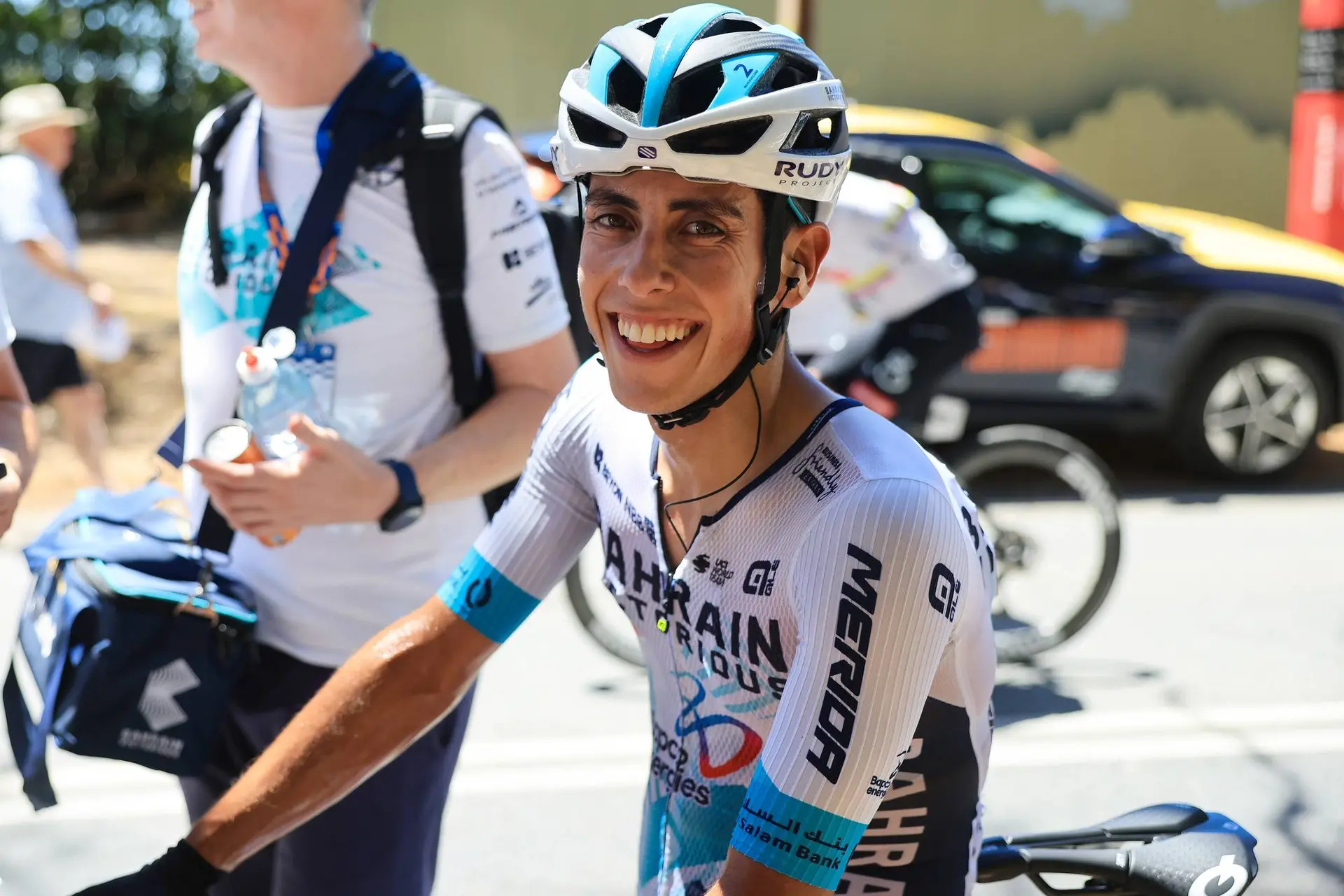
Being a pro cyclist is an incredibly complex task. Beyond the immense hours, the specificity of training, the carefully planned year-long nutrition and much more...There is also the technical aspect of the sport. How do riders develop their on-the-bike skills so they don't fail whilst riding in the peloton? We discuss some of those points with Bahrain - Victorious' Matevz Govekar.
Cycling in a peloton is all about efficiency. There are plenty ways in which this is key, one being aerodynamics on the bike, something more and more important, specially as the peloton becomes increasingly faster. One other is positioning, not only during sprints - which directly concerns Govekar, a former Tour of Britain and Tour of Guangxi stage winner - but during the hours-long races, and specially the classics.
Many riders have this natural talent. Antonio Tiberi, teammate of the Slovenian, has recently explained to us the difference it makes to race with Damiano Caruso, a more experienced rider with decade and a half in the peloton: "With him I can feel for sure more relaxed because I know that with him, if I just only follow him, I know that I'm in the right place in the right moment because he really knows super well how to read the race, to see what is going on and to react in the best way". The Italian is then able to learn how to read the races in the same way, spending energy when necessary only, and avoiding spending unnecessary bullets in non-key moments of the race.
Bike handing is another incredibly key point, specially when in the cobbled classics, where the roads are often narrow, treacherous and in pavement that requires a lot of focus and reaction skills from the riders. Take someone like Mathieu van der Poel, now a three-time consecutive winner of Paris-Roubaix. The physical component can never be ignored, but the Dutchman's decades of experience in cyclocross can directly translate onto the road when it comes to this sort of terrain.
Read also
Nutrition
But there are countless such examples. Nowadays, riders often eat up to 120 grams of carbs per hour during races with high energy demand. This applies both to leaders and domestiques. Consuming such amount requires concentration, and when racing in a high-speed peloton or technical terrain, it can often be difficult to consume solid food. Many will remember Tadej Pogacar's explosion on the Col du Granon at the 2022 Tour de France. Visma's strategy on that day of attacking from far led to a mishap from the Slovenian, which he payed greatly. Being able to feed properly during moments of high tension, and having the ability to eat when in the middle of the peloton, matters at the end of the day.
But not just that, Govekar reveals that during the training camps, the riders are eating as if they were in races, already to adapt their bodies to what is the ideal feeding strategy for an entire day in, for example, a Grand Tour. "I would say nutrition 100%, I think all teams are doing it every year more and more in details, so especially in training camps we try to simulate the nutrition we will do in the races, so that your guts are ready".
Nutrition has evolved greatly over the past few years, and eating in itself for some riders might be considered a task to a certain degree. Tadej Pogacar has described what he now typically has for breakfast during race days, and just how much time it takes to go through it. Velon has even shared specific and surprisingly public numbers on the amount of calories, carbs, protein and fat a rider like Pogacar consumes during a mountain stage at the Tour de France, down to the small details.

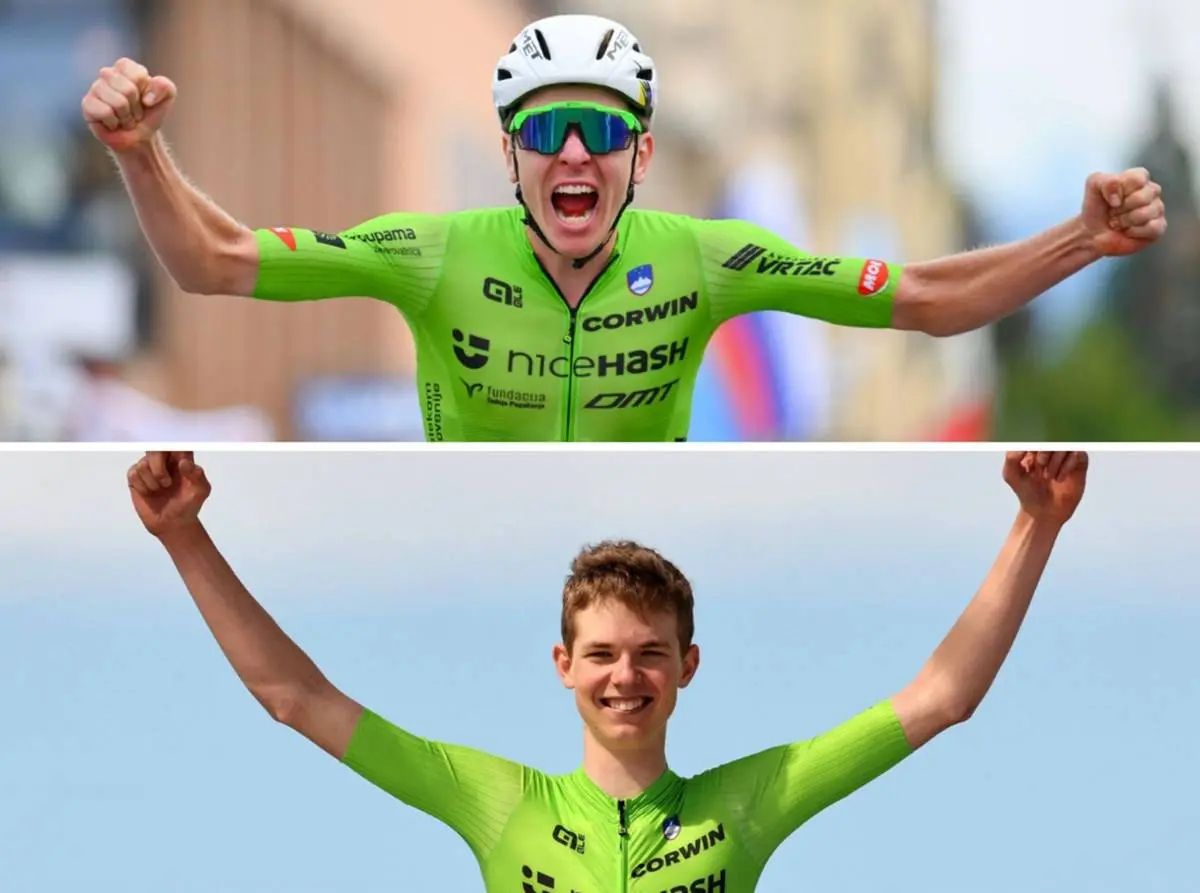
As a sprinter, Matevz Govekar must master the art of positioning.
Putting on clothes
Putting clothes on and taking them off. You will be excused for not noticing, but often it is possible to see riders struggling to take off shoe covers during races, or even jackets. Aero is king, and so everything the riders wearing during races, even those that are incredibly cold or rainy, is tight. It's not by chance that Q36.5's new jacket is called 'the condom' - this is really taken seriously. But it also means that it can be tricky to handle them.
One of the most iconic images of the 2020's has to be, without a doubt, Jai Hindley's struggles to get a jacket on during the Passo dello Stelvio. Minutes of tension as the Australian, with no-one behind or beside, simply could not put it on. Imagine he'd have to stop and then lose time because of it... Imagine he crashed because of the jacket getting tangled with the bike... Imagine he actually couldn't put it on, and as a result fall ill which would then take him out of the race or hamper his performance. Months of work, in the tiniest of details, just to have a race ruined over something so rudimentary.
But it is something pro cyclists have to master. They are professionals, and so failing to do so can be an issue in high competition, and where the stakes are higher than anywhere else in the sport. Govekar explains that this isn't specifically trained in the team, but different riders have their own habits. "Changing the clothes, I think it's a bit up to different cyclists, I think to some these things come very natural, and you get easily the skills to do".
Preventing unnecessary stops
Another one: Urinating on the bike. The images of riders peeing in the side of the road, pushed by a teammate on the go, is certainly one of the sport's most unusual. Often the TV directors do a good job at hiding it, but it's impossible to avoid all occurrences. Whilst this is usually done in more relaxed moments of the race, in modern racing events can go on and on for hours without a true break. In the cobbled classics for example, riders won't often have that luxury.
Stopping on the bike can cost a surprisingly high amount of time, and effort to get back to the peloton. In races often decided in tight sprints, this can be the make or break between winning and finishing second. But it also not an aspect replicated in training: "Peeing off the bike we don't do in training, because I think it's a bit also inappropriate, because we have time to stop and do it somewhere private". However doing so on the go is a massive time saver in many cases.
Domestique duties and more
Taking food and drinks from the car, for oneself but also to hand out to teammates, is a key skill that domestiques specially require. Govekar knows what it's like to be in this role and support his leaders. "Let's say sometimes when there is a new rider that joins the team, we also do in training feeding from the car, so they have to go back to the car and take some bottles," he explains. "For sure, but it's a bit personal".
However many of these small details, almost invisible to the casual spectator, can make a big difference at the end of the day. And in a sport of 'marginal gains', no details can be ignored. "Somebody struggling with something, I ask 'can I try this? Can I do like that?' And things are solved in the best way".
Grabbing bottles from soigneurs (as well as the soigneurs being trained to hand them perfectly); cornering and descending smoothly; paying attention to wind strength and direction so as to dictate position in the peloton; using race radio and communicating with the car and teammates; aiding in quick bike/wheel changes and many more make for a set of important details that have nothing to do with VO2Max, FTP or any other quantitative value, but are key for all racers in the peloton.
Rúben SilvaEditor-in-Chief
A founding contributor to CyclingUpToDate since its launch in January 2022, Ruben Silva has played a central role in shaping the site’s editorial direction and long-term growth. Before joining the project, he built his experience through independent blogging at Echelons Hub and by producing race previews for Ciclismo Internacional, developing a strong analytical voice rooted in daily engagement with professional cycling.
Beyond editorial work, he has been closely involved in the expansion and coordination of CyclingUpToDate’s wider network, helping establish and support sister platforms across multiple languages. This includes ongoing collaboration with CiclismoAlDia (Spanish), CiclismoAtual (Portuguese), WielrennenUpToDate (Dutch), and RadsportAktuell (German), contributing to a shared editorial vision and consistent international coverage.
He also helps oversee editorial governance across the network, setting standards for accuracy and consistency and coordinating updates or corrections when needed.
Originally from the Porto metropolitan area in Portugal, he holds a bachelor’s degree in Geography. His path into cycling journalism was shaped not through formal media training, but through independent reporting, community engagement, and sustained on-the-ground involvement in the sport.
Over the course of his career, he has conducted approximately 100 interviews across road cycling and cyclocross, ranging from one-to-one conversations and online formats to press conferences and on-site pre- and post-race coverage. His interviews include leading riders, team managers, and prominent figures within cycling media: Tadej Pogacar, Jonas Vingegaard, Mathieu van der Poel, Primoz Roglic, Wout van Aert, Joao Almeida and Tom Pidcock; managers like Patrick Lefevere and Joxean Matxin; and YouTube personality Bryan Kennedy (BKXC)...
Within 18 months of launch, he helped grow CyclingUpToDate’s English-language platform into one of the most-read cycling news websites, built entirely from the ground up. As both a professional journalist and lifelong cycling enthusiast, his focus remains on delivering accurate, timely, and well-contextualized coverage.
claps 3visitors 3
Just in
Popular news
Latest comments
- A shame to see him retire, I really liked him as a rider. His dignified tribute along with Matej Mohorovic to Gino Mader after his death was class and will always live in my memory. Enjoy your retirement.GregT11-10-2026
- A shame to see him retire, I really liked him as a rider. His dignified tribute along with Matej Mohorovic to Gino Mader after his death was class and will always live in my memory. Enjoy your retirement.GregT11-10-2026
- I thought Seixas had hit the end of the road from a fatigue standpoint, after the WC meltdown - and he still finished ok. This was impressive and an amazing return.mij11-10-2026
- totally, eating crow for breakfast this morning. after the world championships I thought we were looking at a late season fade from fatigue. way to go Paul!mij11-10-2026
- Well if UAE the best team in history comes knocking their the only team in the world who can get Seixas. Seixas will become unbeatable and incredible there. Lets see if he stays at decathlon or goes to UAE.miguel11-10-2026
- Pogi would have won the Vuelta at around 10 min. But it would have been boring for fools like you. Capish?PogiSloFans11-10-2026
- Rather than me describing the technology at length on here, If you google. Line-scan cameras. They are also sometimes called Slit-Scan cameras. Either search will fill you in. You can read all about how they. work. Enjoy! Just to be clear the cyclist is saying he wants to see exactly where the digital finish line is in relation to the actual physical finish. At this point we only have the word of the authority that the digital line corresponds to the exact starting edge of the physical finish line. That seems like a reasonable request to me.Prorodsandstuff11-10-2026
- 100% @Jumpyjohn, good point well raised.anonymouscyclist11-10-2026
- The media keep stirring the soup.. or spitting in it
 leedorney11-10-2026
 - Yes, he has won many races... second class races. He isn't the real deal... Seixas is the real deal. Capish?PogiSloFans11-10-2026
Loading
1 Comments