“You see a friend in a difficult moment, you help him... otherwise the peloton would be a messed up place” - Victor Campenaerts hits back at critics of De Lie bottle gesture
Cycling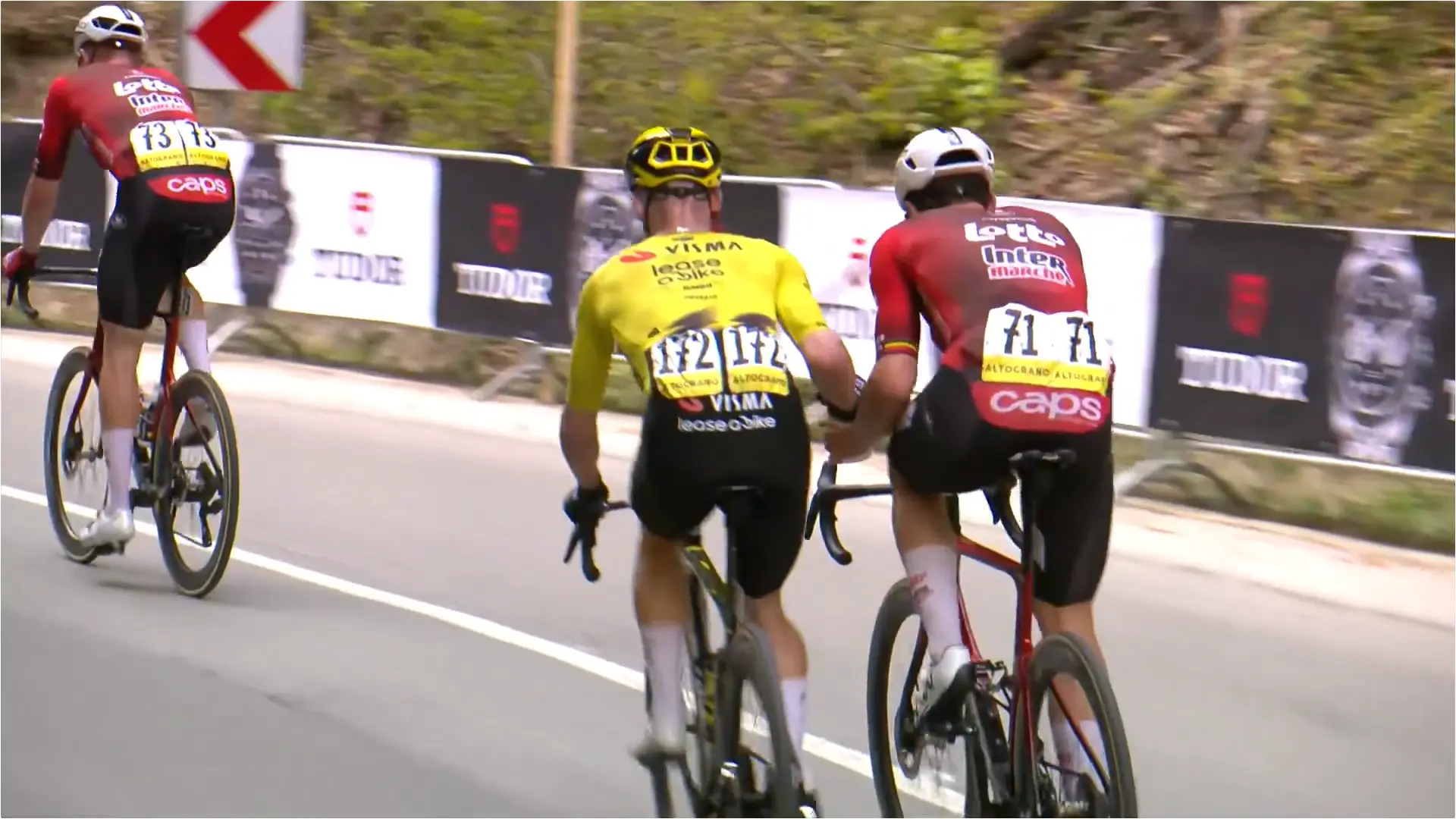
Victor Campenaerts has defended his much-discussed gesture towards Arnaud De Lie at the Giro d’Italia, insisting the moment was not about pity, embarrassment or gamesmanship, but simple friendship inside the peloton.
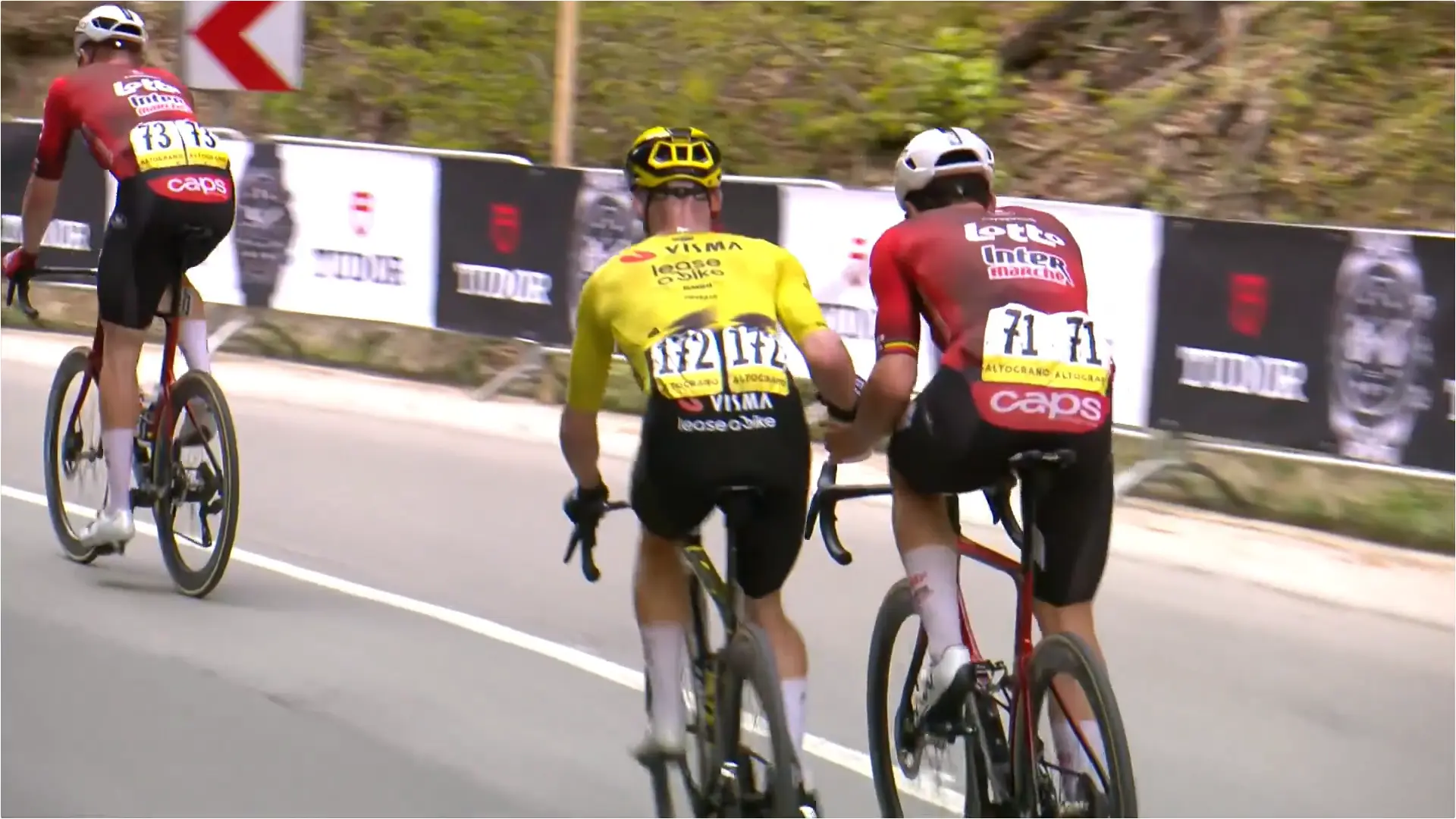
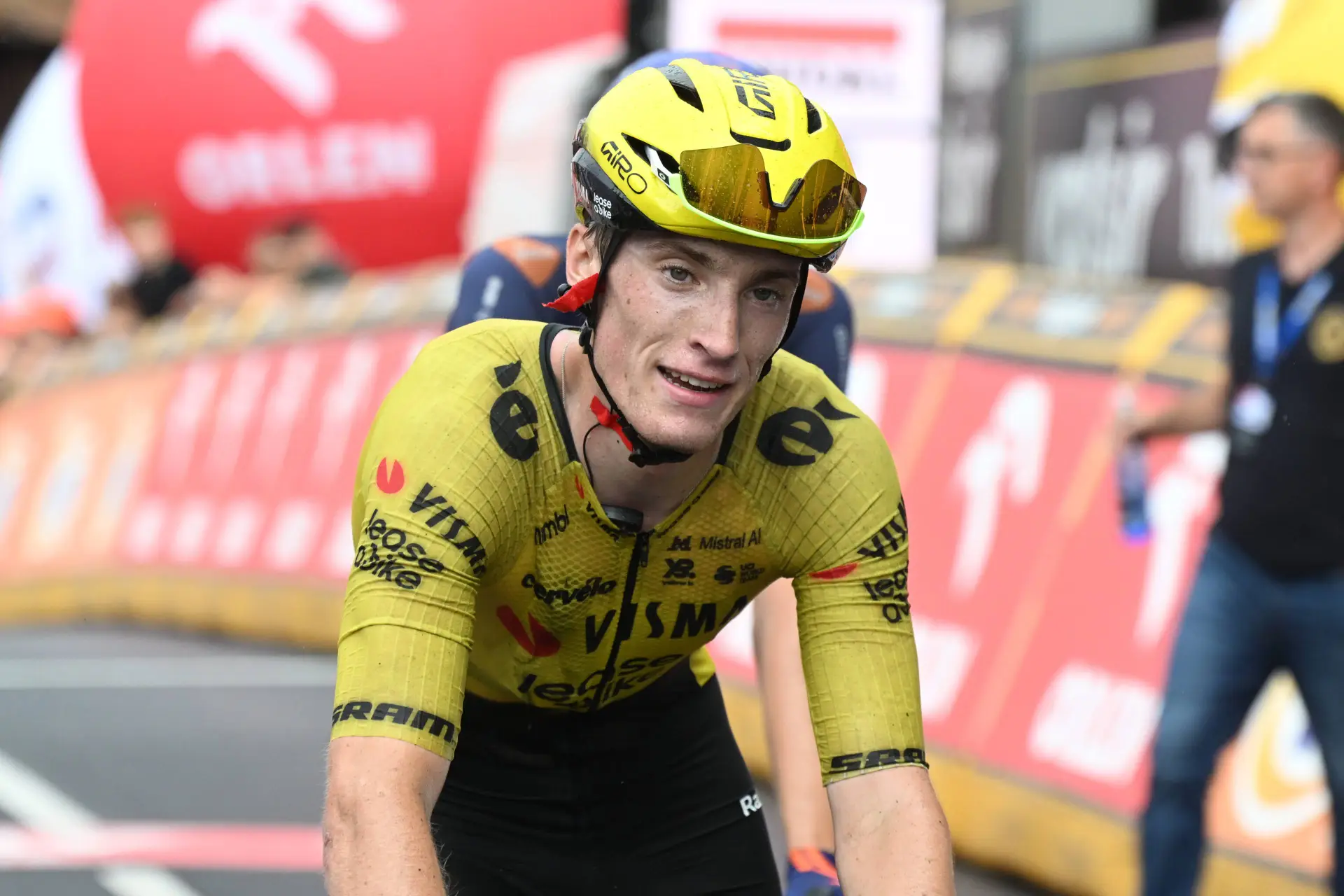
The Team Visma | Lease a Bike rider drew attention during Stage 3 when he briefly took a bottle from De Lie as the Lotto-Intermarche sprinter struggled on a climb. The small act was widely praised on social media, but it also sparked debate over whether such a visible show of help could feel demoralising for a rider already suffering badly.
That criticism was voiced strongly on Eurosport’s Kop over Kop, where Bobbie Traksel described the scene as a “really demotivating moment” and said he would have found it crushing had he been in De Lie’s position. His point was not that Campenaerts acted with bad intentions, but that receiving that kind of help from a rider on another team could underline just how badly things were going.
Campenaerts, however, sees it very differently. Speaking to Sporza, he explained that his bond with De Lie goes well beyond team colours. “When Arnaud turned pro, we spent a lot of time together,” said Campenaerts. “We were together in the Lotto team. Arnaud came to my house a lot during that period. When I was in Spain, Arnaud often came there to train with me as well.”
That history, Campenaerts said, made the decision instinctive rather than calculated. “We also always slept in the same room in Spain. That creates a bond.”
Campenaerts defends peloton solidarity
The image of Campenaerts helping a rider from another team stood out partly because modern Grand Tour racing is often defined by pressure, positioning and self-interest. But for Campenaerts, that is exactly why the moment mattered. “As well as being cyclists, we are also just people sitting in a peloton,” he explained. “If you see a friend having a difficult moment, you help him.”
Campenaerts added that he would expect the same kind of instinctive support from others if roles were reversed. “If I were to ride for another team later in my career and I had a difficult moment, then Bart Lemmen would help me too.”
He then made the point more sharply. “Fortunately, that still exists, otherwise the peloton would be a messed up place.”
The comments give a clearer answer to the debate around the gesture. Rather than viewing the bottle moment as a sign of weakness from De Lie, Campenaerts framed it as proof that old relationships and basic loyalty still matter, even when riders are wearing different jerseys.
De Lie’s Giro struggle ends on Stage 4
For De Lie, the moment may have looked warmer from the outside than it felt from the saddle. The Lotto Intermarche sprinter had endured a miserable Giro d’Italia after starting the race weakened by a stomach bacteria, and he admitted the bottle incident came during a very difficult spell. “That was maybe a nice moment for you, but not for me,” De Lie said with a rueful laugh. “I was à bloc at that moment. It was a very bad day for me.”
De Lie said his body still had not recovered as it should. “I see that my body is still not recovering the way it should,” he explained. “When I go à bloc, I notice there is nothing in the legs.”
His stomach problems had also continued to limit him. “My stomach is still not super either. I can eat, but not everything goes to my legs.”
Before Stage 4, De Lie had reduced his target to simply reaching the finish. “Just finishing, that is already a nice goal for me,” he said. Even that proved too much. As the race hit the first Italian stage between Catanzaro and Cosenza, De Lie was again distanced early on the Cozzo Tunno and later abandoned, ending a Giro that had never truly got going for him.
Campenaerts’ gesture did not change De Lie’s race, and it could not stop the illness struggles that eventually forced him out. It did, however, offer a reminder that even in a Grand Tour shaped by suffering, tactics and pressure, the peloton is still held together by relationships that survive far beyond team buses and contract changes.

Kieran WoodDeputy Editor-in-Chief
Kieran Wood is a sports journalist based in Wales and has been active in journalism since 2022. He regularly contributes to DartsNews.com and CyclingUpToDate.com, where he covers professional cycling and darts. In cycling, his work includes liveblogs from major races, including the Tour de France, the Giro d’Italia, and La Vuelta a España, alongside race reports and analysis. He has also conducted interviews with professional riders.
His reporting spans the full racing calendar, from one-day classics to stage races, with a focus on accurate, real-time coverage and clear contextual analysis. For statistics, results, and historical context, he regularly uses resources such as ProCyclingStats. To support reporting on rider activity and training context where relevant, he also references Strava.
In his work, Kieran places strong emphasis on careful sourcing, editorial accuracy, and updating articles as new, verified information becomes available.
claps 1visitors 1
Just in
Popular news
Latest comments
- Roglič brought in as many points as some of the lower standing teams, so you would think that more than one team would be trying to get one of the top 25 points machines onto their team. He brought in only 500 points less than the entire Picnic Post NL team. Take those points and Unibet is still not in the top 18, but put him on one of the teams fighting for 18th and they get some security. NSN at 18th with Roglič’s 2100 points would be in 11th place.RidesHills24-10-2026
- He's 20, in two years or so he will be the guy winning everything.awp24-10-2026
- You're talking about being lucky if someone crashes out... I'm talking about quality.PogiSloFans24-10-2026
- He finished 2nd this year at the Tour. Pogacar crashed out of the Vuelta. If he had crashed out of the Tour, Remco would have won.acem8224-10-2026
- Lance never won a TdF, so not sure why he and Hincapie are listed here. I thought this was best domestiques for TdF winners.mij24-10-2026
- Pelizzaari is not Remco's domestiqueabstractengineer24-10-2026
- YetJumpyjohn24-10-2026
- Nibali got into the lead because he wanted the team car further forward in the caravan (I love this as a sign of tactical thinking). He solidified the lead on the rainy cobbles day when he was just brilliant, while other contenders crashed out on the wet roads. Strategic and skillful, yes, but the English roads weren’t as decisive as they might seem.RidesHills24-10-2026
- The Domedancy is the one designed for Seixas - anaerobic short climbs. Seixas isn't as good with the long climbs
 Rafionain-Glas24-10-2026
 - no i just type inivitable facts, nothing else. I wish UAE wasnt so damn good but hey the reality is they are. Visma on opposite direction crashing with no money and riders, coaches leaving mid contract ffs..i wish that wasnt the case but im not pretednig its not real when it is reality... RbH and Lidl i UAE cloesst opponents now thats clear. But if were real how can you stop that team with del toor and pogacar (greatest ever rider they made him) and you have mcnulty as a dom with (who would be captain in other teams and wins world and 10 more behind him..) history also says their the best team by far so what you want me to say? fake and be delusional and tell myself things? Its not a matter for praising anyone its a matter of beeing real nothing else, i wish visma for instance was better and like before but they cant buy any proper climbing guys cause their broke...heck they cant even keep their riders and coaches who flee mid contract what you want me to do lol.miguel24-10-2026
Loading
Write a comment