"We still don't know much about a lot of things": Demi Vollering emphasizes the importance of understanding periods, nutrition and health
Cycling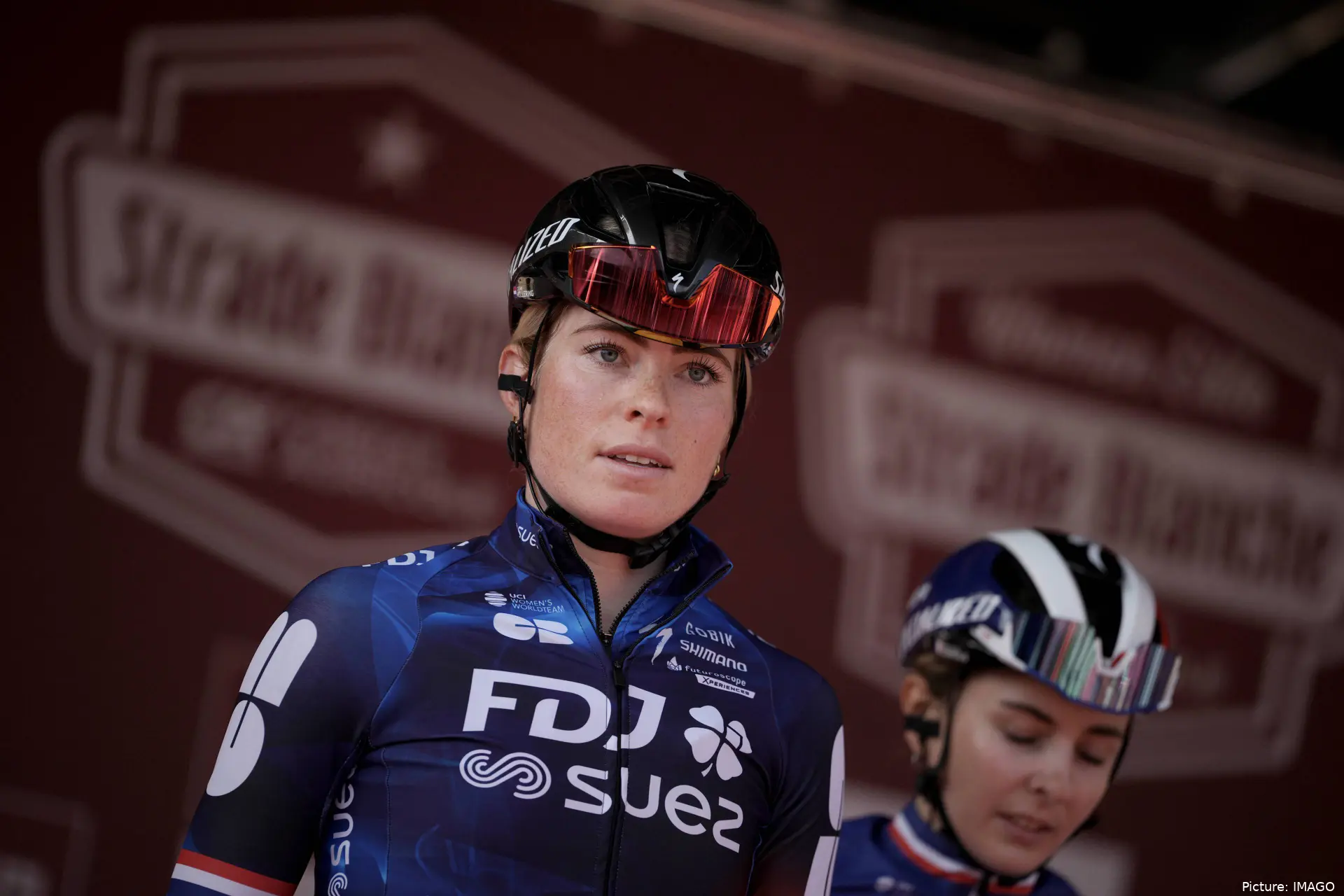
Demi Vollering is one of the main faces of women's cycling. Beyond her outstanding sporting performances, the Dutchwoman is also known for her earnest honesty during interviews, often saying more than less. But that's not always for naught as her openness helped to break some barriers and taboos of women's cycling, in particular with topics related to periods, nutrition and health among female athletes.
"Speaking about these kind of topics, I felt always kind of an obligation to be true and speak out. I also really understand that I have a voice now where I am on the level, so I really want to use my voice," Vollering said during her recent appearance on M.Talks, an interview series from nutrition sponsor Maurten.
At the end of the 2025 Tour de France Femmes, Vollering shut down any discussions regarding her body weight, pointing out that it doesn't put the sport in a good light. "Because young girls are watching us. They notice what we say - and what we don’t." And that's why the FDJ - SUEZ racer spoke up.
"Sometimes I do it by accident, I'm just being too honest in an interview after the finish, [saying] that my period needs to come or something like this. Afterwards I always think it's crazy that it's still a taboo and still we don't know much about a lot of things, and that still a lot of female [athletes] still struggle or are trying to find their way in everything."
Nobody knows how to help
For Vollering, to hear about the health trials some of her colleagues from peloton face has been a steep learning curve: "Since I spoke up, I've heard so many more girls who say that they don't have a period at all, or that they missed cycles," she said. "I think it's often quite painful for a lot of women if they don't have a period anymore, or they worry themselves and they don't want to share it, because maybe they don't want to get pity."
"Really I had no clue that it's such a big topic or big problem for a lot of women athletes that they lose their period and that it's so far never coming back, and also that they don't get any help, or that nobody knows how to help, that there is still so much unknown. I think that's the most worrying part for them, that they have no clue why and what's next."

Demi Vollering after losing the 2025 Tour de France Femmes
Do the basics right
Rather than chase the perfect weight at any cost, Vollering emhasizes the importance of not skipping any steps; nutrition or any other aspect of the process.
"First it's most important that the basics are that you eat right before training, during training, after training, that you always make sure that you have energy to recover and to be ready for the next day. That's what young girls maybe almost forget in their journey, they want to go so fast so they think 'what can I do better? Ah, maybe it's eating less on the bike or after the bike' but often it's not."
"Try to eat good before the ride, during the ride and after the ride, just really focus on your recovery instead of trying to be as light as possible. That's really a small piece that comes all the way in the end – first you need to make sure that you're always energised for your training and that you can give 100 per cent in your training, because that's where you get stronger," she concludes.
Ondrej ZhasilCycling Journalist
Ondřej Zhasil is a cycling journalist at CyclingUpToDate and has been part of the team since 2023. He is based in Ostrava, the third-largest city in the Czech Republic, and covers professional cycling across the main UCI competitions, including the Tour de France, the Giro d’Italia, and La Vuelta a España. A key focus of his work is startlist analysis and pre-race coverage, where he examines team selections, rider line-ups, and tactical scenarios ahead of major events.
Alongside WorldTour coverage, Ondřej has developed specific expertise in junior cycling and in racing across East Asia, including competitions in China and Japan. He also maintains a broad working knowledge of other disciplines and levels, including cyclocross, while continuing to expand his understanding of mountain bike racing.
Ondřej holds a bachelor’s degree in Mathematics and Physics, which supports his analytical, data-driven approach to performance and race analysis. In his reporting, he regularly uses ProCyclingStats for results, statistics, and historical context. He places strong emphasis on careful sourcing, editorial accuracy, and updating articles promptly when new, verified information becomes available.
claps 0visitors 0
Just in
Popular news
Latest comments
- Jonas is declining now. A podium next year would be a good result for him.Renz16-10-2026
- unpredictability is not an issue. Most riders not named Pogi have that. The excuses are and the blaming teammates and other riders for insufficient support and blocking are. if weight is an issue get a nutritionist. If aircon is not working switch rooms. Position yourself or get your teammates and DS to keep reminding you of basic stuff if it is difficult to remember in a long race. Dont whine about other riders not working with you, use tactics yourself or get your DS to develop the tactics. Dont talk about noballs when you yourself have no ballsabstractengineer16-10-2026
- It’s worth remembering that cycling journalism has entered it’s “Shit-Stirring Hot Takes Winter” now in order to keep the clicks and views trickling in.wrsty16-10-2026
- Well that would be a major disappointment. The last two years are the first times I have bothered watching the last day. Maybe at worst it could be the 2nd last day but two classic finishes and then wompWaranga16-10-2026
- Vingegaard was the one showing signs of weakness. He was looking more likely to lose a podium spot or two than to make inroads on Tadej.Papijan16-10-2026
- Disagree with Ardennes, he has never done well there, not even a top 10. Giro Vuelta, avoid the stacked TDF where crashes can derail the rest of the season and even if he avoid that, at best a top 5 is possible. He is 31, no more time left for testing/trying.abstractengineer16-10-2026
- Respectfully disagree. He and the team will want to qualify the result at the Tour against TP, JV, and the other GT specialists who weren't in Spain. And remember, the team is looking for a new title sponsor. Or, at least a co-sponsor. So a run at the TDF would go a long way in securing that! As a fan of the team dating back to the Indurain days, I would love to see it. But I do not think that he can really take it to them in July. But I do think he will try. I do agree that he can do good rides, if not win, in Belgium.coachjulianx16-10-2026
- Kid, you just had to keep your mouth shut, now you opened it and it's too late, everyone knows you're dumb.elosanjos16-10-2026
- “He looked less than brilliant” then Pogacar attacked and distanced all his rivals, again! I swear these support riders are purely doing pr for their leaders at this point.Pedalmasher16-10-2026
- PogiFanBoy just doesn't like you attacking his Tadej boy ! He's quite protective of him as you may have noticed. No one can say a bad thing about him or fear reprisal.frieders316-10-2026
Loading
Write a comment